Hindu faith denigrated in front of minor students by politician, offensive remarks made about traditions and priests
 Shimla, Himachal Pradesh, India
  13 November, 2025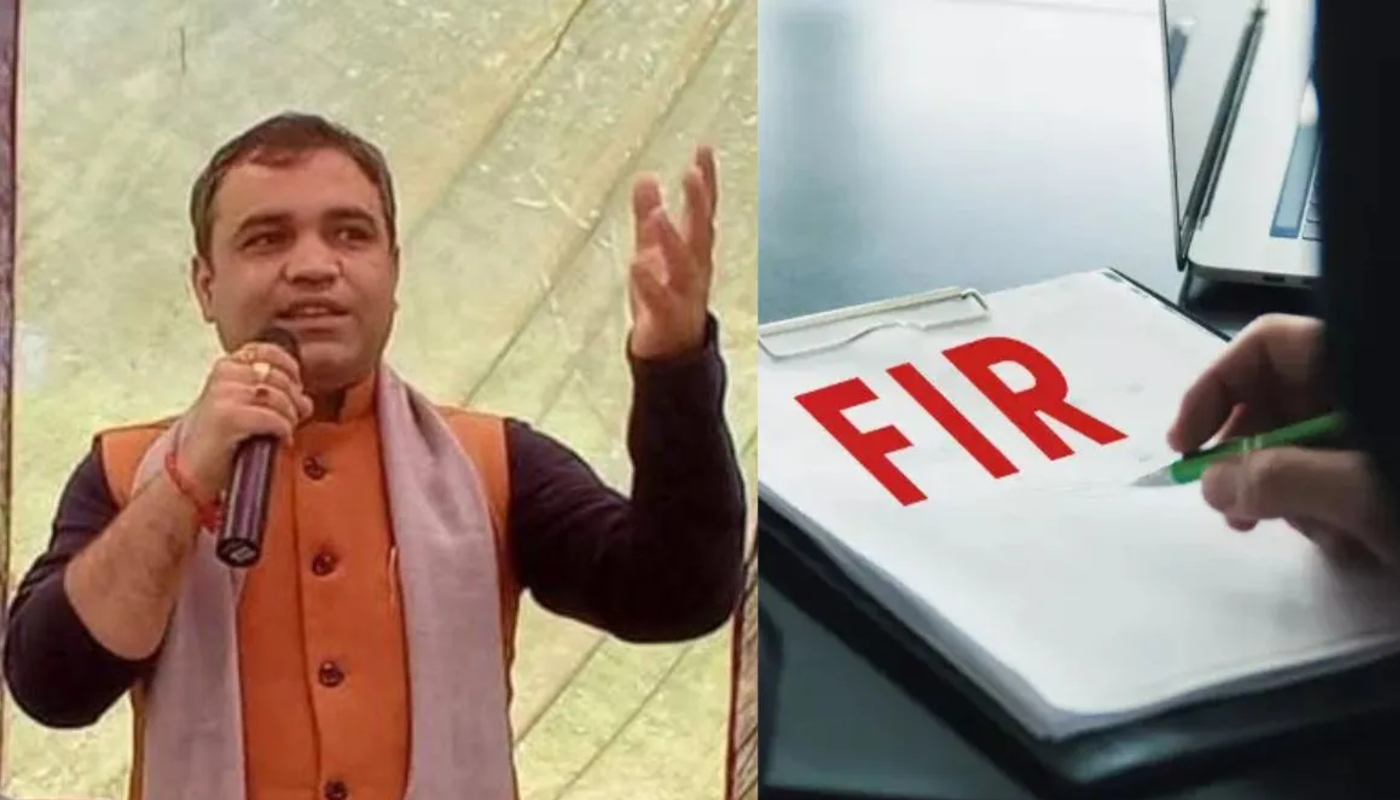
Case Summary
An Indian politician delivered a hate speech against the Brahmin community during a school programme in Kyara, Theog, Himachal Pradesh. The case concerns Ajay Shyam, a former Bharatiya Janata Party candidate from the Theog Assembly constituency, who was accused of making offensive remarks about Brahmin traditions, priests, and long-standing religious practices in front of schoolchildren. According to the written complaint submitted by Atul Sharma of Shimla, the incident took place on 14 November 2025 during an event held at a local school. In his speech, Ajay Shyam mocked beliefs related to reincarnation, shraddha rituals, and customs associated with honouring ancestors. The complainant said that these comments hurt the religious feelings of the Brahmin community and created an atmosphere of hostility towards them. He also raised concerns about the impact of such statements on minors who were present during the programme. The complaint stated that the remarks were made deliberately on a public platform and that video evidence exists. Atul Sharma described the situation as a cultural emergency and demanded strict legal action, citing Supreme Court guidelines that require police to register an FIR in such matters. After reviewing the complaint and the submitted video, the police concluded that the speech amounted to offences punishable under sections 299, 352, 353(1), and 196(1) of the Bharatiya Nyaya Sanhita 2023. An FIR was registered at the Kumarsain police station. Police officials said that a thorough inquiry was underway and further action would depend on the findings.
Why it is Hate Crime ?
The primary category in this case is: Predatory proselytisation. The subcategory selected is- Proselytisation by grooming, brainwashing, manipulation or subtle indoctrination. Further, the tertiary category selected is- Conversion of minor. Religious brainwashing essentially means the often subtle and forcible indoctrination to induce someone to give up their religious beliefs to accept contrasting regimented ideas. Religious grooming or brainwashing also involves propaganda and manipulation. It involves the systematic effort, driven by religious malice and indoctrination, to persuade “non-believers’ to accept allegiance, command, or doctrine to and of a contrasting faith. Cases of such grooming or brainwashing are far more nuanced than direct threats, coercion, inducement and violence. In such cases, it is often seen that there is repeated, subtle and continual manipulation of the victim to induce disaffection towards their own faith and acceptance of the contrasting faith of the perpetrator. While subtle indoctrination is widely acknowledged as predatory, an element which is often understated in such conversions or the attempts of such conversion is the role of loyalty and trust which might develop between the perpetrator and the victim. Fiduciary relationships are often abused to affect such religious conversion. For example, an educator transmitting religious doctrine of a competing faith to a Hindu student. The Hindu student is likely to accept what the teacher is transmitting owing to existence of the fiduciary relationship. The exploitation of the fiduciary relationship to religiously indoctrinate victims would also be included in this category. Since the underlying animosity towards the victim’s faith forms the basis of predatory proselytization, such cases are considered religiously motivated hate crimes. The second category is- Hate speech against Hindus. The subcategory under this is: Anti-Hindu slurs, mocking faith. Anti-Hindu slurs and the deliberate mocking of the Hindu faith owing to religious animosity involve the usage of derogatory terms, stereotypes, or offensive references to religious practices, symbols, or figures. One of the common anti-Hindu slurs used against Hindus is “cow-worshipper” and “cow piss drinker”. The intention of using this term is to demean and mock Hindus as a group and their religious beliefs since Hindus consider the cow holy. Additionally, some symbols and the slurs attached to them have a historical context that exacerbates the insult, hate, stereotyping, dehumanisation and oppression against Hindus. Cow worship has been used for centuries to denigrate Hindus, insult their faith and oppress Hindus specifically as a religious group. There has been overwhelming documentation about how cow slaughter has been used to persecute Hindus with cow meat being thrown in temples and places of worship. There has also been overwhelming documentation where cow meat (beef) has been force-fed to Hindus to either forcefully convert them to Islam or denigrate their faith. Apart from cow worship, the Swastika – which holds deep religious significance for the Hindus – has also been misinterpreted and distorted to use as a slur against Hindus. Similarly, the worship of the Shivling has been used by supremacist ideologies and religions to denigrate Hindus owing to religious animosity. Such slurs and denigration stem out of inherent animosity and hate towards Hindus and their faith, therefore, it is categorised as hate speech targeted at Hindus specifically owing to their religious identity. This case has been added to the Hinduphobia Tracker under the primary category of Predatory Proselytisation, with the subcategory Proselytisation by grooming, brainwashing, manipulation, and the tertiary category Conversion of minor. The second category selected is Hate Speech Against Hindus, with the subcategory Anti-Hindu slurs, mocking faith. This classification is based on the context and the vulnerability of the audience. The incident took place at a school programme attended by Hindu minors, where an Indian politician, Ajay Shyam, used his position of influence to mock Hindu beliefs and Brahminical customs, including doctrines of reincarnation, shraddha rituals, and honouring of ancestors. The act was not merely a case of political commentary but an attempt to undermine and ridicule foundational Hindu practices in a space where children were the primary listeners. In this specific case, it is evident that the Hindu victims were minors, which essentially means that the element of consent and genuine change of conscience was missing ab initio. Children are more susceptible to manipulation as they are still developing emotionally, cognitively, and socially. Their immature reasoning abilities make them vulnerable to psychological influence, particularly when the manipulation comes from trusted authority figures such as politicians or educators. Subtle indoctrination tactics—such as ridicule of faith or false rationalisation of religious customs—can take root quickly in impressionable minds, often without parental awareness or intervention. This use of mockery and derision toward Hindu beliefs in front of children thus constitutes a form of proselytisation by grooming and brainwashing, where the intent is not overt conversion but gradual alienation from one’s inherited faith. By fostering embarrassment, doubt, or inferiority about Hindu traditions, such acts lay the groundwork for future religious disassociation and create a generation psychologically primed for conversion. The speech also qualifies under Hate Speech Against Hindus, as it used anti-Hindu slurs and ridicule to demean and delegitimise Hindu culture. Mocking sacred concepts such as shraddha or reincarnation, which form the moral and philosophical core of Hindu dharma, reveals not academic scepticism but deliberate prejudice against Hindu identity. Since the underlying offence in this case is against children of a specific faith and involves subtle tactics of indoctrination rooted in bias against Hinduism, it qualifies as a religiously motivated hate crime. The politician’s misuse of authority to deride Hinduism before minors represents an organised form of psychological manipulation and communal prejudice, aimed at weakening Hindu belief through ridicule and conditioning rather than open debate.


Case Status
Complaint registered


Perpetrators Details
Perpetrators
Others
Perpetrators Range
One Person
Perpetrators Gender
male
 Sources




