Hindu man pressured to convert to Islam, recite kalma and perform namaz; subjected to sex change surgery
 Muzaffarnagar, Uttar Pradesh, India
  18 November, 2016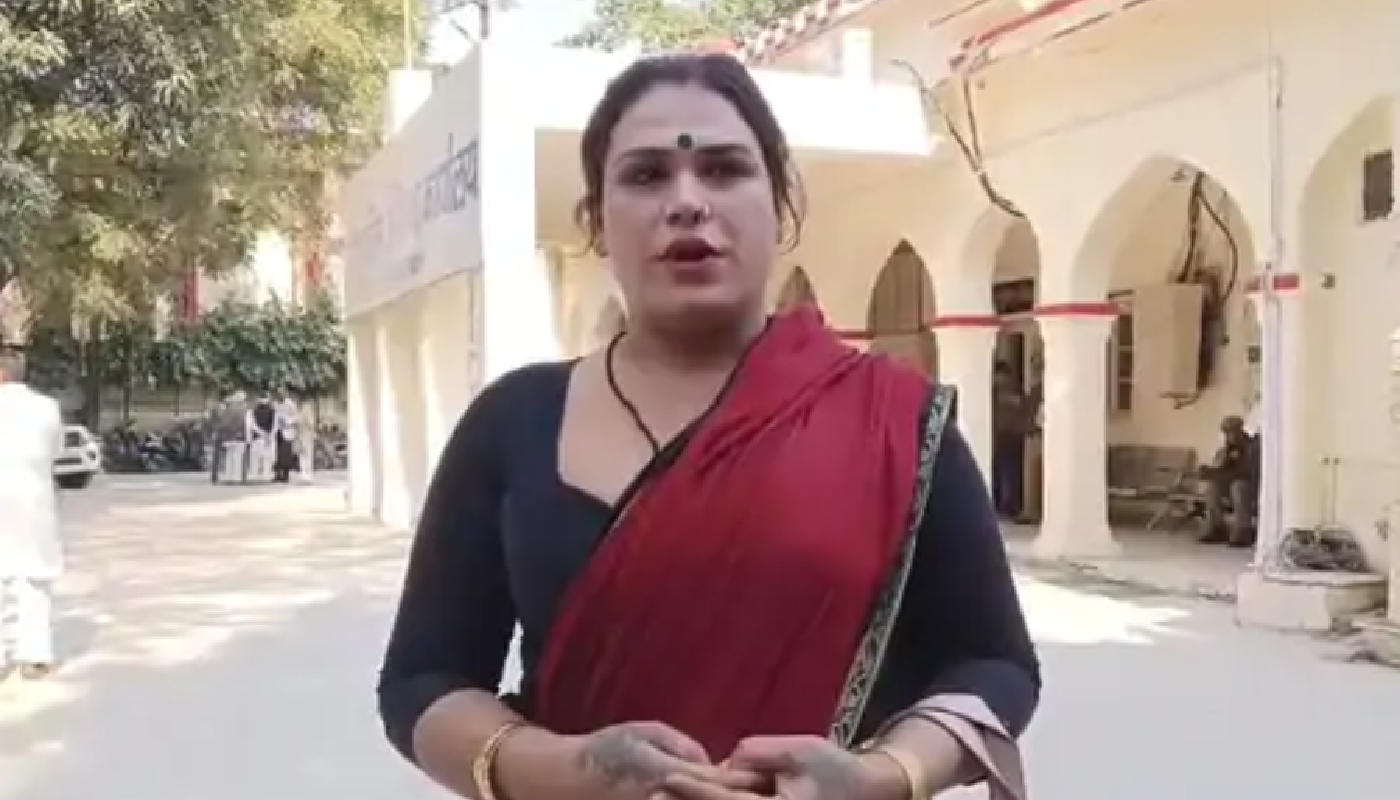
Case Summary
A Hindu man in Muzaffarnagar, Uttar Pradesh, was forced through a series of pressures that led to a gender change and repeated demands for religious conversion. He later lived as Palak within the Kinnar community and approached the New Mandi police station to seek action against those he said were responsible. He stated that he had earlier lived as Avinash, earned a living by performing female roles at devotional gatherings, and supported his family through this work. His family had arranged his marriage, but the strain created by his performance roles led to a separation and eventual divorce. He explained that in 2016, he came into contact with Nazim Bano, who headed a local Kinnar Dera. He said she enticed him with the promise of a steady income and gradually placed him under such sustained pressure that he was taken to Delhi and made to undergo a gender change. After the operation, he became Palak and, according to his account, was separated from his family and compelled to live and work with the Dera. He also stated that after the gender change, he was pressured to accept Islam. He said he had been made to recite the kalma, perform namaz, and alter his daily habits. He was also forced to change his diet to match Islamic practices. He later discovered that the group operated as a network that targeted vulnerable Hindu youths, first drawing them in with the promise of money, then pushing them into gender change, and finally into abandoning their Hindu identity. He described attempts to escape by moving to Rajasthan, but said that the pressure continued there as well. He eventually returned to Muzaffarnagar after demands were made that he be sent back or repay money said to have been spent on him. He stated that he continued to face threats and intimidation. He sought help from Chief Minister Yogi Adityanath and Prime Minister Narendra Modi and asked the authorities to investigate the property and activities of Nazim Bano and her associates. The police said they were examining the complaint and would act after verification. Nazim Bano denied all allegations, stated that she did not know anyone named Palak, and claimed that no coercion had taken place.
Why it is Hate Crime ?
The primary category in this case is: Predatory Proselytisation. The first subcategory under this is: Conversion, attempt to convert by inducement. Predatory Proselytisation is not just limited to threat, harassment, force and violence, but it also has contours of stealth. In several cases, the Hindu victim is exploited to convert, with non-Hindus taking advantage of their poverty. In such cases, the Hindu victim who is suffering financially is offered monetary benefits, including lucrative offers for jobs, health treatment, education, etc, to induce the victim into changing his/her religion. In such cases, the religious identity of the victim and the aim to disenfranchise him from his faith form the heart of the crime. Also, taking advantage of and exploiting an individual’s economic vulnerabilities is widely acknowledged as exploitation, forms of which are often penalised by law. Such cases therefore are considered religiously motivated hate crimes since the victim’s religious identity forms the very heart of the crime itself. The second subcategory selected is- Harassment, threats, coercion for conversion. Harassment covers a wide range of behaviours of an offensive nature. It is commonly understood as behaviour that demeans, humiliates, and intimidates a person, including threats and coercion. Harassment and threats, in this case, find their root on discriminatory grounds which has the effect of nullifying a person’s rights or infringing upon his freedom to exercise his right specifically owing to the victim’s religious identity. Verbal and physical threats and psychological or physical harassment are often used against Hindu victims because they choose to practice their professed religion. Religious harassment also includes forced and involuntary conversions by harassment, threats or coercion. Coercion includes intimidatory tactics like force-feeding a Hindu victim beef to convert to another religion, forceful circumcision etc. In several cases documented, non-Hindu perpetrators or those who harbour specific animosity towards Hinduism, harass victims simply based on their religious identity. Such cases often also include harassment to ensure the Hindu victim abandons his/her professed religion and adopts the religion of the perpetrator. Such cases, where Hindu victims are harassed to convert to the perpetrator’s religion are rooted in animosity towards the victim’s religious identity and are therefore documented as religiously motivated hate crimes. The third subcategory under this is: Proselytisation by grooming, brainwashing, manipulation or subtle indoctrination. WIthin this, the tertiary category is- Pattern of targeting Hindus. Religious brainwashing essentially means the often subtle and forcible indoctrination to induce someone to give up their religious beliefs to accept contrasting regimented ideas. Religious grooming or brainwashing also involves propaganda and manipulation. It involves the systematic effort, driven by religious malice and indoctrination, to persuade “non-believers’ to accept allegiance, command, or doctrine to and of a contrasting faith. Cases of such grooming or brainwashing are far more nuanced than direct threats, coercion, inducement and violence. In such cases, it is often seen that there is repeated, subtle and continual manipulation of the victim to induce disaffection towards their own faith and acceptance of the contrasting faith of the perpetrator. While subtle indoctrination is widely acknowledged as predatory, an element which is often understated in such conversions or the attempts of such conversion is the role of loyalty and trust which might develop between the perpetrator and the victim. Fiduciary relationships are often abused to affect such religious conversion. For example, an educator transmitting religious doctrine of a competing faith to a Hindu student. The Hindu student is likely to accept what the teacher is transmitting owing to existence of the fiduciary relationship. The exploitation of the fiduciary relationship to religiously indoctrinate victims would also be included in this category. Since the underlying animosity towards the victim’s faith forms the basis of predatory proselytization, such cases are considered religiously motivated hate crimes. This case has been added to the tracker because the sequence of events shows a deliberate effort to destabilise a Hindu man’s autonomy, identity and religious continuity through inducement, manipulation, coercion and sustained psychological pressure. The account describes how the victim was first approached through promises of income and material security. The use of inducements to influence vulnerable individuals is a known tactic in conversion-driven environments, where economically disadvantaged persons are offered money, food or other benefits in ways that create dependency and gradually weaken their attachment to their original faith. In many contexts, this method has been used to draw Hindus away from their belief system, and the pattern described here follows that same logic of exploiting vulnerability to create pressure for religious abandonment. According to the victim, he was removed from his home environment, taken to another city and subjected to a gender change procedure carried out under sustained psychological influence. A procedure of this magnitude, when performed without meaningful consent, becomes a tool of control. It isolates the individual from family, social networks and the cultural grounding that maintains religious identity. Once the victim became dependent on the group, the pressure to change his religion grew stronger. He was repeatedly told to recite Islamic declarations, perform namaz and change his daily habits so that he would start living according to a faith very different from the Hindu upbringing he came from. The report also mentions that he was forced to change his diet to match Islamic practices. This kind of pressure aims to slowly break a person’s connection to their own religious way of life and push them toward adopting another faith. The pattern he described shows a step-by-step grooming process. It began with promises of financial support, continued with isolating him from his family and then moved to creating a situation where he felt he had no choice but to obey. Once he was cut off from his old support system, the religious pressure increased. At that point, he was more vulnerable, and the group used this vulnerability to push him further away from Hindu practices and beliefs. This is why the case fits the definition of a hate crime. The harm was aimed at his religious identity rather than any material gain. The forced gender change, the isolation, the repeated instructions to follow Islamic rituals and the pressure to change his diet all point to an attempt to detach him from Hinduism. The goal was to reshape his identity under coercion and fear, replacing his Hindu background with a new religious identity imposed upon him. Trapping someone with the malafide intention of conversion is not only ethically problematic but also a sort of harassment that is rooted in animosity towards the victim’s religious identity, which is why this case qualifies as a hate crime against Hindus and has been documented here. Disclaimer: Since the earliest known stage of the victim’s ordeal traces back to 2016, the Hinduphobia Tracker has assigned 19 November 2016 as a placeholder date. Although the case was reported on 19 November 2025, the Tracker records incidents according to when the harm to the Hindu victim began rather than when it was later reported. Disclaimer: The number of perpetrators has been recorded as one because only the name of Nazim Bano appears explicitly in the complaint. This conservative count is used until further verified information becomes available.
Victim Details
Total Victim
1
Deceased
0
Gender
- Male 1
- Female 0
- Third Gender 0
- Unknown 0
Caste
- SC/ST 0
- OBC 0
- General 0
- Unknown 1
Age Group
- Minor 0
- Adult 1
- Senior Citizen 0
- Unknown 0


Case Status
Complaint filed


Perpetrators Details
Perpetrators
Muslim Extremists
Perpetrators Range
One Person
Perpetrators Gender
third
 Sources




