Derogatory image and offensive remarks targeting revered Hindu deity made on social media
 Unnao, Uttar Pradesh, India
  16 November, 2025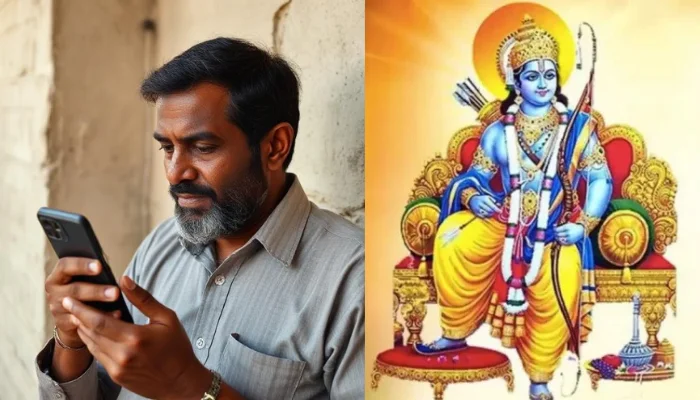
Case Summary
In Bighapur, Unnao, Uttar Pradesh, a derogatory image and comments targeting Lord Ram, a revered Hindu deity, were made on social media by a man named Mayank Jatav. According to media reports, the accused generated a derogatory picture of Lord Ram using artificial intelligence technology (AI) and posted objectionable content on social media. The accused, Mayank, had also repeatedly made offensive comments about Lord Ram as well as other Hindu gods and goddesses. Mayank Jatav, son of Rajendra, was a resident of Gulewa Kheda village in the Kotwali area. His offensive social media posts angered the public. Upon receiving information about the incident, the police promptly acted and arrested Mayank Jatav. Inspector Rajpal stated that preventive action had been taken against Mayank for making derogatory comments against Lord Ram. People had tagged the police about the posts on the social media platform 'X' (formerly Twitter) on 17th November 2025, after which the Bighapur police acted swiftly to arrest the accused.
Why it is Hate Crime ?
The primary category selected in this case is- Hate Speech against Hindus. The subcategory selected is- Anti-Hindu slurs, mocking faith. Anti-Hindu slurs and the deliberate mocking of the Hindu faith owing to religious animosity involve the usage of derogatory terms, stereotypes, or offensive references to religious practices, symbols, or figures. One of the common anti-Hindu slurs used against Hindus is “cow-worshipper” and “cow piss drinker”. The intention of using this term is to demean and mock Hindus as a group and their religious beliefs since Hindus consider the cow holy. Additionally, some symbols and the slurs attached to them have a historical context that exacerbates the insult, hate, stereotyping, dehumanisation and oppression against Hindus. Cow worship has been used for centuries to denigrate Hindus, insult their faith and oppress Hindus specifically as a religious group. There has been overwhelming documentation about how cow slaughter has been used to persecute Hindus with cow meat being thrown in temples and places of worship. There has also been overwhelming documentation where cow meat (beef) has been force-fed to Hindus to either forcefully convert them to Islam or denigrate their faith. Apart from cow worship, the Swastika – which holds deep religious significance for the Hindus – has also been misinterpreted and distorted to use as a slur against Hindus. Similarly, the worship of the Shivling has been used by supremacist ideologies and religions to denigrate Hindus owing to religious animosity. Such slurs and denigration stem out of inherent animosity and hate towards Hindus and their faith, therefore, it is categorised as hate speech targeted at Hindus specifically owing to their religious identity. Another primary category selected in this case is- Attack on Hindu religious representations. The subcategory selected is- Iconoclastic representation of Hindu gods and goddesses. An icon is a symbol of someone or something that is revered, or a religious representation of a spiritual ideal. Iconography is of vital significance in the Hindu milieu. It helps connect people’s spiritual beliefs with the real world. Iconography within the Hindu faith takes several shapes and forms. Murtis are of most significance to Hindus, to which daily rituals, prayers and offerings are done. Besides the murtis, there are several other symbols which have deep significance in the Hindu faith – the Om and Swastika for example. Any iconoclastic representation of these symbols, images and murtis is an affront to the religious beliefs and faith of the Hindu community itself since the symbols and icons are deeply religious in nature. In this sub-category of crime, we would record hate crimes and iconoclastic representations, in words, art, or any other form of representations of symbols that hold religious significance for the Hindu community. Since these symbols, icons and murtis are central to the Hindu faith, any iconoclastic representation of these symbols is born out of animosity towards the faith itself, manifesting itself through these symbols and therefore, these representations would be considered religiously motivated hated crimes. This case is a clear instance of anti-Hindu hate speech. The accused repeatedly made derogatory remarks against Lord Ram and other Hindu gods and goddesses. Lord Ram is a profoundly revered deity in Hinduism, considered the seventh avatar of Lord Vishnu and a symbol of righteousness, virtue, and moral integrity. His life and teachings, as depicted in the epic Ramayana, inspire millions and play a central role in Hindu culture and spirituality. Other Hindu gods and goddesses hold significant positions as embodiments of various divine principles, virtues, and powers essential to the faith and the identity of the Hindu community. Any attack or abuse directed towards these deities is a direct insult to the religious identity of Hindus and amounts to religiously motivated hate speech intended to provoke and denigrate the Hindu faith. Such denigration of revered Hindu gods, including Lord Ram, clearly manifests religious hostility and animosity towards Hinduism. Furthermore, the accused created offensive images of Lord Ram using artificial intelligence technology. Such AI-generated iconoclastic representations constitute direct disrespect towards the sacred position these deities hold in Hinduism. Iconoclasm, or the deliberate mutilation or distortion of religious images, is widely condemned as it attacks the religious and cultural heritage of Hindus. Any defamatory or morphing depiction of Hindu gods and goddesses through such media amounts unequivocally to religiously motivated hate crimes, aiming to demean and mock the Hindu faith itself. Social media has increasingly become a platform rife with Hinduphobia, where offensive memes, derogatory remarks, and targeted abuse against Hindus and their faith have proliferated. This ongoing religious animosity fuels the spread of such hateful content online, contributing to a hostile environment for the Hindu community. Given the fact that this case meets multiple parameters of a religiously motivated hate crime, it is being recorded in the Hate Crime Database of the Hinduphobia Tracker. Disclaimer: The Hinduphobia Tracker records the dates of incidents based on when the crime occurs rather than when it is reported by the media. In this case, media reports have not specified the exact date when the accused made objectionable remarks or posted offensive images of Lord Ram. The only date mentioned is 17th November 2025, when people on social media tagged the police on the platform X to inform them about the accused’s actions. Therefore, for documentation purposes, 17th November 2025 has been selected as the indicative date of the incident.


Case Status
Arrested


Perpetrators Details
Perpetrators
Others
Perpetrators Range
One Person
Perpetrators Gender
male
 Sources




