Hindus targeted for conversion during Christian prayer event; women and children urged to abandon their faith
 Bilaspur, Chhattisgarh, India
  15 November, 2025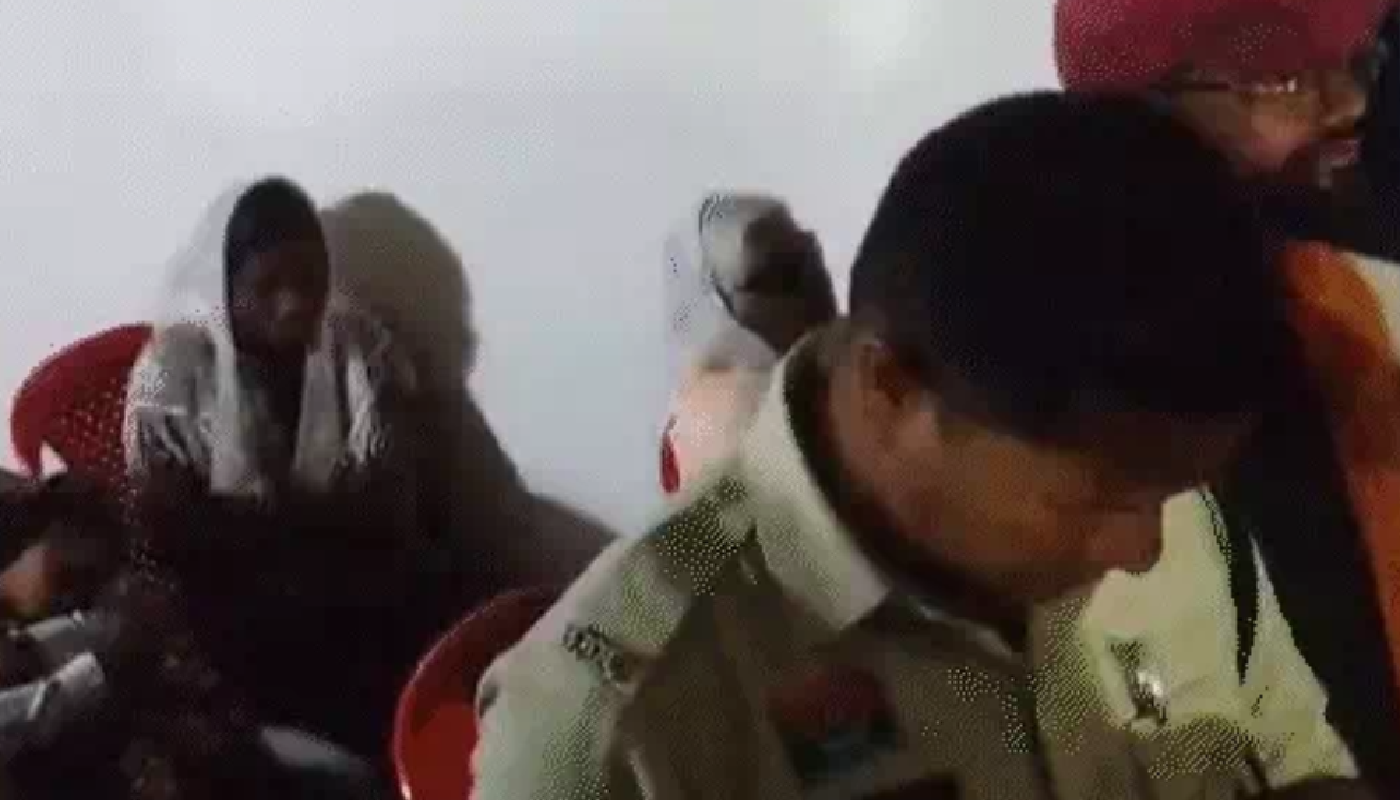
Case Summary
Hindus were targeted for religious conversion in the Bilaspur district of Chhattisgarh, where a Christian prayer gathering organised inside a hut-like structure in the Chilhaty area of Sarkanda turned into a conversion attempt directed at Hindu women and children. The incident occurred on 16 November 2025, when local Hindu organisations received information that a prayer session was being used to influence Hindu attendees into abandoning their faith. Activists arrived at the location with loudspeakers and intervened in the event. Police reached the site shortly afterwards and registered a case based on the findings of their preliminary inquiry. According to the reports, Hindu women and children had been invited to the prayer meeting held in a house near Shani Mandir Road in Chilhaty. Upon arrival, Hindu organisation members found that the attendees were being exposed to claims denigrating Hindu deities and were being encouraged to convert to Christianity. The activists objected strongly and began addressing the neighbourhood over a loudspeaker, urging residents to come out and witness the attempted religious conversion. They accused the organisers of misleading innocent Hindus by offering inducements and using deceptive religious messaging. The protest turned heated, forcing the police to reach the spot and immediately shut down the gathering. Hindu organisation representative Kanhaiya Sahu submitted a written complaint to the Sarkanda police, naming Vishnu Kosaria, Prateek Goyal and others as the organisers of the prayer meeting aimed at converting Hindus. Based on this complaint, the police registered an FIR and seized Christian prayer material from the site. This incident formed a part of a much larger pattern in Bilaspur district, where more than 38 cases of conversion attempts through unauthorised prayer gatherings were reported in the last six months across multiple police station areas.
Why it is Hate Crime ?
The primary category in this case is: Predatory Proselytisation. The first subcategory in this case is: Conversion/ attempts to convert by inducement. Predatory Proselytisation is not just limited to threat, harassment, force and violence, but it also has contours of stealth. In several cases, the Hindu victim is exploited to convert, with non-Hindus taking advantage of their poverty. In such cases, the Hindu victim who is suffering financially is offered monetary benefits, including lucrative offers for jobs, health treatment, education, etc, to induce the victim into changing his/her religion. In such cases, the religious identity of the victim and the aim to disenfranchise him from his faith form the heart of the crime. Also, taking advantage of and exploiting an individual’s economic vulnerabilities is widely acknowledged as exploitation, forms of which are often penalised by law. Such cases, therefore, are considered religiously motivated hate crimes since the victim’s religious identity forms the very heart of the crime itself. The second subcategory under this is: Attempting to convert/converting by denigrating Hinduism. In several cases, Hindus are converted or an attempt is made to convert Hindus by denigrating their faith, Hinduism. In such cases, the Hindus associate with the non-Hindu perpetrators often by choice and then, the attempt to convert them by insulting their faith, showing the faith down etc begins. An example of this would be a non-Hindu gathering where the Hindus are attending the gathering of their own free will. However, once they attend the gathering, there is an explicit attempt to convert them by abusing their faith and hailing the faith of the perpetrator. The denigration of the Hindu faith is often based on misrepresentation of the Hindu faith, its doctrine and scriptures and insult to espoused traditions if not blatant lies about Hindu beliefs and ways. Such conversions or attempts at conversions are driven by animosity towards the Hindu faith and are therefore documented as religiously motivated hate crimes. The third subcategory under this is: Proselytisation by grooming, brainwashing, manipulation or subtle indoctrination. The tertiary category under this is: Conversion of minor. Religious brainwashing essentially means the often subtle and forcible indoctrination to induce someone to give up their religious beliefs to accept contrasting regimented ideas. Religious grooming or brainwashing also involves propaganda and manipulation. It involves the systematic effort, driven by religious malice and indoctrination, to persuade “non-believers’ to accept allegiance, command, or doctrine to and of a contrasting faith. Cases of such grooming or brainwashing are far more nuanced than direct threats, coercion, inducement and violence. In such cases, it is often seen that there is repeated, subtle and continual manipulation of the victim to induce disaffection towards their own faith and acceptance of the contrasting faith of the perpetrator. While subtle indoctrination is widely acknowledged as predatory, an element which is often understated in such conversions or the attempts of such conversion is the role of loyalty and trust which might develop between the perpetrator and the victim. Fiduciary relationships are often abused to affect such religious conversion. For example, an educator transmitting religious doctrine of a competing faith to a Hindu student. The Hindu student is likely to accept what the teacher is transmitting owing to existence of the fiduciary relationship. The exploitation of the fiduciary relationship to religiously indoctrinate victims would also be included in this category. Since the underlying animosity towards the victim’s faith forms the basis of predatory proselytization, such cases are considered religiously motivated hate crimes. This case has been added to the Hinduphobia Tracker because it demonstrates a clear pattern of targeted religious manipulation directed specifically at Hindu women and children under the guise of a Christian prayer gathering. The details reported from the Chilhaty area of Sarkanda reflect core indicators of predatory proselytisation, where vulnerable Hindu individuals are approached, influenced, and encouraged to abandon their religious identity through deceptive methods, inducements, and denigration of their faith. The conditions present in this incident align with established markers of a religiously motivated hate crime, as the attempt to convert was rooted not in free choice but in deliberate efforts to undermine Hindu belief through psychological and emotional pressure. The fact that Hindu women and children were selectively invited to the event reveals targeted intent rather than a general religious congregation. Once inside the hut-like structure, attendees were presented with statements aimed at discrediting Hindu deities, and were encouraged to accept Christianity as the only path to salvation. Such denigration is not merely theological disagreement; it is part of a methodical process designed to create religious shame, alienation, and self-doubt among Hindu participants. Attempts to convert individuals by attacking the integrity of their faith constitute an assault on religious identity, fulfilling a central criterion of a hate-driven offence. Further, the use of inducements and promises of improved living conditions indicates an exploitation of socio-economic vulnerability. This aligns with patterns seen in multiple documented cases, where poor Hindu families are lured through assurances of financial relief, emotional support, or supposed miraculous healing. By targeting financially disadvantaged Hindus, the perpetrators sought to weaponise poverty as a tool for religious displacement. Such actions strip individuals of informed agency and convert religious conversion into an act of coercion disguised as compassion. The event also involved elements of grooming and subtle indoctrination. The setting of a prayer meeting functions as an environment designed to engender trust and emotional influence. Within such spaces, the repeated exposure to ritual displays, promises of divine intervention, and reinterpretation of suffering creates psychological dependence. When directed at Hindus with the specific aim of eroding their ancestral traditions, this pattern of manipulation becomes a direct attack on the continuity of Hindu cultural and religious identity. It is further important to note here that the victims here were also minors, which means the element of consent and genuine change of conscience was missing ab initio. Minors, due to their young age and lack of maturity, are particularly vulnerable to manipulation and coercion. For these reasons, the incident constitutes a religiously motivated hate crime. The conversion effort was not incidental or benign but structured around hostility toward Hinduism and a deliberate attempt to detach Hindu individuals from their belief system. Consequently, this case has been rightfully included in the Hinduphobia Tracker. Disclaimer: The number of perpetrators in this case has been recorded as two, based on the names mentioned in the complaint and media reports. However, several accounts also refer to “others” being involved without specifying their identities. To maintain consistency and avoid inaccurate attribution, only the clearly identified individuals have been counted. If future reports or official records provide additional names, the perpetrator count will be updated accordingly.


Case Status
Complaint registered


Perpetrators Details
Perpetrators
Christian Extremists
Perpetrators Range
From 2 To 5
Perpetrators Gender
male
 Sources




