Effigy burning of Hindu religious leader by Bhim Army and Azad Samaj Party workers; Hindus attacked for opposing act
 Jhansi, Uttar Pradesh, India
  7 November, 2025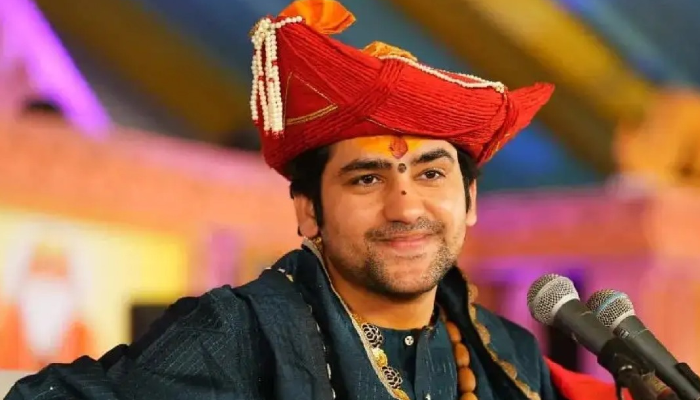
Case Summary
Effigies of Hindu spiritual leader Dhirendra Krishna Shastri were burnt by Bhim Army and Azad Samaj Party workers in Indergarh, Datia, Madhya Pradesh, on 8 November 2025, leading to violent clashes in which Hindus were attacked for opposing the act. The incident unfolded when members of the Bhim Army and Azad Samaj Party, led by their Gwalior divisional president Keshav Yadav, organised a rally from Ambedkar Park with the stated purpose of publicly burning the effigy of the Bageshwar Dham head priest. As the rally advanced, the participants set fire to the effigy nearly 25 feet before the location officially permitted by local authorities, near the Gwalior intersection. Members of Hindu organisations who were present in the area strongly protested the burning, condemning it as an insult to a revered Hindu saint. In retaliation, the Hindu group burned an effigy of Damodar Yadav, national president of the Dalit Pichhda Mahasabha, who had recently filed a petition in the High Court against Shastri’s “Sanatan Ekta Padyatra.” The confrontation quickly escalated into a heated verbal exchange that turned violent. The Bhim Army and Azad Samaj Party workers hurled stones at members of the Hindu groups, resulting in several injuries. According to reports, at least three individuals were hurt and later admitted to the Indergarh Hospital for treatment. Police intervened immediately, using lathicharge and water cannons to disperse the crowd and prevent further violence. Police officials, including Indergarh Station House Officer Vaibhav Gupta, SDOP Sewdha Ajay Channa, and ASP Sunil Shivhare, reached the site with reinforcements from neighbouring police stations. The authorities brought the situation under control, though tension remained in the town for several hours. A large police force was subsequently deployed to prevent renewed clashes. Following the violence, Bhim Army and Azad Samaj Party workers went to the Indergarh Police Station and demanded that an FIR be filed against Dhirendra Krishna Shastri, accusing Hindu groups of using abusive language and disrupting their rally. However, on their return from the police station, both factions once again confronted each other, leading to another round of stone-pelting before the police dispersed the mob. Shiromani Singh Rathore, city president of the Sanatan Hindu Sangathan, stated that “Dhirendra Krishna Shastri speaks for the unity of Sanatan Dharma and opposes caste divisions. Burning the effigy of such a saint is an act meant to provoke Hindus. We will not allow any group to insult saints who symbolise religious harmony and cultural integrity.” SHO Vaibhav Gupta confirmed that the situation was brought under control and that cases were registered against those responsible for instigating and participating in the clashes.
Why it is Hate Crime ?
The primary category in this case is: Hate speech against Hindus. The subcategory under this is: Mocking/denigrating Hindu leaders. Hate speech is defined as any speech, gesture, conduct, writing, or display that is prejudicial against a specific individual and/or group of people, which is leading to or may lead to violence, prejudicial action or hate against that individual and/or group. Religious leaders are often seen as representatives of the community, especially, the community’s religious faith and beliefs. Mocking or denigrating a religious leader specifically owing to his religious identity and/or the religious rituals he observes can be considered hate speech because the motivating factor of the speech is animosity and/or dislike for what he represents – the religious beliefs and faith of the community. It is important to note that mere insulting words against an individual do not constitute hate speech. It is entirely possible that insulting words are used for an individual, however, the specific speech is not the result of religious hate and/or animosity towards the professed faith of the religious leader, but the individual himself. For the speech to be considered hate speech, the speech itself or the motivating factor behind the speech has to be religious in nature. Such speech which denigrates Hindu religious leaders specifically owing to animosity towards the faith they profess and the community faith they represent will be treated as hate speech under this category. Another primary category in this case is: Attack not resulting in death. The subcategory under this is: Attacked for opposing radicals or trying to save victim. In several cases, Hindus are attacked for opposing religiously motivated crimes being committed against a fellow Hindu or simply for voicing an opinion opposing radical elements, who either have in the past or continue to persecute Hindus. In such cases, the initial attack against the victim, against which the Hindu was trying to defend the victim, would also need to be classified as a religiously motivated hate crime. Since the initial crime itself was religiously motivated and the subsequent crime of attempting to save the victim or speaking against the radical elements ends up inviting a violent attack, it would also be classified as a religiously motivated hate crime under this category. This case has been included in the Hinduphobia Tracker because it demonstrates a targeted act of provocation and hostility towards a Hindu spiritual leader, followed by violence against Hindus who protested the desecration of his image. The burning of an effigy of Dhirendra Krishna Shastri, head priest of Bageshwar Dham, by members of the Bhim Army and Azad Samaj Party represents more than a political disagreement; it reflects an attack on the symbolic and spiritual figure of the Hindu faith. The subsequent assault on those who opposed this act underscores the deep animosity directed towards expressions of Hindu religiosity in the public sphere. Effigy burning, when directed at a Hindu saint or religious leader, carries specific implications in a country where Hindu traditions and faith systems remain both visible and vulnerable to political and ideological antagonism. Saints like Dhirendra Krishna Shastri are not political officeholders; they serve as religious representatives who speak for faith-based unity, often advocating for the dissolution of caste divisions within Hindu society. The deliberate targeting of such a figure, therefore, cannot be separated from the intent to insult and degrade the Hindu religious identity he embodies. The organised nature of the effigy-burning rally, led by a regional leader of the Bhim Army, further indicates that this was not a spontaneous act of dissent but a coordinated expression of hostility against a Hindu symbol of faith and unity. The violence that followed the Hindu organisations’ resistance adds a significant dimension to the event. When Hindus protested the burning of Shastri’s effigy, they were met with stone-pelting and physical assault, suggesting a deliberate attempt to suppress their right to defend their religious icons. This fits within the documented pattern of Hindus being attacked when they publicly oppose anti-Hindu acts or attempt to safeguard their community symbols from humiliation. The injuries sustained by three individuals during the clash reinforce the seriousness of the attack, which moved beyond verbal provocation into physical aggression motivated by resentment against Hindu expression. The hate speech component of this incident is equally critical. Burning an effigy of a religious leader specifically because of his Hindu identity and the message of Sanatan unity he propagates constitutes an act of religiously motivated hate. The intent was to demean not only the individual but the entire religious philosophy he represents. Such actions, by their nature, foster division and incite violence, contributing to a hostile environment for the open practice and expression of Hindu belief. It is important to mention here that the accused were members of the Bhim Army. While the Bhim Army presents itself as a champion of Dalit rights, its actions and affiliations often contradict this claim. Dalits are very much Hindus, yet the Bhim Army frequently targets Hindu symbols, festivals, and practices, including those held sacred by Dalits themselves. This pattern suggests that the organisation’s agenda is less about genuine Dalit upliftment and more aligned with broader anti-Hindu narratives that seek to divide and weaken Hindu society from within. This becomes particularly apparent when the Bhim Army aligns with leftist and Islamist platforms, where identity politics is weaponised against Hindus. In such spaces, the micro identities of caste, region, and language are secondary; what matters most is religious identity. It is the Hindu identity, regardless of caste, that often becomes the target of animosity. As seen in cases where Dalit families were attacked for displaying Hindu symbols or worshipping deities, the hostility stems not from caste differences, but from a disdain for Hindu religiosity. For example, on May 19, 2020, reports emerged in which a Dalit family in Bihar’s Kishanganj district accused the local Bhim Army unit of attacking them for their beliefs, desecrating a temple as they objected to their reverence for Hindu deities and saffron flags. The attack in Indergarh thus forms part of a broader trend where Hindu symbols, saints, and gatherings are deliberately targeted to provoke social disorder and assert ideological supremacy. All the elements of religiously motivated crime are clearly present: the initial provocation through hate speech and symbolic desecration, followed by a violent assault on those who resisted it, making this a distinct instance of Hinduphobic aggression directed against the Hindu community’s religious identity and its protectors. Disclaimer: The number of victims in this case has been recorded as 3, as three individuals were reported to have sustained serious injuries during the clash. This figure has been chosen based on verified reports to maintain a conservative estimate. Should additional verified information emerge indicating more victims, the record will be updated accordingly.
Victim Details
Total Victim
3
Deceased
0
Gender
- Male 0
- Female 0
- Third Gender 0
- Unknown 3
Caste
- SC/ST 0
- OBC 0
- General 0
- Unknown 3
Age Group
- Minor 0
- Adult 0
- Senior Citizen 0
- Unknown 3


Case Status
Complaint filed


Perpetrators Details
Perpetrators
Others
Perpetrators Range
Unknown
Perpetrators Gender
male
 Sources




