Hindus offered money to convert to Christianity and their faith denigrated, victim's attacked for opposing conversion attempts
 Korba, Chhattisgarh, India
  7 November, 2025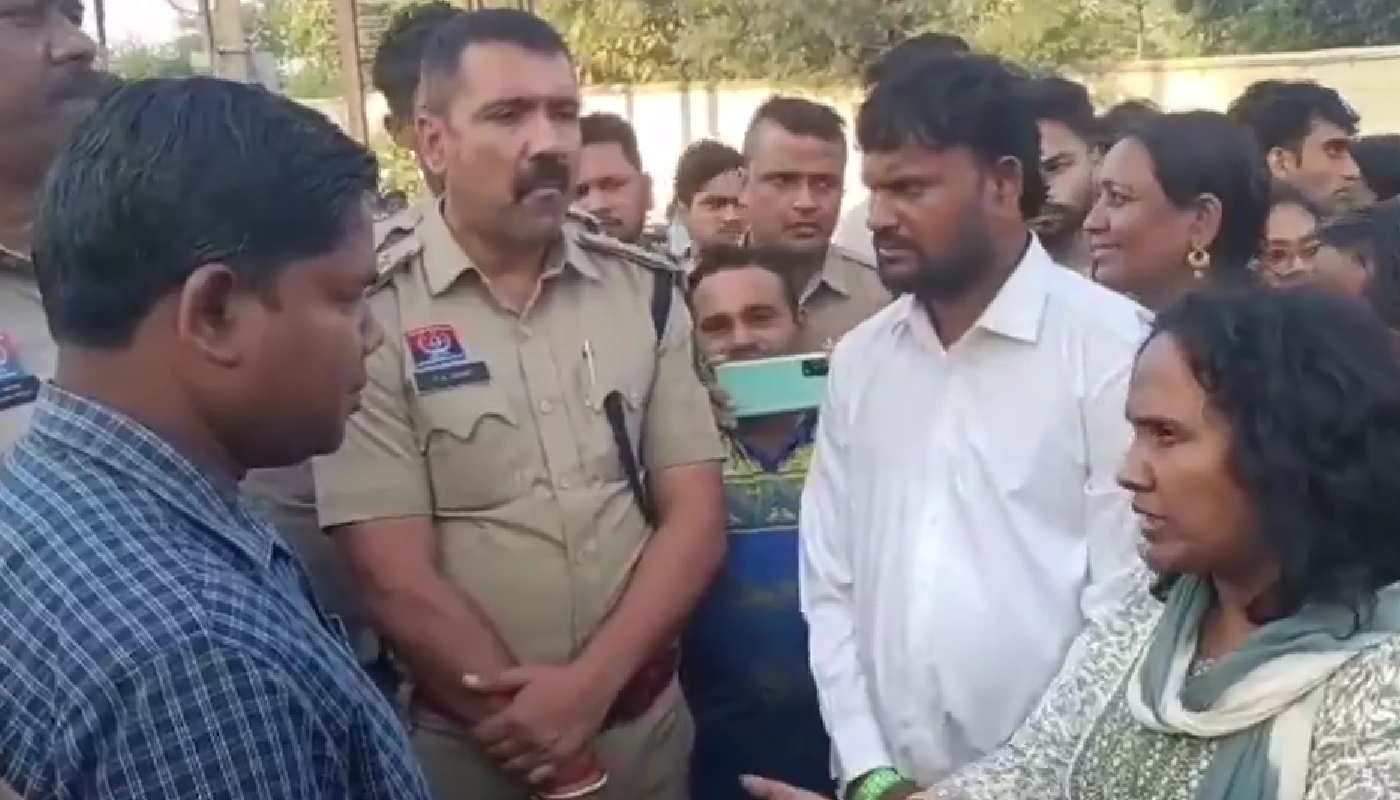
Case Summary
A Christian conversion racket was busted by Hindu groups in the Korba district, Chhattisgarh. The incident took place on 8 November 2025 in Roomgadha New Shanti Nagar settlement of Ward 47 under the Balco police station area. Hindu organisations stated that Christian committees were secretly converting Hindus inside a private house. When the information spread, Hindu activists reached the spot, raised slogans, and protested. They stated that objectionable remarks were being made against Sanatan Dharma and that Hindus were being lured with money and other incentives for conversion. As the protest intensified, the situation turned tense. The situation nearly turned into a physical clash between both sides. After heavy efforts, the police controlled the situation. Ward 17 Councillor Laxman Shrivas said that when he reached out to gather details, a man named Sanjay Masih pushed him and threatened to kill him. Police then shifted all Christian community members from the spot to a safe location. After the incident, Ward Councillor Laxman Mahant submitted a written complaint to the police demanding strict action against those involved in conversion. A video of the incident went viral on social media, in which Hindu members could be seen slapping people involved in conversion and raising slogans. After some hours, members of the Christian community blocked the road at Balco Parsabhata and started protesting, demanding the arrest of those who allegedly attacked them in the name of religion. Police officers were deployed at the spot, and the Christian side also started raising slogans against the police administration. Balco Pastor Peter claimed that the pastors and other members of the district had gathered for a meeting to prepare for Christmas. At that time, he claimed, two men named Laxman Shrivas and Hemant arrived and created chaos by accusing them of religious conversion. They also slapped one person. Korba CSP Bhushan Ekka stated that a complaint has been received regarding Christian conversion in the Balco area. During the inquiry, there was a confrontation. Further action will be taken after the investigation.
Why it is Hate Crime ?
The primary category in this case is: Predatory Proselytisation. The subcategory under this is: Conversion/ attempts to convert by inducement. Predatory Proselytisation is not just limited to threat, harassment, force and violence, but it also has contours of stealth. In several cases, the Hindu victim is exploited to convert, with non-Hindus taking advantage of their poverty. In such cases, the Hindu victim who is suffering financially is offered monetary benefits, including lucrative offers for jobs, health treatment, education, etc, to induce the victim into changing his/her religion. In such cases, the religious identity of the victim and the aim to disenfranchise him from his faith form the heart of the crime. Also, taking advantage of and exploiting an individual’s economic vulnerabilities is widely acknowledged as exploitation, forms of which are often penalised by law. Such cases therefore are considered religiously motivated hate crimes since the victim’s religious identity forms the very heart of the crime itself. Another subcategory under this is: Attempting to convert/converting by denigrating Hinduism. In several cases, Hindus are converted or an attempt is made to convert Hindus by denigrating their faith, Hinduism. In such cases, the Hindus associate with the non-Hindu perpetrators often by choice and then, the attempt to convert them by insulting their faith, showing the faith down etc begins. An example of this would be a non-Hindu gathering where the Hindus are attending the gathering of their own free will. However, once they attend the gathering, there is an explicit attempt to convert them by abusing their faith and hailing the faith of the perpetrator. The denigration of the Hindu faith is often based on misrepresentation of the Hindu faith, its doctrine and scriptures and insult to espoused traditions if not blatant lies about Hindu beliefs and ways. Such conversions or attempts at conversions are driven by animosity towards the Hindu faith and are therefore documented as religiously motivated hate crimes. Another primary category in this case is: Attack not resulting in death. The subcategory under this is: Attacked for opposing radicals or trying to save victim. In several cases, Hindus are attacked for opposing religiously motivated crimes being committed against a fellow Hindu or simply for voicing an opinion opposing radical elements, who either have in the past or continue to persecute Hindus. In such cases, the initial attack against the victim, against which the Hindu was trying to defend the victim, would also need to be classified as a religiously motivated hate crime. Since the initial crime itself was religiously motivated and the subsequent crime of attempting to save the victim or speaking against the radical elements ends up inviting a violent attack, it would also be classified as a religiously motivated hate crime under this category. This case has been added to the tracker because it represents a clear pattern of predatory proselytisation where inducement, misinformation, and denigration of Hindu beliefs were used to engineer religious conversion. The reported facts show that Christian groups had gathered inside a private residence where Hindus were being targeted. Hindu organisations reached the spot only after receiving information that conversion activity was underway. Once present, they found that objectionable statements against Sanatan Dharma were being made and that economic inducements were being offered in exchange for conversion. The targeting of Hindus within a closed environment and the use of inducement establish the intent to exploit Hindu identity and vulnerability. That intent places this incident firmly in the category of religiously motivated harm. The second significant factor is the religious demoralisation described by the Hindu side, that is, the claim that derogatory and insulting remarks were being issued against the Hindu religion. Conversion driven through religious humiliation is not an ordinary social dispute. It is a direct attack on Hindu identity. When conversion is attempted by lowering the dignity of the Hindu faith, the aim is not only to convert the individual. The aim is to psychologically detach the Hindu from Sanatan Dharma by poisoning the well of faith. This is an act driven by religious animus. This case has also been added because of the violent confrontation that followed. When Hindu representatives reached the location in their capacity as elected representatives and community members, they were physically pushed, threatened and intimidated. This violence was aimed at silencing those raising objections to predatory proselytisation. The harm is not incidental. It is aimed at preventing Hindus from protecting other Hindus from being converted. Therefore, the assault becomes an extension of the religiously motivated crime. It is a retaliatory attack against those who opposed the conversion activity. This converts the second part of the incident into another category of hate crime where people are attacked for stopping a crime against Hindus. For a tracker dedicated to documenting Hinduphobia, this case is essential because it provides evidence of conversion operations functioning within residential localities, away from public scrutiny, and dependent on secrecy. Both the inducement and the denigration of Hinduism show that the Hindu community was not approached as equals. They were approached as targets. The subsequent retaliation against Hindu representatives shows the existence of structured hostility. The combination of these elements confirms the religious motive, and therefore, this incident is correctly categorised as a hate crime against Hindus.


Case Status
Complaint filed


Perpetrators Details
Perpetrators
Christian Extremists
Perpetrators Range
Unknown
Perpetrators Gender
unknown
 Sources




