Hindu minors from poor tribal families taken to Christian Bishop’s camp and groomed for conversion with promises of education, care and a better future
 Gwalior, Madhya Pradesh, India
  4 November, 2025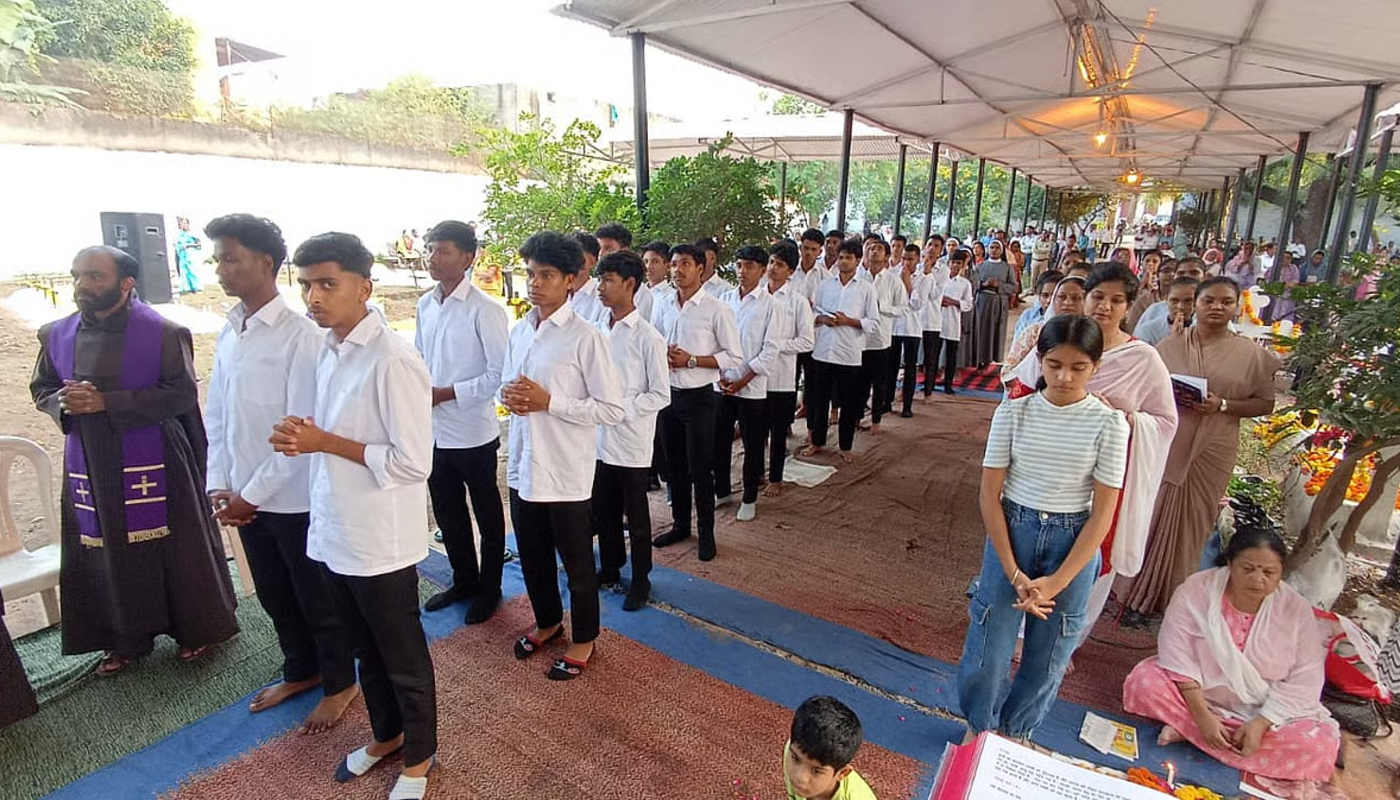
Case Summary
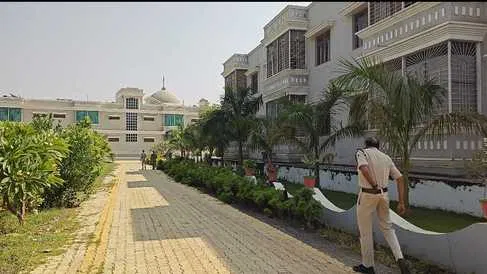
26 tribal Hindu children were forcefully converted and taken to a Bishop’s camp in Gwalior, Madhya Pradesh. The children belonged to poor tribal Hindu families from Madhya Pradesh, Odisha, Jharkhand, Chhattisgarh and Kerala. They were collected with promises of education, care and a better future. Police and intelligence teams raided the Bishop’s Residence campus in Baragaon and found the children inside a centre run by a Christian organisation. Investigation revealed that the children were being trained in religious doctrine and spiritual activities with the aim of preparing them to become Christian preachers. Officials even confirmed that one of the children had recently been made a deacon in Dabra. The module was being operated under Bishop Joseph Tycattil, while Father Harshal A X was responsible for their food and teaching. Authorities also learned that religious rituals linked to this training were carried out in rural churches outside the city, away from public scrutiny. Families had sent their children because the missionaries promised them education and support, which raised suspicion that poverty was used as a tool to convert the minor tribal Hindus. The Bishop’s administration denied forced conversion and claimed this was just “social education”, but the organised religious training found on site contradicted this claim. Police began an investigation into the incident.
Case Images

Why it is Hate Crime ?
The primary category in this case is: Predatory Proselytisation. The first subcategory under this is: Conversion/ attempts to convert by inducement. Predatory Proselytisation is not just limited to threat, harassment, force and violence, but it also has contours of stealth. In several cases, the Hindu victim is exploited to convert, with non-Hindus taking advantage of their poverty. In such cases, the Hindu victim who is suffering financially is offered monetary benefits, including lucrative offers for jobs, health treatment, education, etc, to induce the victim into changing his/her religion. In such cases, the religious identity of the victim and the aim to disenfranchise him from his faith form the heart of the crime. Also, taking advantage of and exploiting an individual’s economic vulnerabilities is widely acknowledged as exploitation, forms of which are often penalised by law. Such cases therefore are considered religiously motivated hate crimes since the victim’s religious identity forms the very heart of the crime itself. The second subcategory under this is: Proselytisation by grooming, brainwashing, manipulation or subtle indoctrination, and the tertiary categories are- Pattern of targeting Hindus and Conversion of minors. Religious brainwashing essentially means the often subtle and forcible indoctrination to induce someone to give up their religious beliefs to accept contrasting, regimented ideas. Religious grooming or brainwashing also involves propaganda and manipulation. It involves the systematic effort, driven by religious malice and indoctrination, to persuade “non-believers’ to accept allegiance, command, or doctrine to and of a contrasting faith. Cases of such grooming or brainwashing are far more nuanced than direct threats, coercion, inducement and violence. In such cases, it is often seen that there is repeated, subtle and continual manipulation of the victim to induce disaffection towards their own faith and acceptance of the contrasting faith of the perpetrator. While subtle indoctrination is widely acknowledged as predatory, an element which is often understated in such conversions or the attempts of such conversion is the role of loyalty and trust which might develop between the perpetrator and the victim. Fiduciary relationships are often abused to affect such religious conversion. For example, an educator transmitting religious doctrine of a competing faith to a Hindu student. The Hindu student is likely to accept what the teacher is transmitting owing to the existence of the fiduciary relationship. The exploitation of the fiduciary relationship to religiously indoctrinate victims would also be included in this category. Since the underlying animosity towards the victim’s faith forms the basis of predatory proselytisation, such cases are considered religiously motivated hate crimes. This case has been added to the Hinduphobia Tracker because it represents a layered and structured form of predatory proselytisation where the target population was not only Hindu, but was deliberately chosen from a demographically vulnerable group: tribal Hindu children from financially distressed households. The conversion activity was not incidental or peripheral. It took the form of a closed training regime where the minors were relocated out of their cultural and village ecosystems and placed under the supervision of an organised religious network, with explicit indoctrination aimed at preparing them for Christian religious roles. The inducement in this case is central to the crime. The children were brought with the promise of education, care and improved life prospects. This indicates that the conversion process utilised economic deprivation and the aspiration for basic upliftment to manufacture assent. The targeted inducement of minors from poor households is not a social welfare programme. It is a coercive method of creating religious dislocation by exploiting vulnerability and need. This case also reflects the second layer of predatory conversion methodology identified in the Tracker: subtle grooming and indoctrination. The children were not converted through a one-time ritual. They were placed inside a controlled environment where doctrine, religious discipline and spiritual exercises formed an ongoing routine. When minors are subjected to such a routine, the distinction between education and indoctrination disappears. The mentor-child relationship is restructured into a conduit for altering belief systems. Since minors cannot meaningfully consent or grasp the nature and consequences of religious abandonment, the conversion process from the outset lacks any legitimate autonomy. The fact that at least one child had already been made a deacon indicates that the conversion trajectory was advanced and that the institutional network had already begun to incorporate the converted minor into a chain of religious function. This shows that the activity is not a random one-off case, but a structured pipeline. This case, therefore, fits squarely into the definition of Hinduphobic hate crime. The victims were Hindu, and their Hindu identity was the variable being targeted for removal. Their poverty was used as the entry point. Their age was used as the vulnerability. Their isolation from their community was used as the mechanism. The conversion was achieved not through discourse or conviction but through inducement, manipulation and institutional influence. Because the core objective was to separate these Hindu minors from their inherited faith and integrate them into a religious system that requires abandonment of their Hindu identity, this incident meets the criteria of religiously motivated animus against Hindus and rightly forms part of this Tracker. Moreover, since the victims were minors, it indicates a lack of consent and a genuine change of conscience. It is a well-established fact that children are more susceptible to manipulation since they are still developing emotionally, cognitively, and socially. Their brains are not fully mature, making them more vulnerable to influence and less capable of critically evaluating information. Moreover, subtle manipulation tactics can be difficult to detect, especially when employed by trusted authority figures in positions of influence. This makes it challenging for parents to identify and address instances of religious manipulation. Consequently, cases involving religious manipulation of minors not only represent an infringement on an individual's religious freedom but also demonstrate a calculated strategy of targeting those who are less able to resist or understand the long-term implications of conversion, making it a significant case of religiously motivated hate crime. For this reason, this case has been added to the tracker. Disclaimer: Since no date has been mentioned regarding when these children were taken to the camp or when the conversion process began, the date on which the matter was reported in the media has been taken as the date of the incident for documentation purposes. Disclaimer: Since no gender wise breakdown was provided, for documentation clarity, the Hinduphobia Tracker has applied a proportional demographic estimate based on India’s Census 2011 and NFHS 5 (2019 to 2021) rural population data. Accordingly, the 26 minors have been recorded as 13 males and 13 females, reflecting an equal gender distribution consistent with typical rural tribal demographics. Disclaimer: The number of perpetrators has been set to 2 because one Bishop and one Father were specifically identified in reports. There were other actors involved in the system, but as a conservative figure for documentation purposes, the perpetrator count has been recorded as 2.
Victim Details
Total Victim
26
Deceased
0
Gender
- Male 13
- Female 13
- Third Gender 0
- Unknown 0
Caste
- SC/ST 26
- OBC 0
- General 0
- Unknown 0
Age Group
- Minor 26
- Adult 0
- Senior Citizen 0
- Unknown 0


Case Status
Complaint filed


Perpetrators Details
Perpetrators
Christian Extremists
Perpetrators Range
From 2 To 5
Perpetrators Gender
male
 Sources




