Adivasi Hindu family converted to Christianity through illness cure lure and promised money and house
 Barwani, Madhya Pradesh, India
  3 November, 2025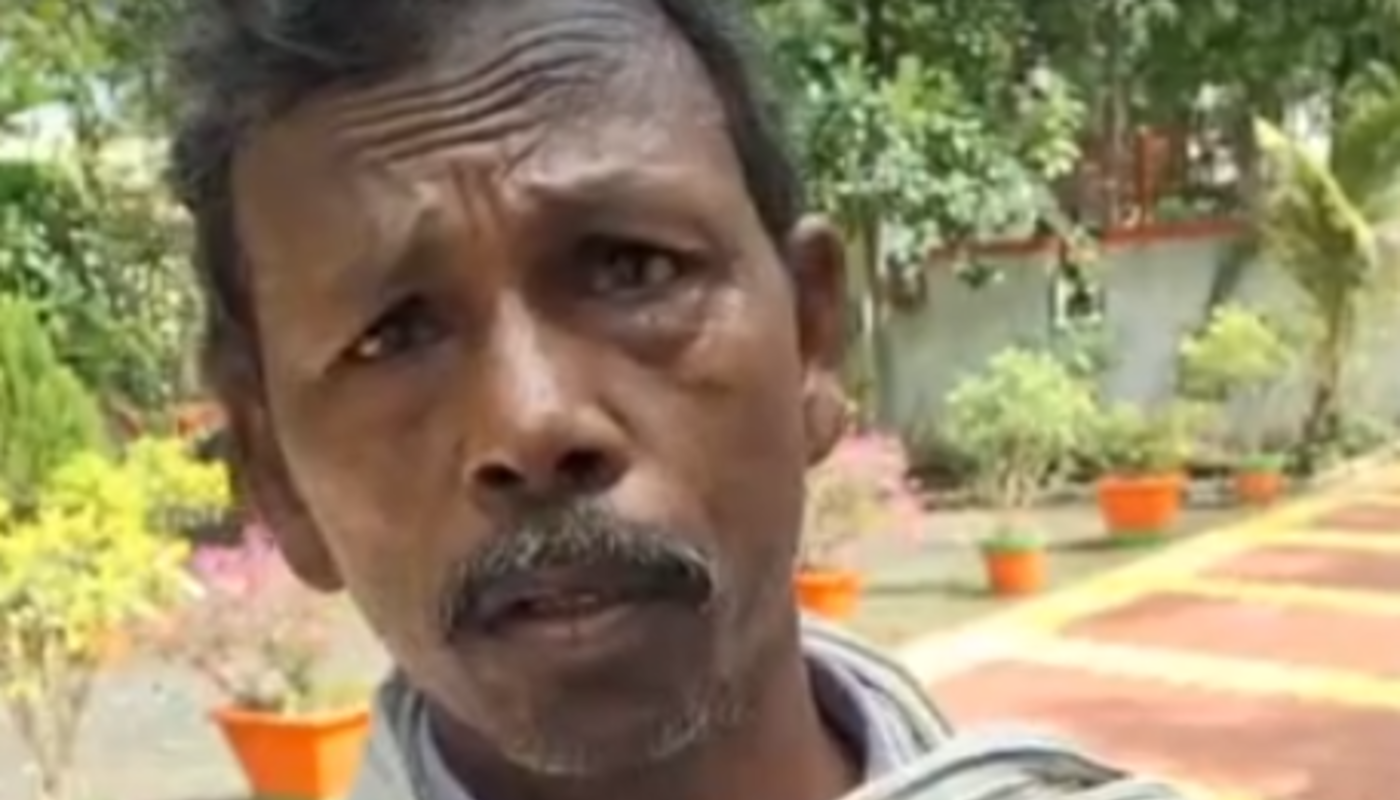
Case Summary
An Adivasi Hindu family in Barwani, Madhya Pradesh, was converted to Christianity by giving false hope of an illness cure and promises of money and a house. The victim, Pyara Singh of Temla village in Rajpur tehsil, submitted a complaint stating that a man named Suresh, along with some people from Chandigarh, targeted him and his family. First, Suresh and Anil became friends with him and then pressured him to meet their contacts in Chandigarh. He was repeatedly told that his illness would be cured only if he adopted Christianity and worshipped “Jesus.” According to the victim, he was stopped from going to a doctor and told to only pray to Jesus. His conversion and religious rituals were conducted at multiple places. He was also promised money and benefits. He stated that he was given a house in Temla Buzurg after leaving his native village, Hatpala. He now wanted to return to Hindu Dharma, but was being pressured not to leave Christianity. Social worker Sanjay Gupta helped him submit the complaint at the office of Rajya Sabha MP Sumer Singh Solanki. However, the MP could not meet him because he was in Bhopal. Sanjay Gupta demanded strict action, stating that many innocent Adivasi Hindus in this tribal region are being converted by luring them with money and fake assurances of healing.
Why it is Hate Crime ?
The primary category in this case is: Predatory Proselytisation. The first subcategory under this is: Conversion/ attempts to convert by inducement. Predatory Proselytisation is not just limited to threat, harassment, force and violence, but it also has contours of stealth. In several cases, the Hindu victim is exploited to convert, with non-Hindus taking advantage of their poverty. In such cases, the Hindu victim who is suffering financially is offered monetary benefits, including lucrative offers for jobs, health treatment, education, etc, to induce the victim into changing his/her religion. In such cases, the religious identity of the victim and the aim to disenfranchise him from his faith form the heart of the crime. Also, taking advantage of and exploiting an individual’s economic vulnerabilities is widely acknowledged as exploitation, forms of which are often penalised by law. Such cases therefore, are considered religiously motivated hate crimes since the victim’s religious identity forms the very heart of the crime itself. The second subcategory under this is: Proselytisation by grooming, brainwashing, manipulation or subtle indoctrination. Religious brainwashing essentially means the often subtle and forcible indoctrination to induce someone to give up their religious beliefs to accept contrasting regimented ideas. Religious grooming or brainwashing also involves propaganda and manipulation. It involves the systematic effort, driven by religious malice and indoctrination, to persuade “non-believers’ to accept allegiance, command, or doctrine to and of a contrasting faith. Cases of such grooming or brainwashing are far more nuanced than direct threats, coercion, inducement and violence. In such cases, it is often seen that there is repeated, subtle and continual manipulation of the victim to induce disaffection towards their own faith and acceptance of the contrasting faith of the perpetrator. While subtle indoctrination is widely acknowledged as predatory, an element which is often understated in such conversions or the attempts of such conversion is the role of loyalty and trust which might develop between the perpetrator and the victim. Fiduciary relationships are often abused to affect such religious conversion. For example, an educator transmitting religious doctrine of a competing faith to a Hindu student. The Hindu student is likely to accept what the teacher is transmitting owing to existence of the fiduciary relationship. The exploitation of the fiduciary relationship to religiously indoctrinate victims would also be included in this category. Since the underlying animosity towards the victim’s faith forms the basis of predatory proselytization, such cases are considered religiously motivated hate crimes. The third subcategory under this is: Harassment, threats, coercion for conversion. Harassment covers a wide range of behaviours of an offensive nature. It is commonly understood as behaviour that demeans, humiliates, and intimidates a person, including threats and coercion. Harassment and threats, in this case, find their root on discriminatory grounds which has the effect of nullifying a person’s rights or infringing upon his freedom to exercise his right specifically owing to the victim’s religious identity. Verbal and physical threats and psychological or physical harassment are often used against Hindu victims because they choose to practice their professed religion. Religious harassment also includes forced and involuntary conversions by harassment, threats or coercion. Coercion includes intimidatory tactics like force-feeding a Hindu victim beef to convert to another religion, forceful circumcision etc. In several cases documented, non-Hindu perpetrators or those who harbour specific animosity towards Hinduism, harass victims simply based on their religious identity. Such cases often also include harassment to ensure the Hindu victim abandons his/her professed religion and adopts the religion of the perpetrator. Such cases where Hindu victims are harassed to convert to the perpetrator’s religion are rooted in animosity towards the victim’s religious identity and are therefore documented as religiously motivated hate crimes. This case has been entered into the Hinduphobia Tracker because it represents a layered, structured, predatory and manipulative conversion of a poor Adivasi Hindu family by using illness, poverty and material vulnerability as the lever to detach them from Hindu Dharma. The victim himself has stated that he did not convert to Christianity out of personal conviction or intellectual belief. He was repeatedly told that his illness would be cured only if he abandoned Hindu Dharma. This is not a religious interaction. This is religious exploitation. This case fits the subcategory Conversion by inducement because the victim was directly promised money, a house and healing. These promises were part of the conversion machinery. They were not incidental side comments. They were the actual inducement offered to ensure that the victim and his family agreed to the religious switch. In addition to inducement, the perpetrators built trust over time through befriending him, cultivating personal contact, repeatedly taking him to different places, and slowly shifting his allegiance from Hindu Dharma to a foreign faith tradition. This gradual method of influencing a Hindu victim through emotional trust and dependency is one of the most common patterns documented in tribal belt conversions. Religious conversion conducted by telling a seriously ill Hindu that he must not go to a doctor, and instead pray only to Jesus, is a direct weaponisation of suffering and disease to attack Hindu identity. This is Hinduphobia because the primary target of the act is the Hindu civilisational identity of the victim. The aim was not to help his life condition. The aim was to convert him by withholding medical care and replacing it with a religious command. This case also fits the tertiary category of harassment and coercion. Once converted, the victim was pressured to remain in Christianity and was stopped from returning to Hindu Dharma. The moment a victim expresses the desire to return to his ancestral faith and is stopped by threat or pressure, the coercive nature of the conversion becomes even clearer. The victim himself has stated that he now wanted to return to Hindu Dharma but was being prevented. The Hinduphobia Tracker documents predatory proselytisation because it is fundamentally an attack on Hindu identity. It is not the presence of a religion, but the rejection of the Hindu identity and the active dismantling of it that makes this a hate crime. When illness is used as a weapon and vulnerability is used as an access point, the core intention becomes visible. The perpetrators are not offering religion. They are taking away Hindu Dharma using inducement and manipulation. That is precisely why this case has been documented here. Disclaimer: Since the exact date of conversion is not mentioned in reports, the date the news appeared in the media has been taken as the date of the incident for documentation purposes. Disclaimer: The number of victims has been set to 5 because the entire family was converted. We have taken 5 as the reference figure for documentation.
Victim Details
Total Victim
5
Deceased
0
Gender
- Male 0
- Female 0
- Third Gender 0
- Unknown 5
Caste
- SC/ST 5
- OBC 0
- General 0
- Unknown 0
Age Group
- Minor 0
- Adult 0
- Senior Citizen 0
- Unknown 5


Case Status
Complaint filed


Perpetrators Details
Perpetrators
Christian Extremists
Perpetrators Range
One Person
Perpetrators Gender
male
 Sources




