Hindu students face hostility as US University hosts biased panel portraying Hindutva as a global menace
 New Brunswick, New Jersey, United States
  27 October, 2025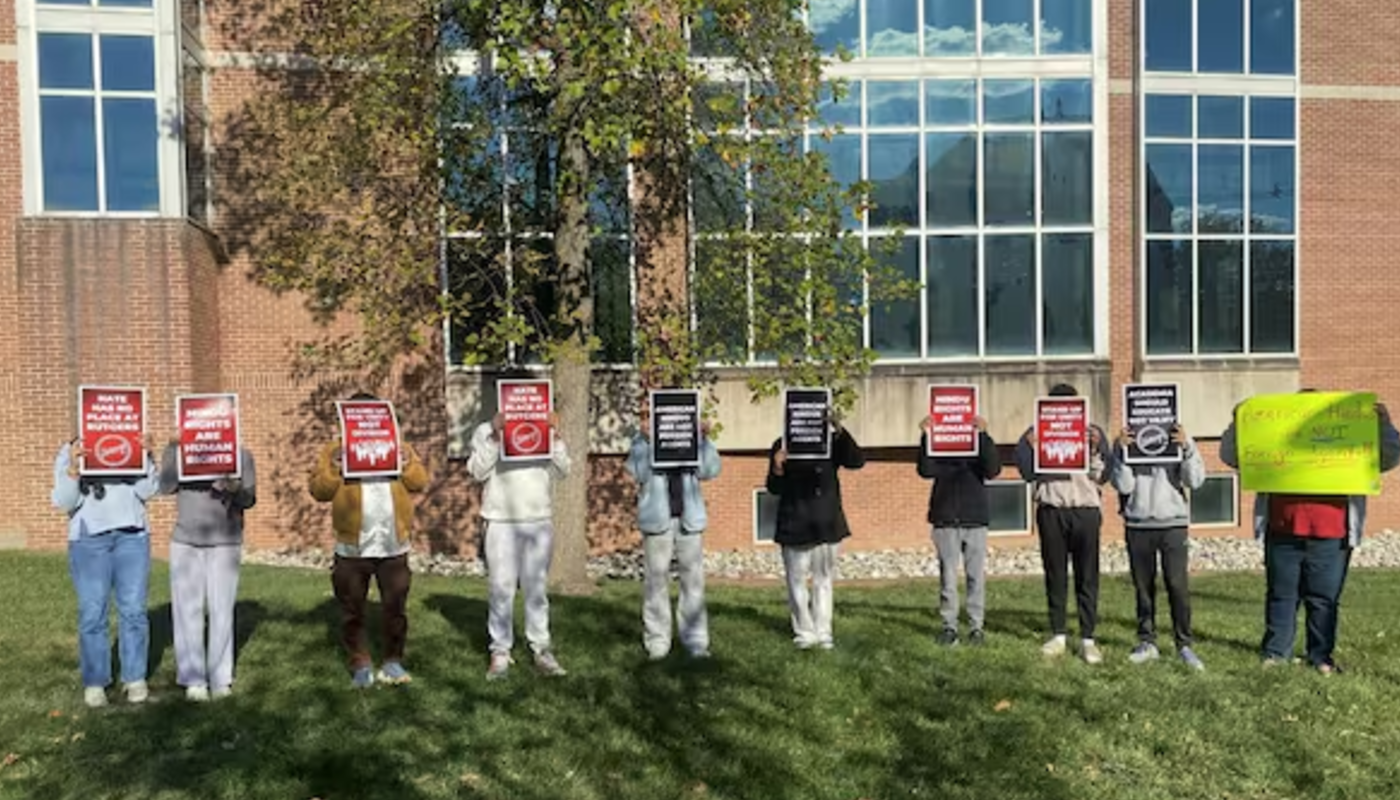
Case Summary
A panel discussion titled Hindutva in America: A Threat to Equality and Religious Pluralism was held at Rutgers University in New Jersey on October 28, 2025. The event targeted Hindutva, describing it as a transnational far-right political ideology rooted in Hindu supremacy. According to the panellists, Hindu nationalism promotes a rigid form of ethnonationalism that seeks to redefine India’s secular democracy into an exclusively Hindu state, marginalising religious minorities, particularly Muslims. The programme also stressed that Hindu nationalism is distinct from Hinduism, despite Hindutva proponents’ attempts to claim representation of the global Hindu community. This followed after a research paper was presented by Rutgers in June 2025. The discussion, framed as an academic inquiry, attracted criticism from multiple quarters. Four U.S. lawmakers, Democrats Suhas Subramanyam, Shri Thanedar, Sanford Bishop, and Republican Dr. Rich McCormick, wrote to Rutgers University President Jonathan Holloway, urging the institution to clarify that it did not officially endorse the event. They argued that the programme’s title and framing risked promoting bias against an entire faith community. The Coalition of Hindus of North America (CoHNA), a Hindu advocacy organisation, strongly condemned the event. It asserted that the panel had excluded practising Hindus while making sweeping and uninformed claims about their religion and culture. CoHNA further stated that the organisers silenced participants who questioned or challenged the speakers’ statements. In response, several Hindu students organised a peaceful and officially permitted protest outside the venue. The demonstration reportedly turned tense when a supporter of the panel behaved aggressively toward the students. According to Rutgers’ campus news site, some faculty members joined the protest in solidarity. One of the student participants, speaking anonymously, said, “It was scary to see an adult trying to dox us.”
Why it is Hate Crime ?
The primary category in this case is: Hate speech against Hindus. The subcategory under this is: Anti-Hindu slurs, mocking faith. Anti-Hindu slurs and the deliberate mocking of the Hindu faith owing to religious animosity involve the usage of derogatory terms, stereotypes, or offensive references to religious practices, symbols, or figures. One of the common anti-Hindu slurs used against Hindus is “cow-worshipper” and “cow piss drinker”. The intention of using this term is to demean and mock Hindus as a group and their religious beliefs since Hindus consider the cow holy. Additionally, some symbols and the slurs attached to them have a historical context that exacerbates the insult, hate, stereotyping, dehumanisation and oppression against Hindus. Cow worship has been used for centuries to denigrate Hindus, insult their faith and oppress Hindus specifically as a religious group. There has been overwhelming documentation about how cow slaughter has been used to persecute Hindus with cow meat being thrown in temples and places of worship. There has also been overwhelming documentation where cow meat (beef) has been force-fed to Hindus to either forcefully convert them to Islam or denigrate their faith. Apart from cow worship, the Swastika – which holds deep religious significance for the Hindus – has also been misinterpreted and distorted to use as a slur against Hindus. Similarly, the worship of the Shivling has been used by supremacist ideologies and religions to denigrate Hindus owing to religious animosity. Such slurs and denigration stem out of inherent animosity and hate towards Hindus and their faith, therefore, it is categorised as hate speech targeted at Hindus specifically owing to their religious identity. The inclusion of this case in the tracker arises from the systematic denigration of Hindu identity and the intellectual framing of Hindutva as a supremacist ideology within a Western academic setting that disregards the lived reality and diversity of Hindu thought. The panel discussion at Rutgers University, while presented as an exercise in pluralistic discourse, effectively normalised anti-Hindu bias by portraying Hindutva as a threat to democracy and pluralism without offering space for practising Hindus or scholars representing the tradition’s internal plurality. The exclusion of Hindu voices from an event ostensibly about Hindu identity perpetuates a long-standing trend in Western academia where Hindu belief systems are filtered through ideological prisms that equate cultural assertion with extremism. This treatment transforms a theological and cultural discourse into a political stereotype, thereby fuelling prejudice and suspicion toward Hindus globally. Such discourse, when amplified institutionally, nurtures an environment of hate speech under the guise of scholarship, where Hindu symbols, traditions, and philosophies are dismissed or mocked as relics of chauvinism rather than expressions of civilisation and faith. This case represents hate speech against Hindus because it institutionalises a narrative that vilifies an entire faith community by conflating its cultural identity with political extremism. When universities allow panels that selectively frame Hindutva as an inherently violent or exclusionary ideology while silencing Hindu perspectives, they legitimise discrimination in academic and social spaces. This reinforces stereotypes that Hindus who take pride in their faith or cultural heritage are complicit in oppression. The systematic marginalisation of Hindu voices in global discourse, coupled with the historic use of anti-Hindu slurs, contributes to a continuum of intellectual and cultural hate targeting Hindus for their religious identity rather than their political views. At its core, Hindutva, in its philosophical sense, is not an instrument of domination but a civilisational assertion of belonging. It draws upon the expansive ethos of Sanatan Dharma, which regards the world as one family, Vasudhaiva Kutumbakam. In this understanding, Hindutva is not antagonistic to other faiths but seeks to preserve the dignity, heritage, and continuity of a civilisation that has historically endured invasions, colonial distortions, and cultural erasure. It embodies cultural self-respect, the right to narrative sovereignty, and a call for equitable representation in global discourse. 'Hindutva' is often used as a euphemism to make the targeting of Hindus more palatable. Hindutva is essentially a unifying ideology for Hindus, which became imperative for Hindus to find and preserve their cultural identity, which was being eroded and attacked due to Islamic invasions, British colonisation, Christian theological impositions and conversions. Hindutva is not a destructive ideology, as some attempt to portray, but one that is used as a unifying edifice for Hindus. Hindutva is also often used as a euphemism to target Hindus on the whole and their religious identity and faith. It is essentially semantic jugglery to confuse Hindus into believing that their own persecution by supremacists is somehow 'justified' because the specific victims espoused an ideology (Hindutva) which deserves the onslaught. The fact that the use of 'Hindutva' is merely to mask animosity towards Hindus was evident from the "Dismantling Global Hindutva" conference held in the USA, where speakers unabashedly spoke about how Hindutva and Hinduism are indistinguishable and therefore, to "dismantle Hindutva" one would have to "dismantle Hinduism". The practices of targeting Hindus and their religious and cultural identity, and justifying that victimisation and dehumanisation by using euphemisms like "Hindutva", stem from inherent animosity and hostility towards Hindus. Far from being a threat to pluralism, the genuine idea of Hindutva as envisioned by its philosophical forebears upholds coexistence and diversity as intrinsic to the Indian spirit. Its reclamation, therefore, must be understood not as an act of exclusion, but as a reaffirmation of Hindu identity against centuries of denigration and misrepresentation.


Case Status
Unknown


Perpetrators Details
Perpetrators
Others
Perpetrators Range
Unknown
Perpetrators Gender
unknown
 Sources




