Hindu man beaten by Muslim youths after days of communal tension between local groups in Azamgarh, Uttar Pradesh
 Azamgarh, Uttar Pradesh, India
  24 October, 2025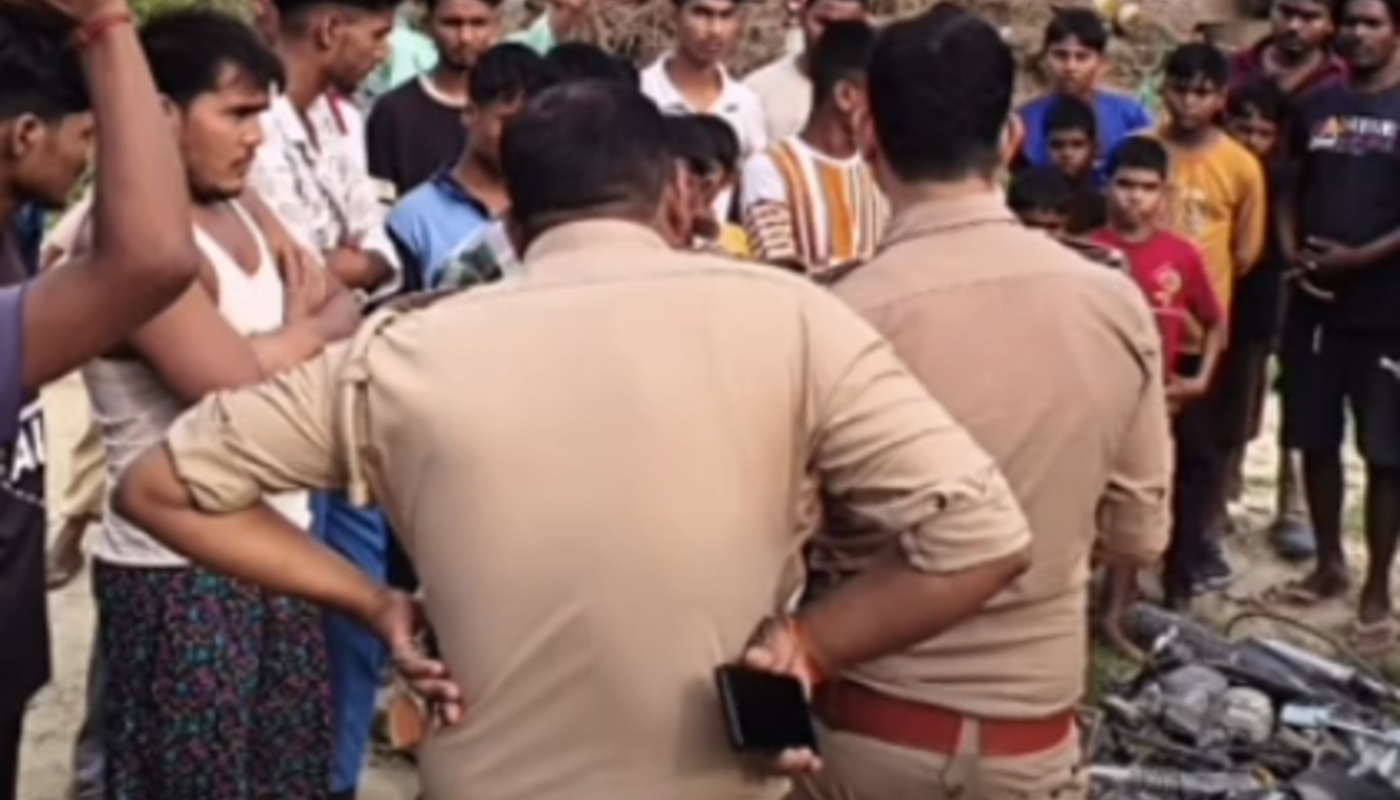
Case Summary
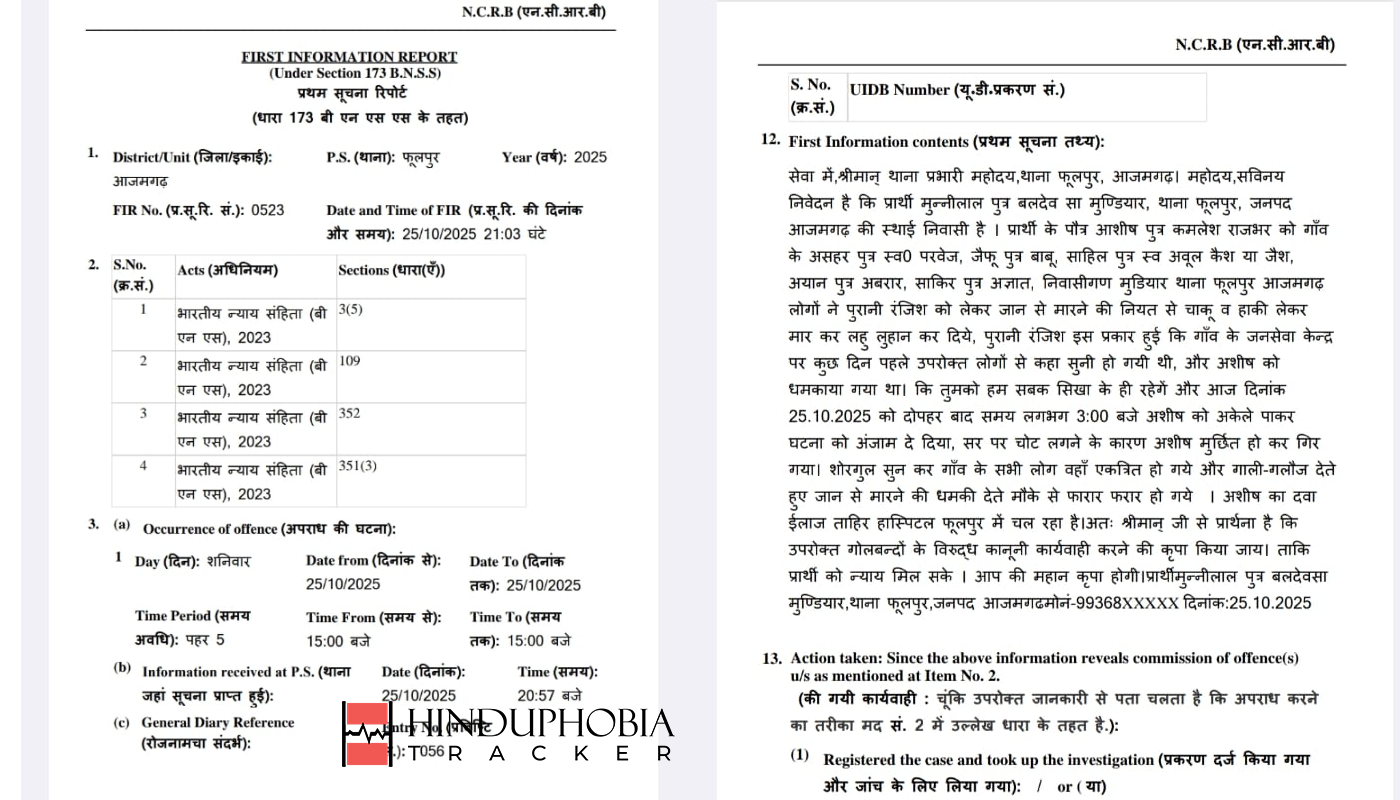
A Hindu man was attacked by a group of Muslim youths in Mundiyar village under the Phoolpur police station area of Azamgarh district, Uttar Pradesh. The victim, identified as Ashish, son of Kamlesh, was surrounded and brutally beaten on the evening of 25 October 2025, leaving him severely injured in the head and unconscious on the spot. The assault followed a previous altercation between boys from the Rajbhar locality and children belonging to the Muslim community, which had created tension in the area for several days. After the incident, Ashish’s family members and local residents gathered at the scene, prompting police intervention to prevent further violence. A heavy police force led by Senior Inspector Gangaram Bind arrived to restore order, and the injured Ashish was rushed to the Community Health Centre for medical treatment. Ashish’s grandfather, Munnilal, lodged a complaint naming four perpetrators, including Ashhad, son of Parvez. Based on the complaint, the police registered a case and arrested Ashhad, while the remaining three accused were absconding. Police forces remained deployed in the village to maintain peace and prevent any further communal tension.
Case Images
Why it is Hate Crime ?
The primary category in this case is: Attack not resulting in death. The subcategory under this is: Communal clash/attack Communal clash is a form of collective violence that involves clashes between groups belonging to different religious identities. For a communal clash between Hindus and non-Hindus to qualify as a religiously motivated hate crime, the trigger of the violence itself would have to be anti-Hindu in essence. For example, if there is a Hindu religious procession that comes under attack from a non-Hindu mob and after the initial attack, Hindus retaliate in self-defence, leading to a communal clash between the two religious communities. While at a later stage, both communities are involved in the clash/violence, the initial trigger of the violence was by the non-Hindu mob against the Hindus and therefore, it could safely be termed as an anti-Hindu violence. Further, the trigger would also have to be religiously motivated. In the cited example, the attack by the non-Hindu mob was against religious processions and therefore, can be concluded to be religiously motivated. In some cases, the trigger may be non-religious, however, it develops into religious violence against Hindus at a later stage. In such cases too, the foundational animosity towards Hindus becomes the motivating factor of the crime and therefore, it would be classified as a religiously motivated hate crime against Hindus under this category. This incident has been categorised as a communal attack because the violence against the Hindu victim arose directly from an ongoing religiously charged dispute between Hindu and Muslim residents of the village. The assault on Ashish did not occur in isolation but followed an earlier clash between boys from the Rajbhar locality and children belonging to the Muslim community, which had already created a tense communal environment. Since the initial trigger itself was rooted in Hindu Muslim conflict, the subsequent targeting of a Hindu youth by a group of Muslim youths was an extension of that same communal hostility. The attack on Ashish was therefore not a personal dispute or a spontaneous act of violence. It took place within a clear pattern of religious tension where the Hindu side and the Muslim side had already been in conflict. By surrounding and brutally beating a young Hindu man during a period of heightened communal strain, the perpetrators acted in a manner driven by group-based religious hostility rather than individual grievance. Because the violence stemmed from an already active religious dispute and was carried out by members of one community against a Hindu victim from the other, the case fits the definition of a communal attack and has been recorded as such in the tracker.
Victim Details
Total Victim
1
Deceased
0
Gender
- Male 0
- Female 0
- Third Gender 0
- Unknown 1
Caste
- SC/ST 1
- OBC 0
- General 0
- Unknown 0
Age Group
- Minor 0
- Adult 0
- Senior Citizen 0
- Unknown 1


Case Status
Case sub-judice


Perpetrators Details
Perpetrators
Muslim Extremists
Perpetrators Range
From 2 To 5
Perpetrators Gender
male
 Sources




