Attack on Hindu religious sentiments: Canadian Christian influencer denigrates Diwali celebrations on social media
 Cape Breton County, Nova Scotia, Canada
  22 October, 2025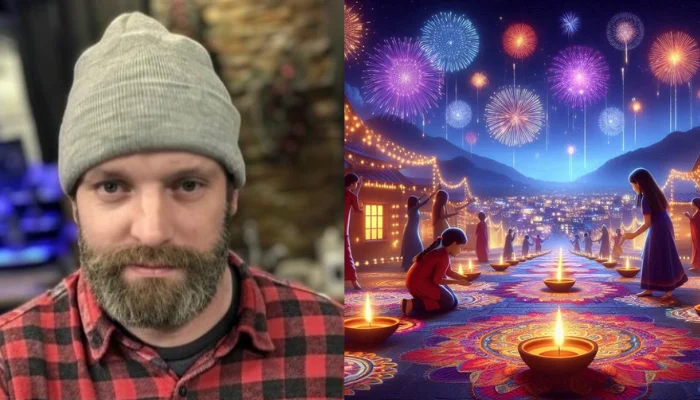
Case Summary
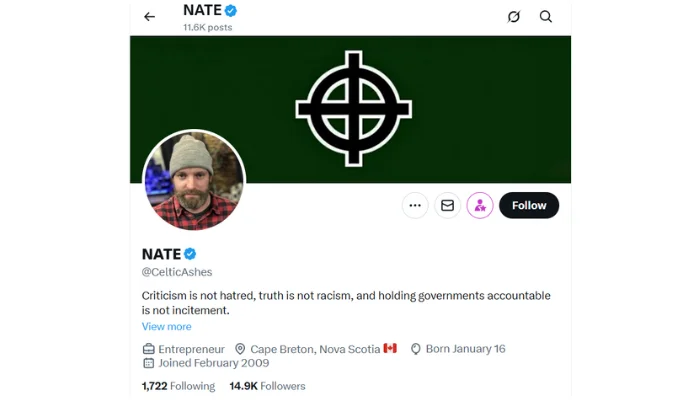
A derogatory remark targeting Diwali, a revered Hindu festival, was made on social media by a Canadian Christian influencer named Nate, who used the username "@celticashes" on X (formerly Twitter). Diwali, also known as Deepavali, holds profound importance for Hindus as it symbolises the victory of light over darkness, good over evil, and knowledge over ignorance. It commemorates the return of Lord Rama to Ayodhya after defeating the demon king Ravana, representing the triumph of righteousness (dharma) and virtue. The festival also celebrates the divine feminine energy through Goddess Lakshmi, who symbolises wealth, prosperity, and good fortune, and through Goddess Kali, who represents the destruction of evil forces. Diwali unites Hindu families and communities in prayer, celebration, and renewal, encouraging spiritual cleansing, positive beginnings, and harmony. The accused describes himself as a “Christian nationalist” on his X handle, where he has 14,900 followers. On 23rd October 2025, he posted a video showing Hindus bursting crackers in Canada, with cracker waste scattered on the road. Along with the video, he uploaded a post denigrating both Hindus and the Diwali festival itself. The accused wrote: “Just like that, we’ve let braindead f*cking Indians turn our beautiful Western countries into total shitholes with their retarded Diwali garbage that has zero to do with us.”
Case Images
Why it is Hate Crime ?
This case has been added to the tracker under the primary category- Hate Speech against Hindus. Within this, the subcategory selected is- Anti-Hindu slurs, mocking faith. Anti-Hindu slurs and the deliberate mocking of the Hindu faith owing to religious animosity involve the usage of derogatory terms, stereotypes, or offensive references to religious practices, symbols, or figures. One of the common anti-Hindu slurs used against Hindus is “cow-worshipper” and “cow piss drinker”. The intention of using this term is to demean and mock Hindus as a group and their religious beliefs since Hindus consider the cow holy. Additionally, some symbols and the slurs attached to them have a historical context that exacerbates the insult, hate, stereotyping, dehumanisation and oppression against Hindus. Cow worship has been used for centuries to denigrate Hindus, insult their faith and oppress Hindus specifically as a religious group. There has been overwhelming documentation about how cow slaughter has been used to persecute Hindus with cow meat being thrown in temples and places of worship. There has also been overwhelming documentation where cow meat (beef) has been force-fed to Hindus to either forcefully convert them to Islam or denigrate their faith. Apart from cow worship, the Swastika – which holds deep religious significance for the Hindus – has also been misinterpreted and distorted to use as a slur against Hindus. Similarly, the worship of the Shivling has been used by supremacist ideologies and religions to denigrate Hindus owing to religious animosity. Such slurs and denigration stem out of inherent animosity and hate towards Hindus and their faith, therefore, it is categorised as hate speech targeted at Hindus specifically owing to their religious identity. In this case, the derogatory remark made by the Christian influencer constituted an explicit instance of anti-Hindu hate speech targeting both the Hindu community and their revered festival Diwali. The accused denigrated the festival under the pretext of caring about garbage waste. Instead of addressing the environmental concern in a reasonable manner, he chose to abuse the Hindu festival itself, calling it “retarded” and using the same slur for Indians, who in this context clearly referred to Hindus celebrating Diwali. This language reflected deep-seated contempt and hostility towards Hindus and their beliefs. Such abusive speech went far beyond social commentary or environmental criticism and exposed a deeply ingrained prejudice against Hindu traditions and religious expressions. Some may argue that the accused was merely criticising the garbage left after celebrations. However, if that were his intent, he could have limited his post to highlighting the issue of public waste disposal — a subject relevant to many events in Canada, including fireworks celebrations during the Christian New Year. The fact that he remained silent during those occasions but chose to voice his outrage only during Diwali revealed his selective bias. His criticism was not environmental but communal — arising from resentment towards the Hindu festival and those who celebrated it. By calling Diwali “retarded,” he vilified a sacred Hindu celebration that symbolises the victory of light over darkness and good over evil, making his remarks a clear case of religiously motivated hate speech. Furthermore, the post went beyond attacking the festival — it directly demeaned Hindus themselves. By referring to them as “braindead f*cking Indians,” the accused engaged in open abuse of a faith community, demeaning their identity, faith, and culture. Such language reflected religious hatred, which sought to dehumanise and ridicule Hindus and their religious expressions. This type of hatred aligns with the supremacist mindset rooted in the belief systems of Abrahamic faiths like Christianity, which regard their faith as absolute and view followers of other religions as inferior or misled. The accused's remark exemplified such intolerance, showing clear religious hostility towards Hindus and their practices. Given that this case meets multiple criteria of anti-Hindu hate speech, it is being added to the Hate Crime Database of the Hinduphobia Tracker.


Case Status
Unknown


Perpetrators Details
Perpetrators
Christian Extremists
Perpetrators Range
One Person
Perpetrators Gender
male
 Sources




