Hindus attacked by Muslims over bursting firecrackers during Diwali celebrations in Sambhal, Uttar Pradesh
 Sambhal, Uttar Pradesh, India
  19 October, 2025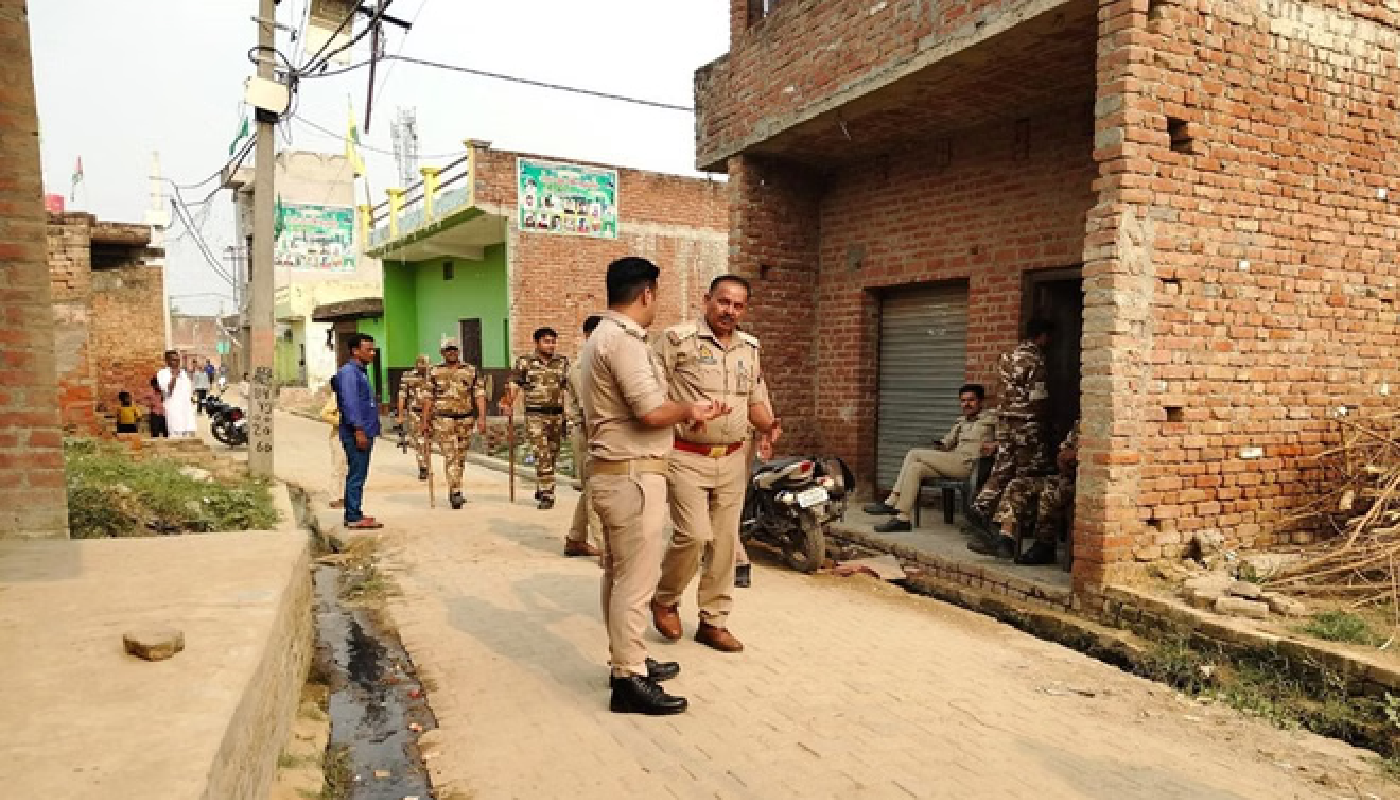
Case Summary
Hindus were attacked in Ahmednagar Thresa, a Hindu-majority village in Baniyather, Sambhal, during Diwali celebrations. The incident occurred following a dispute among teenagers over bursting firecrackers. On the night of Diwali (20 October 2025), members of the Muslim community, including Sadiq, Arif, Faheem, Mohammad, As Mohammad, Noorul, Ahsan Mohammad, and Suleman, confronted Hindu teenagers, including Tanish, son of Dharm Singh, and used abusive language. When Tanish protested, he was reportedly brutally beaten and sustained a severe cut near his eye from a sharp weapon. Several people, including a minor, were injured during the altercation. Stones were thrown from rooftops and across the village, causing further injuries and escalating tensions. Police and Rapid Response Force personnel were deployed to restore order. The Hindu community filed complaints against three named and several unidentified attackers, and authorities continued investigations to manage tensions and ensure safety in the village.
Why it is Hate Crime ?
The primary category in this case is: Attack not resulting in death. The subcategory under this is: Attacked for Hindu identity. In several cases, Hindus are attacked merely for their Hindu identity without any perceived provocation. A classic example of this category of religiously motivated hate crime is a murder in 2016. 7 ISIS terrorists were convicted for shooting a school principal in Kanpur because they got ‘triggered’ seeing the Kalava on his wrist and tilak that he had put. In this, the Hindu victim had offered no provocation except for his Hindu religious identity. The motivation for the murder was purely religious, driven by religious supremacy. Such cases where Hindus are targeted merely for their religious identity would be documented as a hate crime under this category. Another subcategory under this is: Communal clash/attack. Communal clash is a form of collective violence that involves clashes between groups belonging to different religious identities. For a communal clash between Hindus and non-Hindus to qualify as a religiously motivated hate crime, the trigger of the violence itself would have to be anti-Hindu in essence. For example, if there is a Hindu religious procession that comes under attack from a non-Hindu mob and after the initial attack, Hindus retaliate in self-defence, leading to a communal clash between the two religious communities. While at a later stage, both communities are involved in the clash/violence, the initial trigger of the violence was by the non-Hindu mob against the Hindus and therefore, it could safely be termed as an anti-Hindu violence. Further, the trigger would also have to be religiously motivated. In the cited example, the attack by the non-Hindu mob was against religious processions and therefore, can be concluded to be religiously motivated. In some cases, the trigger may be non-religious, however, it develops into religious violence against Hindus at a later stage. In such cases too, the foundational animosity towards Hindus becomes the motivating factor of the crime and therefore, it would be classified as a religiously motivated hate crime against Hindus under this category. The second category under which this incident has been placed is- Attack on Hindu religious representations. Within this, the subcategory selected is- Defiling religious customs. Sanatan Dharma is not a religion of one book, which is to say that while it has religious scriptures that form the central tenets of the faith, there are several traditions followed through thousands of years, mostly passed from generation to generation orally. There are several such customs and traditions that are followed by various Hindus and Hindu sects. Defiling of these traditions and customs is a breach of an individual or group’s religious practices. Such practices can range from dietary restrictions like not eating non-vegetarian food for a certain period of the year, not eating non-vegetarian food at all, not eating beef since the cow is considered holy in Hinduism, the sanctity of religious customs followed in the house (like many ISCKON devotees), etc. Any malicious action leading to the breach of such traditions or defilement of these traditions owing to animosity towards the faith or for the sake of activism stems not only from the lack of faith in the religion itself but also from disregard for the faith of the devotees who follow the customs/traditions and implicit bias against the faith, the tradition itself. Since these specific traditions are central to the faith of the devotees of that specific sect of Hindus, any non-compliance with these traditional rules would be considered a religiously motivated hate crime. This case has been added to the Hinduphobia Tracker because it represents a targeted attack on Hindus during the celebration of Diwali, a sacred festival in Hinduism. The incident in Ahmednagar Thresa began when Hindu teenagers, including Tanish, son of Dharm Singh, were bursting firecrackers, a customary Diwali practice, when members of the Muslim community, including Sadiq, Arif, Faheem, Mohammad, As Mohammad, Noorul, Ahsan Mohammad, and Suleman, confronted them with abusive language. The targeting of the Hindu youths during a religious festival demonstrates that the assault was motivated by hostility toward their religious identity and practices. The attack escalated into violent assault, including the brutal beating of Tanish with a sharp weapon, resulting in a severe cut near his eye, and injuries to several other people, including a minor. Stones were thrown from rooftops and across the village, further endangering the Hindu community. These acts were not the result of a neutral dispute but a deliberate targeting of Hindus celebrating their sacred festival. Although the violence developed into a broader communal clash, the initial trigger was the anti-Hindu assault during a Diwali celebration, making it clearly religiously motivated. The assault disrupted the performance of Hindu religious customs and threatened the community’s ability to observe their festival safely. The combination of targeted violence, threats, and disruption of sacred festival practices confirms this as a hate crime against Hindus. Disclaimer: The number of perpetrators in this case has been recorded as seven, based on the names mentioned in the media report. This figure will be updated if additional details or clarifications emerge from official sources or subsequent reports.


Case Status
Complaint filed


Perpetrators Details
Perpetrators
Muslim Extremists
Perpetrators Range
From 5 to 10
Perpetrators Gender
male
 Sources




