Delhi Police deny permission for Ram Navami procession in Jahangirpuri
 North West Delhi, Delhi, India
  26 March, 2023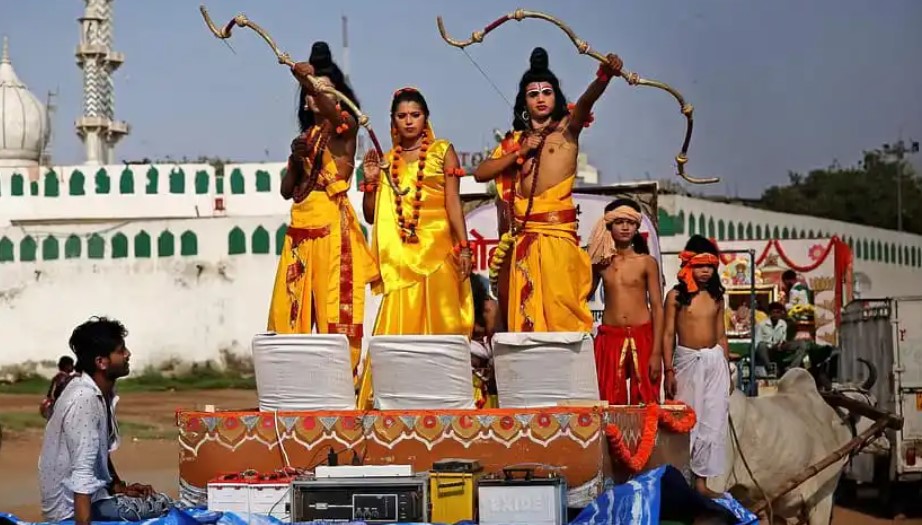
Case Summary
On March 27, the Office of the Police Commissioner (north-west Delhi) denied permission to carry out an idol procession during Ram Navami in the Jahangirpuri area of Delhi. A Hindu devotee had requested permission to organise the annual event but it was turned down by the police, citing the law and order situation. Opindia reached out to the Station House Office (SHO) of the Jahangirpuri police station, who confirmed the authenticity of the letter. It is not known whether the Jahangirpuri violence orchestrated by Islamists during Hanuman Jayanti in 2022 had any bearing on the decision of the police.
Why it is Hate Crime ?
In several cases, it is seen that the administration/state disallows a religious procession owing to prejudicial orders and concerns, targeted specifically against the Hindu community. Such restriction/prohibition would be considered documented as a hate crime because the orders are often a result of pressure by groups that harbour animosity towards Hinduism and Hindus. Often, the restriction by the authorities is driven by bias, hostility, or prejudice against the specific community being stopped from holding a religious procession, by pressure groups that harbour animosity towards Hindus, intrinsic to their faith. Since the religious procession is inherent to the faith of the Hindus, such prejudicial restriction is considered a curtailing of the fundamental rights of the Hindu community. In several cases, for example, the authorities ban a Hindu religious procession due to pressure from groups opposed to the religion. In other instances, the prohibition is selectively enforced against one religious group (Hindus) while others are allowed to proceed. There are still other cases where the authorities preemptively restrict a religious process by Hindus because those who hold animosity towards Hindus may get “provoked” leading to them being violent, thereby assuaging the sentiments of those who hold animosity towards Hindus by curtailing the religious rights of Hindus. Such acts and orders are prejudiced, indicating discriminatory motives owing to the capitulation to groups that harbour animosity towards Hindus and therefore, would be categorized as a religiously motivated hate crime since the original pressure leading to the order itself is a result of hatred/bias/prejudice/religious hate against Hindus. In this case, the Delhi police denied permission to Hindus to take out a religious procession to commemorate their festival Ram Navami. Ram Navami is a significant festival in Hinduism, celebrating the birth of Lord Rama, and processions are a traditional part of the celebrations. This is a clear case of bias and religious discrimination as it was the Hindus in particular who were not allowed to conduct the procession. Denying permission for a religious procession to one particular community is a clear infringement of the religious rights of the Hindus. It violates one's fundamental right to freedom of religion, which includes the right to express one's religious beliefs openly. It also sends a message of intolerance and exclusion to the broader community. Such arbitrary actions taken against the Hindus are prejudicial to their rights and stem from animosity and prejudice against Hindu beliefs, this is why this case has been categorised as a religiously motivated hate crime.


Case Status
Unknown


Perpetrators Details
Perpetrators
State and Establishment
Perpetrators Range
N/A
Perpetrators Gender
unknown
 Sources




