Hindu man brutally murdered by Muslims for refusing to slaughter cow; victim also compelled to eat beef and subjected to casteist slurs
 Navsari, Gujarat, India
  14 December, 2024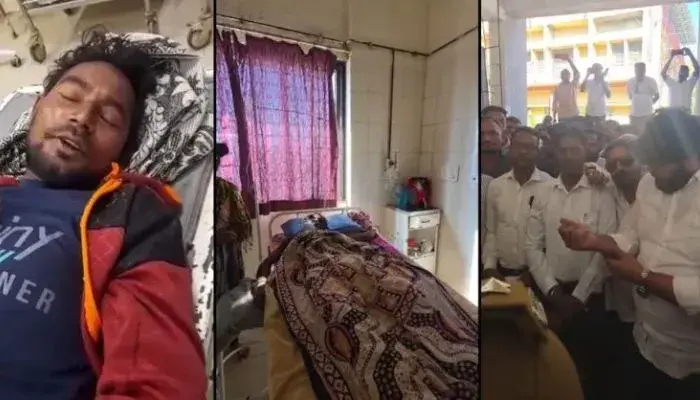
Case Summary
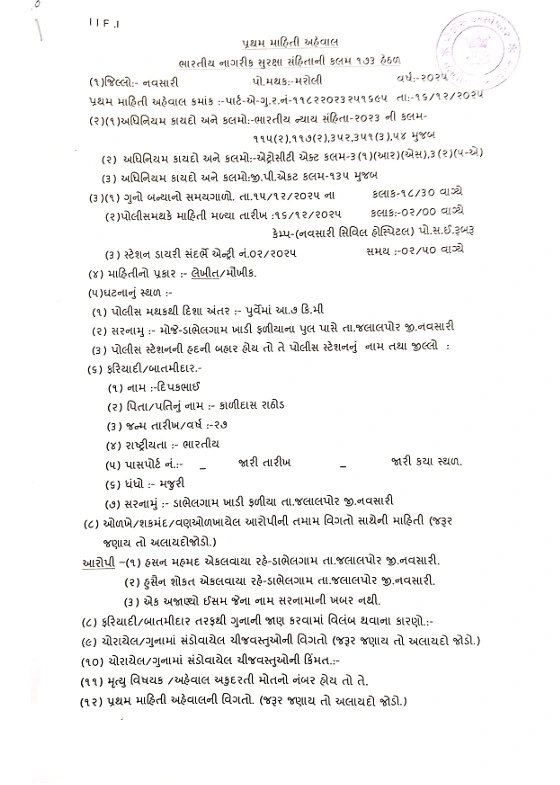
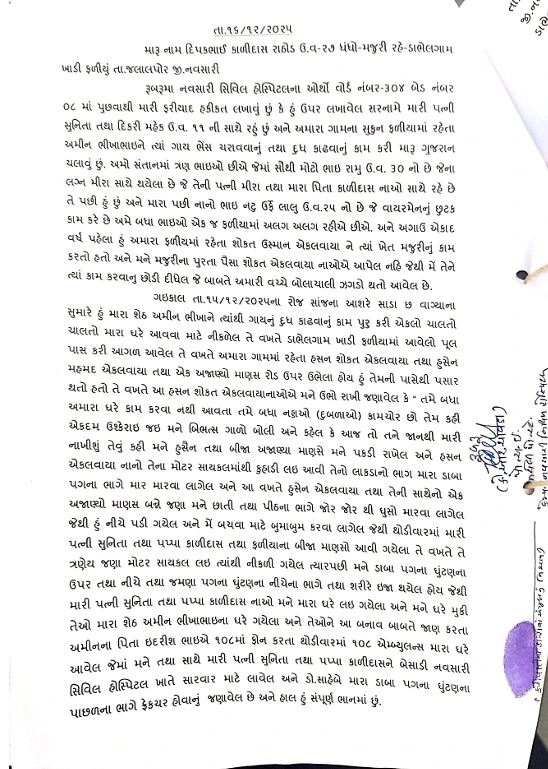
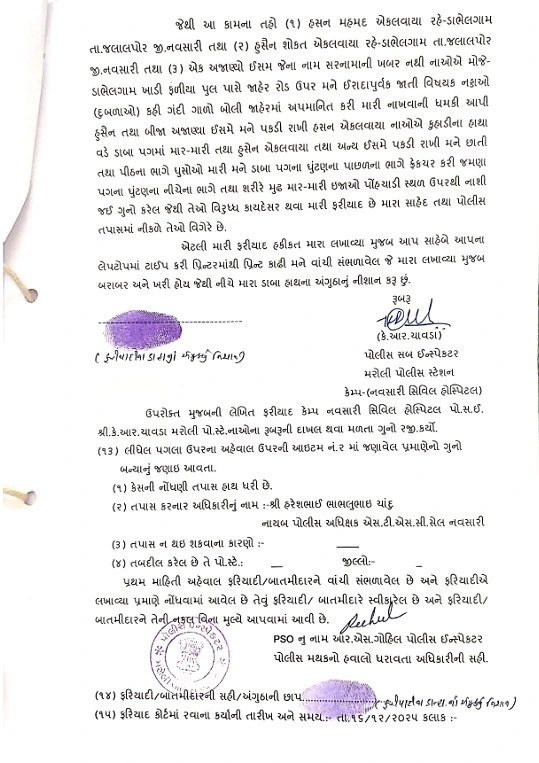
In the Dabhel village of Navsari district, Gujarat, a tribal Hindu man named Dipak Kalidas Rathod was beaten to death by Muslim youths, following sustained hostility linked to his refusal to slaughter a cow, a sacred animal in Hinduism. According to reports, Dipak Kalidas Rathod, a Hindu tribal youth from the Halpati community, used to work at the residence of a Muslim man named Shaukat Usman Ekalwaya in 2024. As per the police complaint, while working at Shaukat Usman's residence, Dipak was not paid properly and was repeatedly pressured to slaughter a cow, which he refused on religious grounds. He was also forced to pick up cow remains, and he was also assaulted when he refused. The complaint also revealed that Dipak was forced to eat beef. Due to this issue, he left the job and took up the work of grazing cows and buffalo. However, the resentment over Dipak's refusal persisted in the minds of the accused. On 15 December 2025, around 6:30 pm, the victim was returning home after finishing work when he was stopped near a graveyard on the roadside. The accused blocked his path, began abusing him, and hurled caste-based slurs. Hasan Shaukat Ekalwaya and Hussain Mohammed Ekalwaya, along with others, restrained the victim and threatened him with death before brutally assaulting him. The victim was attacked with an axe by the Muslim men, causing grievous injuries to his chest and legs. The victim screamed for help, which alerted his wife, father, and other villagers, who rushed to the spot to help him, following which the attackers fled. The victim was taken to Navsari Civil Hospital in critical condition, where police recorded his statement during treatment, including a video in which he stated that the attack took place because he refused to slaughter a cow and due to long-standing hostility. Despite medical intervention, Dipak’s condition deteriorated, and he died during treatment, after which Section 302 of the Bharatiya Nyaya Sanhita was added to the FIR, which had initially been registered under multiple sections of the BNS, provisions of the SC/ST Atrocities Act, and the Gujarat Police Act. Police arrested the accused and initiated further investigation to identify others involved. Dipak’s wife stated that she had approached the police on at least two earlier occasions regarding threats and harassment, but no action was taken. Local Hindu activists maintained that more individuals participated in the assault and accused the authorities of minimising the scale of the violence.
Case Images
Why it is Hate Crime ?
This case has been added to the tracker under the primary category of - Attack resulting in death. Within it, the sub-category selected is - Attacked for Hindu identity. In several cases, Hindus are attacked merely for their Hindu identity without any perceived provocation. A classic example of this category of religiously motivated hate crime is a murder in 2016. 7 ISIS terrorists were convicted for shooting a school principal in Kanpur because they got ‘triggered’ seeing the Kalava on his wrist and tilak that he had put. In this, the Hindu victim had offered no provocation except for his Hindu religious identity. The motivation for the murder was purely religious, driven by religious supremacy. Such cases where Hindus are targeted merely for their religious identity would be documented as a hate crime. Under this category, cases where the attack led to the death of the Hindu victim/s would be documented. The other sub-category selected is - Attacked for opposing radicals or trying to save victim. In several cases, Hindus are attacked for opposing religiously motivated crimes being committed against a fellow Hindu or simply for voicing an opinion opposing radical elements, who either have in the past or continue to persecute Hindus. In such cases, the initial attack against the victim, against which the Hindu was trying to defend the victim, would also need to be classified as a religiously motivated hate crime. Since the initial crime itself was religiously motivated and the subsequent crime of attempting to save the victim or speaking against the radical elements ends up inviting a violent attack, it would also be classified as a religiously motivated hate crime. Under this category, cases where the attack led to the death of the Hindu victim/s would be documented. The other sub-category selected is - Communal clash/attack. Communal clash is a form of collective violence that involves clashes between groups belonging to different religious identities. For a communal clash between Hindus and non-Hindus to qualify as a religiously motivated hate crime, the trigger of the violence itself would have to be anti-Hindu in essence. For example, if there is a Hindu religious procession that comes under attack from a non-Hindu mob, and after the initial attack, Hindus retaliate in self-defence, leading to a communal clash between the two religious communities. While at a later stage, both communities are involved in the clash/violence, the initial trigger of the violence was by the non-Hindu mob against the Hindus and therefore, it could safely be termed as an anti-Hindu violence. Further, the trigger would also have to be religiously motivated. In the cited example, the attack by the non-Hindu mob was against a religious procession and therefore, can be concluded to be religiously motivated. In some cases, the trigger may be non-religious, however, it develops into religious violence against Hindus at a later stage. In such cases too, the foundational animosity towards Hindus becomes the motivating factor of the crime and therefore, it would be classified as a religiously motivated hate crime against Hindus. Under this category, cases where the attack led to the death of the Hindu victim/s would be documented. The second primary category selected here is - Attack on Hindu religious representations. The sub-category selected is - Desecration of Hindu religious symbols. Icons and symbols or a religious representation of a spiritual ideal are widely revered in Hinduism. Iconography is of vital significance in the Hindu milieu. It helps connect people’s spiritual beliefs with the real world. Iconography within the Hindu faith takes several shapes and forms. Murtis are of most significance to Hindus, to which daily rituals, prayers and offerings are done. Besides the murtis, there are several other symbols which have deep significance in the Hindu faith – the Om and Swastika for example. Since these Hindu religious symbols hold paramount importance in Hinduism, any desecration of symbols, icons, murtis, religious representations and manifestations, is driven by animosity towards the faith itself which manifests itself through these murtis, icons and symbols. Therefore, any desecration of these Hindu religious symbols and representations is considered religiously motivated hate crimes under this category. The other sub-category selected is - Defiling religious customs. Sanatan Dharma is not a religion of one book, which is to say that while it has religious scriptures that form the central tenets of the faith, there are several traditions followed through thousands of years, mostly passed from generation to generation orally. There are several such customs and traditions that are followed by various Hindus and Hindu sects. Defiling of these traditions and customs is a breach of an individual or group’s religious practices. Such practices can range from dietary restrictions like not eating non-vegetarian food for a certain period of the year, not eating non-vegetarian food at all, not eating beef since the cow is considered holy in Hinduism, the sanctity of religious customs followed in the house (like many ISCKON devotees), etc. Any malicious action leading to the breach of such traditions or defilement of these traditions owing to animosity towards the faith or for the sake of activism stems not only from the lack of faith in the religion itself but also from disregard for the faith of the devotees who follow the customs/traditions and implicit bias against the faith, the tradition itself. Since these specific traditions are central to the faith of the devotees of that specific sect of Hindus, any non-compliance with these traditional rules would be considered a religiously motivated hate crime. The third primary category selected is- Hate Speech against Hindus. The subcategory selected is- Anti-Hindu slurs, mocking faith. Anti-Hindu slurs and the deliberate mocking of the Hindu faith owing to religious animosity involve the usage of derogatory terms, stereotypes, or offensive references to religious practices, symbols, or figures. One of the common anti-Hindu slurs used against Hindus is “cow-worshipper” and “cow piss drinker”. The intention of using this term is to demean and mock Hindus as a group and their religious beliefs since Hindus consider the cow holy. Additionally, some symbols and the slurs attached to them have a historical context that exacerbates the insult, hate, stereotyping, dehumanisation and oppression against Hindus. Cow worship has been used for centuries to denigrate Hindus, insult their faith and oppress Hindus specifically as a religious group. There has been overwhelming documentation about how cow slaughter has been used to persecute Hindus with cow meat being thrown in temples and places of worship. There has also been overwhelming documentation where cow meat (beef) has been force-fed to Hindus to either forcefully convert them to Islam or denigrate their faith. Apart from cow worship, the Swastika – which holds deep religious significance for the Hindus – has also been misinterpreted and distorted to use as a slur against Hindus. Similarly, the worship of the Shivling has been used by supremacist ideologies and religions to denigrate Hindus owing to religious animosity. Such slurs and denigration stem out of inherent animosity and hate towards Hindus and their faith, therefore, it is categorised as hate speech targeted at Hindus specifically owing to their religious identity. This case was added to the tracker because a tribal Hindu man, Dipak Kalidas Rathod, was beaten to death by Muslim youths after he refused to slaughter cows, an act that directly violated his religious beliefs as a practising Hindu since cows are considered a sacred animal in Hinduism. The sequence of events demonstrated that the violence directed against him stemmed from sustained hostility towards his religious identity and his refusal to abandon religious obligations central to Hindu belief and practice. Firstly, Dipak was targeted, attacked, and ultimately killed because he refused to slaughter cows while employed at the residence of the Muslim accused. His refusal generated persistent hostility towards him, which did not remain limited to the period of his employment but continued even after he left the job. The violence inflicted upon him stemmed directly from his adherence to Hindu religious beliefs that prohibit cow slaughter. The fatal assault on him by the Muslim accused was the culmination of this long-standing resentment, establishing that the motive for the attack was rooted in hostility towards his religious conduct and identity. Such instances are clear examples of communal attacks against Hindus rooted in hatred and contempt for Hinduism, its values and beliefs. Muslim radicals have long weaponised cows through smuggling and slaughter to desecrate this sacred Hindu symbol, provoking outrage among Hindus who view the protection of cows as non-negotiable to their faith. Here, the Muslim accused targeted the Hindu man because of his adherence to his faith, exposing deep-seated hatred not just for the act but for Hindu values themselves. This underscores a deliberate bid to terrorise and silence those upholding their faith's sanctity and opposing cow slaughter, making it a clear instance of religiously motivated offence. Secondly, Dipak was forced to pick up cow remains and made to consume beef, acts that constituted deliberate religious humiliation. These actions were not incidental forms of abuse but targeted violations of Hindu religious sensibilities, intended to degrade and intimidate him because of his faith. The coercion to consume beef and handle cow remains reflected an attempt to desecrate beliefs held sacred by the victim and to assert dominance through religious degradation. This demonstrated an intent to punish adherence to Hindu religious principles and further reinforced the religiously motivated nature of the crime. Furthermore, such acts have a precedent in history, where Hindu victims were forcibly fed beef by Muslim extremists to desecrate their beliefs and push them towards abandoning their Hindu faith. In this case, the force-feeding of beef was an act of grave religious violation, shaped by hostility towards the Hindu victim and his faith, rendering this, unequivocally, a religiously motivated hate crime. Thirdly, the use of caste-based slurs during the assault did not dilute the religious motivation of the crime but rather compounded it. Here, some may argue that a caste-specific slur is aimed at the victim's micro identity of belonging to the Dalit section of the Hindu community and not his Hindu identity itself. However, as far as Abrahamic religions are concerned, the micro identities of caste, region, and language are secondary. It is the religious identity that drives the animosity of the perpetrator against the Hindu victim. Therefore, in this case, even though caste-based abuses were hurled, the underlying hatred was directed at Hinduism and Hindus. Hence, the use of casteist slurs alongside physical violence confirms this as a religiously motivated hate crime against the Hindu victim. In conclusion, the sustained hostility arising from Dipak’s refusal to slaughter cows, the deliberate acts of religious desecration through forced consumption of beef and handling of cow remains, and the use of caste-based abuse culminating in his brutal killing together established this incident as a religiously motivated hate crime against a Hindu tribal man. Since the accused's actions were motivated by religious animosity, this case has been added to the hate crime database of the tracker. Disclaimer: The Hinduphobia Tracker records the date of the incident based on when the crime occurred. The media reports published this case on 20 December 2025. However, the media reports do not specify the exact date of the beginning of the victim’s ordeal. The victim was employed at the accused's house in 2024, and on 15 December 2025, the victim was brutally assaulted and killed. Considering these two pieces of information, we are using an indicative date of 15 December 2024 as the date of the incident. This date is used for documentation purposes only and represents the estimated beginning of his ordeal.
Victim Details
Total Victim
1
Deceased
1
Gender
- Male 1
- Female 0
- Third Gender 0
- Unknown 0
Caste
- SC/ST 1
- OBC 0
- General 0
- Unknown 0
Age Group
- Minor 0
- Adult 1
- Senior Citizen 0
- Unknown 0


Case Status
Case sub-judice


Perpetrators Details
Perpetrators
Muslim Extremists
Perpetrators Range
From 2 To 5
Perpetrators Gender
male
 Sources




