Hindu journalist arrested in Bangladesh after Muslim mob surrounds her, persecutes her as an 'agent of India' - a Hindu collectivity
 Dhaka District, Bangladesh
  29 November, 2024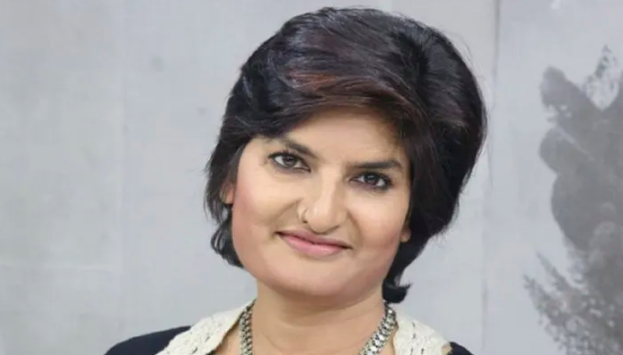
Case Summary
On November 30, prominent Hindu journalist Munni Saha was arrested in Dhaka, Bangladesh, after being surrounded by a mob near Janata Tower in Karwan Bazar. The mob blocked her way, heckled her, and demanded her trial. Police intervened and arrested Saha around 10 p.m., taking her to the Tejgaon police station and later to the Dhaka Metropolitan Detective Branch office. She was released on bond under Section 497 of the Code of Criminal Procedure but has to seek bail from a court and comply with police summons. Saha, the editor of the online news portal Ek Takar Khabor, was targeted amidst the political turmoil following the ousting of Sheikh Hasina as Prime Minister. She, along with seven other journalists, was falsely implicated in a murder case related to the death of 17-year-old rioter Nayeem Howlader, who was shot during violent student protests in Jatrabari. The Muslim mob that threateningly surrounded her said that she was trying to make Bangladesh a "part of India" and was working as India's agent. The case was widely seen as part of a broader witch-hunt against minority leaders and dissenting voices. In October, the Bangladesh Financial Intelligence Unit also directed banks to share Saha’s account details, further escalating harassment against her.
Why it is Hate Crime ?
This case has been added to the tracker under the category of- Attack not resulting in death. Under this, the sub-category selected is- Attacked for Hindu identity. In several cases, Hindus are attacked merely for their Hindu identity without any perceived provocation. A classic example of this category of religiously motivated hate crime is a murder in 2016. 7 ISIS terrorists were convicted for shooting a school principal in Kanpur because they got ‘triggered’ seeing the Kalava on his wrist and tilak that he had put. In this, the Hindu victim had offered no provocation except for his Hindu religious identity. The motivation for the murder was purely religious, driven by religious supremacy. Such cases where Hindus are targeted merely for their religious identity would be documented as a hate crime under this category. The removal of Sheikh Hasina from power in Bangladesh on August 5 escalated the persecution and marginalisation of the Hindu minority in the predominantly Islamic nation, intensifying what can be described as a silent genocide. Since her ouster, Islamists have carried out unchecked atrocities against Hindus, including physical violence, the destruction of temples and religious symbols, and the systematic displacement of Hindus from their ancestral lands. Over 205 attacks on Hindu temples, shops, and businesses have been recorded following Sheikh Hasina's removal as Prime Minister. Many Hindus have been brutally murdered or injured in these assaults. Amidst this violence, Munni Saha, a prominent Hindu journalist was arrested in Dhaka, Bangladesh. The Muslim crowd which surrounded her blamed her for working at the behest of India and trying to make Bangladesh a part of India. It is pertinent to note that Muslim extremists harbour specific animosity towards Hindus and their faith and also view India as a Hindu collectivity. The very basis of the partition of India was that the Muslims believed that Islam was a nation unto itself, which could not survive with a Hindu collectivity like India. Further, Muslims often believe in transnational unity - or the Ummah - which is a belief that all Muslims across the world are a nation unto themselves and therefore, loyalty as far as the nation-state is concerned lies with the Muslim collectivity and not with a Hindu collectivity like India. After the ouster of Sheikh Hasina, the Muslim population of Bangladesh has been branding every Hindu, who speaks against the ongoing persecution, as an "agent of India" and further persecuting them. This persecution of Hindus after branding them India agents is about hailing a Muslim collectivity and an expression of transnational loyalty and anti-Hindu sentiments, while considering Hindus a default part of the Hindu collectivity of India. Munni Saha's arrest is a part of a broader pattern of stifling dissenting voices in Bangladesh, particularly those speaking out against the persecution of Hindus. As a Hindu journalist, Saha became a target for her outspoken views on the atrocities faced by the Hindu minority in the country. The arbitrary nature of her arrest and the fabricated charges against her highlight the ongoing efforts to intimidate and silence individuals who challenge the state’s treatment of Hindus. This arrest is emblematic of a systematic campaign to suppress dissent in a state where religious minorities, especially Hindus, are increasingly marginalized. In this context, Saha's targeting is not an isolated incident but part of a broader effort to stifle voices that advocate for the rights of Hindus and expose the religious persecution they face. It underscores the growing climate of fear in Bangladesh, where speaking out against the oppression of Hindus is met with harassment, legal action, and even violence, reflecting a deeply entrenched pattern of religiously motivated hate against the Hindu community.
Victim Details
Total Victim
1
Deceased
0
Gender
- Male 0
- Female 1
- Third Gender 0
- Unknown 0
Caste
- SC/ST 0
- OBC 0
- General 0
- Unknown 1
Age Group
- Minor 0
- Adult 1
- Senior Citizen 0
- Unknown 0


Case Status
Unknown


Perpetrators Details
Perpetrators
State and Establishment
Perpetrators Range
Unknown
Perpetrators Gender
unknown
 Sources




