Hindu temple land encroached by Muslim man in Songadh, Gujarat
 Songadh, Gujarat, India
  10 December, 2025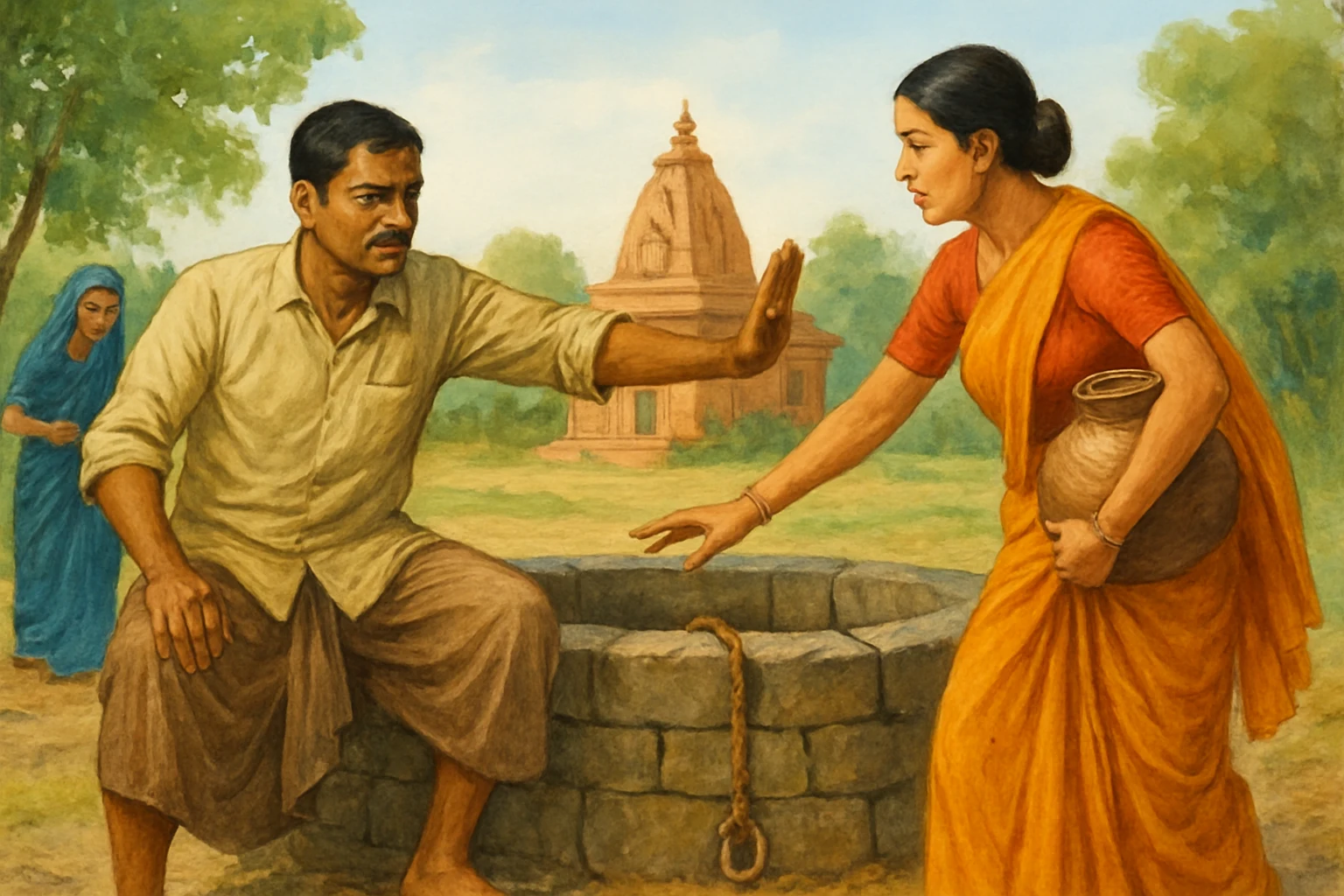
Case Summary
The well of the Mahadev Temple and the surrounding temple premises in Hathi Phaliya, Songadh, where Hindu devotees have traditionally gathered for worship and religious rituals over many years, were illegally encroached upon by a Muslim man named Iqbal bhai. The man had reportedly constructed a structure on the temple land without permission from the authorities, blocking access to the well and disturbing the otherwise peaceful religious atmosphere of the locality. As a result, members of the Nareshwar Mahadev Temple Committee and nearby Hindu residents had experienced interference in their daily religious practices and had begun to live in an atmosphere of fear and tension. Following these developments, the Nareshwar Mahadev Temple Committee submitted a written representation to the Chief Officer of the municipality. In the representation, the committee pointed out that the Nareshwar Mahadev Temple and its well were very old and held deep religious significance for the Hindu community. The committee had urged the civic authorities to remove the unlawful construction, clear the temple land of the occupation, and restore a peaceful and respectful environment so that Hindu devotees could once again freely visit the temple, use the well, and perform their religious rituals without obstruction.
Why it is Hate Crime ?
This case has been added to the tracker under the primary category- Attack on Hindu religious representations. Within this, the sub-category selected is: Encroachment or illicit takeover of temple land/land near temple. In Hinduism, a temple is the abode of the Deity. The Deity in the Temple is consecrated, thereby, making it a real, breathing entity. Hindus believe that not just the Deity but the temple premises itself are sacred to Hindus since Hindus hold the faith that the entire Temple space is an amalgamation of the divine energy of the deity. Not only the Temple but the Temple premises in its entirety are considered sacred by Hindus. In several cases, the premises of the Temple and/or religious centre are illicitly taken over by institutions belonging to other faiths – like the Waqf board or the Church. Other times, the temple property, land or the property of religious centres are illicitly encroached by non-Hindu groups. Any illicit take over or encroachment is a crime an initio, however, when non-Hindu groups illicitly take over or encroach the sacred land of Hindus, it is an affront to the Hindu community and is therefore classified as a religiously motivated hate crime under this category. This incident could reasonably be treated as a hate‑driven act because it struck at the heart of a specific religious community rather than at mere property. A Muslim man, Iqbalbhai, had taken over the Mahadev well and temple area where Hindus had been worshipping for many years, and had built a structure that blocked their access and disturbed the religious atmosphere. By cutting off entry to a sacred well and temple precinct that held deep spiritual importance, his actions directly interfered with Hindu religious rituals and daily worship, causing fear and tension among Hindu devotees and residents. The fact that the temple committee had to seek official action to remove the construction and “restore a peaceful and respectful environment” shows that the community experienced this not as a neutral encroachment but as an attack on their religious identity and freedom of worship. The temple land or areas around the sacred space are not simply a piece of property; they hold profound religious significance for the Hindu community. For Hindus, both the temple and its land are regarded as the abode of the deity. Any form of encroachment or seizure of temple land is an attack on the religious rights and sentiments of Hindus, disrupting their ability to worship and to maintain their sacred spaces. Any unauthorised occupation of this space, especially one that halts worship and religious observance, is a violation of that sanctity. Such an act, regardless of the identity of the offenders, qualifies as a hate crime due to its religious impact and the targeting of a sacred Hindu site. Disclaimer: The Hinduphobia Tracker records incidents based on when an event occurred or when the victim's ordeal began. It is important to clarify that none of the media sources covering this case has specified the exact date when the temple encroachment began. Therefore, for documentation purposes, we have recorded the date based on when the incident was reported in the media, 12 December 2025.


Case Status
Complaint filed


Perpetrators Details
Perpetrators
Muslim Extremists
Perpetrators Range
One Person
Perpetrators Gender
male
 Sources




