Hindu temple vandalised as unknown miscreants smash head of the Bajrangbali idol, damage aarti microphone set before fleeing
 South 24 Parganas district, West Bengal, India
  9 December, 2025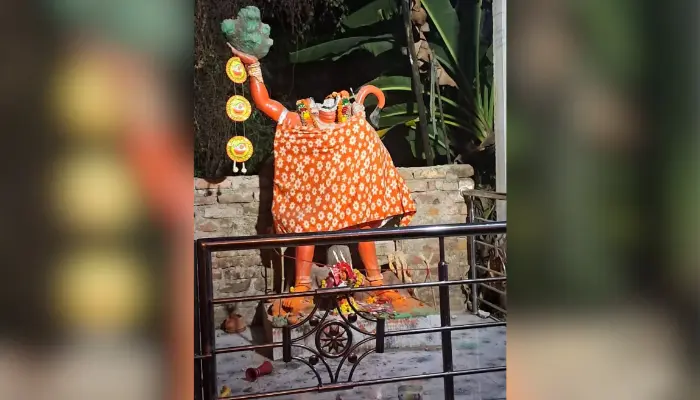
Case Summary
A Bajrangbali temple in the Ramkrishnapur region of the Kulpi Assembly area in South 24 Parganas was vandalised late Tuesday (9th December, 2025) night. Unidentified miscreants entered the temple at Singir Hat Mor, broke the head of the Bajrangbali idol, and damaged the aarti microphone set before fleeing. The incident came to light the next morning when the temple priest and local residents discovered the destruction, which immediately triggered unrest in the area. The elderly priest who looks after the temple said he had never witnessed anything like this before and that no one realised when the vandals entered during the night. Residents described the act as cruel and urged the administration to quickly identify those responsible. Local police responded by stating that an investigation began as soon as a complaint was received. Samples were collected from the site, and officers are examining all possible angles, including communal motives, local disputes, and anti-social elements. Additional police deployment was ordered to prevent further tension. Meanwhile, after the words of vandalism spread, political reactions erupted across West Bengal. Leader of the Opposition Suvendu Adhikari stated that the temple was attacked by fundamentalist elements. He further raised concerns about how such incidents were rising under the Mamata Banerjee government. He said that from Kulpi to Kakdwip and Mandirbazar, cases of temple vandalism have been increasing and accused the administration of failing to protect Hindu religious sites. Adhikari also criticised the police, stating that they act harshly against Sanatani protesters but avoid taking action against radical elements. He demanded immediate arrests and strict punishment for the perpetrators.
Why it is Hate Crime ?
This incident has been added to the tracker under the primary category- Attack on Hindu religious representations. Under this, the first subcategory selected is- Attack on Temples. In Hinduism, a temple is the abode of the Deity. The Deity in the Temple is consecrated, thereby, making it a real, breathing entity. Hindus believe that not just the Deity but the temple premises itself are sacred to Hindus since Hindus hold the faith that the entire Temple space is an amalgamation of the divine energy of the deity. Given the central significance of Temples in Hindu Dharma, any attack against a Hindu Temple or its peripheral premises is an attack on the faith itself and is born out of animosity towards the faith, of which, the Temple is a central tenet. Any manner of attack against a Temple and/or its premises would therefore be considered a religiously motivated hate crime. The other subcategory selected is- Desecration of Hindu religious symbol. Icons and symbols or a religious representation of a spiritual ideal are widely revered in Hinduism. Iconography is of vital significance in the Hindu milieu. It helps connect people’s spiritual beliefs with the real world. Iconography within the Hindu faith takes several shapes and forms. Murtis are of most significance to Hindus, to which daily rituals, prayers and offerings are done. Besides the murtis, there are several other symbols which have deep significance in the Hindu faith – the Om and Swastika for example. Since these Hindu religious symbols hold paramount importance in Hinduism, any desecration of symbols, icons, murtis, religious representations and manifestations, is driven by animosity towards the faith itself which manifests itself through these murtis, icons and symbols. Therefore, any desecration of these Hindu religious symbols and representations is considered religiously motivated hate crimes under this category. This incident is being recorded as a hate crime because it involved the deliberate desecration of a Hindu temple and the targeted destruction of a sacred Hindu idol. The Hanuman temple at Singir Hat Mor was not damaged accidentally or as part of any administrative activity. Unknown individuals entered the temple at night, broke the head of the Bajrangbali idol, and vandalised the aarti microphone set. A Hindu temple is not simply a building; it is a sacred space believed to hold the divine presence of Hindu deities. Any attack on such a site is an assault on the faith, identity, and religious sentiments of the Hindu community. The breaking of the deity’s head is especially significant. Temple idols are revered as physical manifestations of divine presence, and harming them is seen as a direct act of religious hostility. The targeted destruction of an idol’s face or head has deep symbolic importance in Hinduism and is widely recognised as a calculated attempt to humiliate the deity and the community that worships there. Acts of this nature are not random mischief; they reflect a conscious attempt to hurt Hindu sentiment by attacking what is sacred to the community. Some may attempt to distance the act from religious motivation by suggesting it was the work of unidentified miscreants without a clear motive. However, the nature of the vandalism contradicts this. The attackers chose a Hindu temple, entered at night, destroyed only the idol and the essential objects used for worship, and then fled. The choice of target, the method, and the symbolism all align with an intention to insult and provoke Hindus. If the aim were random vandalism, other structures or objects in the area would likely have been damaged as well. Given the deliberate targeting of a Hindu place of worship and the specific desecration of a deity’s idol, this act reflects hostility toward Hindu religious symbols and the Hindu community itself. For these reasons, the incident has been recorded in the Hinduphobia Tracker as a hate crime directed against Hindu religious identity and sacred spaces.


Case Status
Complaint registered


Perpetrators Details
Perpetrators
Unknown
Perpetrators Range
Unknown
Perpetrators Gender
unknown
 Sources




