Hindus subjected to abusive remark, sacred Gurukula system denigrated by Dravidian propagandist author
 India
India  8 December, 2025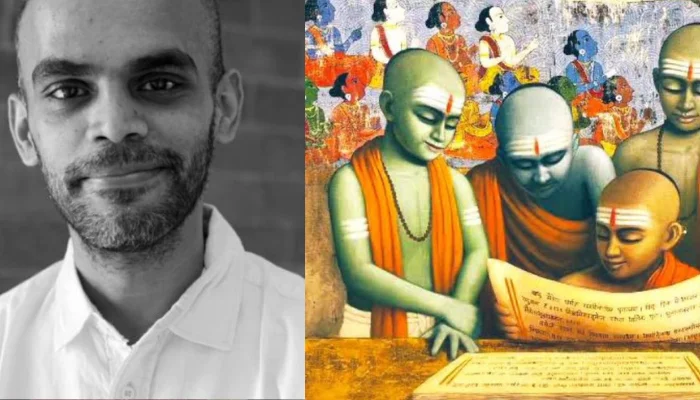
Case Summary
An anti-Hindu remark targeting Hindus and denigrating their sacred Gurukula system was made by a Dravidian propagandist writer named Nilakanthan RS. He described Hindus as demons and dismissed the sacred Gurukula system as casteist and opposed to modernism. The Gurukula system holds profound significance in Hinduism as it represents an ancient tradition of holistic education that integrates academic learning with spiritual and religious knowledge. In this system, students from all castes and genders were welcomed equally, reflecting Hinduism’s inclusive approach to learning and personal growth. Gurukulas served not only as centres of knowledge but also as sanctuaries for preserving and transmitting the sacred teachings of Hinduism across generations. As a vital pillar of Hindu society, the Gurukula system symbolised the harmony of education and faith, shaping the spiritual and intellectual lives of countless Hindus. This incident took place on the social media platform X (formerly Twitter). A Hindu page named 'Bhagavad Gita' with the handle "@GitaSholaks_" had tweeted about donating money to reinstate the Hindu Gurukula system of education. The tweet read: "If you have to contribute ₹100 per family to re-establish Gurukula in India, will you contribute?... Please give your opinion in the comments." Nilakanthan RS, using the X handle @puram_politics, responded to this tweet by saying: "How morally corrupt are these monsters (Hindus) that they want to pay to restore a casteist, anti-modern idea." This tweet was posted on 9th December 2025. This was not the first time Nilakanthan RS made anti-Hindu remarks. The Hinduphobia Tracker had previously documented another instance where he insulted the revered Hindu epic, the Mahabharata, calling it a "shitty epic." Earlier, he also made violent comments glorifying and supporting the murder of upper caste Hindus.
Why it is Hate Crime ?
This case is being added to the tracker under the primary category- Hate Speech against Hindus. The subcategory selected is- Anti-Hindu slurs, mocking faith. Anti-Hindu slurs and the deliberate mocking of the Hindu faith owing to religious animosity involve the usage of derogatory terms, stereotypes, or offensive references to religious practices, symbols, or figures. One of the common anti-Hindu slurs used against Hindus is “cow-worshipper” and “cow piss drinker”. The intention of using this term is to demean and mock Hindus as a group and their religious beliefs since Hindus consider the cow holy. Additionally, some symbols and the slurs attached to them have a historical context that exacerbates the insult, hate, stereotyping, dehumanisation and oppression against Hindus. Cow worship has been used for centuries to denigrate Hindus, insult their faith and oppress Hindus specifically as a religious group. There has been overwhelming documentation about how cow slaughter has been used to persecute Hindus with cow meat being thrown in temples and places of worship. There has also been overwhelming documentation where cow meat (beef) has been force-fed to Hindus to either forcefully convert them to Islam or denigrate their faith. Apart from cow worship, the Swastika – which holds deep religious significance for the Hindus – has also been misinterpreted and distorted to use as a slur against Hindus. Similarly, the worship of the Shivling has been used by supremacist ideologies and religions to denigrate Hindus owing to religious animosity. Such slurs and denigration stem out of inherent animosity and hate towards Hindus and their faith, therefore, it is categorised as hate speech targeted at Hindus specifically owing to their religious identity. In this case, the accused’s remarks represented a blatant example of anti-Hindu hate speech. By labelling Hindus as demons simply because a Hindu page sought donations to revive the Gurukula system, the accused targeted the community with profound hostility. The Gurukula system is an ancient and sacred Hindu educational tradition where students of all castes and genders live, learn, and grow together under the guidance of a guru. It formed one of the foundational pillars of Hindu society and faith, emphasising inclusive education, spiritual growth, and the preservation of religious and cultural values. To disparage this revered system as casteist and anti-modern was not just an attack on an educational model but a denigration of a core religious institution deeply tied to Hindu identity and spirituality. Furthermore, describing Hindus as demons revealed explicit bias and prejudice, underscoring a clear intent to demean and vilify the Hindu community as a whole. This combination of offensive stereotyping and faith-based disparagement unequivocally qualifies as anti-Hindu hate speech. The accused’s claim that the Gurukula system was casteist also promoted a harmful generalisation that all Hindus practised caste-based discrimination. This sweeping narrative unfairly painted the entire Hindu community as prejudiced and exclusionary, fostering negative stereotypes. Such generalisations contribute to widespread prejudice and social bias against Hindus, which could escalate into discrimination in everyday life. In some cases, this animosity can even incite violence against Hindus. Therefore, these remarks clearly demonstrated anti-Hindu hostility and fuelled communal divisions. The accused’s previous conduct reinforced the deliberate nature of this hostility and confirmed that this was not an isolated or accidental incident. His history of disparaging revered Hindu epics, such as calling the Mahabharata a “shitty epic,” coupled with violent rhetoric advocating harm against upper-caste Hindus, painted a consistent pattern of religiously motivated antagonism. Such deliberate vilification of Hindu beliefs, sacred texts, and community members amounted to sustained hate speech that sought to undermine and intimidate the Hindu population. This pattern of behaviour—targeting religious faith, cultural heritage, and advocating violence—constituted a clear case of anti-Hindu hate speech motivated by religious hostility. Given that this case meets the parameters of religiously motivated hate speech, it is being added to the hate crime database of the Hinduphobia Tracker.


Case Status
Unknown


Perpetrators Details
Perpetrators
Others
Perpetrators Range
One Person
Perpetrators Gender
male
 Sources




