Hindu man brutally assaulted and subjected to casteist abuse by Muslim man; mocked for wearing tilak
 Shahjahanpur, Uttar Pradesh, India
  26 November, 2025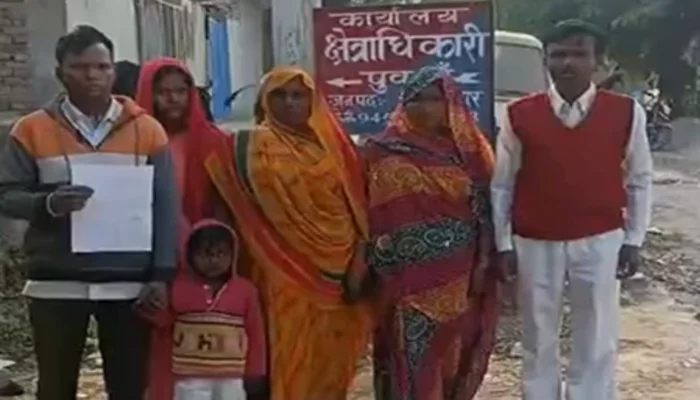
Case Summary
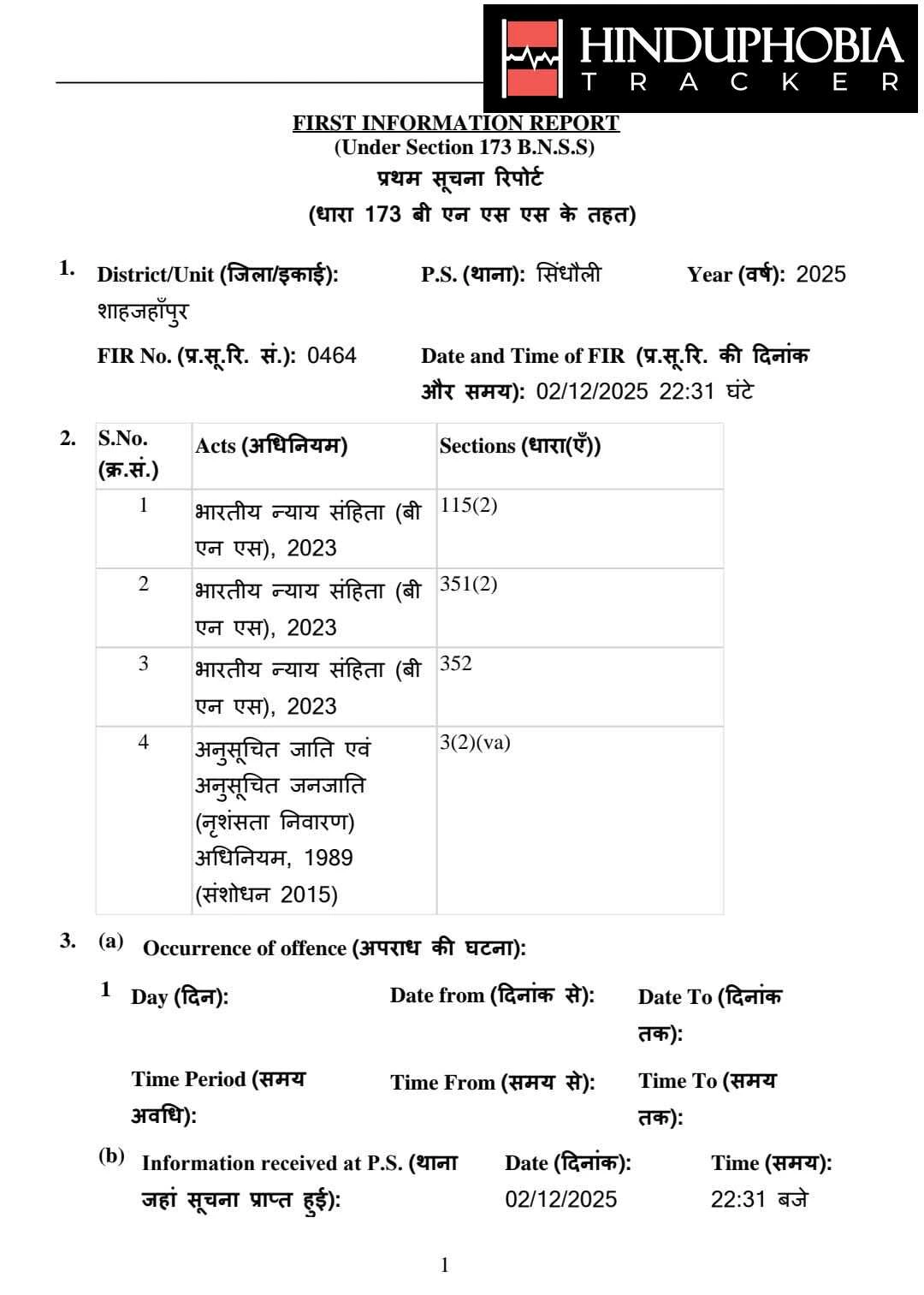
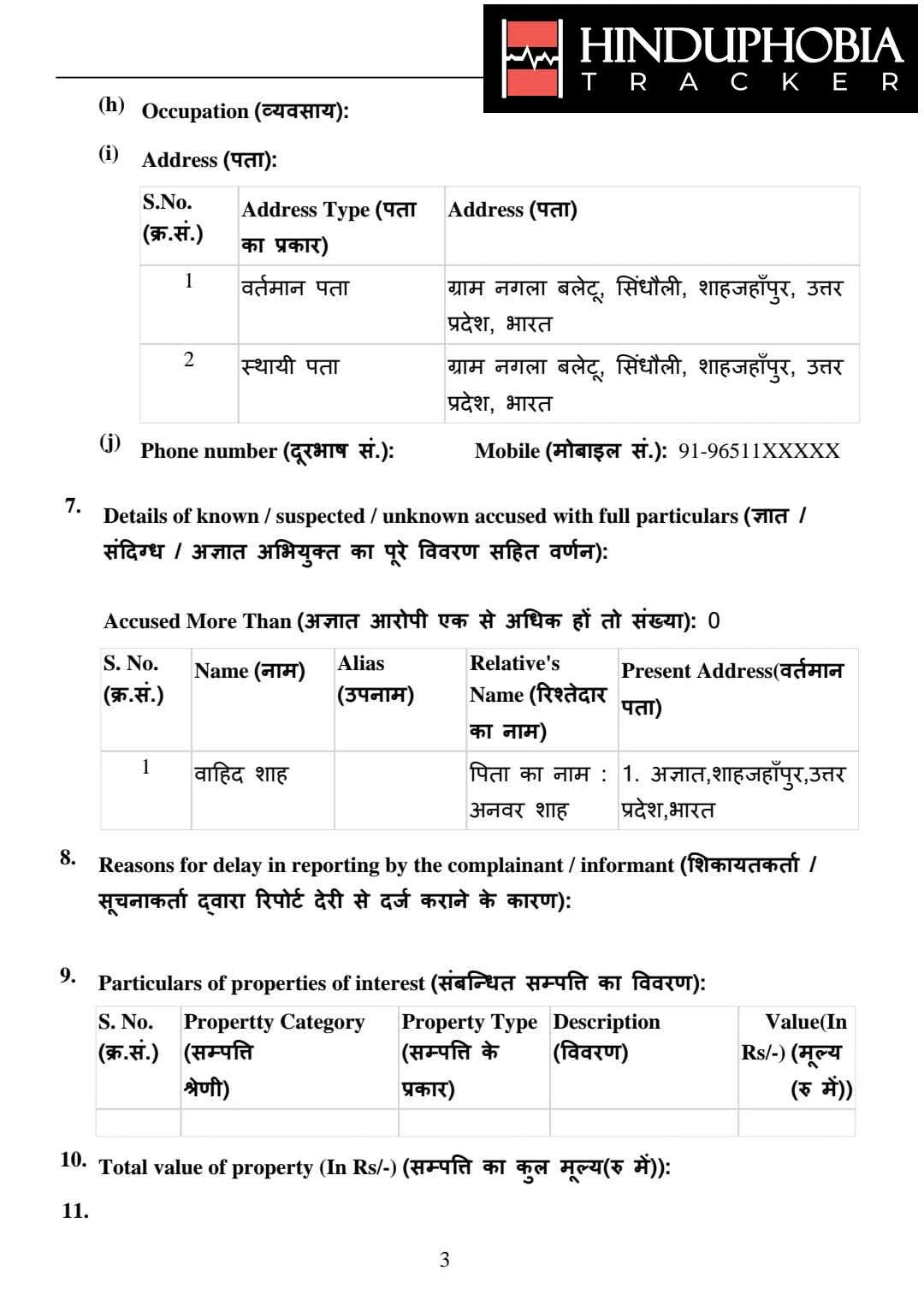
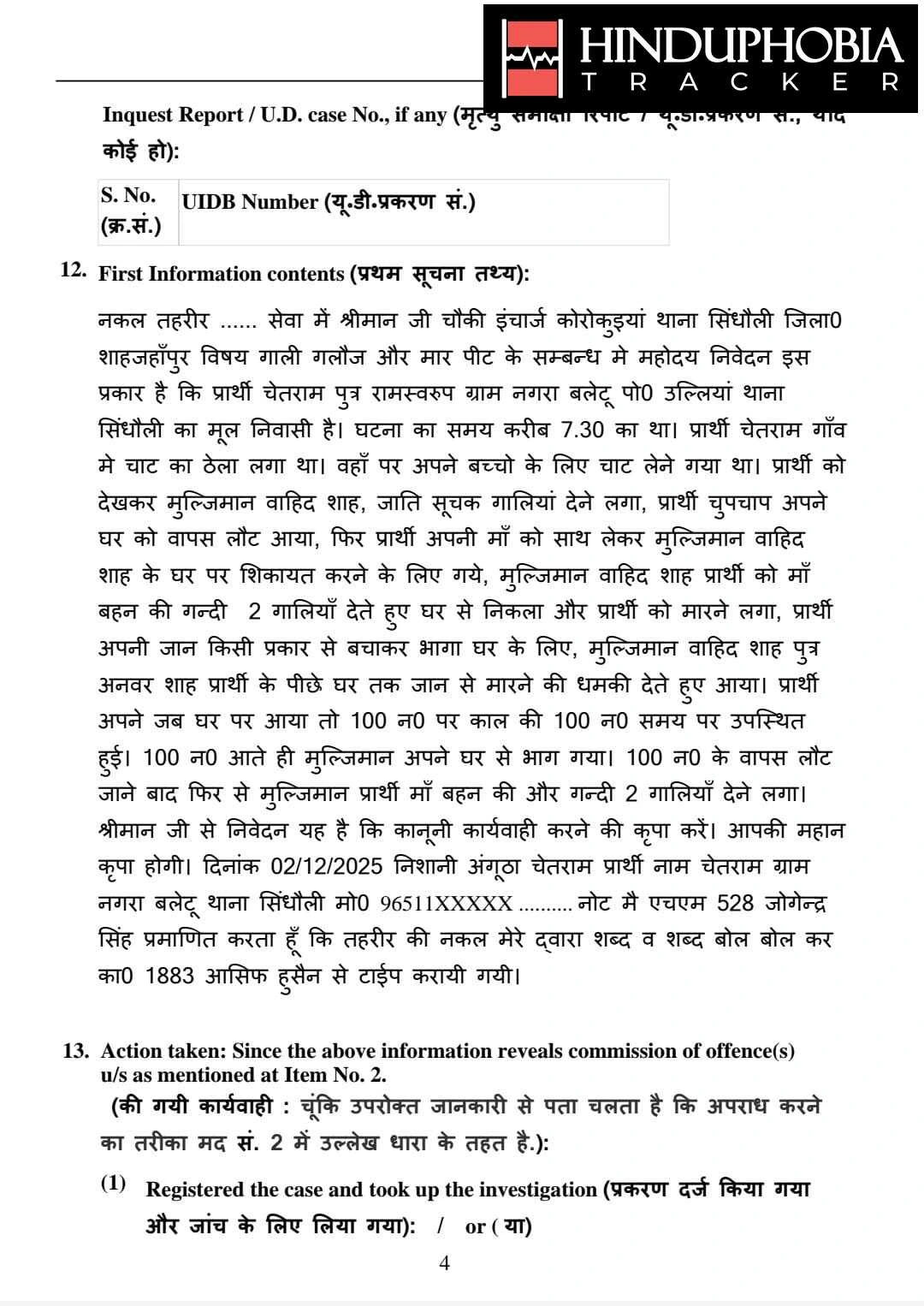
In the Nagra Baletu of Shahjahanpur district, Uttar Pradesh, a Hindu man named Chetram was subjected to casteist abuse and brutally assaulted by a Muslim man named Wahid Shah. The accused also objected to the Hindu man wearing a tilak on his forehead. According to reports, the victim, Chetram, operates a chaat stall and was wearing a tilak on his forehead. On 27 November 2025, at around 7:30 pm, a Muslim man named Wahid Shah came to his stall and began hurling casteist abuse at the victim. The accused said, "Being a Dhanuk, why do you wear a tilak?" When the victim protested, the accused physically assaulted him. Chetram quietly returned home, but later went with his mother Phulmati, wife Anita, Satyavati, Nirmala, and other family members to Wahid Shah’s house to complain about the abuse. Wahid Shah came out of the house, hurled further casteist remarks and obscene abuses at the victim's family, and began assaulting him. Chetram escaped and ran towards his home, but Wahid Shah followed him while issuing death threats. Once Chetram reached home, he called the police on 100, and the emergency response team arrived promptly, upon which the accused fled. After the police left, Wahid Shah again returned and continued abusing Chetram and his family with vulgar caste-based insults. Subsequently, the victim submitted a written complaint on 2 December 2025, requesting legal action. The police confirmed that the complaint had been received and registered a case under the SC-ST Act. As of the date of writing this report, the investigation was ongoing.
Case Images
Why it is Hate Crime ?
This case has been added to the tracker under the primary category of - Hate speech against Hindus. Within it, the sub-category selected is - Anti-Hindu slurs, mocking faith. Anti-Hindu slurs and the deliberate mocking of the Hindu faith owing to religious animosity involve the usage of derogatory terms, stereotypes, or offensive references to religious practices, symbols, or figures. One of the common anti-Hindu slurs used against Hindus is “cow-worshipper” and “cow piss drinker”. The intention of using this term is to demean and mock Hindus as a group and their religious beliefs since Hindus consider the cow holy. Additionally, some symbols and the slurs attached to them have a historical context that exacerbates the insult, hate, stereotyping, dehumanisation and oppression against Hindus. Cow worship has been used for centuries to denigrate Hindus, insult their faith and oppress Hindus specifically as a religious group. There has been overwhelming documentation about how cow slaughter has been used to persecute Hindus with cow meat being thrown in temples and places of worship. There has also been overwhelming documentation where cow meat (beef) has been force-fed to Hindus to either forcefully convert them to Islam or denigrate their faith. Apart from cow worship, the Swastika – which holds deep religious significance for the Hindus – has also been misinterpreted and distorted to use as a slur against Hindus. Similarly, the worship of the Shivling has been used by supremacist ideologies and religions to denigrate Hindus owing to religious animosity. Such slurs and denigration stem out of inherent animosity and hate towards Hindus and their faith, therefore, it is categorised as hate speech targeted at Hindus specifically owing to their religious identity. The second primary category selected here is - Attack not resulting in death. Within it, the sub-category selected is - Attacked for Hindu identity. In several cases, Hindus are attacked merely for their Hindu identity without any perceived provocation. A classic example of this category of religiously motivated hate crime is a murder in 2016. 7 ISIS terrorists were convicted for shooting a school principal in Kanpur because they got ‘triggered’ seeing the Kalava on his wrist and tilak that he had put. In this, the Hindu victim had offered no provocation except for his Hindu religious identity. The motivation for the murder was purely religious, driven by religious supremacy. Such cases where Hindus are targeted merely for their religious identity would be documented as a hate crime under this category. The other sub-category selected here is - Attacked for opposing radicals or trying to save victim. In several cases, Hindus are attacked for opposing religiously motivated crimes being committed against a fellow Hindu or simply for voicing an opinion opposing radical elements, who either have in the past or continue to persecute Hindus. In such cases, the initial attack against the victim, against which the Hindu was trying to defend the victim, would also need to be classified as a religiously motivated hate crime. Since the initial crime itself was religiously motivated and the subsequent crime of attempting to save the victim or speaking against the radical elements ends up inviting a violent attack, it would also be classified as a religiously motivated hate crime under this category. This case has been added to the Hinduphobia Tracker because a Hindu man named Chetram was subjected to casteist abuse and brutally assaulted by the Muslim accused, Wahid Shah. Firstly, the victim and later his family members were subjected to casteist remarks and abuse by the Muslim accused. It can be argued that a caste-specific slur is aimed at the micro identity of belonging to the Dalit section of the Hindu community and not the Hindu identity itself. However, as far as Abrahamic religions are concerned, the micro identities of caste, region, and language are secondary. It is the religious identity that drives the animosity of the perpetrator against the Hindu victim. In this case, the accused hurled caste abuses at the victim because of his animosity towards Hinduism and Hindus. The fact that caste slurs were hurled at the victim further proves the communal nature of the whole crime. Secondly, the victim was mocked by the accused for wearing a tilak while being a lower caste. The accused mockingly said, "Being a Dhanuk, why do you wear a tilak?", as if lower caste people can't wear a tilak. The accused was simultaneously mocking both his caste and his Hindu identity. The tilak is not merely a decorative mark; it holds profound spiritual and cultural significance for Hindus. It represents religious identity, devotion, and affirmation of faith, often worn during prayers, rituals, and as a daily symbol of belief. By mocking it, along with the victim's caste, the accused committed a symbolic attack on the religious identity of the victim, demonstrating hostility toward Hindu practices and culture. This deliberate act of humiliation made the assault a direct attack on Hindu identity, constituting a targeted hate crime against the community. Thirdly, when the victim and his family decided to confront the accused, they were physically assaulted and subjected to further casteist remarks. This demonstrated a deliberate pattern of hostility, showing that the accused not only targeted the victim but also escalated the violence when the victim confronted the accused. Instead of resolving the matter or acknowledging his wrongdoing, the accused intensified the aggression, directed caste-based insults at the victim's family members, and subjected them to death threats. This violent overreach stems from an Islamic supremacist ideology within Muslim extremist circles, which views Hindus as socially and religiously inferior. This toxic belief breeds contempt and aggression, especially when Hindus resist submission or refuse to yield in disputes. The readiness to use violence exposes the continuing threat Hindu communities face, as these incidents are not isolated or spontaneous but part of an ongoing pattern of religiously motivated violence. Since the accused's actions were rooted in religious hostility towards the victim's Hindu identity, this case has been added to the tracker.
Victim Details
Total Victim
6
Deceased
0
Gender
- Male 1
- Female 4
- Third Gender 0
- Unknown 1
Caste
- SC/ST 6
- OBC 0
- General 0
- Unknown 0
Age Group
- Minor 0
- Adult 3
- Senior Citizen 0
- Unknown 3


Case Status
Complaint registered


Perpetrators Details
Perpetrators
Muslim Extremists
Perpetrators Range
One Person
Perpetrators Gender
male
 Sources




