Hindu women including a minor lured by Muslim men on pretext of providing work, raped and coerced to convert and marry
 Jobat, Madhya Pradesh, India
  30 November, 2025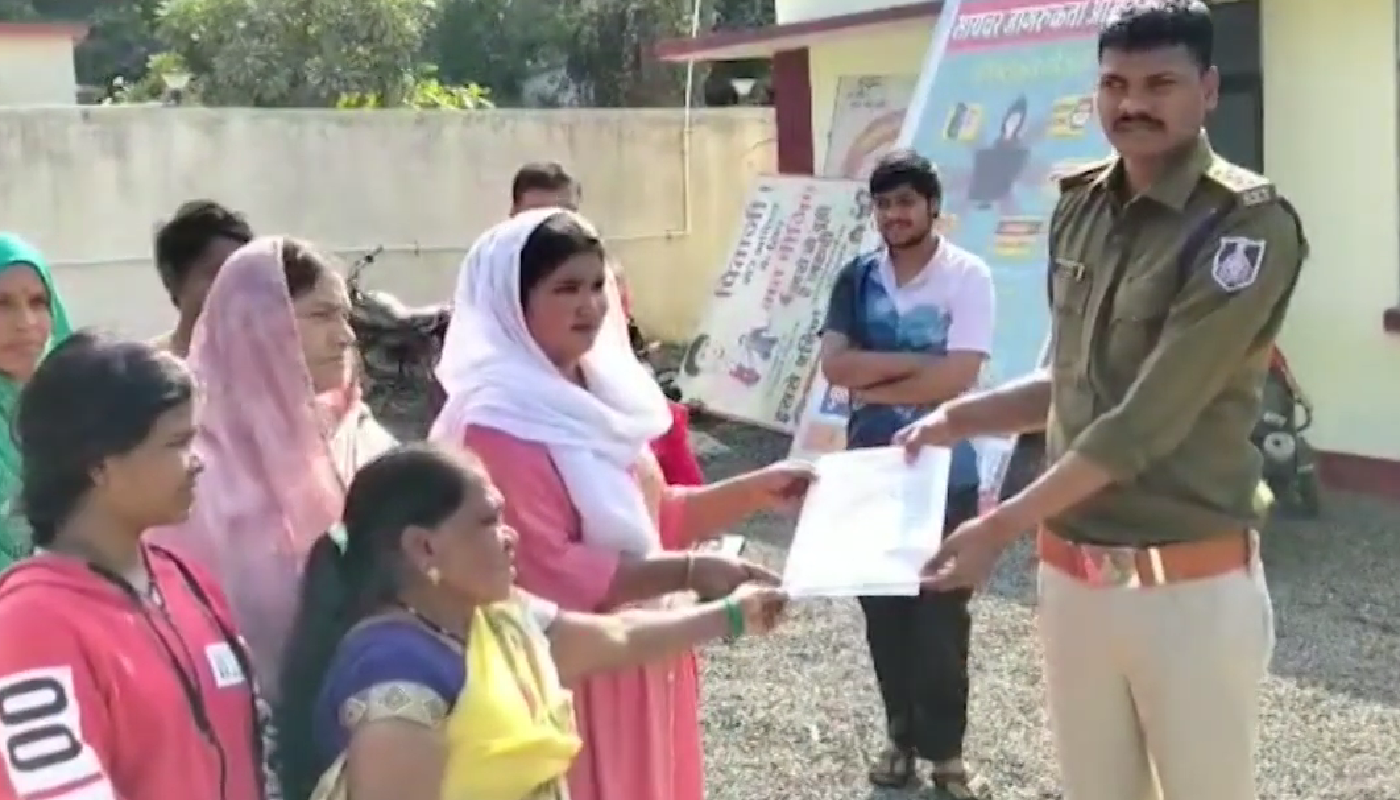
Case Summary
Two Dalit Hindu women were lured away on the pretext of being given work and were sexually harassed and coerced by three Muslim men in Jobat town of Alirajpur district, Madhya Pradesh. A victim stated that the accused Imran Yakub, Ahmad Sheikh, son of Husain Sheikh, and Amjad Khatri took her and another girl to a house in Ward 11 under the guise of arranging labour work. Once inside, the men attempted to force themselves on the two girls and threatened them when they resisted. The men also forced one of them to convert and marry one man. The victims said they were frightened and pressured while the men continued their sexual misconduct. When news of the incident reached the neighbourhood, several local women and residents rushed to the spot, rescued the two girls, and immediately informed the police. The victims were then taken to the Jobat police station for safety and further action. Based on the complaint, Jobat police registered a case under the SC/ST Act, the Religious Freedom Act, and other serious sections. Since one of the two girls was a minor, sections of the POCSO Act were also added. Police confirmed that two of the accused had been arrested, while the third remained at large. After the incident, many women from the area reached the police station and submitted a written application demanding strict action against the accused.
Why it is Hate Crime ?
The primary category in this case is: Predatory Proselytisation. The first subcategory under this is: Conversion/ attempts to convert by inducement. Predatory Proselytisation is not just limited to threat, harassment, force and violence, but it also has contours of stealth. In several cases, the Hindu victim is exploited to convert, with non-Hindus taking advantage of their poverty. In such cases, the Hindu victim who is suffering financially is offered monetary benefits, including lucrative offers for jobs, health treatment, education, etc, to induce the victim into changing his/her religion. In such cases, the religious identity of the victim and the aim to disenfranchise him from his faith form the heart of the crime. Also, taking advantage of and exploiting an individual’s economic vulnerabilities is widely acknowledged as exploitation, forms of which are often penalised by law. Such cases therefore are considered religiously motivated hate crimes since the victim’s religious identity forms the very heart of the crime itself. The second subcategory selected is- Proselytisation by grooming, brainwashing, manipulation or subtle indoctrination. The tertiary category under this is: Rape and sexual assault/harassment. Religious brainwashing essentially means the often subtle and forcible indoctrination to induce someone to give up their religious beliefs to accept contrasting regimented ideas. Religious grooming or brainwashing also involves propaganda and manipulation. It involves the systematic effort, driven by religious malice and indoctrination, to persuade “non-believers’ to accept allegiance, command, or doctrine to and of a contrasting faith. Cases of such grooming or brainwashing are far more nuanced than direct threats, coercion, inducement and violence. In such cases, it is often seen that there is repeated, subtle and continual manipulation of the victim to induce disaffection towards their own faith and acceptance of the contrasting faith of the perpetrator. While subtle indoctrination is widely acknowledged as predatory, an element which is often understated in such conversions or the attempts of such conversion is the role of loyalty and trust which might develop between the perpetrator and the victim. Fiduciary relationships are often abused to affect such religious conversion. For example, an educator transmitting religious doctrine of a competing faith to a Hindu student. The Hindu student is likely to accept what the teacher is transmitting owing to existence of the fiduciary relationship. The exploitation of the fiduciary relationship to religiously indoctrinate victims would also be included in this category. Since the underlying animosity towards the victim’s faith forms the basis of predatory proselytization, such cases are considered religiously motivated hate crimes. The third subcategory under this is: Harassment, threats, coercion for conversion. Harassment covers a wide range of behaviours of an offensive nature. It is commonly understood as behaviour that demeans, humiliates, and intimidates a person, including threats and coercion. Harassment and threats, in this case, find their root on discriminatory grounds which has the effect of nullifying a person’s rights or infringing upon his freedom to exercise his right specifically owing to the victim’s religious identity. Verbal and physical threats and psychological or physical harassment are often used against Hindu victims because they choose to practice their professed religion. Religious harassment also includes forced and involuntary conversions by harassment, threats or coercion. Coercion includes intimidatory tactics like force-feeding a Hindu victim beef to convert to another religion, forceful circumcision etc. In several cases documented, non-Hindu perpetrators or those who harbour specific animosity towards Hinduism, harass victims simply based on their religious identity. Such cases often also include harassment to ensure the Hindu victim abandons his/her professed religion and adopts the religion of the perpetrator. Such cases where Hindu victims are harassed to convert to the perpetrator’s religion are rooted in animosity towards the victim’s religious identity and are therefore documented as religiously motivated hate crimes. This case has been added to the Hinduphobia Tracker because it contains clear indicators of targeted religious exploitation, coercion and predatory behaviour directed specifically at Hindu girls. The actions of the accused were not random or opportunistic. They involved deliberate planning, deception, and pressure that centred on the victims’ Hindu identity and their vulnerability. The first reason this case qualifies as a religiously motivated hate crime is the use of deliberate deception to lure the Hindu girls. The accused men approached them under the guise of offering work and then isolated them inside a house. The shift from a promise of employment to sexual coercion shows a calculated plan to take advantage of their trust. Such grooming-based deception is a recognised tool in predatory proselytisation, where victims are first trapped emotionally or physically before religious pressure is applied. Luring Hindus to convert to a different faith by offering money and inducements such is predatory in nature since the extremists manipulate the specific vulnerabilities of disadvantaged and poor Hindus to manipulate them into conversion. This stems from inherent hostility towards the victim's professed faith since Abrahamic faiths believe that any non-adherent to the faith is a subject to be dehumanised till they convert. Since such predatory actions stem from doctrinal animosity towards the Hindu faith and its adherents, this case is being documented as a religiously motivated hate crime. The second factor that categorises this case as a hate crime is the attempt to force at least one of the girls to convert and marry one of the accused. Forced conversion is not merely a personal violation. It is an attack on the victim’s religious identity and an act rooted in hostility towards her faith. When conversion pressure is combined with sexual harassment, intimidation, and threats, it becomes a form of religious subjugation aimed at breaking the victim’s spiritual and personal autonomy. The case also involves minors, making the crime even more serious. When a Hindu minor is targeted through coercion or grooming, the religious motivation behind the attempt to convert becomes even more significant. The addition of POCSO sections by the police further emphasises the gravity of the abuse and exploitation. Moreover, since the Hindu victims were minors the element of consent and genuine change of conscience was missing ab initio. It is a well-established fact that children are more susceptible to manipulation since they are still developing emotionally, cognitively, and socially. Their brains are not fully matured, making them more vulnerable to influence and less capable of critically evaluating information. Moreover, subtle manipulation tactics can be difficult to detect, especially when they are employed by trusted authority figures in positions of influence. This makes it challenging for parents, to identify and address instances of religious manipulation in schools. Since the underlying offence in this case is against children of a specific faith and involves subtle tactics of indoctrination, which obviously stems from a bias against the Hindu faith, this case has been documented as a hate crime. Another reason this case is categorised as a hate crime is the evident pattern of pressure, manipulation, and intimidation used to force the victims away from their Hindu identity. The Religious Freedom Act was invoked because the actions of the accused were not limited to sexual misconduct; they included religious coercion, which is central to the legal definition of a faith-based crime. Finally, the community response and involvement of multiple women rushing to rescue the victims underline how strongly the incident was perceived as an attack on Hindu girls and Hindu dignity. The mobilisation of local residents and the filing of serious charges by the police reflect the broader social harm caused by such acts. For these reasons, the case has been classified as a religiously motivated hate crime against Hindus and added to the tracker. Disclaimer: It is important to clarify that none of the media sources covering this case have specified the exact date on which the hate speech against Hindus was made. The viral video clip in question is also undated. Therefore, for documentation purposes, we have recorded the date based on when the incident was reported in the media.
Victim Details
Total Victim
2
Deceased
0
Gender
- Male 0
- Female 2
- Third Gender 0
- Unknown 0
Caste
- SC/ST 2
- OBC 0
- General 0
- Unknown 0
Age Group
- Minor 1
- Adult 1
- Senior Citizen 0
- Unknown 0


Case Status
Case sub-judice


Perpetrators Details
Perpetrators
Muslim Extremists
Perpetrators Range
From 2 To 5
Perpetrators Gender
male
 Sources




