Hindu girl student assaulted by Muslim roommate and confined in university hostel after objecting to desecration of puja space
 Rewa, Madhya Pradesh, India
  26 November, 2025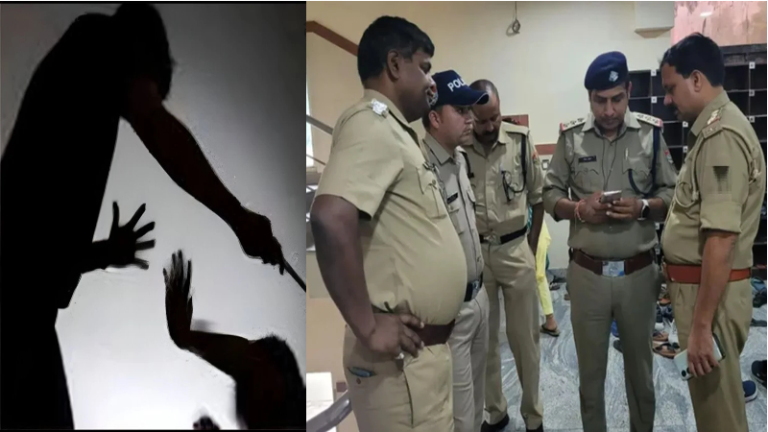
Case Summary
A Hindu girl was attacked inside her university hostel in Rewa, Madhya Pradesh, after she objected to the desecration of her prayer space. Smita, a resident of the girls hostel at Awadhesh Pratap Singh University, was performing puja in her room on 27 November 2025 when her roommate, Ayesha Parveen, entered while smoking a cigarette and began dropping ash near the area where the puja was taking place. When the Hindu student objected, the Muslim student said, "This is your God, not mine." This comment led to an argument between the two, which escalated into a physical altercation. When Smita further protested, Ayesha responded with offensive remarks, turning the situation into a violent confrontation. Smita stated that Ayesha then called a friend to the room, and the two assaulted her together. She further added that she was confined inside the room for nearly two hours, during which she faced both physical and mental harassment. After managing to report the incident, Smita lodged complaints with the hostel warden and the university vice chancellor. The lack of immediate disciplinary action sparked a protest by the Akhil Bharatiya Vidyarthi Parishad (ABVP) on campus. ABVP district convenor P. N. Pandey said the victim had suffered serious assault and intimidation. The organisation demanded that her safety be ensured and that an FIR be filed against the accused students, warning of agitation if the administration failed to act. The university authorities acknowledged the complaint and stated that a report had been sought from the hostel warden. Vice Chancellor Rajkumar Kudaria announced that an inquiry committee had been constituted to investigate the incident, and further action would follow based on its findings.
Why it is Hate Crime ?
The primary category in this case is: Attack not resulting in death. The first subcategory under this is: Attacked for Hindu identity. In several cases, Hindus are attacked merely for their Hindu identity without any perceived provocation. A classic example of this category of religiously motivated hate crime is a murder in 2016. 7 ISIS terrorists were convicted for shooting a school principal in Kanpur because they got ‘triggered’ seeing the Kalava on his wrist and tilak that he had put. In this, the Hindu victim had offered no provocation except for his Hindu religious identity. The motivation for the murder was purely religious, driven by religious supremacy. Such cases where Hindus are targeted merely for their religious identity would be documented as a hate crime under this category. The second subcategory under this is: Attack against Hindu devotees. Hindu devotees are a few of the easiest targets of religiously motivated hate crimes because during the festival/procession/puja etc, for non-Hindus it is easy to profile their victims on the basis of religion. Hindu devotees come under attack on several occasions by individual non-Hindus or mobs of non-Hindus owing to their animosity against Hinduism, its symbols and tradition/practices. There are several instances of Hindu devotees being attacked while they worship in temples or temporary religious structures, during religious processions, doing bhajan/kirtan/puja in their own homes, in the residential society etc. These attacks are perpetrated by non-Hindus primarily because of their animosity towards Hindus and their faith. In some cases, the trigger for the violence may be non-religious, however, there are two elements that make these hate crimes. First, the Hindus who come under attack are attacked violently while indulging in religious activity. Whether they are in a place of worship or not is immaterial to the crime. When individuals are attacked while indulging in religious practices, the attack in itself is a hindrance to their freedom to practice religion and therefore constitutes a hate crime. Secondly, religious supremacist doctrines and ideologies deem religious practices of Hindus to be offensive ab initio since they are considered “sinful” by these ideologies, worthy to be annihilated by force or coercion. Driven by these religious supremacist ideologies and doctrines, the attacks against Hindu devotees stem from intrinsic animosity towards Hinduism. In some cases, the trigger for the violence may be non-religious, however, it develops into a religiously motivated crime during the course of the violence. Since these attacks stem from animosity towards Hindus and Hinduism, they are considered religiously motivated hate crimes under this category. Another primary category in this case is: Attack on Hindu religious representations. The subcategory under this is: Desecration of Hindu religious symbol. Icons and symbols or a religious representation of a spiritual ideal are widely revered in Hinduism. Iconography is of vital significance in the Hindu milieu. It helps connect people’s spiritual beliefs with the real world. Iconography within the Hindu faith takes several shapes and forms. Murtis are of most significance to Hindus, to which daily rituals, prayers and offerings are done. Besides the murtis, there are several other symbols which have deep significance in the Hindu faith – the Om and Swastika for example. Since these Hindu religious symbols hold paramount importance in Hinduism, any desecration of symbols, icons, murtis, religious representations and manifestations, is driven by animosity towards the faith itself which manifests itself through these murtis, icons and symbols. Therefore, any desecration of these Hindu religious symbols and representations is considered religiously motivated hate crimes under this category. The other subcategory selected under the above category is- Defiling religious customs. Sanatan Dharma is not a religion of one book, which is to say that while it has religious scriptures that form the central tenets of the faith, there are several traditions followed through thousands of years, mostly passed from generation to generation orally. There are several such customs and traditions that are followed by various Hindus and Hindu sects. Defiling of these traditions and customs is a breach of an individual or group’s religious practices. Such practices can range from dietary restrictions like not eating non-vegetarian food for a certain period of the year, not eating non-vegetarian food at all, not eating beef since the cow is considered holy in Hinduism, the sanctity of religious customs followed in the house (like many ISCKON devotees), etc. Any malicious action leading to the breach of such traditions or defilement of these traditions owing to animosity towards the faith or for the sake of activism stems not only from the lack of faith in the religion itself but also from disregard for the faith of the devotees who follow the customs/traditions and implicit bias against the faith, the tradition itself. Since these specific traditions are central to the faith of the devotees of that specific sect of Hindus, any non-compliance with these traditional rules would be considered a religiously motivated hate crime. Another primary category in this case is: Hate speech against Hindus. The subcategory under this is: Anti-Hindu slurs, mocking faith. Anti-Hindu slurs and the deliberate mocking of the Hindu faith owing to religious animosity involve the usage of derogatory terms, stereotypes, or offensive references to religious practices, symbols, or figures. One of the common anti-Hindu slurs used against Hindus is “cow-worshipper” and “cow piss drinker”. The intention of using this term is to demean and mock Hindus as a group and their religious beliefs since Hindus consider the cow holy. Additionally, some symbols and the slurs attached to them have a historical context that exacerbates the insult, hate, stereotyping, dehumanisation and oppression against Hindus. Cow worship has been used for centuries to denigrate Hindus, insult their faith and oppress Hindus specifically as a religious group. There has been overwhelming documentation about how cow slaughter has been used to persecute Hindus with cow meat being thrown in temples and places of worship. There has also been overwhelming documentation where cow meat (beef) has been force-fed to Hindus to either forcefully convert them to Islam or denigrate their faith. Apart from cow worship, the Swastika – which holds deep religious significance for the Hindus – has also been misinterpreted and distorted to use as a slur against Hindus. Similarly, the worship of the Shivling has been used by supremacist ideologies and religions to denigrate Hindus owing to religious animosity. Such slurs and denigration stem out of inherent animosity and hate towards Hindus and their faith, therefore, it is categorised as hate speech targeted at Hindus specifically owing to their religious identity. This case has been added to the tracker because it contains clear indicators of religiously motivated hostility directed at a Hindu girl while she was practising her faith. The victim’s puja was the direct point of conflict, and the actions described in the complaint demonstrate a targeted attempt to humiliate, obstruct, and violate her right to religious practice inside her own living space. The confrontation did not arise from a neutral disagreement but from an act that desecrated a Hindu prayer area, which constitutes an attack on a deeply personal expression of faith. A significant aspect of the incident is the use of a lit cigarette inside the puja area. Within Hindu customs, the presence of smoke from cigarettes or any intoxicant in a place of worship is considered deeply impure, as it contaminates the sanctity of the space and disrespects the deity being worshipped. Dropping cigarette ash near a shrine is understood as a direct act of defilement, symbolically violating the purity required for puja. For a devotee, this is not a casual disturbance but a deliberate intrusion into sacred space, making the act itself an expression of disregard for Hindu religious norms. The escalation into physical assault further strengthens the religious angle. In many documented cases, attacks on Hindu devotees occur precisely when they are offering prayers or engaged in rituals, as this is the moment where their religious identity is most visible. Here too, the assault followed immediately after the victim objected to ash being dropped on her puja space. This shows that her religious practice was not incidental to the violence but central to the chain of events. When someone is attacked at the moment of prayer, the aggression is inseparable from an attempt to silence or demean that religious expression. The accused used objectionable language while reacting to the puja adds another layer to the hostility. Such speech aligns with patterns seen in anti Hindu harassment, where verbal contempt for Hindu symbols, deities, or rituals accompanies physical intimidation. Attacks of this type go beyond interpersonal conflict and target the dignity of the victim’s faith itself, making them relevant for documentation as hate crimes. The reported two hour confinement of the victim further underscores the power driven nature of the assault. Confinement following a confrontation over religious practice indicates an intention to punish the victim for asserting her Hindu identity. In broader patterns of hate based incidents, prolonged intimidation often follows initial acts of desecration or mockery. The presence of a second assailant, called by the primary accused, also mirrors common behavioural patterns in targeted religious hostility, where reinforcement from peers emboldens the aggressor and amplifies the victim’s vulnerability. The incident caused fear among students and required intervention from a student organisation, which indicates that the environment became hostile for the Hindu victim. Given these elements desecration of the worship space, verbal contempt, physical assault, confinement, and the targeting of the victim during prayer the case has been added to the tracker. If the inquiry confirms the religious motive, it will be classified formally as a hate crime against Hindus.
Victim Details
Total Victim
1
Deceased
0
Gender
- Male 0
- Female 1
- Third Gender 0
- Unknown 0
Caste
- SC/ST 0
- OBC 0
- General 0
- Unknown 1
Age Group
- Minor 0
- Adult 0
- Senior Citizen 0
- Unknown 1


Case Status
Complaint filed


Perpetrators Details
Perpetrators
Muslim Extremists
Perpetrators Range
From 2 To 5
Perpetrators Gender
female
 Sources




