Muslim women hurl casteist slurs, assault Dalits in Nuh, threaten to kill them to induce migration
 Nuh, Haryana, India
  16 April, 2024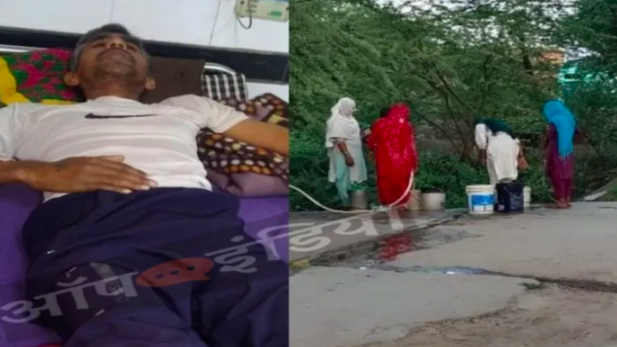
Case Summary
In the Nuh district of Haryana, a Dalit family was assaulted by a Muslim mob while they were gathering water from a tube well. The incident unfolded when Dalit women were accosted by Muslim women, who claimed exclusive rights to the water source and hurled caste-based insults. “You belong to Ch*m*r (low caste), how can you fill water before us?”, they said. When confronted, the Muslim women initiated physical violence, with the situation escalating as men from the Muslim family joined in. The attack extended to the Dalit families' homes, where the assailants not only continued their physical assault but also vandalised properties, destroying household items and even harming animals. The victims, including women and men who intervened, sustained severe injuries, with some requiring hospitalisation. They said, “Today we spared you, you low-borns and wretches. If you ever dare to fill water before us again or even look at us the wrong way, we will kill you.” The victims delayed filing a complaint due to attending to the injured. Eventually, an FIR was lodged against 18 individuals, including both men and women, under various sections of the Indian Penal Code and the SC/ST Act. Charanjeet, an injured victim of the incident, shared insights with OpIndia about the religious dynamics in his village. He revealed that there are approximately 14-15 Hindu households, all belonging to the Dalit community, in contrast to about 400 Muslim households. Despite being devotees of Lord Mahadev and Mother Durga, the Dalits refrain from building temples due to fear. Charanjeet recounted observing Navratri fast with his family but worshipping at home without drums and cymbals due to intimidation. He highlighted the routine verbal abuse and threats faced by Dalits, echoing similar sentiments expressed by victim Rajni.
Why it is Hate Crime ?
Distinct elements in this particular case demonstrate that the crime was committed while harbouring a bias against the Hindu faith. As per case details, the first prime category under which this case has been placed in the hate tracker is 'Attack not resulting in death'. Further, to break down the case further, two sub-categories under this prime category have been chosen here. The first sub-category relevant in this case is, 'Attacked for Hindu identity'. In several cases, Hindus are attacked merely for their Hindu identity without any perceived provocation. A classic example of this category of religiously motivated hate crime is a murder in 2016. 7 ISIS terrorists were convicted for shooting a school principal in Kanpur because they got ‘triggered’ seeing the Kalava on his wrist and tilak that he had put. In this, the Hindu victim had offered no provocation except for his Hindu religious identity. The motivation for the murder was purely religious, driven by religious supremacy. Such cases where Hindus are targeted merely for their religious identity would be documented as a hate crime under this category. The second sub-category under which this case has been placed in the hate tracker is, 'Attacked to induce migration from non-Hindu dominated area'. There have been cases where the Hindus living in an area, often with a majority dwelling belonging to non-Hindus or those harbouring animosity towards the Hindu faith, the Hindu residents experience threats and violence. The violence is employed with the aim of making the Hindus leave the area and relocate, so the area could be turned into an exclusive ghetto for adherents of the non-Hindu faith or those who harbor animosity towards the Hindu faith. In several cases, the aim of exodus is explicit. However, in several cases, the demand for exodus of Hindu residents is not explicit, however, violence by non-Hindu residents leaves the Hindu residents no option but to leave the area, thereby, turning the area into an exclusive ghetto of non-Hindu residents. In such cases, there are instances violence against the Hindu residents explicitly. For example, in the Hauz Qazi case of 2019, the Muslim residents claimed that mob violence against the Hindu residents had been triggered by a parking dispute. However, the violence did turn religious with a temple being desecrated and was directed specifically against the Hindu residents. The Hindu residents of the area were clear that the violence was religiously motivated and one of the motives was to affect an exodus of the Hindu residents. In such cases, even though the perpetrators have not explicitly expressed the aim of affecting exodus, the given circumstances and violence and precedent point to the intention of exodus and therefore would be categorized under this sub-category. Such crimes are religiously motivated and therefore are hate crimes. The second category relevant here is- Hate speech against Hindus, within which, the sub-category selected is- Anti-Hindu slurs, mocking faith. Anti-Hindu slurs and the deliberate mocking of the Hindu faith owing to religious animosity involve the usage of derogatory terms, stereotypes, or offensive references to religious practices, symbols, or figures. One of the common anti-Hindu slurs used against Hindus is “cow-worshipper” and “cow piss drinker”. The intention of using this term is to demean and mock Hindus as a group and their religious beliefs since Hindus consider the cow holy. Additionally, some symbols and the slurs attached to them have a historical context that exacerbates the insult, hate, stereotyping, dehumanisation and oppression against Hindus. Cow worship has been used for centuries to denigrate Hindus, insult their faith and oppress Hindus specifically as a religious group. There has been overwhelming documentation about how cow slaughter has been used to persecute Hindus with cow meat being thrown in temples and places of worship. There has also been overwhelming documentation where cow meat (beef) has been force-fed to Hindus to either forcefully convert them to Islam or denigrate their faith. Apart from cow worship, the Swastika – which holds deep religious significance for the Hindus – has also been misinterpreted and distorted to use as a slur against Hindus. Similarly, the worship of the Shivling has been used by supremacist ideologies and religions to denigrate Hindus owing to religious animosity. Such slurs and denigration stem out of inherent animosity and hate towards Hindus and their faith, therefore, it is categorised as hate speech targeted at Hindus specifically owing to their religious identity. Anti-Hindu slurs and the deliberate mocking of the Hindu faith owing to religious animosity involve the usage of derogatory terms, stereotypes, or offensive references to religious practices, symbols, or figures. One of the common anti-Hindu slurs used against Hindus is “cow-worshipper” and “cow piss drinker”. The intention of using this term is to demean and mock Hindus as a group and their religious beliefs since Hindus consider the cow holy. Additionally, some symbols and the slurs attached to them have a historical context that exacerbates the insult, hate, stereotyping, dehumanisation and oppression against Hindus. Cow worship has been used for centuries to denigrate Hindus, insult their faith and oppress Hindus specifically as a religious group. There has been overwhelming documentation about how cow slaughter has been used to persecute Hindus with cow meat being thrown in temples and places of worship. There has also been overwhelming documentation where cow meat (beef) has been force-fed to Hindus to either forcefully convert them to Islam or denigrate their faith. Apart from cow worship, the Swastika – which holds deep religious significance for the Hindus – has also been misinterpreted and distorted to use as a slur against Hindus. Similarly, the worship of the Shivling has been used by supremacist ideologies and religions to denigrate Hindus owing to religious animosity. Such slurs and denigration stem out of inherent animosity and hate towards Hindus and their faith, therefore, it is categorised as hate speech targeted at Hindus specifically owing to their religious identity. In his instance, the Muslims singled out the Dalit families living in the village, which was predominantly occupied by people of the Muslim community. The Muslims harassed the handful of Hindu families living there. They were not allowed to take water from the common taps placed in the village. The Muslims wanted the Hindus to refrain from following their religious customs and celebrations, keeping Islamic sensibilities in mind. Here, the victims themselves testified that despite being devotees of Lord Mahadev and Mother Durga, they refrained from building temples due to fear. They could not observe religious fasts and could not celebrate their festivals due to fear and intimidation. Further, casteist abuses were hurled at the victims, owing to their religious identities. Here, it can be argued that a caste-specific slur is aimed at her micro identity of belonging to the Dalit section of the Hindu community and not her Hindu identity itself. However, as far as Abrahamic religions are concerned, the micro identities of caste, region, and language are secondary. It is the religious identity that drives the animosity of the perpetrator against the Hindu victim. In this case, while the accused hurled caste abuses at the victims, the animosity was driven by his animosity towards Hinduism and Hindus. While the immediate trigger of the violence could be the fight over drawing water from the common taps placed in the village, as mentioned in reports, the fact that caste slurs were hurled at the victim by the perpetrators and the violence was perpetuated against individuals based on their social and religious identity, this case can be classified as a hate crime and included in the tracker.


Case Status
Complaint registered


Perpetrators Details
Perpetrators
Muslim Extremists
Perpetrators Range
From 10 to 100
Perpetrators Gender
both
 Sources




