Anti-Hindu fake news: Indian media maliciously labels Muslim fakir involved in duping people as 'Tantrik'
 Mumbai, Maharashtra, India
  31 January, 2024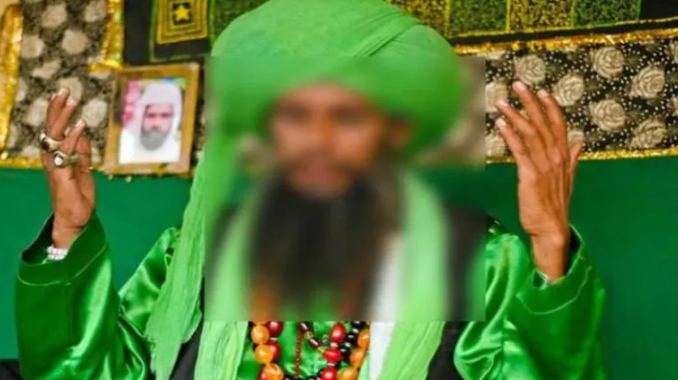
Case Summary
An anti-Hindu fake news story was spread by Hindustan Times, a media outlet that referred to a Muslim Peer/Fakir criminal as a ‘tantrik’, a Hindu term used specifically for practitioners of Hindu tantric traditions. According to media reports, the police in Sewri, Mumbai, registered a case against a Muslim fakir named Abubakar Mohammad Ali Sheikh. It was stated that Abubakar Mohammad Ali Sheikh deceived people by claiming to cure their illnesses, sacrificed goats in their names, extorted millions of rupees, and spent the money at a dargah (shrine). The Hindustan Times report made it clear from the name that the fraud was carried out by a “Muslim fakir.” However, they presented the news as if a “tantrik” was responsible, who, by lying to the victims, deceitfully made them perform sacrifices. A close reading of the report reveals how Hindustan Times manipulated words to send a misleading message in a single article. According to the police version cited in the report, the accused’s full name is Abubakar Mohammad Ali Sheikh (32 years old). A case was registered against him under Section 406 (criminal breach of trust) and Section 420 (cheating) of the Indian Penal Code, and Section 3 of the Maharashtra Prevention and Eradication Act. Additionally, a case was filed under the Human Sacrifice and Inhuman, Wicked and Aghori Practices and Black Magic (Prohibition) Act, 2013. The police complaint stated that a woman had constant body pain. Despite consulting several doctors, she did not get relief, so she approached the fakir. The fakir told her he could treat her illness with traditional methods but demanded 400,000 rupees and gold jewellery. During this process, he also sacrificed a goat and distributed money outside a dargah. After this, he gave the woman an amulet, claiming he had performed rituals on it to bring her good fortune. After meeting the fakir, the woman also contacted him regarding domestic problems. She sent a relative to the fakir because the relative wanted to send her son to the United Nations. The fakir took 170,000 rupees from her relative. Furthermore, the fakir told a friend of the woman that he could cure cancer, trapping him by saying he would die in 12 days if he did not follow the fakir’s instructions. He also extorted money from the complainant’s friend, who approached the fakir to calm her crying child. After cheating people of millions of rupees with no solutions to their problems, when the victims questioned the fakir, he started ignoring them instead of answering or refunding the money. The police received information about his activities and registered cases of fraud between March 2023 and January 2024, and began gathering evidence. During the investigation, police found that the victims had given 230 grams of gold and 700,000 rupees to the fakir. Hindustan Times, reporting this entire incident, played with words, which was also objected to on social media. Writer Madhu Purnima Kishwar questioned the reporter Vinay Dalvi, asking how someone named Ali Sheikh could be described as a tantrik. She pointed out that tantra is part of the Hindu knowledge tradition and sarcastically asked if, next time a Maulvi (Muslim cleric) is caught committing rape, will they be labelled a priest.
Why it is Hate Crime ?
This case is being added to the tracker under the primary category- Hate Speech against Hindus. The subcategory selected is- Anti-Hindu subversion and prejudice. The tertiary category selected is- Mislabelling/Misrepresentation of perpetrator's religion as Hindu. Hate speech is defined as any speech, gesture, conduct, writing, or display that is prejudicial against a specific individual and/or group of people, which is leading to or may lead to violence, prejudicial action or hate against that individual and/or group. Media plays a specific and overarching reach in perpetuating prejudicial attitudes towards a community owing to unfair, untrue coverage and/or misrepresentation/misinterpretation, selective coverage and/or omission of facts of/pertaining to issues affecting a specific religious group. This type of bias can dehumanise the victim group, making it easier for others to justify harmful actions against them, which aligns with the objectives of hate speech laws aimed at preventing such harm. It is often observed that the media takes a prejudicial stand against the Hindu community driven by their need to shield the aggressor community which happens to be a numeric minority, however, is the one perpetrating violence against Hindus. For example, the media is often quick to contextualise religiously motivated crimes against Hindus, omit or misrepresent facts that point towards religiously motivated hate crimes, justify and/or downplay religiously motivated hate crimes or simply present fake news to stereotype Hindus. Such media bias leads to the denial of persecution and is often used to dehumanise Hindus, leading to justification for violence against them. For example, the media covered several fake allegations of Hindus targeting Muslims and forcing them to chant Jai Shree Ram. Most of these cases were proved false and fabricated after police investigation. These fake news reports were subsequently never retracted or clarified. Such fake news led to the justification of violence and dehumanisation of Hindus based on the argument that since Hindus targeted Muslims and forced them to chant Jai Shree Ram, the dehumanisation of Hindus and violence against them was par for the course and merely a retaliation. Such media bias leads to prejudicial portrayal of Hindus and offers a justification for violence against them and therefore, is considered hate speech under this category. In this case, the media outlet Hindustan Times deliberately targeted the Hindu community by falsely portraying a Muslim fakir—the accused in a criminal case—as a “tantrik,” a term deeply rooted in Hindu traditions. In Hinduism, a tantrik is a practitioner of tantra, an esoteric spiritual path involving complex rituals, meditation, and philosophy aimed at spiritual growth and enlightenment. Tantra is intimately tied to the worship of Goddess Shakti and Lord Shiva and represents a sacred quest for the union of masculine and feminine energies, spiritual liberation, and divine wisdom. It is an ancient and revered facet of Hindu religious practice that fosters inner transformation and connection with the divine. By incorrectly labelling the Muslim fakir as a Tantrik, Hindustan Times not only misassigned his religious identity but also promoted animosity towards the Hindu community. This portrayal distorted the religion of the perpetrator, effectively casting him as a member of the Hindu community, which sowed confusion and prejudice. Furthermore, such misleading terminology and word choices foster negative stereotypes about Hindu tantricism and the Hindu community at large. It perpetuates damaging clichés that Hindus are deceitful or prone to wrongdoing, fostering unwarranted stigma, discrimination, and hatred against Hindus who have no involvement in the crime. This deliberate mischaracterisation reflects deep religious bias and malice harboured by Hindustan Times towards Hinduism and its followers. Given the clear evidence of religiously motivated hate speech, where a media outlet intentionally distorts facts to defame the Hindu community, this incident meets the criteria for inclusion as a hate crime. Consequently, the case is being recorded in the hate crime database of the Hinduphobia Tracker.


Case Status
Unknown


Perpetrators Details
Perpetrators
Others
Perpetrators Range
Unknown
Perpetrators Gender
unknown
 Sources




