Insult to Hindu religious sentiments: Kabirpanth follower publishes anti-Hindu literature abusing Hindu deities
 Uttar Pradesh, India
  9 July, 2025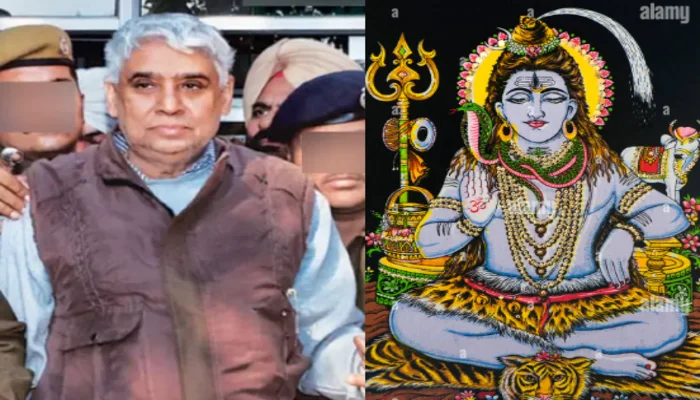
Case Summary
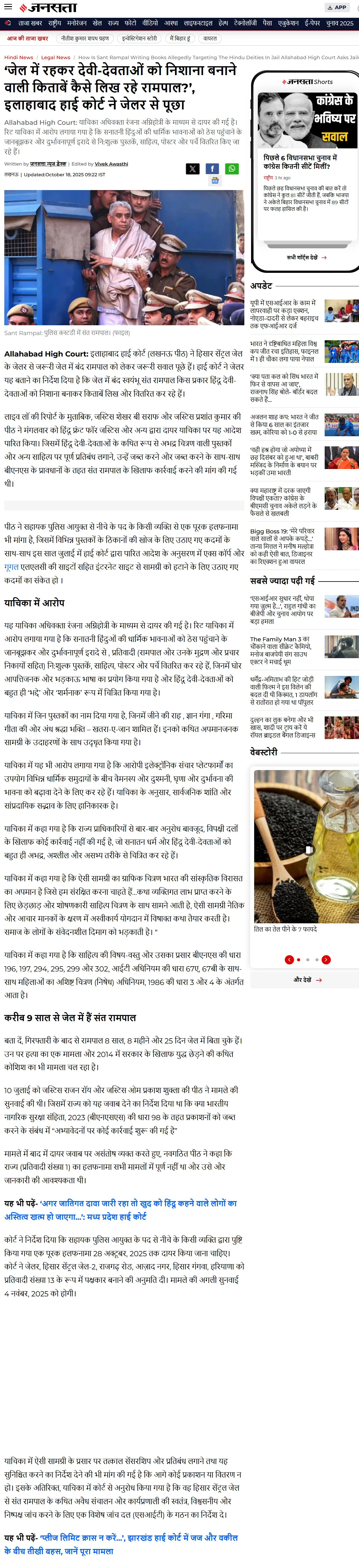
Hindu religious sentiments were insulted by Sant Rampal, a Kabirpanthi, who wrote and distributed literature that portrayed Hindu deities in an objectionable manner. Kabirpanthis are followers of Kabir, a 15th-century mystic and poet. According to a petition filed in the Allahabad High Court, Sant Rampal and his publishing bodies deliberately distributed books, literature, posters and pamphlets containing highly objectionable and inflammatory language against Hinduism and Hindu deities. The books named in the petition included Jeene Ki Raah, Gyan Ganga, Garima Geeta Ki and Andh Shraddha Bhakti - Khatra-e-Jaan. The books depicted Hindu deities in a vulgar and shameful manner, which insulted the religious sentiments of the Hindu community. Electronic communication platforms were also used to spread material promoting enmity, hatred and ill-will between religious communities, affecting public peace and communal harmony. Despite repeated requests to state authorities, no action had been taken against the distribution of content insulting Hinduism and Hindu deities. The petition emphasised that such content degraded India’s cultural heritage, created a toxic narrative that eroded moral and ethical standards, and inflamed sensitive minds. The Allahabad High Court (Lucknow Bench), by the division bench of Justices Shekhar B. Saraf and Prashant Kumar, passed an order on the petition filed by Hindu Front for Justice and others, seeking a complete ban, seizure and confiscation of books and other literature containing indecent depictions of Hindu deities, and action against Rampal under the provisions of the BNS. They also directed the jailer to explain how Rampal, who was already imprisoned, managed to produce and disseminate such material. It is important to note here that Sant Rampal had spent more than eight years, eight months and 25 days in prison since his arrest and faced charges of murder and an attempt to wage war against the government in 2014.
Case Images
Why it is Hate Crime ?
This case has been added to the tracker under the primary category- Hate Speech against Hindus. The subcategory selected is- Anti-Hindu slurs, mocking faith. Anti-Hindu slurs and the deliberate mocking of the Hindu faith owing to religious animosity involve the usage of derogatory terms, stereotypes, or offensive references to religious practices, symbols, or figures. One of the common anti-Hindu slurs used against Hindus is “cow-worshipper” and “cow piss drinker”. The intention of using this term is to demean and mock Hindus as a group and their religious beliefs since Hindus consider the cow holy. Additionally, some symbols and the slurs attached to them have a historical context that exacerbates the insult, hate, stereotyping, dehumanisation and oppression against Hindus. Cow worship has been used for centuries to denigrate Hindus, insult their faith and oppress Hindus specifically as a religious group. There has been overwhelming documentation about how cow slaughter has been used to persecute Hindus with cow meat being thrown in temples and places of worship. There has also been overwhelming documentation where cow meat (beef) has been force-fed to Hindus to either forcefully convert them to Islam or denigrate their faith. Apart from cow worship, the Swastika – which holds deep religious significance for the Hindus – has also been misinterpreted and distorted to use as a slur against Hindus. Similarly, the worship of the Shivling has been used by supremacist ideologies and religions to denigrate Hindus owing to religious animosity. Such slurs and denigration stem out of inherent animosity and hate towards Hindus and their faith, therefore, it is categorised as hate speech targeted at Hindus specifically owing to their religious identity. This case has been added to the tracker because Hindu religious sentiments were insulted by Sant Rampal, who wrote and distributed literature that portrayed Hindu deities in an objectionable manner. Sant Rampal and his publishing bodies deliberately distributed books, literature, posters and pamphlets containing highly objectionable and inflammatory language against Hinduism and Hindu deities. The books depicted Hindu deities in a vulgar and shameful manner, which insulted the religious sentiments of the Hindu community. Sant Rampal's actions demonstrated a persistent pattern of targeting Hindus, Hinduism, deities, and religious symbols, which clearly fall within the definition of hate crimes against Hindus. While promotion of any religion or philosophy is legal, it does not include the right to abuse, vilify, or intentionally denigrate a faith, in this case, Hinduism, with the aim of provoking hostility towards its followers. In Kabirpanth theology, followers are taught to reject the worship of Hindu gods and goddesses, or any form of idol worship, as they regard such practices as contrary to the teachings of Kabir. While any religion or philosophy is free to practise its beliefs, denigrating Hindu deities in an effort to incite hostility towards Hinduism constitutes a hate crime. Although some schools of thought among Hindus consider Kabirpanth to be part of Hinduism, Kabirpanth followers view themselves as distinct from Hindus, creating clear religious animosity. This school of thought and its methods are similar to those seen in Muslim and Christian groups, which target vulnerable Hindus and denigrate Hindu beliefs and their religious practices. Hindu deities occupy an immensely important and sacred position in Hinduism and are deeply revered by the Hindu community. Targeting them in a derogatory and abusive manner is not merely offensive; it reflects direct religious animosity towards Hinduism and its followers. By publicly maligning revered Hindu deities, the accused not only disrespected the faith but also incited hostility, making this a clear example of a religiously motivated crime. Such actions are consistent with hate speech, as they were designed to provoke hostility, offend religious sentiments, and spread contempt for Hinduism and its adherents.- The material produced and distributed by Sant Rampal was crafted specifically to insult, demean, and attack Hindu deities and sacred practices. The writings did not merely promote Kabirpanth teachings; they actively sought to portray Hindu gods in a vulgar manner and paint Hindu practices as evil, fraudulent, or spiritually dangerous. Such kind of anti-Hindu literature leads to the normalisation of hostility towards Hindu beliefs and the larger Hindu community, resulting in violence against them. In summary, Sant Rampal’s actions constitute a hate crime because they involved an organised and deliberate effort to demean Hindu deities, insult Hindu beliefs, and provoke hostility towards the Hindu community. Since the perpetrator's actions were motivated by religious animosity, this case has been added to the tracker. Disclaimer: The Hinduphobia Tracker records incidents based on when a crime occurred. It is important to clarify that none of the media sources covering this case has specified the exact date since when the books were in publication. Therefore, for documentation purposes, we have recorded the date of the incident as 10 July 2025 - when the court first heard the case. This is an indicative date of the incident.


Case Status
Arrested


Perpetrators Details
Perpetrators
Others
Perpetrators Range
One Person
Perpetrators Gender
male
 Sources




