Insult to Hindu sentiments: Muslim man posts derogatory remarks and video targeting revered Hindu deity on social media
 Bareilly, Uttar Pradesh, India
  11 October, 2025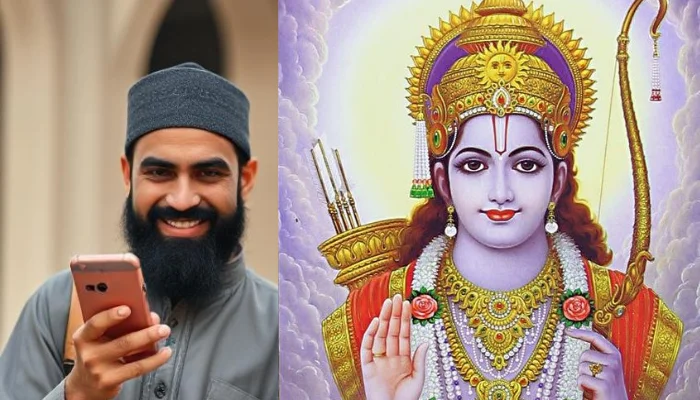
Case Summary
In Hafizganj, Bareilly, Uttar Pradesh, derogatory remarks and a video targeting Lord Ram had been uploaded on social media by a Muslim man named Hasan. In this case, the Hinduphobia Tracker managed to contact Station House Officer Pawan Kumar of Hafizganj police station. He stated that the accused had made derogatory remarks against Lord Ram on social media. The officer further stated that the accused had been arrested and sent to jail. According to news reports, Sarvesh Saini, district vice-president of Hindu Jagran Manch’s Yuva Vahini, a Hindu organisation, stated that Hasan from Bhandsar village had made a video viral on social media that provoked Hindu religious sentiments. The complainant is a resident of Harharpur Matkali village under Hafizganj police station. Upon becoming aware of Hasan's derogatory video and remarks, Sarvesh Saini promptly submitted a written complaint to the police. Subsequently, the police registered a formal case and arrested Hasan. Station House Officer Pawan Kumar officially confirmed that the accused had been taken into custody.
Why it is Hate Crime ?
This case has been added to the tracker under the primary category- Hate Speech against Hindus. The subcategory selected is- Anti-Hindu slurs, mocking faith. Anti-Hindu slurs and the deliberate mocking of the Hindu faith owing to religious animosity involve the usage of derogatory terms, stereotypes, or offensive references to religious practices, symbols, or figures. One of the common anti-Hindu slurs used against Hindus is “cow-worshipper” and “cow piss drinker”. The intention of using this term is to demean and mock Hindus as a group and their religious beliefs since Hindus consider the cow holy. Additionally, some symbols and the slurs attached to them have a historical context that exacerbates the insult, hate, stereotyping, dehumanisation and oppression against Hindus. Cow worship has been used for centuries to denigrate Hindus, insult their faith and oppress Hindus specifically as a religious group. There has been overwhelming documentation about how cow slaughter has been used to persecute Hindus with cow meat being thrown in temples and places of worship. There has also been overwhelming documentation where cow meat (beef) has been force-fed to Hindus to either forcefully convert them to Islam or denigrate their faith. Apart from cow worship, the Swastika – which holds deep religious significance for the Hindus – has also been misinterpreted and distorted to use as a slur against Hindus. Similarly, the worship of the Shivling has been used by supremacist ideologies and religions to denigrate Hindus owing to religious animosity. Such slurs and denigration stem out of inherent animosity and hate towards Hindus and their faith, therefore, it is categorised as hate speech targeted at Hindus specifically owing to their religious identity. Another primary category relevant in this case is- Attack on Hindu religious representations. Within this, the subcategory selected is- Iconoclastic representation of Hindu gods/ goddesses. An icon is a symbol of someone or something that is revered, or a religious representation of a spiritual ideal. Iconography is of vital significance in the Hindu milieu. It helps connect people’s spiritual beliefs with the real world. Iconography within the Hindu faith takes several shapes and forms. Murtis are of most significance to Hindus, to which daily rituals, prayers and offerings are done. Besides the murtis, there are several other symbols which have deep significance in the Hindu faith – the Om and Swastika for example. Any iconoclastic representation of these symbols, images and murtis is an affront to the religious beliefs and faith of the Hindu community itself since the symbols and icons are deeply religious in nature. In this sub-category of crime, we would record hate crimes and iconoclastic representations, in words, art, or any other form of representations of symbols that hold religious significance for the Hindu community. Since these symbols, icons and murtis are central to the Hindu faith, any iconoclastic representation of these symbols is born out of animosity towards the faith itself, manifesting itself through these symbols and therefore, these representations would be considered religiously motivated hated crimes. In this case, the accused, a Muslim man named Hasan, made derogatory remarks targeting Lord Ram on social media, which resulted in widespread outrage from Hindu organisations. Lord Ram is one of the most revered deities in Hinduism, worshipped as the seventh avatar of Vishnu and seen as the embodiment of righteousness, compassion, and duty. Hindus view Lord Ram not just as a religious figure, but as a profound symbol of their faith, ethics, and collective identity. Any disrespect, abuse, or mockery directed towards Lord Ram is an affront to the religious sentiments of the Hindu community. It is also a deliberate attempt to mock their Hindu beliefs and provoke emotional harm. This act reflected the religious animosity that the Muslim perpetrator held towards Hinduism and the Hindu community itself, turning the incident into an instance of religiously motivated hate speech. The Muslim accused also made an objectionable and derogatory video explicitly targeting Lord Ram, showcasing this case as an instance of iconoclastic disrespect towards Hindu deities. The accused clearly circulated this video with the intention to provoke and insult the Hindu faith, as confirmed by media reports. This amounts to a deliberate affront to the religious identity of Hindus. Such conduct is unequivocally a hate crime, carried out with the motivation to offend and demean the faith and religious tradition of the Hindu community. Recently, social media has become a safe haven for anti-Hindu individuals, allowing for the posting of Hinduphobic content—such as memes, posts, and comments targeting Hindu deities, religious symbols, scriptures, and members of the Hindu community, including Hindu scholars. This proliferation of online Hinduphobia represents a clear affront to the religious sentiments of Hindus, amounting to repeated and targeted anti-Hindu offences. Given that this case meets all the parameters of religiously motivated hate speech, it is being included in the Hate Crime Database maintained by the Hinduphobia Tracker. Disclaimer: The Hinduphobia Tracker generally records the date of an incident based on when the crime actually occurred rather than when it is first reported by the media. However, in this present case, the media reports do not specify the exact date on which the crime occurred. Therefore, for the purpose of documentation, the Hinduphobia Tracker is recording the date of the incident as 12th October 2025, which is the date when the media reported the case. This date is used solely as an indicative reference to the timing of the incident.


Case Status
Arrested


Perpetrators Details
Perpetrators
Muslim Extremists
Perpetrators Range
One Person
Perpetrators Gender
male
 Sources




