Hindu faith denigrated: Ambedkarite abuses Hindu deities, threatens death and rape when confronted
 Vaghodia, Gujarat, India
  2 October, 2025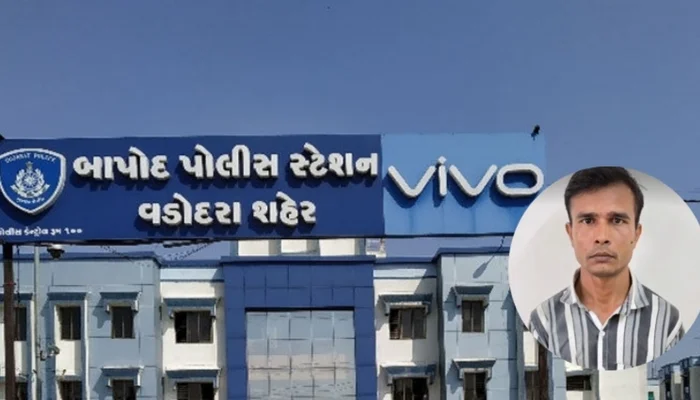
Case Summary
In Vadodara, Gujarat, Hindu religious sentiments were insulted after derogatory videos about Hindu deities were posted by a YouTuber named Nilesh Nanji Jitiya, an Ambedkarite. According to reports, the accused, a resident of Khodiyarnagar, operated a YouTube channel named "Nilesh N Jitiya" where he uploaded multiple videos that insulted Hindu gods and goddesses. The controversy began after someone uploaded an image of Dr B. R. Ambedkar, which the accused found to be offensive. Enraged by this, the accused responded by insulting Lord Ram and other Hindu deities in his videos. The video drew public outrage, after which several individuals confronted him, requested that he take the video down. However, instead of removing the video, the accused verbally abused them and threatened to kill them. The accused also threatened to rape the minor daughter of one of the people who confronted him. Following these threats, a complaint was lodged by Karanbhai Shantilal Solanki at the Bapod police station. Acting promptly on the complaint, police arrested the accused and removed the objectionable videos from YouTube and other social media platforms. During the investigation, it was found that after facing backlash, the accused had gone live again on social media, where he continued to insult Hindu deities and further inflame tensions. As of the date of writing this report, the accused was produced before the court and sent to judicial custody. The police registered a case under the relevant provisions of the Bharatiya Nyaya Sanhita and the Information Technology Act. Further investigation was initiated to examine his past online activities and possible motives behind the repeated targeting of Hindu religious sentiments. Interestingly, the accused was an Ambedkarite, a Bhim Army supporter, and was often seen in his video raising the slogans of Jai Bheem. His videos showed a consistent pattern of hostility towards the Hindu community, filled with abusive language and deliberate provocation against anyone who even mildly criticised Dr B. R. Ambedkar. He repeatedly insulted Hindu deities with the clear intention of demeaning the Hindu community under the guise of Ambedkarite activism.
Why it is Hate Crime ?
This case has been added to the tracker under the primary category- Hate Speech against Hindus. The subcategory selected is- Anti-Hindu slurs, mocking faith. Anti-Hindu slurs and the deliberate mocking of the Hindu faith owing to religious animosity involve the usage of derogatory terms, stereotypes, or offensive references to religious practices, symbols, or figures. One of the common anti-Hindu slurs used against Hindus is “cow-worshipper” and “cow piss drinker”. The intention of using this term is to demean and mock Hindus as a group and their religious beliefs since Hindus consider the cow holy. Additionally, some symbols and the slurs attached to them have a historical context that exacerbates the insult, hate, stereotyping, dehumanisation and oppression against Hindus. Cow worship has been used for centuries to denigrate Hindus, insult their faith and oppress Hindus specifically as a religious group. There has been overwhelming documentation about how cow slaughter has been used to persecute Hindus with cow meat being thrown in temples and places of worship. There has also been overwhelming documentation where cow meat (beef) has been force-fed to Hindus to either forcefully convert them to Islam or denigrate their faith. Apart from cow worship, the Swastika – which holds deep religious significance for the Hindus – has also been misinterpreted and distorted to use as a slur against Hindus. Similarly, the worship of the Shivling has been used by supremacist ideologies and religions to denigrate Hindus owing to religious animosity. Such slurs and denigration stem out of inherent animosity and hate towards Hindus and their faith, therefore, it is categorised as hate speech targeted at Hindus specifically owing to their religious identity. The other sub-category selected is - Violent threats. Violent threats, explicit, implicit or implied, is the most dangerous form of hate speech since it goes beyond discriminatory and prejudicial language to express the intent of causing harm to an individual or a group of people based on their religious identity and faith. There could be several different kinds of threats that are issued to Hindus based on religious animosity. An explicit threat would mean the direct threat of violence towards an individual Hindu, a group of Hindus or Hindus at large. Physical violence, death threats, threats of destruction of property belonging to Hindus and threats of genocide would mean explicit threats against Hindus for their religious identity. Implicit threats may not be a direct threat but implied through the use of symbols of actions – for example – in the Nupur Sharma case, other than explicit threats, there were also implicit threats when Islamists took to the streets to burn and beat her effigies. It implies that they want to do the same to Nupur Sharma – thereby is considered an implicit threat. Violent threats can be delivered in person, through letters, phone calls, graffiti, or increasingly through social media and other online platforms. It would be important to understand that a threat – explicit or implicit, online or offline – to an individual who happens to be a Hindu does not qualify as a religiously motivated threat. Such a threat, while vile and dangerous, could be owing to non-religious reasons and/or personal animosity. To qualify as a religiously motivated threat, it would need to exhibit an indication that the individual is being targeted for religious reasons and/or owing to his/her religious identity as a Hindu. This case has been added to the hate crime database as the accused, an Ambedkarite and supporter of the Bhim Army, deliberately posted derogatory remarks against Hindu deities with the intent to insult and provoke the Hindu community. Hindu Deities are an integral part of the Hindu religion and are highly revered by Hindus. Any attempt to mock or abuse them is born out of animosity towards Hinduism. In this case, the objectionable remarks were a direct attack on the sanctity of the Hindu faith. It was, in fact, not a random or misguided act, but a calculated and premeditated effort to attack Hinduism and the larger Hindu society. When confronted by members of the Hindu community who asked him to remove the objectionable video, the accused reacted with extreme aggression. Instead of showing remorse or restraint, he verbally abused those questioning him, issued death threats, and even threatened to rape the minor daughter of one of the individuals who confronted him. This demonstrates that his intent extended far beyond mere online provocation; it was an open expression of hatred and contempt towards Hindus as a group. The threats of murder and sexual violence were not random outbursts but were motivated by his hostility towards those defending their faith, thereby reinforcing the religious bias underlying his actions. Such targeted intimidation of Hindus for asserting their right to protect their deities and beliefs qualifies this incident squarely as a hate crime rooted in religious animosity. In recent times, social media has increasingly become a platform for anti-Hindu hate, with derogatory memes, videos, and messages targeting Hindu religious symbols, practices, and deities. Such content is recognised as part of a broader pattern of Hinduphobia and religious hate crimes online. This deliberate targeting of revered deities firmly establishes this act as a religiously motivated hate crime; therefore, it is being categorised under the hate crime database of the Hinduphobia Tracker. It is important to mention here that the accused was a supporter of the Bhim Army, an Ambedkarite group. While the Bhim Army presents itself as a champion of Dalit rights, its actions and affiliations often contradict this claim. Dalits are very much Hindus, yet the Bhim Army frequently targets Hindu symbols, festivals, and practices, including those held sacred by Dalits themselves. This pattern suggests that the organisation’s agenda is less about genuine Dalit upliftment and more aligned with broader anti-Hindu narratives that seek to divide and weaken Hindu society from within. This becomes particularly apparent when the Bhim Army aligns with leftist and Islamist platforms, where identity politics is weaponised against Hindus. In such spaces, the micro identities of caste, region, and language are secondary; what matters most is religious identity. It is the Hindu identity, regardless of caste, that often becomes the target of animosity. As seen in cases where Dalit families were attacked for displaying Hindu symbols or worshipping deities, the hostility stems not from caste differences, but from a disdain for Hindu religiosity. For example, on May 19, 2020, reports emerged in which a Dalit family in Bihar’s Kishanganj district stated that the local Bhim Army unit attacked them for their Hindu beliefs, desecrating a temple as they objected to their reverence for Hindu deities and saffron flags. Similarly, on June 29, 2021, in Saharanpur, Uttar Pradesh, a Hindu named Saurabh Sharma was attacked by Bhim Army members over political differences. The assailants used swords and rods, causing severe injuries, and threatened to eliminate the Brahmin community from the area. Moreover, Bhim Army chief Chandrashekhar Azad has repeatedly made statements and taken positions that reflect his anti-Hindu stance. For instance, he has publicly endorsed conversion as a political weapon, invoking B.R. Ambedkar’s decision to leave Hinduism, and has actively supported movements that call for a rejection of Hindu festivals and practices. In fact, Chandrashekhar Azad's political trajectory has strongly focused on building a Dalit-Muslim alliance, a strategy that became particularly visible during his active participation in the anti-CAA (Citizenship Amendment Act) protests that culminated in the Delhi anti-Hindu Riots 2020. His brand of politics, under the banner of Dalit-Muslim unity, has contributed to narratives that vilify Hindu traditions and exacerbate targeted attacks against Hindus. Thus, by attacking Hindu symbols and aligning with forces hostile to Hinduism at large, the Bhim Army effectively turns against the cultural and spiritual traditions of the Dalit community itself. In doing so, it reinforces the very forces of division and religious antagonism that marginalise Dalits, not as a caste, but as Hindus. This contradiction reveals that, despite its stated mission, the Bhim Army’s trajectory increasingly serves an anti-Hindu, rather than a pro-Dalit agenda. Therefore, this case has been categorised under the Hinduphobia Tracker’s hate crime database as it represents a deliberate and ideologically motivated attempt to denigrate Hindu deities and promote hatred towards Hinduism under the guise of Ambedkarite activism. Disclaimer: The Hinduphobia Tracker records incidents based on when an event occurred or when the victim’s ordeal began. In this case, since the objectionable videos were deleted from social media following the accused’s arrest, the original date of posting or making those derogatory remarks could not be ascertained. Therefore, for documentation purposes, the date of the incident has been recorded as 3rd October 2025, the day when the accused was arrested by the Vadodara police.


Case Status
Arrested


Perpetrators Details
Perpetrators
Others
Perpetrators Range
One Person
Perpetrators Gender
male
 Sources




