Hindu religious festival desecrated; obscene dances performed inside Hindu temple during Ras Mela in Bangladesh
 Dinajpur District, Bangladesh
 23 November, 2026
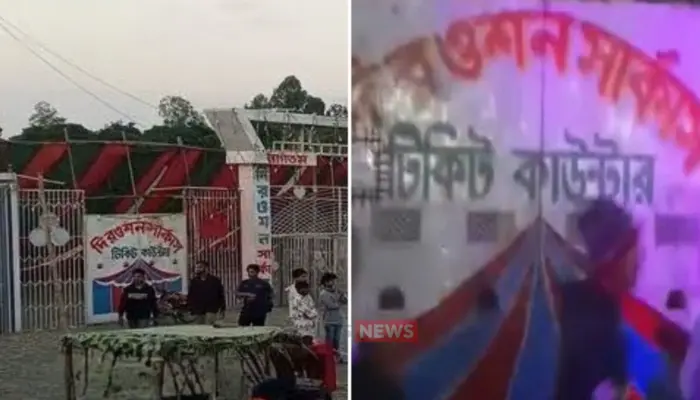
Case Summary
In Bangladesh, three circus groups were shut down by the district administration after obscene dance and song performances were organised during the annual Ras Mela at the historic Kantajiu Temple in Dinajpur. The annual Ras Mela, a month-long traditional Hindu religious festival held at the historic Kantajiu Temple in Dinajpur, Bangladesh, was organised around the Ras festival dedicated to Sri Sri Radha Krishna, featuring religious worship, kirtan, devotional programmes and other cultural activities. According to reports, during the first two days of the fair, artists performed offensive and indecent dances inside two circus pandals under the guise of circus entertainment. The performances sparked anger among local devotees, traditional religious groups and conscious residents, who objected to such activities being organised within the premises of an important Hindu religious and pilgrimage site. The controversy had also followed a similar incident during the previous year's Ras Mela, when videos of obscene dance and song performances inside a circus pandal went viral on social media and attracted nationwide criticism in Bangladesh. Despite the previous year's controversy, circus pandals were set up again during the 2026 fair, prompting renewed protests. Residents questioned how the performances had been permitted without the necessary approval and raised concerns over the failure of the authorities to prevent their recurrence. They also questioned the role of the police personnel responsible for security and maintaining law and order at the fair, as the performances had continued in their presence. Kantajiu Temple, situated in Kantanagar village of Kaharol upazila in Dinajpur, was one of Bangladesh's most significant historical, archaeological and religious sites. Its construction had begun in 1704 under Maharaja Prannath and was completed in 1752 during the reign of his son, Maharaja Ramnath. The temple was renowned for its intricate terracotta panels, while its nine spires had been destroyed in the earthquake of 1897. Every year, the temple hosted the traditional Ras festival dedicated to Sri Sri Radha Krishna on the full moon of Kartik, followed by a month-long Ras Mela. Thousands of devotees, pilgrims and visitors from across the country attended the festival to participate in religious worship, kirtan, devotional programmes and prasad distribution, alongside traditional stalls and family-oriented cultural activities. Local devotees maintained that the Ras Mela was not merely an entertainment event but an important religious and cultural tradition deeply connected to their faith, spiritual sentiments and longstanding customs. They objected to the organisation of indecent dances and songs at the temple premises, stating that such performances were incompatible with the sanctity of the religious site and the devotional significance of the festival. They also questioned how such activities had been permitted despite repeated objections, particularly when the Deputy Commissioner of Dinajpur served as the chairman of the temple management committee. Following the collective protests, the district administration shut down all three circus groups operating at the fair on 27 November 2026. The closure affected the entertainment section of the month-long festival, with comparatively fewer visitors present at the fairgrounds on Thursday night. The decision also affected the commercial activities associated with the fair, which had a turnover worth crores of taka, prompting shopkeepers to fear substantial business losses. The protesters welcomed the closure and demanded a permanent ban on such controversial entertainment programmes within the temple premises. They also called for proper scrutiny of circus performances, Jatrapala, processions and other entertainment activities before granting permission for future editions of the fair. They urged the Dinajpur District Commissioner, temple management committee and fair organisers to ensure that the religious sanctity, historical heritage and traditional character of the Kantajiu Temple's Ras Mela were preserved.
Why it is Hate Crime ?
This case is being added to the tracker under the primary category: Attack on Hindu religious representations. The subcategory selected is: Defiling religious customs. Sanatan Dharma is not a religion of one book, which is to say that while it has religious scriptures that form the central tenets of the faith, there are several traditions followed through thousands of years, mostly passed from generation to generation orally. There are several such customs and traditions that are followed by various Hindus and Hindu sects. Defiling of these traditions and customs is a breach of an individual or group’s religious practices. Such practices can range from dietary restrictions like not eating non-vegetarian food for a certain period of the year, not eating non-vegetarian food at all, not eating beef since the cow is considered holy in Hinduism, the sanctity of religious customs followed in the house (like many ISCKON devotees), etc. Any malicious action leading to the breach of such traditions or defilement of these traditions owing to animosity towards the faith or for the sake of activism stems not only from the lack of faith in the religion itself but also from disregard for the faith of the devotees who follow the customs/traditions and implicit bias against the faith, the tradition itself. Since these specific traditions are central to the faith of the devotees of that specific sect of Hindus, any non-compliance with these traditional rules would be considered a religiously motivated hate crime. The incident amounted to an act of religious disrespect towards Hinduism, as obscene dance and song performances were organised within the premises of the historic Kantajiu Temple during its annual Ras Mela. The obscene performances disregarded the religious significance of the festival and the sanctity associated with a Hindu place of worship. The Kantajiu Temple is not an ordinary entertainment venue but an important pilgrimage site dedicated to Sri Sri Radha Krishna, where devotees gathered to observe longstanding religious traditions. Introducing obscene entertainment within such a sacred setting undermined the dignity of the religious occasion and demonstrated disregard for the sentiments of the Hindu community. To understand the seriousness of the incident, it is important to understand the religious significance of the Ras festival. The annual Ras festival is dedicated to Sri Sri Radha Krishna and holds an important place in Vaishnavite Hindu traditions. It celebrates the divine love of Radha and Krishna and is observed through religious worship, kirtan, devotional singing, prayers and other spiritual activities. The Ras Mela organised at Kantajiu Temple is an important religious gathering during which thousands of devotees visit the temple to participate in these observances. The festival is therefore not merely a public fair or an entertainment event but a sacred religious occasion centred on devotion to Sri Sri Radha Krishna. Such an occasion demands respect for the religious character of the temple and the traditions associated with it. In this case, the organisation of obscene dance and song performances inside circus pandals within the temple premises violated the sanctity of the religious gathering. A Hindu religious festival cannot be treated as an ordinary entertainment platform where activities incompatible with its spiritual character are introduced without regard for the sentiments of devotees. The circus performances brought obscene entertainment into a space associated with worship and devotion, undermining the religious dignity of the occasion. The fact that similar performances had also generated controversy during the previous year's Ras Mela, yet circus arrangements were introduced again in 2026, further demonstrated the disregard for the religious character of the site and the objections raised by devotees. The repetition of such activities despite the previous controversy made the violation particularly serious. The conduct was not simply a matter of disagreement over the nature of entertainment being offered at a public fair. The performances took place within the premises of the temple. The religious identity of the venue and the devotional character of the occasion made the location of these performances particularly significant. Introducing obscene entertainment into such a setting disregarded the religious sentiments of Hindu devotees and compromised the sanctity they associated with the temple and its annual religious observances. The organisation of obscene dance and song performances during a sacred Hindu festival and within the premises of Kantajiu Temple desecrated a Hindu religious occasion. The performances violated the sanctity of the temple, disrespected the devotional significance of the Ras festival and hurt the religious sentiments of Hindu devotees. The incident was therefore added to the Hinduphobia Tracker as an act of religious disrespect towards Hinduism. Disclaimer: The date of the incident has been recorded as 24 November 2026, as the indecent performances took place during the first two days of the Ras Mela, which began on that date. The district administration subsequently shut down the three circus groups on 27 November 2026.


Case Status
Complaint filed


Perpetrators Details
Perpetrators
Unknown
Perpetrators Range
Unknown
Perpetrators Gender
unknown
 Sources





