Hindu deities and revered figures depicted in objectionable manner during art appreciation programme in Noida
 Noida, Uttar Pradesh, India
 19 November, 2026
Case Summary
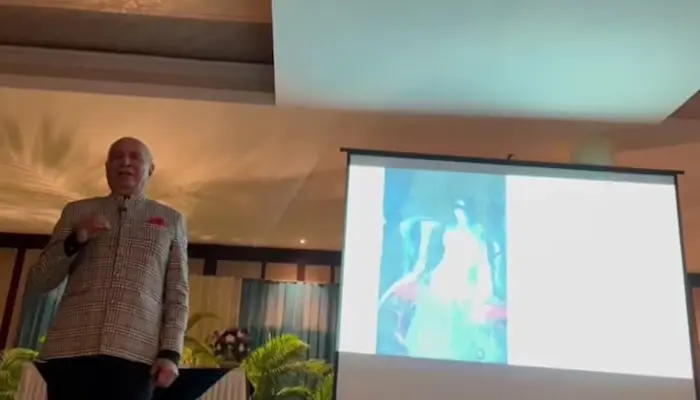
In Noida, Uttar Pradesh, Hindu deities and religious symbols were portrayed in an objectionable manner during an art appreciation programme organised by The Study Circle at Silver Oak Hall, Club 15A, in Sector 15A on 20 November 2026. The programme, titled "And You Thought Modern Was Now! – How to look at and understand art: Pointers to make you an expert", featured art curator Kishore Singh as the guest speaker. The complaint was filed by Ashutosh Chaudhary, a resident of Harola, who stated that the speaker, the organising body and the club management were hurting Hindu religious sentiments through the presentation. Dr Anupama, a resident of Sector 15A who attended the programme, also recounted the incident and supported the complaint. She stated that she regularly attended the monthly programmes organised by The Study Circle, which had previously hosted prominent personalities, including Shashi Tharoor, Dushyant Dave and Montek Singh Ahluwalia, along with several well-known artists. She attended the 20 November programme expecting an informative session on art appreciation. At the beginning of the session, Kishore Singh displayed a painting of a woman by L.F. Azusa and asked the audience how they felt about it. Some women present expressed discomfort with the painting. The speaker subsequently placed an image of Goddess Kamakhya alongside the painting and presented references to Hindu goddesses in conjunction with nude images of women. The complaint specifically mentioned references to Goddess Kamakhya, Goddess Durga and Goddess Lakshmi being juxtaposed with images of nude women. One presentation featured a nude image of a woman identified in the complaint as a sex worker from Kolkata alongside a reference to Goddess Durga. The speaker remarked that the form of Goddess Durga could be seen in the woman and referred to the abuse she faced on a daily basis. Dr Anupama also stated that the presentation included objectionable references to Padmini Mata, Draupadi's cheer haran and Bharat Mata. She further objected to the speaker's discussion of certain artworks by M.F. Husain, during which he used obscene language. Describing the presentation as an attack on Hindu deities, faith and beliefs, she demanded strict action against the speaker so that such conduct would not be repeated. Ashutosh Chaudhary stated that the presentation went beyond artistic expression and publicly associated revered Hindu religious figures and symbols with objectionable imagery. He sought an investigation into the guest speaker's role and remarks, the organisers' involvement and whether the club management had prior knowledge of the presentation's content. He also demanded that the programme's permission and booking records, complete video recording, original digital files, audio recordings, photographs and available CCTV footage be secured and examined. The complaint further sought digital forensic examination to establish the authenticity and original source of the circulated video recordings, along with statements from people who attended the programme. The complainant also submitted the complete video recording, audio clips and photographs of the event to the police as supporting evidence. Devdutt, the president of the RWA and the club, denied that Hindu deities had been insulted during the programme and stated that he was unaware of the complaint. The complaint was subsequently received at the Phase-1 police station, where the station in-charge confirmed that the matter was being investigated. The police stated that further legal action, including registration of an FIR, would depend on the findings of the investigation. No FIR had been confirmed at the time of the reports.
Why it is Hate Crime ?
This case has been added to the tracker under the primary category: Attack on Hindu religious representations. Within it, the sub-category selected is: Iconoclastic representation of Hindu Gods/Goddesses. An icon is a symbol of someone or something that is revered, or a religious representation of a spiritual ideal. Iconography is of vital significance in the Hindu milieu. It helps connect people’s spiritual beliefs with the real world. Iconography within the Hindu faith takes several shapes and forms. Murtis are of most significance to Hindus, to which daily rituals, prayers and offerings are done. Besides the murtis, there are several other symbols which have deep significance in the Hindu faith – the Om and Swastika for example. Any iconoclastic representation of these symbols, images and murtis is an affront to the religious beliefs and faith of the Hindu community itself since the symbols and icons are deeply religious in nature. In this sub-category of crime, we would record hate crimes and iconoclastic representations, in words, art, or any other form of representations of symbols that hold religious significance for the Hindu community. Since these symbols, icons and murtis are central to the Hindu faith, any iconoclastic representation of these symbols is born out of animosity towards the faith itself, manifesting itself through these symbols and therefore, these representations would be considered religiously motivated hated crimes. The other primary category selected is: Hate speech against Hindus. Within it, the sub-category selected is: Anti-Hindu slurs, mocking faith. Anti-Hindu slurs and the deliberate mocking of the Hindu faith owing to religious animosity involve the usage of derogatory terms, stereotypes, or offensive references to religious practices, symbols, or figures. One of the common anti-Hindu slurs used against Hindus is “cow-worshipper” and “cow piss drinker”. The intention of using this term is to demean and mock Hindus as a group and their religious beliefs since Hindus consider the cow holy. Additionally, some symbols and the slurs attached to them have a historical context that exacerbates the insult, hate, stereotyping, dehumanisation and oppression against Hindus. Cow worship has been used for centuries to denigrate Hindus, insult their faith and oppress Hindus specifically as a religious group. There has been overwhelming documentation about how cow slaughter has been used to persecute Hindus with cow meat being thrown in temples and places of worship. There has also been overwhelming documentation where cow meat (beef) has been force-fed to Hindus to either forcefully convert them to Islam or denigrate their faith. Apart from cow worship, the Swastika – which holds deep religious significance for the Hindus – has also been misinterpreted and distorted to use as a slur against Hindus. Similarly, the worship of the Shivling has been used by supremacist ideologies and religions to denigrate Hindus owing to religious animosity. Such slurs and denigration stem out of inherent animosity and hate towards Hindus and their faith, therefore, it is categorised as hate speech targeted at Hindus specifically owing to their religious identity. The incident constituted an act of religious denigration because Hindu deities and revered religious figures were brought into an objectionable and provocative visual context, subjecting their sacred representations to an irreverent interpretation. The issue was not merely the presentation of nude artwork or the discussion of sexuality as part of an art appreciation programme. It was the manner in which these subjects were juxtaposed with Hindu goddesses and religious figures, thereby drawing a direct association between sacred Hindu representations and imagery presented in a sexually provocative context. The use of Goddess Kamakhya, Goddess Durga and Goddess Lakshmi in this manner disregarded their religious significance and the reverence with which they were worshipped by Hindus. Goddess Kamakhya is a revered manifestation of Shakti and is worshipped as a powerful embodiment of the Divine Feminine. Goddess Durga is venerated as the supreme protective force who destroys evil and restores righteousness, while Goddess Lakshmi is worshipped as the goddess of wealth, prosperity and auspiciousness. These are not merely cultural figures or artistic motifs but sacred deities central to Hindu worship and religious practice. Similarly, Draupadi is a revered figure from the Mahabharata, whose cheer haran represents a profound episode of humiliation and injustice, while Bharat Mata holds deep civilisational and national significance. Bringing these revered deities and figures into an objectionable context involving nude imagery and provocative comparisons disregarded their sacred status and the religious sentiments associated with them. The presentation of Goddess Durga alongside the nude image of a woman identified as a sex worker from Kolkata was particularly objectionable. The speaker's comparison, suggesting that the form of Goddess Durga could be seen in the woman, brought a revered Hindu deity into an entirely inappropriate context. Goddess Durga is worshipped as a manifestation of divine power, strength and the protection of righteousness. Her representation is not an ordinary artistic image that can be detached from its religious meaning and used indiscriminately to make provocative comparisons. The manner in which her name and image were invoked trivialised her sacred identity and reduced a revered deity to a reference within a presentation centred on nudity and the experiences of a sex worker. The references to Padmini Mata, Draupadi's cheer haran and Bharat Mata further demonstrated that the presentation extended beyond a discussion of individual artworks. These figures hold considerable religious, cultural and civilisational significance for Hindus. Draupadi's cheer haran, in particular, represents an episode of humiliation and injustice in the Mahabharata, while Bharat Mata is revered as a personification of the nation. Bringing such figures into an objectionable presentation, alongside nude imagery and discussions of sexuality, subjected deeply respected Hindu symbols and traditions to an irreverent treatment. The cumulative effect of these references was to place multiple Hindu religious and cultural representations within a framework that attendees considered offensive to their faith. This was therefore not simply a matter of artistic disagreement or a difference in how an audience interpreted contemporary art. Art appreciation can involve challenging subjects, unconventional imagery and critical interpretations of religious or cultural themes. However, the use of sacred Hindu figures in a manner that mocks, trivialises or strips them of their religious significance constitutes religious denigration. The distinction lies in whether the presentation critically engaged with an artwork or instead used Hindu deities and revered figures as props for provocative comparisons. The complaint and the account of an attendee indicated the latter, particularly in view of the juxtaposition of nude imagery with Hindu goddesses and the reported remarks concerning Goddess Durga. The invocation of artistic expression did not, by itself, negate the religious implications of such treatment. The incident consequently involved the mocking of Hindu faith and the iconoclastic representation of Hindu deities, rather than merely the exhibition of controversial artwork. The sacred identity of Hindu goddesses and revered figures was placed in a context that disregarded their devotional significance and caused offence to those who regarded them as objects of worship and reverence. Therefore, this case has been added to the Hate crime database. Disclaimer: The perpetrator count includes only the speaker, Kishore Singh, who was specifically named in the complaint.


Case Status
Complaint filed

Perpetrators Details
Perpetrators
Others
Perpetrators Range
One Person
Perpetrators Gender
male
 Sources