Hindu deities Lord Ganesha and Goddess Parvati denigrated by Haryanvi singer during Ganesh Utsav event in Punjab
 Patiala, Punjab, India
 23 September, 2026
Case Summary
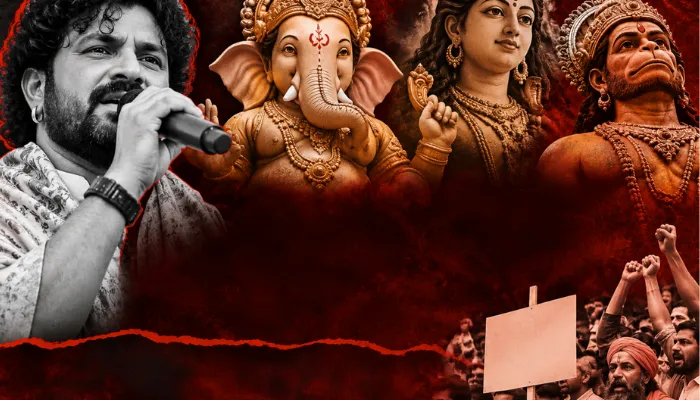
In Rajpura, Patiala district, Punjab, Haryanvi singer Kashinath made objectionable remarks about Hindu deities, including Goddess Parvati and Lord Ganesha, during a stage performance. The remarks hurt the religious sentiments of members of the Hindu community and prompted a complaint seeking police action. On 24 September 2026. Kashinath, who was originally from Kaithal, Haryana, and was residing in Mohali, had performed at a Ganesh Utsav event on Mahinder Ganj Road alongside singer Master Salim. A video of the performance was subsequently circulated on social media, including Kashinath's own social media account and other platforms. The remarks directed at Lord Ganesha sparked strong objections from Hindu organisations, who called the remarks offensive to Hindu religious sentiments. The controversy intensified on 25 September 2026, when Hindu organisations staged a protest outside the Eagle Motel in Rajpura. The Hindu leaders objected to the remarks concerning Lord Ganesha and demanded action against Kashinath. During the protest, Hindu organisations announced a ₹1 lakh reward for anyone who blackened Kashinath's face. Kashinath had left the location approximately three minutes before the Hindu leaders arrived. On 1 October, Rajiv Tandon, national chairman of Shiv Sena Punjab, submitted a complaint at the Haibowal police station concerning the remarks. The complaint specifically referred to Kashinath's comments about Goddess Parvati and Lord Ganesha in the video. The video had been circulated through Facebook. After investigating the complaint and examining the video and other material, Haibowal police registered FIR No. 315 on 25 November 2026 under Section 299 of the Bharatiya Nyaya Sanhita (BNS) in connection with the remarks concerning Hindu religious beliefs. Kashinath was named in the FIR. Amid continued opposition from Hindu organisations, Kashinath issued a video apology to the Hindu community. He expressed regret over the incident involving Lord Ganesha and apologised for his remarks. The Hindu organisations, however, remained dissatisfied with the apology and continued pursuing action. No arrests had been made at the time of documentation. The investigation was continuing, and further legal action was to follow based on its findings.
Why it is Hate Crime ?
The primary category selected for this incident is: Hate speech against Hindus. The subcategory selected here is: Anti-Hindu slurs, mocking faith. Anti-Hindu slurs and the deliberate mocking of the Hindu faith owing to religious animosity involve the usage of derogatory terms, stereotypes, or offensive references to religious practices, symbols, or figures. One of the common anti-Hindu slurs used against Hindus is “cow-worshipper” and “cow piss drinker”. The intention of using this term is to demean and mock Hindus as a group and their religious beliefs since Hindus consider the cow holy. Additionally, some symbols and the slurs attached to them have a historical context that exacerbates the insult, hate, stereotyping, dehumanisation and oppression against Hindus. Cow worship has been used for centuries to denigrate Hindus, insult their faith and oppress Hindus specifically as a religious group. There has been overwhelming documentation about how cow slaughter has been used to persecute Hindus with cow meat being thrown in temples and places of worship. There has also been overwhelming documentation where cow meat (beef) has been force-fed to Hindus to either forcefully convert them to Islam or denigrate their faith. Apart from cow worship, the Swastika – which holds deep religious significance for the Hindus – has also been misinterpreted and distorted to use as a slur against Hindus. Similarly, the worship of the Shivling has been used by supremacist ideologies and religions to denigrate Hindus owing to religious animosity. Such slurs and denigration stem out of inherent animosity and hate towards Hindus and their faith, therefore, it is categorised as hate speech targeted at Hindus specifically owing to their religious identity. This incident constituted a religiously driven hate crime because Hindu religious beliefs and revered Hindu deities were specifically targeted through objectionable and derogatory remarks made by Haryanvi singer Kashinath during a public stage performance. His remarks concerning Lord Ganesha and Goddess Parvati directly targeted figures central to Hindu faith, worship and religious traditions. The conduct went beyond an expression of personal opinion because it involved the public denigration of deities held sacred by millions of Hindus, thereby striking at the religious beliefs and devotional sentiments of the community. Lord Ganesha and Goddess Parvati occupy an important and revered position within Hinduism. Lord Ganesha is worshipped as the deity associated with wisdom, auspiciousness and the removal of obstacles, and is invoked before the commencement of important religious ceremonies and undertakings. Goddess Parvati is revered as a principal goddess and is worshipped in various forms across Hindu religious traditions. Both deities hold a significant place in Hindu households, temples, festivals and devotional practices. Derogatory remarks directed at them therefore targeted sacred elements of Hindu faith and religious identity rather than an unrelated subject of public discussion. The circumstances in which the remarks were made further underscored the religious dimension of the incident. Kashinath made the objectionable comments publicly during a Ganesh Utsav programme held on Mahinder Ganj Road in Rajpura, an event organised to celebrate and worship Lord Ganesha. The remarks were not confined to the audience present at the event, as a video of the performance was subsequently uploaded on his social media account and circulated across other platforms. By making derogatory comments about Hindu deities during a religious celebration and disseminating the recorded performance on social media, the accused extended the reach of the objectionable remarks to a wider audience, directly affronting the religious beliefs and devotional sentiments of the Hindu community. In recent times, social media has increasingly become a platform for anti-Hindu hate, with derogatory memes, videos, and messages targeting Hindu religious symbols, practices, and deities. Such content is recognised as part of a broader pattern of Hinduphobia and religious hate crimes online. The incident was therefore recorded in the Hinduphobia Tracker as a religiously motivated hate crime because the object of the derogatory remarks was specifically Hindu religious belief, its revered deities and the faith of Hindu devotees.


Case Status
Complaint registered


Perpetrators Details
Perpetrators
Others
Perpetrators Range
One Person
Perpetrators Gender
male
 Sources





