Hindu tradition mocked, stand-up comedian compares long streak of sindoor worn by Bihari Hindu women to male genitalia
 Delhi, Delhi, India
 20 November, 2026
Case Summary
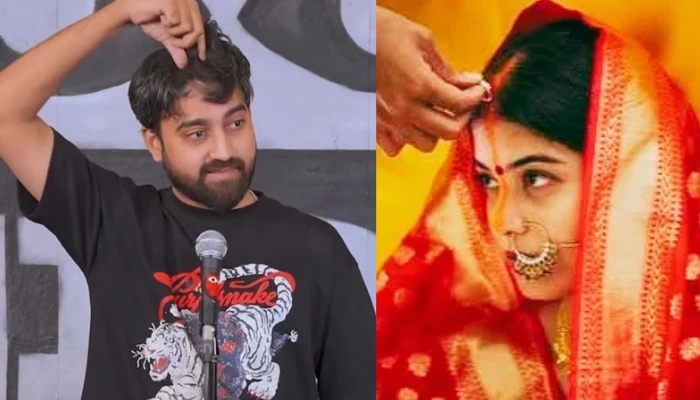
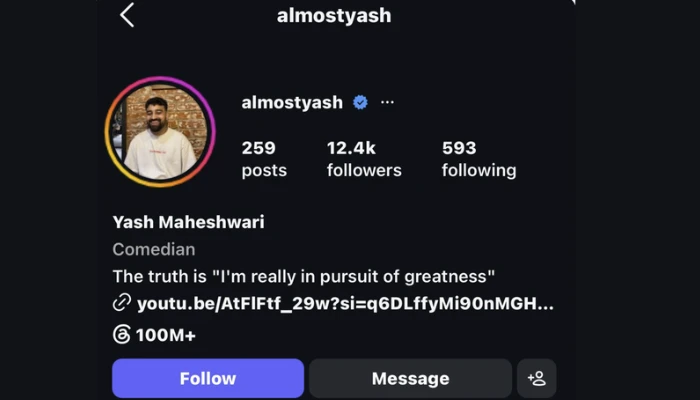
A Hindu religious and cultural tradition observed by married women during Chhath Puja was subjected to vulgar and sexually explicit mockery by a stand-up comedian named Yash Maheshwari. In one of his performances, he ridiculed Bihari Hindu women for applying a long streak of sindoor from their noses, making obscene references to their husbands' genitalia and using profane language to demean the sacred tradition. He also mocked Lord Hanuman by invoking Bajrang Bali in a sexually suggestive and derogatory remark. On 21 November 2026, Yash Maheshwari uploaded a stand-up comedy video titled ‘Morally Questionable Standup Comedy’ on his YouTube channel, which he performs in Delhi NCR. A video clip from his comedy set went viral, where he is heard mocking Bihari Hindu women and their tradition of applying a long streak of sindoor from the nose towards the forehead during Chhath Puja. He compared the length of the sindoor streak to the size of men's genitalia, saying that women who applied longer streaks had husbands with longer penises. He also used profane language while making these sexually explicit remarks. He further mocked the tradition's religious significance by suggesting that women applied the long sindoor streak for their husbands' longevity. Continuing his vulgar remarks, he said, “Meri lambi umar main khud dekh lunga, par tu jo Bajrang Bali ban ke baithi hai na tujhe mujhse kaun bachayega,” which loosely translates to “I’ll take care of my own longevity, but you, sitting there pretending to be Bajrang Bali, who will save you from me?” Through this remark, he also dragged Lord Hanuman, one of the most revered Hindu gods, into his sexually suggestive mockery. The incident came to light after the video went viral on social media and gained wider attention when X user Raj Shekhar Verma (@shekhar_br02) shared the clip and highlighted the comedian's derogatory remarks about Bihari Hindu women and the Chhath tradition. The video triggered outrage, with several social media users demanding action against the comedian and urging the Bihar Police to take cognisance of the matter. BJP member and activist Ritu Jaiswal also demanded legal action against Yash. She called for an FIR to be registered against him in every district of Bihar for making obscene jokes about the Chhath festival and women observing the Chhath fast. She further demanded stringent action to deter anyone from making similar remarks about the festival. The Hinduphobia Tracker team investigated the comedian's social media accounts. His YouTube account, under the handle @almostyash, had approximately 29,000 followers, while his Instagram account, @almostyasha, had approximately 12,400 followers. During the investigation, the team found that the YouTube videos containing the controversial content had been deleted and his Instagram profile had been suspended. The Hinduphobia Tracker team also found several other videos in which Yash Maheshwari made derogatory remarks about Bihari women and Hindu religious matters. In one such video, he mocked Bihari women by saying that they were “experts” at getting beaten. He also made remarks about men from Haryana being habitual offenders and suggested that Bihari women and men from Haryana should be matched against each other to eliminate crime. In another video about the Ram Mandir, he mocked the temple's construction and Prime Minister Narendra Modi, saying, “Modiji ne Ram Mandir pe chori karwayi,” and added that if people gave him ₹15,000 each, he would forget the alleged theft. These videos reflected a pattern of using comedy to ridicule Bihari Hindu women and make disparaging remarks about Hindu religious and cultural matters.
Case Images

Why it is Hate Crime ?
This case has been added to the tracker under the primary category: Hate speech against Hindus. Within it, the sub-category selected is: Anti-Hindu slurs, mocking faith. Anti-Hindu slurs and the deliberate mocking of the Hindu faith owing to religious animosity involve the use of derogatory terms, stereotypes, or offensive references to religious practices, symbols, or figures. One of the common anti-Hindu slurs used against Hindus is “cow-worshipper” and “cow piss drinker”. The intention of using these terms is to demean and mock Hindus as a group and their religious beliefs, since Hindus consider the cow holy. Additionally, some symbols and the slurs attached to them have a historical context that exacerbates the insult, hate, stereotyping, dehumanization,n and oppression against Hindus. Cow worship has been used for centuries to denigrate Hindus, insult their faith,th and oppress Hindus specifically as a religious group. There has been overwhelming documentation about how cow slaughter has been used to persecute Hindus, thus with cow meat being thrown in temples and places of worship. There has also been overwhelming documentation that cow meat (beef) has been force-fed to Hindus to either forcefully convert them to Islam or denigrate their faith. Apart from cow worship, the Swastika – which holds deep religious significance for the Hindus – has also been misinterpreted and distorted to be used as a slur against Hindus. Similarly, the worship of the Shivling has been used by supremacist ideologies and religions to denigrate Hindus owing to religious animosity. Such slurs and denigration stem from inherent animosity and hate towards Hindus and their faith; therefore, it is categorised as hate speech targeted at Hindus specifically owing to their religious identity. The other primary category selected in the case is: Attack not resulting in death. Within this, the subcategory selected is Attacked for Hindu identity. In several cases, Hindus are attacked merely for their Hindu identity without any perceived provocation. A classic example of this category of religiously motivated hate crime is a murder in 2016. 7 ISIS terrorists were convicted for shooting a school principal in Kanpur because they got ‘triggered’ seeing the Kalava on his wrist and the tilak that he had put. In this, the Hindu victim had offered no provocation except for his Hindu religious identity. The motivation for the murder was purely religious, driven by religious supremacy. Such cases where Hindus are targeted merely for their religious identity would be documented as a hate crime under this category. This case was included in the Hinduphobia Tracker because the comedian deliberately used vulgar sexual references, degrading stereotypes, and religious mockery to humiliate Hindu women and ridicule Hindu beliefs and traditions. His remarks were not merely crude jokes about marriage or regional identity. They specifically targeted Bihari Hindu women for their religious and cultural practices, turned an auspicious Hindu tradition into a sexual punchline,e and dragged a revered Hindu deity into the same degrading mockery. Such conduct amounted to deliberate religious denigration, intended to provoke, insult, and humiliate Hindus on account of their faith and cultural identity. One of the most offensive aspects of this conduct was the ridicule of the Hindu tradition of applying sindoor during Chhath Puja. Sindoor holds profound significance in Hindu married women's lives. It is a symbol of marital status, auspiciousness, devotion, and the sacred bond between husband and wife. The tradition of applying sindoor from the parting of the hair down towards the nose holds particular cultural and emotional significance. In this distinctive practice, the longer the sindoor is extended towards the nose, the stronger is the belief that it signifies a longer life for the husband. This practice reflects beliefs and customs passed down through generations and represents a Hindu woman's connection with her marital identity, cultural heritage,tage and religious roots. Chhath Puja itself is among the most revered Hindu festivals, dedicated to the worship of Surya Dev and Chhathi Maiya. It is observed with deep devotion, discipline and gratitude, with devotees undertaking rigorous fasting and offering prayers for the well-being and longevity of their families. The observances carry immense spiritual, cultural,tural and emotional importance, particularly for women who undertake the vrat with devotion and commitment. The sindoor tradition associated with married women during this period is therefore not an arbitrary fashion choice or an amusing cultural peculiarity. It is connected to deeply cherished Hindu beliefs surrounding marriage, devotion, family welfare, and auspiciousness. By comparing the length of the sindoor streak to men's genitalia, the comedian reduced a sacred expression of marital devotion to a vulgar sexual comparison. He took something Hindu women regard with reverence and turned it into an instrument of public humiliation. The suggestion that the length of the sindoor reflected the size of a woman's husband's sexual organ was especially degrading because it sexualised women while ridiculing a practice through which they express their marital identity and devotion. The use of profane language made the mockery even more vulgar and contemptuous. Instead of recognising the religious and emotional significance of the tradition, he presented Hindu women who observed it as objects of sexual ridicule. This was an insulting attack on their dignity, their belief, and their cultural identity. The comedian further dragged Lord Hanuman into this vulgar mockery. Lord Hanuman is one of the most revered deities in Hinduism and is worshipped as a symbol of devotion, strength, courage, loyalty and selfless service. He holds a special place in the religious lives of Hindu devotees, who revere him as Bajrang Bali and seek his blessings and protection. Using his name and religious identity as part of a sexually suggestive joke was a deliberate violation of the respect owed to a sacred Hindu deity. It turned the name of a revered figure into a crude punchline and treated Hindu devotion as material for ridicule. For devotees, such mockery is deeply offensive because it targets not an ordinary cultural reference but a deity central to their faith and worship. The deliberate use of Lord Hanuman's name in this degrading context demonstrated contempt for Hindu religious sentiments and extended the humiliation beyond Hindu women to the wider Hindu community. The wider pattern of the comedian's content also showed that the remarks were not confined to a single instance of crude humour. His repeated use of Bihari women as subjects of degrading stereotypes, alongside his ridicule of Hindu religious and cultural matters, reflected a pattern of contempt towards identities and traditions cherished by Hindus. Mocking women through stereotypes about domestic violence and using regional identities as material for degrading comparisons normalised humiliation rather than challenging prejudice. Similarly, ridiculing the Ram Mandir and making disparaging remarks about a temple of immense religious significance to Hindus extended the denigration to one of the most important symbols of contemporary Hindu devotion. These remarks contributed to an environment in which Hindu women, Hindu traditions and Hindu religious sentiments were treated as legitimate targets for contempt. Using comedy as a medium did not make this conduct harmless or remove its religious dimension. Humour does not place sacred beliefs beyond the right to dignity and respect, nor does it justify sexually degrading an entire community for observing its traditions. The repeated reliance on vulgarity, religious references, and stereotypes turned the performance into a vehicle for humiliating Hindus. The audience's amusement did not diminish the insult experienced by those whose faith and customs were being ridiculed. Rather, it demonstrated how contempt towards Hindu religious practices and devotees was being presented as entertainment. The deliberate targeting of a Hindu marital tradition, the sexual humiliation of women observing their faith, and the degrading invocation of Lord Hanuman constituted explicit hostility towards Hindu religious and cultural identity. The conduct trivialised sacred beliefs, demeaned Hindu women, and treated the religious sentiments of the Hindu community with open contempt. Therefore, this case was included in the Hinduphobia Tracker's hate crime database.


Case Status
Unknown


Perpetrators Details
Perpetrators
Others
Perpetrators Range
One Person
Perpetrators Gender
male
 Sources





