Hindu woman pressured to convert and undergo nikah by Muslim man posing as Hindu; sexually exploited for 10 years and forced to undergo several abortions
 Sultanpur, Uttar Pradesh, India
 7 December, 2007
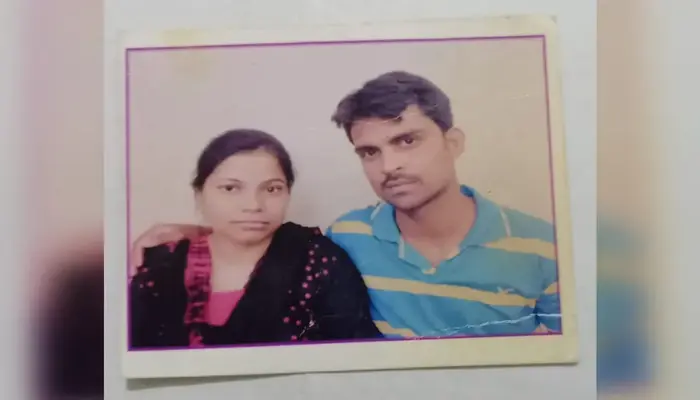
Case Summary
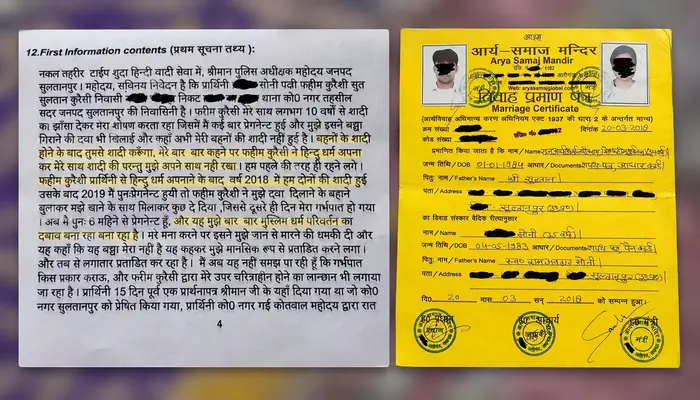
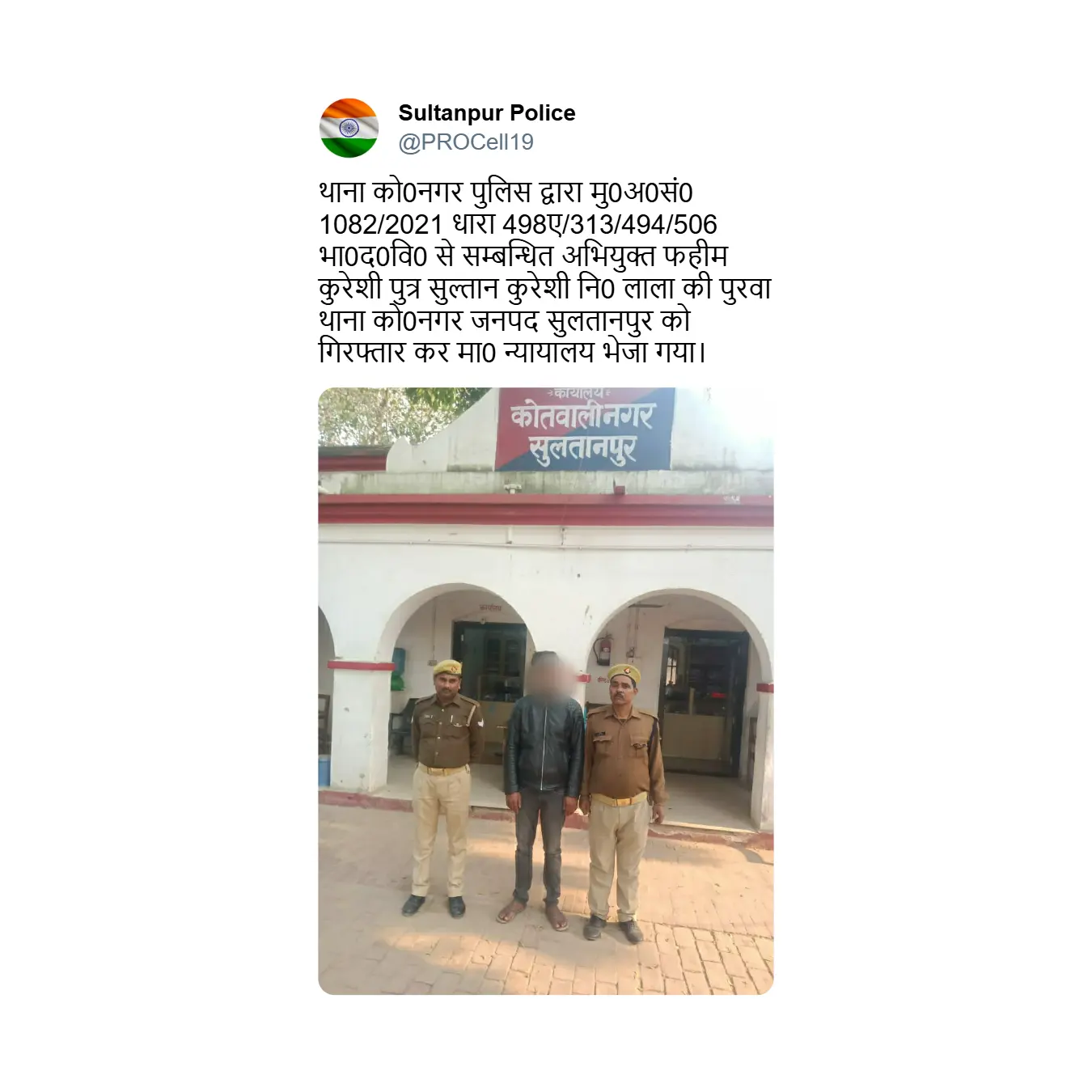
In Sultanpur, Uttar Pradesh, a Hindu woman named Pratibha Soni was deceived by a Muslim man named Faheem Qureshi, who concealed his religious identity and posed as a Hindu man named 'Rajesh'. He entered into a relationship with her under this false identity and subsequently married her at an Arya Samaj temple in 2018, as per Hindu rituals. During the marriage, he purportedly embraced Hinduism and recorded his name as 'Raj Arya'. However, he later began pressuring Pratibha to convert to Islam and undergo a nikah ceremony, making it a condition for accepting their unborn child. This pressure began after his family refused to accept his adoption of Hinduism and insisted that the couple marry according to Islamic rites. . Pratibha, aged 35 at the time of documentation, had entered into an arranged marriage in 2002 with a man from her Sunar caste. She was then a year short of turning 18 and had completed Class XII. Her husband's family lived in Jaunpur district. She gave birth to three sons during the marriage, before her husband died in an accident five years later. Following his death, she returned to her parents' home in Sultanpur and resumed her education. She subsequently completed a Bachelor of Commerce degree, a Master of Commerce degree and a vocational diploma in computers. Alongside her studies, she learnt tailoring from her mother and earned a modest income through the work. After completing her education, she secured a job at a private college in Jaunpur and moved there. While studying at a college in Sultanpur, Pratibha met a man introduced to her as Rajesh through a mutual female friend, who was Muslim. The two initially became friends and eventually entered into a relationship as Pratibha became financially independent through her employment. Rajesh frequently visited her in Jaunpur. She considered him open-minded, possibly because he had previously worked and lived in Mumbai, and appreciated his willingness to enter into a relationship with a single woman who had children. However, she subsequently learnt from one of his friends that his actual name was Faheem Qureshi. When she confronted him, he dismissed her concerns, explaining that Muslim men often changed their names to secure employment. Pratibha accepted his explanation. According to Pratibha's statement recorded in the First Information Report (FIR), Faheem maintained sexual relations with her throughout their ten-year relationship on the promise of marriage. She repeatedly urged him to formalise their relationship, as he frequently visited her and stayed at her accommodation. However, he continued to postpone the marriage, citing the need to get his sisters married first. She even approached one of his friends to persuade him, but the friend instead disclosed his actual identity. Following a failed pregnancy in 2017, Pratibha severed ties with Faheem. A few weeks later, he returned with a marriage proposal, promising to live with her and spend the rest of his life by her side. By then, they had been in a relationship for more than seven years. Pratibha accepted his proposal and moved to Sultanpur to be closer to him. She rented accommodation for the two of them, after which Faheem introduced her to his family. When discussions about the marriage formalities began, Faheem suggested that they marry at a Hindu temple, citing the Yogi government's actions against Muslim men marrying Hindu women. He told Pratibha that solemnising their marriage as Hindus at a temple would be safer for both of them. Pratibha welcomed the proposal, acknowledging that changing one's religion was a significant decision. She also stated that she would have agreed to convert to Islam and undergo a nikah had Faheem insisted on it. Although her parents disapproved of her decision, she proceeded with the marriage. With the assistance of Hindu activists, the couple married at an Arya Samaj temple in Lucknow on 20 March 2018. The ceremony involved a few rituals, followed by the signing of the marriage documents. Pratibha further stated that a local leader associated with Hindu Yuva Vahini, who had helped arrange the marriage formalities, congratulated her for having converted a Muslim man to Hinduism. He described it as a rare achievement and even offered her financial assistance, which she declined, saying that she had sufficient resources. Following the temple ceremony, Pratibha's brother-in-law, who worked at a newspaper advertisement agency, offered to arrange for Faheem's name-change declaration to be published in a newspaper free of charge. However, Faheem declined, explaining that he had converted solely for the purpose of marriage and did not wish to change his name in any of his official documents. Pratibha further stated that Faheem possessed an additional Aadhaar card bearing the name Rajesh, which she had personally seen. When the correspondent pointed out the seriousness of the matter and advised her to inform the police, Pratibha said she would do so. The marriage certificate issued by the Arya Samaj temple recorded Faheem's name following his conversion as Raj Arya and his age as 34, while Pratibha's age was listed as 35. Although their addresses differed, both were in Sultanpur district, approximately 150 kilometres from the state capital, Lucknow. The temple's address was recorded as Sector H, Harsh Vihar, in the Aliganj area of Lucknow district. When the correspondent contacted the mobile number mentioned on the marriage certificate, a man named Santosh Mishra answered the call. He confirmed that the Arya Samaj temple branch was registered with the Arya Samaj Trust under registration number 672/1162. When asked to provide an affidavit signed by Faheem before his conversion, Mishra agreed to share the document but requested a couple of days to do so. The original report stated that the article would be updated once the affidavit was received. Despite their marriage, Faheem never took Pratibha to live with his family. She continued to reside alone in rented accommodation in Sultanpur, paying the rent herself, while Faheem visited her frequently and occasionally stayed for several days at a time. In 2019, Pratibha became pregnant again, but Faheem gave her certain medicines that resulted in another miscarriage. During their relationship, she had become pregnant several times, and on each occasion, Faheem had arranged for the pregnancy to be terminated, citing his sisters' marriages as the reason he could not marry her. Pratibha also provided Faheem with financial assistance, as he had no regular source of income or occupation and frequently evaded questions about his livelihood. He often diverted conversations whenever she asked what he did for a living. Since she was financially independent, she initially did not press him on the matter and occasionally gave him money. During a visit to a dargah two years before their marriage, she demanded that he disclose his occupation. Faheem told her that he sold smack (drugs). Shocked by the revelation, Pratibha urged him to abandon the trade if he wished to continue their relationship, explaining that she did not want the police turning up at her home for questioning. When she asked what alternative work he could pursue, he told her that all he knew was how to chop meat. Pratibha subsequently gave him Rs 50,000 to establish a meat shop. She also clarified that Faheem had never pressured her to cook or consume meat at home, as she was a vegetarian. In 2021, Pratibha became pregnant once again. Having been diagnosed with an illness, she was advised to undergo a blood test, during which a doctor discovered her pregnancy. Given her medical condition, the doctor advised her against terminating it. When Pratibha informed Faheem, he reluctantly agreed to continue with the pregnancy, although his sisters were still unmarried. However, after she had completed three months of pregnancy, she noticed a marked change in his behaviour. He began pressuring her to convert to Islam and undergo a nikah ceremony. Pratibha found these demands unusual, particularly because Faheem had already reduced his visits and had never properly introduced her to his family following their temple marriage. None of his family members had contacted her either. The couple frequently argued over the issue. Faheem told Pratibha that his family had refused to accept his conversion to Hinduism and their marriage at the temple, insisting instead that he undergo a nikah. Pratibha stated that she would have agreed to the nikah had she not increasingly felt that Faheem had deceived her and was using her for sexual gratification and money. After another two months of pregnancy marked by frequent arguments, Faheem angrily questioned the paternity of the unborn child, telling Pratibha that it was not his. He demanded proof that he was the father. Angered by his response, she told him that she could have him jailed on rape charges and that a DNA test would establish the child's paternity. Faheem, however, responded that he was not afraid of facing rape charges. As the pregnancy progressed, Faheem gradually stopped visiting Pratibha and responding to her calls. His phone remained switched off, and all communication between them eventually ceased. In October 2021, while heavily pregnant, Pratibha decided to confront him at his parents' residence. However, upon reaching the house alone, she discovered that the family had moved out. Neighbours informed her that Faheem's family had relocated to another part of Sultanpur and had been living in rented accommodation all along. With their assistance, she obtained the family's new address, located behind Khajuri Masjid in the Lala ka Purwa area. When Pratibha reached the area and asked residents for directions, they questioned her identity. She introduced herself as Faheem's wife, but the residents expressed surprise and informed her that he had married a woman from their colony just a few weeks earlier in a low-key ceremony. Holding her belly and struggling to walk on trembling legs, Pratibha made her way to Faheem's house, where she saw his newlywed bride. Overcome with distress, she broke down in tears, called the police and subsequently collapsed on the floor. She regained consciousness only after finding herself inside a police van. Expressing her anguish, Pratibha stated that she had financially supported Faheem and his family, purchased clothes for his mother and sisters, and that they had even accepted clothes she had discarded. On 29 October 2021, Pratibha lodged a complaint with the police, following which Faheem, his father Sultan Qureshi and his brother Farukh Qureshi were summoned to the police station for questioning. A settlement was subsequently reached, although Pratibha declined to disclose its details. She stated that Faheem had agreed to live with her and returned to her accommodation the following day. However, a few weeks later, he disappeared once again. Pratibha then approached the police station again, following which a First Information Report (FIR) was registered. On 27 November 2021, an FIR was registered against Faheem at City Kotwali police station in Sultanpur under Sections 498A, 313, 494 and 506 of the Indian Penal Code. The charges pertained to cruelty towards a woman by her husband or his relatives, causing miscarriage without the woman's consent, marrying again during the lifetime of a spouse and criminal intimidation. Faheem was arrested in connection with several charges, including harassment and criminal intimidation. When the correspondent contacted City Kotwali police station, Ram Ashish Upadhyay, who identified himself as the chowki in-charge, stated that the case was being handled by Sub-Inspector Praveen Mishra. Investigating Officer Praveen Mishra confirmed that Faheem was in judicial custody and had denied all the charges against him. According to the officer, Faheem claimed that he had ended the relationship after discovering at a later stage that Pratibha had three grown-up children. Mishra further explained that the police had not registered an FIR following Pratibha's initial complaint on 29 October 2021 because both parties had reached a compromise and no case had therefore been pursued at the time. He added that the investigation was still underway and that it was too early to make any official statement. On 7 December 2021, Pratibha told the correspondent that she was on her way to the police station to submit her Arya Samaj marriage certificate. She had been urging the police to invoke provisions of the anti-forced conversion law in her case, but the officers had asked her to produce the relevant documents. With approximately two months remaining until the birth of her child, she said she had realised that she had been deceived over the preceding ten years. When asked whether she would consider an out-of-court settlement, Pratibha said the matter had gone beyond her personal opinion. She stressed that two women were involved and that both her unborn child and Faheem's second wife deserved justice. She further declared that she would make Faheem's family sell all their possessions to provide for the baby. Following the registration of the police case, Pratibha relocated to Jaunpur, where she owned a house purchased with her savings.
Case Images
Why it is Hate Crime ?
The primary category selected in this case is: Crimes against women in relationships and other sexual crimes. Within this, the subcategory selected is: Man pretends to be Hindu. The tertiary category selected is: Name changed and Marries as per Hindu rituals. When a non-Hindu man pretends to be a Hindu to deceive a Hindu woman into a relationship, the act is seen as triggered by malafide intentions. In some cases, the woman eventually accepts the man’s original religious identity and converts after the man’s identity is revealed. These cases could be argued as cases of religious brainwashing and a result of the pressure a woman feels after getting into a relationship with a man. The woman, it can be argued, also changed her religious identity because of the stigma she believes she might face if she chooses to walk out of a deceptive relationship. However, for the purpose of documenting hate crimes, the cases in this subcategory are limited to those where there is explicit violence aimed at religious conversion against the wishes of the victim (force-feeding beef, blackmailing with intimate videos, rape on refusal to convert, etc), or if the woman herself complains of the man’s religious deception. In such cases, it is established that the deception of the non-Hindu man had a specific aim of religious conversion or targeting of the victim due to her Hindu religious identity, therefore, making it a religiously motivated hate crime. The other subcategory selected is: Brainwashed and/or Groomed. The tertiary categories selected are: Rape and sexual assault/harassment and Victim says she was brainwashed/groomed. In our database, we have not added incidents where women have converted to another religion of their free will and no allegations of forced/involuntary conversion have been made. However, there are certain cases of conversion where the consent itself is a result of the brainwashing or grooming of a minor by the non-Hindu perpetrator trying to victimise a woman for her Hindu religious identity. The phenomenon of grooming points to non-Hindu perpetrators identifying their Hindu victims’ vulnerabilities and exploiting them over months and sometimes years, to extract the supposed ‘consent’ in order to convert their religion. In most cases of grooming, the victims are minors or the grooming started when the victim was a minor. In other cases of grooming, the non-Hindu perpetrator brainwashes and grooms a minor victim to extract their trust and then proceeds to rape them repeatedly with the intent of converting them to their faith. It is pertinent to understand here that when the victim is a minor, the ‘consent’ to convert or enter into a romantic relationship with an adult itself is redundant – addressed by POCSO. While every case of conversion of a minor and incidents of establishing a physical relationship with a minor by an adult is a crime, for the purpose of this database, a case would be considered a hate crime only if there is a distinct religious angle to the grooming. For example, in the UK, if a Hindu minor is targeted by Pakistani grooming gangs, it would be considered a hate crime because the victims are specifically targeted owing to their non-Muslim religious identity with the perpetrators being Muslim. In other cases, if a Hindu minor is brainwashed into entering a physical relationship with the non-Hindu adult perpetrator and the family alleges grooming/brainwashing of the minor to convert her religion, it would form a part of this database. If the victim is a Hindu adult, the case would form a part of this database only if the victim herself says that she was brainwashed/groomed to convert her religion. However, if the victim is deceased (murdered or otherwise), the case would form a part of this database if her family/friends provided testimony that the victim was brainwashed/groomed to convert her religion. Since these crimes have a distinct religious angle where the victim is being targeted owing to her Hindu religious identity, these cases are considered a hate crime. The other subcategory selected is: Forced conversion after marriage. The tertiary category selected is: Forced to do Nikah. In such cases, a non-Hindu man marries a Hindu woman, and the force/pressure to convert to any Abrahamic faith, like Islam, begins after marriage. In such cases, typically, two patterns emerge. First, when the relationship is consensual, and the religious identity of the perpetrator is known to the Hindu woman in the relationship. The marriage could be under the Special Marriages Act, where neither parties are required to convert their religion for the marriage to be considered legitimate. While the victim in such cases enters matrimony assuming that religious identity is not a barrier, the non-Hindu man starts to pressure the woman to convert her religion after marriage. The second is when the woman gets into a marriage with the man, pretending to share her faith. Later, when the truth is revealed, the man starts pressuring the woman to convert her religion and give up her religious identity. In both situations, there is application of force by the perpetrator, including the denial of the woman’s religious rights. Some of the means by which the woman is forced/pressured to convert include force-feeding beef, being forced to read the Kalma, being forced to wear a hijab, forced to undergo Halala, etc. There are several instances where, after marriage, the woman voluntarily converts to Islam. Such cases are often argued to be a result of religious brainwashing; however, for the purpose of documenting religiously motivated hate crimes, in the absence of the victim complaining of forced conversion, such cases do not form a part of the database. The other subcategory selected is: Leaves Hindu partner upon refusal to convert. When Hindu women are in a relationship with non-Hindu men, there are cases where the woman faces pressure/threats/violence to convert and change her religious identity by the non-Hindu man. However, when the Hindu woman refuses to convert, the non-Hindu man ends the relationship or divorces the woman, as the case might be. Such relationships may be consensual with the religious identity of the non-Hindu man known to the victim. Somewhere along the relationship, the non-Hindu man starts pressuring the Hindu woman to change her religious identity and upon her refusal, ends the relationship. Cases where the Hindu woman converts to Islam and does not file a complaint about the force, or threat after she refuses to convert to Islam, are not considered a part of the hate tracker. This incident stands as a clear instance of a religiously motivated hate crime, as a Muslim man deliberately concealed his religious identity and posed as a Hindu to deceive a Hindu woman into entering a relationship and subsequently marrying him through Hindu rituals at an Arya Samaj temple. After the marriage, he pressured her to abandon her Hindu faith and convert to Islam, while his family outright rejected the marriage solemnised through Hindu rites and insisted that the couple undergo a nikah. He further made acceptance of their unborn child conditional upon her conversion and eventually abandoned her when she resisted his demands. Firstly, the Muslim perpetrator’s act of deception by posing as a Hindu itself demonstrated a clear disregard for the victim’s religious identity and trust. By hiding his true identity, Faheem manipulated Pratibha's trust and approached her under false pretences, indicating a deliberate effort to deceive her. This constituted a direct violation of her right to make an informed choice about whom she chose to have a relationship with, as she was kept unaware of the perpetrator’s actual religious identity. Thus, the perpetrator’s deliberate decision to conceal his Muslim identity and present himself as a Hindu strongly underscored the religious dimension of the crime. In such instances, identity concealment is not just a deceptive tactic for personal reasons but a calculated strategy rooted in religious profiling and targeting. The accused knew that the victim, being Hindu, would likely refuse his advances if she knew his real identity, and he circumvented this by lying, which directly pointed to religiously driven intent. This deception reflects a larger pattern where Hindu women are specifically singled out using false identities by Muslim men. Such targeted victimisation based on religion demonstrates a fundamental disregard for Hinduism and exposes deeper animosity towards Hindu women and their beliefs, making it a religiously driven hate crime. Faheem's decision to marry Pratibha through Hindu rituals at an Arya Samaj temple, only to subsequently pressure her to convert to Islam, demonstrated his blatant disregard for Hindu customs and the sanctity of a Hindu marriage. He appeared to have used the adoption of a Hindu identity and participation in Hindu marriage rituals as instruments to gain Pratibha's trust, deceive her further and secure his place in her life. Having used Hindu religious identity and customs to facilitate the relationship and marriage, he later sought to invalidate that very religious identity by insisting that she abandon Hinduism and undergo a nikah. This reflected a deeply dismissive attitude towards Hindu religious practices, treating them as convenient tools to serve his ulterior motives rather than traditions deserving of respect. Using a Hindu marriage as a means to secure the trust of a Hindu woman, only to subsequently pressure her to relinquish her faith, demonstrated religious hostility and a disregard for the religious sanctity and autonomy of the victim. Secondly, Faheem's repeated sexual exploitation of Pratibha, coupled with the repeated pregnancies and pregnancy terminations she underwent during the relationship, demonstrated the predatory nature of the relationship and the extent of her exploitation. He repeatedly maintained sexual relations with her on the promise of marriage, while ensuring that her pregnancies were terminated, citing his sisters' marriages as the reason he could not marry her. This prolonged exploitation of her physical intimacy and reproductive autonomy demonstrated how her bodily autonomy was manipulated to serve the perpetrator's interests. The repeated pregnancies, pregnancy terminations and false assurances of marriage also kept Pratibha emotionally and psychologically invested in a relationship built on deception, making her increasingly vulnerable to the perpetrator's influence. This becomes particularly significant when examined alongside his concealed religious identity and subsequent insistence that she abandon Hinduism. Having exploited her trust and bodily autonomy over several years, Faheem subsequently sought to use the relationship and the emotional dependence arising from it to pressurise her into relinquishing her religious identity. The sexual exploitation, therefore, was not an isolated aspect of the relationship but formed part of a prolonged pattern of deception, manipulation and control, through which the victim's personal, physical and religious autonomy were repeatedly disregarded. This pattern demonstrates the predatory nature of the relationship and the religiously hostile circumstances in which the exploitation took place. Thirdly, Faheem's insistence that Pratibha convert to Islam, coupled with his family's outright rejection of their marriage solemnised through Hindu customs and their insistence on a nikah, directly demonstrated religious hostility towards her Hindu identity. Religious conversion can only be considered valid when it is undertaken through an individual's own free will, conviction and choice. Pressuring a Hindu woman to abandon her faith as a condition for continuing the marriage and accepting her unborn child directly violates this principle. Instead of respecting Pratibha's right to practise Hinduism, Faheem and his family treated her religious identity as an obstacle that had to be eliminated for the relationship to be accepted. The insistence on a nikah further demonstrated this hostility, as it sought to replace the Hindu marital customs through which the couple had originally married with Islamic religious practices. Under Islamic jurisprudence, a Hindu woman cannot marry a Muslim man unless she converts to Islam. Therefore, the insistence that Pratibha convert and undergo a nikah was aimed at fulfilling this religious requirement, institutionalising her forced conversion within the marital relationship and exercising control over her religious identity through marriage. Rather than respecting her individual faith and her right to remain Hindu, the perpetrator and his family sought to make her acceptance as a wife conditional upon her conversion. This demonstrates how religious practices and marital institutions were used to impose a particular religious identity upon the victim, reflecting deep-seated religious hostility and a blatant disregard for her freedom of conscience. It is also important to address the argument that Pratibha had herself expressed willingness to convert to Islam and undergo a nikah. Such statements cannot be examined in isolation without considering the circumstances in which they were made. Pratibha had been lured into a relationship through the concealment of Faheem's religious identity, subjected to years of sexual exploitation under the promise of marriage, and repeatedly made to undergo pregnancy terminations. She had invested more than a decade of her life in a relationship that was initiated through deception and subsequently involved prolonged emotional, physical and financial exploitation. These circumstances are essential to understanding her apparent willingness to accommodate the perpetrator's religious preferences. Having been deceived about his identity and emotionally invested in the relationship for years, her willingness to consider conversion cannot automatically be equated with an independent and uninfluenced religious choice. The prolonged manipulation had already placed her in a vulnerable position, which the perpetrator subsequently exploited by making conversion and nikah conditions for accepting their unborn child and continuing the relationship. More importantly, Pratibha later objected when Faheem began insisting that she convert to Islam, demonstrating that she did not consent to the coercive conditions being imposed upon her. Her earlier willingness to accommodate his religious preferences did not give him the right to demand that she abandon Hinduism. The sequence of events demonstrates how religious deception and prolonged emotional manipulation and brainwashing were used to undermine her ability to exercise her religious autonomy freely. Her Hindu identity was repeatedly pushed to the margins, with conversion being presented as the price she had to pay to retain the relationship and secure acceptance for her unborn child. This deliberate use of emotional vulnerability to pressurise a Hindu woman into abandoning her faith further showcases the religiously hostile nature of the conduct. Furthermore, Faheem's eventual abandonment of Pratibha after she resisted his demands for conversion exposed the extent of his disregard for her Hindu identity. He did not treat her as an equal partner whose religious convictions and right to practise her faith deserved respect. Instead, his conduct demonstrated that her continued acceptance within the relationship was conditional upon her relinquishing Hinduism and submitting to Islamic marital practices. When she refused to comply, he progressively withdrew from the relationship, stopped visiting her, ceased responding to her calls and ultimately abandoned her while she was heavily pregnant. He subsequently married another woman from his community, leaving Pratibha to face the consequences of the prolonged exploitation and deception. This demonstrates that the perpetrator's concern was not simply with maintaining a relationship but with exercising control over the victim's religious identity while continuing to benefit from her physical, emotional and financial support. The moment she resisted his conversion demands, he abandoned her rather than respecting her decision to remain Hindu. This treatment of a Hindu woman as a target for religious conversion and physical exploitation, rather than as an equal individual with independent religious rights, exposes the depth of the religious hostility involved. His abandonment of her after she refused to surrender her faith further establishes the coercive and predatory nature of the relationship. It is also important to address a question that often arises in such cases: if the woman discovered that the accused had concealed his religious identity, why did she remain in the relationship for several years? Such questions overlook the complex emotional, psychological and social circumstances that often prevent women from leaving relationships founded on deception and speaking openly about their exploitation. Emotional attachment, the hope that the situation might improve, fear of social stigma, family pressures and uncertainty about rebuilding one's life can make it extremely difficult for a woman to walk away. In Pratibha's case, these circumstances were further compounded by years of sexual exploitation, repeated pregnancies and pregnancy terminations under the promise of marriage, experiences that could leave her traumatised and emotionally vulnerable. The stigma associated with such circumstances can further discourage women from disclosing their experiences. The pressure became even more severe when Faheem made acceptance of their unborn child conditional upon her conversion to Islam and undergoing a nikah, effectively placing her in a position where she was expected to surrender her Hindu religious identity to secure acceptance for her child. This demonstrated how her vulnerable circumstances were exploited to pressure her into abandoning her faith. Her eventual decision to confront Faheem's family, approach the police and pursue legal action demonstrated her attempt to break free from the prolonged deception and coercion. Neither her decision to remain in the relationship nor the delay in reporting her ordeal can be interpreted as acceptance of the deception or as diminishing the severity of the religiously motivated targeting she experienced. Overall, the circumstances of this incident expose the perpetrator's deeply hostile attitude towards the victim's Hindu religious identity, reflecting a mindset in which her faith was treated as something to be concealed, manipulated and ultimately eradicated to serve his religious interests. His conduct, alongside his family's insistence on replacing the Hindu marriage with Islamic marital practices, demonstrates an attitude rooted in religious intolerance and an Islamic supremacist outlook that places the victim's Hindu identity in a subordinate position and seeks its complete erasure through conversion and marital coercion. Such disregard for Hindu religious identity and the attempt to impose an Islamic identity upon a Hindu woman showcase clear anti-Hindu hostility. Therefore, this case is being added to the hate crime database of the Hinduphobia Tracker. Disclaimer: Hinduphobia Tracker records incident dates based on when the victim's ordeal began rather than when the incident was reported by the media. In this case, media reports stated that the victim married in 2002 and her husband died in an accident five years later, in 2007. Following his death, she returned to Sultanpur and resumed her education, during which she met Faheem Qureshi, who was posing as 'Rajesh'. As the exact date when the victim first met the perpetrator has not been specified, an indicative incident date of 8 December 2007, corresponding to the earliest media report published on 8 December 2021, has been selected for documentation purposes only. In this case, the report identified Faheem Qureshi and his family members as the perpetrators; however, the total number of family members involved has not been specified. Only three individuals have been specifically identified by name: Faheem Qureshi, his father Sultan Qureshi and his brother Farukh Qureshi. Hence, for documentation purposes, a conservative perpetrator count of three has been recorded.
Victim Details
Total Victim
1
Deceased
0
Gender
- Male 0
- Female 1
- Third Gender 0
- Unknown 0
Caste
- SC/ST 1
- OBC 1
- General 0
- Unknown -1
Age Group
- Minor 0
- Adult 1
- Senior Citizen 0
- Unknown 0


Case Status
Case sub-judice


Perpetrators Details
Perpetrators
Muslim Extremists
Perpetrators Range
From 2 To 5
Perpetrators Gender
male
 Sources





