Hindu woman deceived and pressured to convert to Islam by Muslim man posing as Hindu; victim commits suicide
 Baghpat, Uttar Pradesh, India
 16 January, 2020
Case Summary
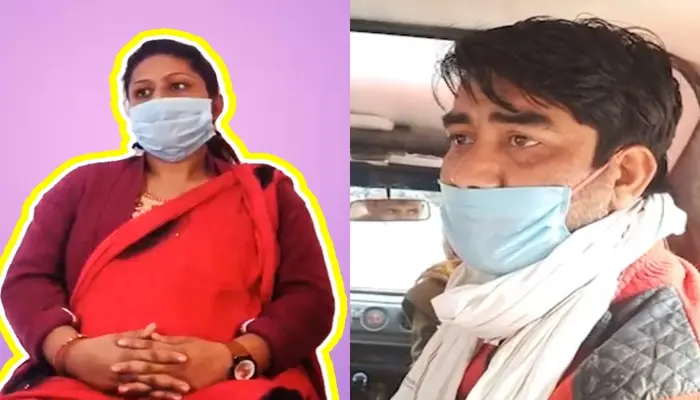
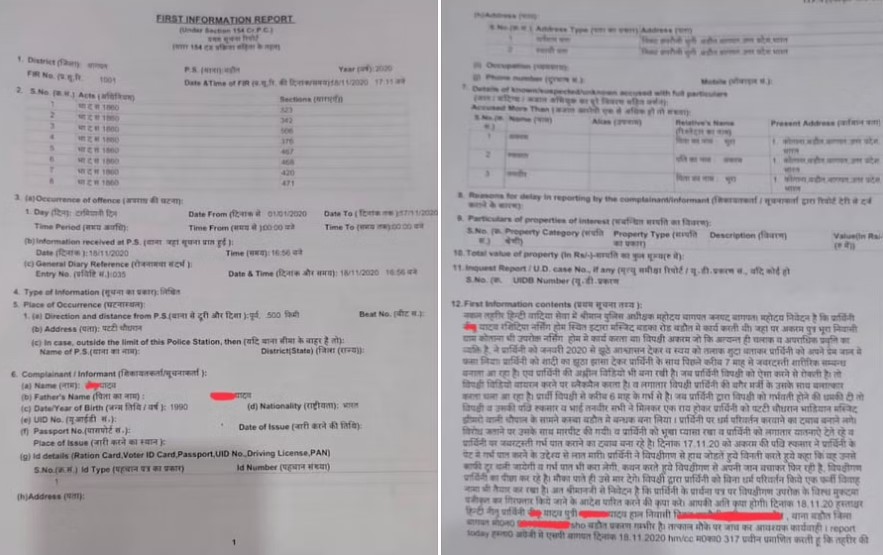
In Baghpat, Uttar Pradesh, a Hindu woman, Neetu Yadav, was deceived into a relationship and pressured to convert to Islam by a Muslim man, Akram Qureshi, who introduced himself as a Hindu man and presented himself as a divorced Hindu man before entering into a relationship with her on the promise of marriage. The case resurfaced in November 2026 after journalist Swati Goel Sharma's earlier interview with Neetu Yadav was republished by Rashtra Jyoti on 22 November 2026. The interview, originally conducted in November 2020, four days after Neetu lodged her FIR against Akram Qureshi and 12 days before the Uttar Pradesh Prohibition of Unlawful Conversion of Religion Ordinance came into effect, documented her account in detail. According to reports, Neetu came into contact with the accused in January 2020 while working as a nurse at Rashidiya Nursing Home in Baraut, Baghpat district, where he worked as a general physician. During this time, he introduced himself as a Hindu man named Aksh and told her that he was divorced and had a young son. He subsequently proposed marriage, telling her that his son would get a mother and that she would get a family. Neetu initially hesitated but eventually accepted his proposal after developing a relationship with him. Neetu stated that Qureshi concealed his actual identity until June 2020, after she became pregnant. He then told her that his name was Akram Qureshi and that he was Muslim, explaining that he had hidden his identity to avoid caste and religious complications. He also showed her a document described as a nikahnama and told her that her name had been changed to Muskan and that the marriage document had already been prepared. When she questioned how a nikahnama could have been prepared without her appearing before a Qazi, Qureshi dismissed the matter as a formality and told her that he remained the same person she knew as Aksh. Neetu subsequently discovered that Qureshi had not been divorced and was still married to a woman named Rukhsar, who was pregnant at the time. She stated that after confronting him about his marital status, the situation escalated. According to her account, Rukhsar, with the assistance of Qureshi's brother Tanveer, held her hostage, assaulted her and pressured her to terminate her pregnancy. During this time, the victim was also pressured to convert to Islam. She stated that on 17 November 2020, Rukhsar assaulted her and hit her in the stomach, after which she pleaded with them to leave her alone and stated that she would move away and terminate the pregnancy herself. On 18 November 2020, Neetu approached Baraut Police Station in Baghpat district and submitted a complaint. Police registered FIR Case No. 1001 against Akram Qureshi, Rukhsar and Tanveer under Sections 323, 342, 506, 376, 467, 468, 420 and 471 of the Indian Penal Code. The provisions covered offences including causing hurt, wrongful confinement, criminal intimidation, rape, forgery and cheating. Qureshi was arrested and sent to jail. During his arrest, he denied concealing his marital status and claimed that Neetu knew he was already married and had agreed to live with him as his second wife. Neetu rejected his version and maintained that he had deceived her from the beginning by concealing both his identity and marital status. The case later came to public attention through interviews conducted by journalist Swati Goel Sharma. Neetu maintained that Qureshi's family subsequently sought an out-of-court settlement and proposed that he divorce Rukhsar so that Neetu could live with him as his only wife. She rejected the proposal and stated that she wanted Qureshi to face the consequences of his actions. She also described the difficulties she faced while pursuing the case and said that Qureshi's family had appealed to her by referring to his children and the difficulties caused by his incarceration. With financial assistance of Rs 1 lakh from Sewa Nyaya Utthan Foundation, Neetu later established a small nursing home in Loni, Ghaziabad, and continued working there. She told Swati Goel Sharma that she was not deterred by concerns about her safety and intended to pursue the legal case. Neetu had a son from her first marriage and a daughter with Qureshi. Her earlier marriage, arranged by her family in 2012, ended in divorce in 2017, after which she lived with her parents before moving to Loni and later Baraut for nursing work. On 18 May 2022, Neetu, then 32, was found dead at her residence in Prem Nagar Colony, Loni, Ghaziabad. She was found hanging inside her flat, and police took her body for post-mortem examination. Loni Kotwali SHO Ajay Chaudhary stated that, prima facie, the case appeared to be suicide and that no complaint had been filed regarding her death at that time. Journalist Swati Goel Sharma, who had remained in contact with Neetu and had spoken to her around 20 days before her death, expressed doubts about the suicide theory and stated that Neetu had been deeply concerned about her daughter, whom she believed had no one other than her.
Case Images
Why it is Hate Crime ?
The primary category selected for this case is: Crimes against women in relationships and other sexual crimes. The subcategory selected is: man pretends to be Hindu. The tertiary category selected is: Name Changed. When a non-Hindu man pretends to be a Hindu to deceive a Hindu woman into a relationship, the act is seen as triggered by mala fide intentions. In some cases, the woman eventually accepts the man’s original religious identity and converts after the man’s identity is revealed. These cases could be argued as cases of religious brainwashing and a result of the pressure a woman feels after getting into a relationship with a man. The woman, it can be argued, also changed her religious identity because of the stigma she believes she might face if she chooses to walk out of a deceptive relationship. However, for the purpose of documenting hate crimes, the cases in this subcategory are limited to those where there is explicit violence aimed at religious conversion against the wishes of the victim (force-feeding beef, blackmailing with intimate videos, rape on refusal to convert, etc), or if the woman herself complains of the man’s religious deception. In such cases, it is established that the deception of the non-Hindu man had a specific aim of religious conversion or targeting of the victim due to her Hindu religious identity, therefore, making it a religiously motivated hate crime. The other subcategory selected is: Forced conversion before marriage. In such cases, a non-Hindu man is in a relationship with a Hindu woman when the pressure to convert her religion begins to manifest. In such cases, typically, two patterns emerge. First, when the relationship is consensual, and the religious identity of the perpetrator is known to the Hindu woman in the relationship, however, at some point during the relationship, the non-Hindu man starts to force the victim to convert her religion and give up her Hindu religious identity. The second is when the woman gets into a marriage with the man pretending to share her faith. Later, when the truth is revealed, the man starts pressuring the woman to convert her religion and give up her religious identity. In both the situations, the methods used to force the victim to convert her religion often revolve around force-feeding beef, forcing her to wear hijab, forcing her to read the Kalma or even pressurizing the victim to do ‘Nikah’, which is marriage under Islamic law, with a prerequisite being conversion to Islam. Cases where a Hindu woman consensually converts to Islam in a relationship will be left out of the hate crime database, even though it could be argued in several cases that the conversion was a result of religious brainwashing. The incident involved the targeting of a Hindu woman through deliberate concealment of religious identity and subsequent pressure to abandon Hinduism and embrace Islam. The use of a false Hindu identity to gain her trust, followed by an attempt to replace her existing religious identity, directly affected her dignity, religious freedom and personal autonomy. A Hindu woman's religious identity is an integral part of her personal life, cultural inheritance, family traditions and freedom of belief. Her choice of a life partner includes the right to know the person's actual religious identity and make an informed decision about marriage. Deliberately assuming a Hindu identity to gain the trust of a Hindu woman exploits her religious belonging and undermines her freedom to make that choice. This itself is a clear manifestation of bias and malicious intent towards the victim's religion. By concealing his true identity, he exploited her trust, targeting her under false pretences. This indicates a premeditated intent to manipulate her based on her religious background. In cases like these, the tactic of adopting a false Hindu identity to manipulate and "ensnare" a Hindu individual is not just an act of personal betrayal but can also be interpreted as an expression of disdain or disregard for Hinduism and its customs that reflects a deeper animosity towards Hindus and their beliefs. A person's name carries personal, familial and cultural significance. Hindu names are often connected with religious traditions, deities, family heritage and civilisational identity. Replacing a Hindu woman's name with an Islamic name in the context of a proposed nikahnama signifies an erasure of her existing Hindu identity and an assertion of Islamic identity. Hinduism recognises the freedom of an individual to retain and practise their faith as an essential aspect of religious life. Marriage does not require a Hindu woman to surrender her religious identity, abandon her traditions or accept another faith against her wishes. Conversion to Islam under pressure is a direct interference with this freedom. The demand for conversion following religious deception is particularly significant because it places the burden of abandoning Hinduism upon the woman after her trust has already been secured through a false representation of shared religious identity. Pressuring a Hindu individual to discard her religious faith and embrace another was a direct attack on her religious identity and dignity. It was not a matter of personal choice; it was coercion rooted in hostility towards the victim's Hindu identity. Such an attempt reflects religious animosity because the act was not simply about personal differences but about erasing the victim’s Hindu faith, making it a religiously motivated crime. Such acts are carried out by Muslim perpetrators due to indoctrination by Islamic theology, which advocates that all non-Muslims (referred to as kafirs) are inferior and subject to subjugation unless they convert to Islam or live under Islamic rule (dhimmitude). These ideas are not mere abstractions; they manifest in actions where non-Muslims, especially Hindus in India, are seen as targets for religious domination, coercion, or humiliation. This theological framework fosters an "us versus them" mindset, in which any assertion of Hindu identity or religious freedom is seen not only as undesirable but as a threat to Islamic supremacy. Perpetrators who are shaped by such teachings feel justified, even morally obligated, to harass, suppress, or violently attack Hindus, particularly when Hindus assert their religious rights or resist conversion. As a result, Muslim perpetrators invoke such doctrines to justify coercive attempts to convert non-Muslims, particularly Hindus, portraying conversion as a means of abandoning Kufr (a state of disbelief in Islam or disbelief in Islam) and attaining salvation. Disclaimer: The Hinduphobia Tracker records the date of the incident based on when the crime occurred. However, the media reports do not specify the exact date of the beginning of the victim’s ordeal or when she came into contact with the accused. It is mentioned that the victim came in contact with the accused in January 2020, and on 17 November 2020, the victim was assaulted by the accused's family. Considering these two pieces of information, we are using an indicative date of 17 January 2020 as the date of the incident. This date is used for documentation purposes only and represents the estimated beginning of her ordeal. Disclaimer: The Hinduphobia Tracker records the number of perpetrators based on the individuals identified in the available media reports and police records. In this case, three individuals, Akram Qureshi, his wife Rukhsar and his brother Tanveer, were named in the FIR registered at Baraut Police Station. Accordingly, the perpetrator count has been recorded as 3.
Victim Details
Total Victim
1
Deceased
1
Gender
- Male 0
- Female 1
- Third Gender 0
- Unknown 0
Caste
- SC/ST 0
- OBC 0
- General 0
- Unknown 1
Age Group
- Minor 0
- Adult 1
- Senior Citizen 0
- Unknown 0


Case Status
Complaint registered


Perpetrators Details
Perpetrators
Muslim Extremists
Perpetrators Range
From 2 To 5
Perpetrators Gender
both
 Sources