Idol of Hindu deity vandalised at Mata Rani Temple by unknown miscreants in Kasganj, Uttar Pradesh
 Kasganj, Uttar Pradesh, India
 18 November, 2026
Case Summary
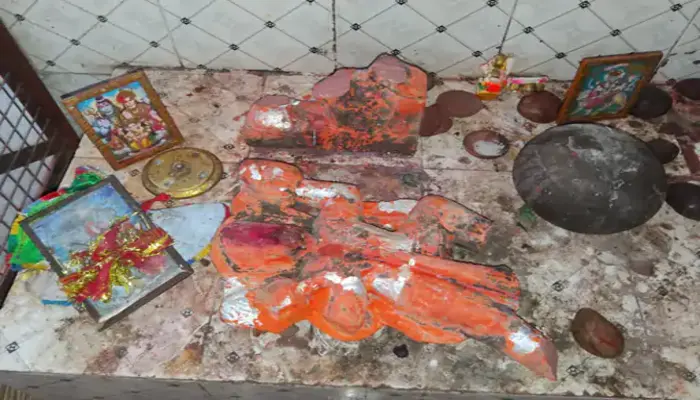
In Tikampura village, located in the Mohanpura area of Kasganj district, Uttar Pradesh, an idol of Bajrangbali at the Mata Rani Temple was vandalised by unknown individuals. The incident occurred on 19 November 2026. Upon learning about the vandalism, villagers gathered at the temple premises and expressed their concern over the incident. According to the villagers, an idol at the same temple had also been vandalised approximately seven months earlier. In view of the repeated incidents, they demanded that the perpetrators be identified and strict action be taken against them. They also called for increased security at the temple to prevent further incidents of vandalism. Following the incident, outpost in-charge Dr Mahesh Kumar Singh and Kasganj Kotwali police station in-charge Jagdish Chandra arrived at the spot along with police personnel. The police inspected the site and spoke to villagers to gather information about the incident. Gram Pradhan representative Rajendra Rathod was also present at the scene. Addressing the villagers, Kotwali in-charge Jagdish Chandra stated that the matter was being investigated and that efforts were underway to identify and arrest those responsible. The villagers reiterated their demand for enhanced security at the temple.
Why it is Hate Crime ?
This case has been added to the tracker under the primary category of Attack on Hindu religious representations. Within it, the sub-category selected is Desecration of Hindu religious symbol. Icons and symbols, or a religious representation of a spiritual idea,l are widely revered in Hinduism. Iconography is of vital significance in the Hindu milieu. It helps connect people’s spiritual beliefs with the real world. Iconography within the Hindu faith takes several shapes and forms. Murtis are of the greatest significance to Hindus, to which daily rituals, prayers, and offerings are done. Besides the murtis, there are several other symbols which have deep significance in the Hindu faith – the Om and Swastika, for example. Since these Hindu religious symbols hold paramount importance in Hinduism, any desecration of symbols, icons, murtis, religious representations, andmanifestations, is driven by animosity towards the faith itself, which manifests through these murtis, icons, and symbols. Therefore, any desecration of these Hindu religious symbols and representations is considered religiously motivated hate crimes under this category. The vandalism of the idol of Bajrangbali at the Mata Rani Temple constituted an attack on a sacred object of Hindu worship and therefore carried a distinct religious dimension. Lord Hanuman, also known as Bajrangbali, occupied an important place in Hindu religious belief and devotion. He was revered as a symbol of strength, courage, loyalty, selfless service and unwavering devotion to Lord Rama. His worship held deep significance for Hindu devotees, who offered prayers to him for protection, courage and the removal of obstacles. Idols of Lord Hanuman were not merely decorative or material objects but sacred representations through which devotees expressed their faith and maintained their religious practices. Consequently, the deliberate desecration of his idol struck at an object central to Hindu religious worship and directly affected the sanctity of the temple. The religious significance of the incident was underscored by the fact that the vandalism took place inside a Hindu temple, a place specifically established for the worship of Hindu deities and the observance of religious practices. The targeting of an idol within such a sacred space went beyond ordinary damage to property because it involved the desecration of an object that held profound spiritual and devotional importance for the Hindu community. Such acts undermined the sanctity of Hindu places of worship and interfered with the community's ability to practise its faith in an environment where its religious beliefs and sacred objects were respected. The fact that the same temple had witnessed the vandalism of another idol approximately seven months earlier also added significance to the incident. Repeated desecration of sacred objects at the same place of worship raised concerns about the security of Hindu religious institutions and the vulnerability of their sacred spaces to further attacks. The importance of protecting Hindu idols and temples must also be understood in the context of their role in preserving the religious and cultural life of the community. Temples serve not only as places of worship but also as centres where devotees gather, perform rituals, celebrate religious occasions and sustain their shared religious traditions. Vandalising an idol therefore affects more than the physical object itself; it strikes at the collective religious sentiments of the devotees who regard it as sacred. Such desecration can create an atmosphere of insecurity among worshippers and undermine their sense of safety while exercising their fundamental religious practices. The villagers' demand for increased security reflected the seriousness with which the community viewed the desecration of its place of worship.


Case Status
Unknown


Perpetrators Details
Perpetrators
Unknown
Perpetrators Range
Unknown
Perpetrators Gender
unknown
 Sources



