Sacred idols of Lord Hanuman and Shivalinga desecrated within police station premises; third idol left damaged in disturbing act of vandalism in Banda, Uttar Pradesh
 Banda, Uttar Pradesh, India
 16 November, 2026
Case Summary
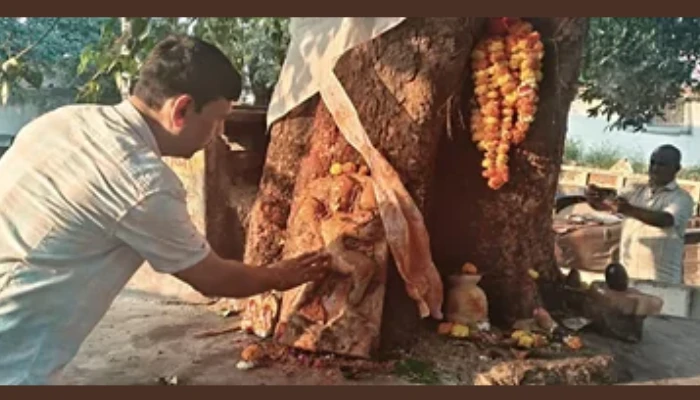
At the Atarra Kotwali police station premises in Banda, Uttar Pradesh, two idols of Lord Hanuman and a Shivling were vandalised by unidentified miscreants on Tuesday night, 17 November 2026. A third idol of Lord Hanuman was also damaged. The incident came to light on Wednesday, 18 November 2026, morning when Hindu devotees arrived to perform worship and discovered the desecrated idols. The broken remains of the idols were found scattered approximately 25 feet away from the platform where they had been installed. They informed the police, who initiated an investigation and began examining CCTV footage to identify those responsible. Following the incident, the devotees collected the damaged idols and immersed them in the Bage River at Badausa. Station House Officer Vinod Kumar Rai said police were examining CCTV footage and that they would take legal action against those responsible. While the initial police assessment suggested a broken tree branch might have caused the damage, the investigation was ongoing.
Why it is Hate Crime ?
This case has been added to the tracker under the primary category of Attack on Hindu religious representations. Within it, the sub-category selected is Desecration of Hindu religious symbol. Icons and symbols, or a religious representation of a spiritual idea,l are widely revered in Hinduism. Iconography is of vital significance in the Hindu milieu. It helps connect people’s spiritual beliefs with the real world. Iconography within the Hindu faith takes several shapes and forms. Murtis are of the greatest significance to Hindus, to which daily rituals, prayers, and offerings are done. Besides the murtis, there are several other symbols which have deep significance in the Hindu faith – the Om and Swastika, for example. Since these Hindu religious symbols hold paramount importance in Hinduism, any desecration of symbols, icons, murtis, religious representations, andmanifestations, is driven by animosity towards the faith itself, which manifests through these murtis, icons, and symbols. Therefore, any desecration of these Hindu religious symbols and representations is considered religiously motivated hate crimes under this category. The other sub-category selected here is - Attack on temples . In Hinduism, a temple is the abode of the Deity. The Deity in the Temple is consecrated, thereby making it a real, breathing entity. Hindus believe that not just the Deity but the temple premises itself are sacred to Hindus, since Hindus hold the faith that the entire Temple space is an amalgamation of the divine energy of the deity. Given the central significance of Temples in Hindu Dharma, any attack against a Hindu Temple or its peripheral premises is an attack on the faith itself and is born out of animosity towards the faith, of which the Temple is a central tenet. Any manner of attack against a Temple and/or its premises would therefore be considered a religiously motivated hate crime. The incident involved the desecration of sacred Hindu idols and a Shivling installed within the premises of a police station, directly affecting the religious sentiments of Hindu devotees. The vandalism was particularly disturbing because the idols were installed on an established platform where devotees regularly visited to offer prayers. The fact that sacred representations of Hindu deities were damaged even within the premises of a police station further highlighted the vulnerability of Hindu religious symbols and places of worship. Idols of Hindu deities hold profound religious and spiritual significance in Hinduism. They are not merely stone or metal structures but sacred representations through which devotees connect with the divine. Lord Hanuman is deeply revered for his devotion, strength, courage, and protection, while the Shivling represents Lord Shiva and is worshipped as a sacred manifestation of the divine. Devotees offer prayers, perform rituals, and seek divine blessings before these sacred representations. Consequently, breaking or desecrating these idols is not ordinary property damage. It strikes at the religious beliefs of devotees, violates the sanctity of worship, and causes deep distress to the Hindu community. The vandalism of the idols within police station premises also raised serious concerns about the security of Hindu religious symbols in public institutions. A place where devotees should have been able to worship without fear became the site of desecration. Such incidents undermine the confidence of Hindu devotees in the protection of their religious practices and convey a deeply disturbing disregard for the sanctity of their faith. The destruction of sacred representations must not be dismissed as ordinary vandalism when its direct impact is on the religious beliefs and sentiments of an entire community. It is important to mention here that, though the last update was that the miscreants were unknown, regardless, the action stemmed from hatred against Hinduism and resulted in the desecration of the sacred idols and would therefore be considered a religiously motivated hate crime.


Case Status
Unknown


Perpetrators Details
Perpetrators
Unknown
Perpetrators Range
Unknown
Perpetrators Gender
unknown
 Sources



