Hindu women residents threatened, abused and attacked by Muslim men for installing Diwali lights in Navi Mumbai society
 Navi Mumbai, Maharashtra, India
 26 October, 2024
Case Summary
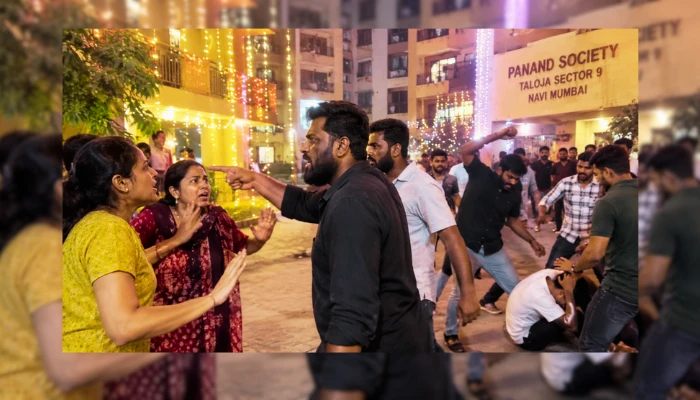
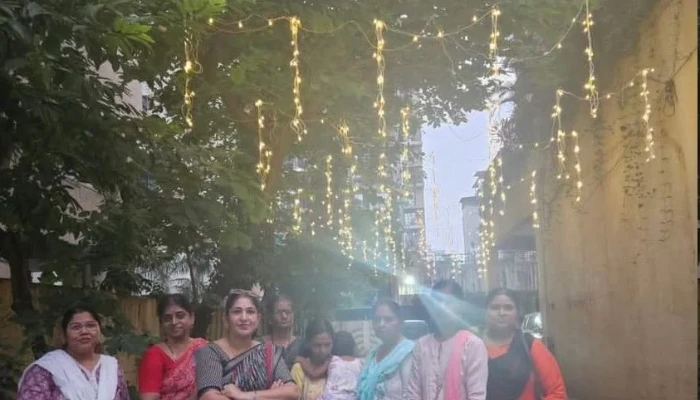
In Taloja Phase 1, Sector 9, Navi Mumbai, Maharashtra, Hindu women threatened, abused, and attacked a group of Muslim men for celebrating Diwali by putting up festive lights, lighting diyas, and bursting firecrackers inside their residential society. The perpetrators threatened Hindu women, objected to the decorations, and declared that Diwali lights would not be allowed in the society. The hostility subsequently escalated into a violent attack on Hindu youngsters, with a group of around 10–12 Muslim men chasing and brutally assaulting them for bursting firecrackers. The incident took place on 27 October 2024, during Diwali celebrations, outside Panand Society in the Taloja Sector 9 area of Navi Mumbai. The hostility first came to light when 2–3 Muslim men confronted Hindu women who were putting up decorative lights in the residential society for Diwali. The Muslim men objected to the decorations, verbally abused the women, and used profane language against them. In a video of the confrontation that circulated on social media, one of the men was heard intimidating a Hindu woman, "Tum phasogi auntie, sab se upar tumhara naam hai" (You will get into trouble, aunty, we have written your name on the top), while another declared, "Ye lights nahi jalegi hamari society main" (These lights will not be put up in our society). The men openly threatened the women and attempted to prevent them from putting up Diwali decorations. The hostility further escalated when a group of around 10–12 Muslim men targeted Hindu youngsters who were bursting firecrackers for Diwali outside the society premises. The perpetrators chased the youngsters and brutally assaulted them, leaving several victims injured. During the attack, the Muslim men openly declared that Hindus would not be permitted to celebrate Diwali within the residential society premises. Following the incident, Maharashtra Police registered an FIR against Ashfaque Siddiqui and his brothers in connection with the threats and violence against Hindu residents. Police also detained the housing society chairman. Security was subsequently strengthened in the locality. Following police intervention and increased security, the Hindu residents successfully installed the Diwali lights in the society.
Case Images
Why it is Hate Crime ?
This case has been added to the tracker under the primary category of: Attack not resulting in death. Within it, the selected subcategory is: Attacked for Hindu identity. In several cases, Hindus are attacked merely for their Hindu identity without any perceived provocation. A classic example of this category of religiously motivated hate crime is a murder in 2016. 7 ISIS terrorists were convicted for shooting a school principal in Kanpur because they got ‘triggered’ seeing the Kalava on his wrist and tilak that he had put. In this, the Hindu victim had offered no provocation except for his Hindu religious identity. The motivation for the murder was purely religious, driven by religious supremacy. Such cases where Hindus are targeted merely for their religious identity would be documented as a hate crime under this category. This case was included in the Hinduphobia Tracker because Hindu residents were targeted for celebrating Diwali within their residential society, with the hostility directed at their Hindu religious identity and their right to practise their faith. Muslim men objected to the installation of Diwali lights and the bursting of firecrackers, threatened Hindu women, and declared that Diwali lights would not be permitted in the society. The hostility escalated into a violent attack on Hindu youngsters, who were chased and beaten for celebrating the festival. This went beyond a neighbourhood disagreement and reflected intolerance towards the open expression of Hindu religious and cultural identity. More importantly, there was no provocation whatsoever by the Hindu residents. They were not engaging in any activity directed against the Muslim residents or their religious beliefs. They were simply celebrating their own festival within their residential society. Yet, this very expression of Hindu religious identity was treated as a provocation by the Muslim men. The fact that ordinary Diwali celebrations, including putting up lights and bursting firecrackers, invited threats and violence demonstrated that the hostility was directed not at any misconduct by the Hindu residents but at their decision to openly celebrate a Hindu festival. In effect, their mere exercise of religious freedom became a trigger for aggression. Diwali holds immense religious and spiritual significance in Hinduism. It symbolises the victory of light over darkness, knowledge over ignorance, and good over evil. The festival commemorates Lord Ram's return to Ayodhya after fourteen years of exile and his victory over Ravana. Lighting diyas and decorating homes with festive lights are widely practised traditions associated with Diwali. Bursting firecrackers also forms part of the celebrations and expresses the festival's joy. Objecting to these ordinary expressions of Diwali, threatening residents and resorting to violence demonstrated hostility towards Hindu religious and cultural practices. The perpetrators' declaration that Diwali lights would not be allowed in the society was particularly significant. A residential society cannot become a space where members of one religious community dictate whether another community can observe its festivals. Every individual has the constitutional right to profess and practise their religion, and no religious community has the authority to impose its religious preferences on others or prevent them from exercising this freedom. The Hindu residents were peacefully celebrating Diwali by putting up lights and lighting diyas within their residential premises. Their celebrations were ordinary expressions of their religious and cultural identity. The objection to these practices reflected an exclusionary attitude that treated Hindu traditions as unwelcome and subject to the approval of those who objected. The declaration that the lights would not be permitted effectively sought to restrict how Hindu residents could celebrate their own festival within the society where they lived. The intimidation of Hindu women further exposed the coercive nature of this hostility. They were confronted, threatened, and verbally abused for putting up Diwali decorations. Such conduct sought to make Hindu women feel that even decorating their homes and participating in the celebrations of their own festival invited confrontation. It created an atmosphere in which Hindu residents were expected to suppress ordinary expressions of their faith to avoid hostility from members of another religious community. The subsequent attack on Hindu youngsters made the incident particularly disturbing. They were chased and beaten for bursting firecrackers during Diwali. The targeting of young Hindus for participating in their religious festival risked instilling fear at an early age and sending the message that openly celebrating Hindu traditions was unsafe or unacceptable in their own residential surroundings. Instead of allowing children and young people to participate freely in their festival, the perpetrators subjected them to intimidation and physical violence. The collective nature of the attack further exposed the hostility's aggressive and coercive character. The perpetrators' actions conveyed that Hindu residents were expected to comply with objections to their religious celebrations or face intimidation and physical violence. Such aggression served to instil fear, discourage Hindus from openly celebrating their festivals, and establish an atmosphere in which their religious expression was treated as subordinate to the objections of others. Hindus were made to bear the brunt of violence for exercising their freedom to celebrate Diwali. Overall, the threats against Hindu women, the objection to Diwali decorations and the physical assault on Hindu youngsters demonstrated clear hostility towards Hindu religious identity and expression. The incident reflected an exclusionary attitude in which Hindu celebrations were treated as unwelcome within a residential society,y and residents were intimidated and attacked for refusing to abandon their religious practices. The targeting of Hindus for celebrating Diwali made this a case of religiously motivated hostility. Disclaimer: Three Hindu women were visibly threatened and targeted in the video. Accordingly, the victim count has been recorded as three (3) for documentation purposes, based on the individuals identifiable in the available footage. The actual number of victims may be higher. Similarly, although the police arrested Ashfaque Siddiqui and his brothers and detained the housing society chairman, the number of arrested men was not available. The report specifically stated that a group of 10–12 people attacked the Hindu youngsters, bursting firecrackers. Accordingly, the perpetrator count has been recorded as twelve (12), representing the highest number specified in the report. This figure has been selected for documentation purposes and reflects the reported number of assailants involved in the attack.
Victim Details
Total Victim
3
Deceased
0
Gender
- Male 0
- Female 3
- Third Gender 0
- Unknown 0
Caste
- SC/ST 0
- OBC 0
- General 0
- Unknown 3
Age Group
- Minor 0
- Adult 3
- Senior Citizen 0
- Unknown 0


Case Status
Arrested


Perpetrators Details
Perpetrators
Muslim Extremists
Perpetrators Range
From 10 to 100
Perpetrators Gender
male
 Sources



