Hindu faith targeted; Muslim man mocks Vijayadashami celebrations and Hindu religious customs on social media
 Uttar Dinajpur district, West Bengal, India
 20 October, 2026
Case Summary
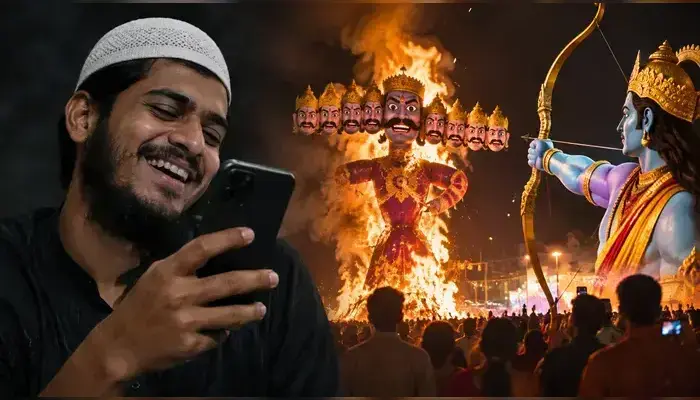
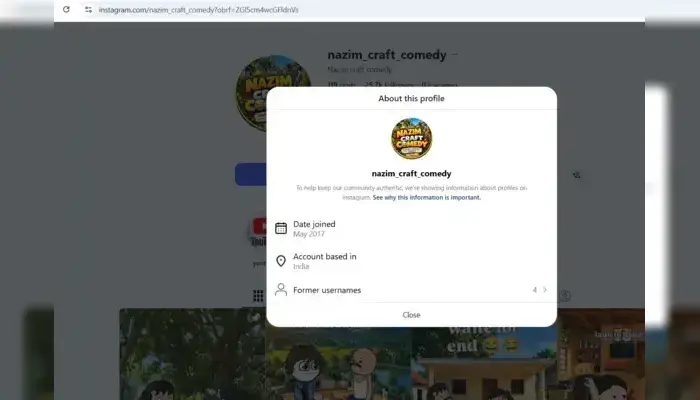
A Muslim social media handle named “Nazim Craft Comedy” (@nazim_craft_comedy) on Instagram posted a derogatory video targeting the Hindu community and mocking Vijayadashami celebrations, an integral part of the Dussehra festival. The video, posted on 21 October 2026, ridiculed Hindu religious beliefs and the tradition of burning Ravan effigies during the festival. The incident came to light when a prominent news portal, Hindu Voice, highlighted it through a post on its official X account on 13 November 2026. According to the information shared by the news portal, the perpetrator was identified as Nazim Ali, a resident of Islampur in Uttar Dinajpur district of West Bengal. He operated the Instagram account under the name “Nazim Craft Comedy”, through which he posted the video targeting Hindus and their religious beliefs. In the video, the account holder mockingly addressed Hindus as “andhbhakts” and said, “Listen, andhbhakts, according to Hindu traditions, only a son performs the Antyeshti (final rites of his father). Then why do all these people burn Ravan on Dussehra? That means they are all children of Ravan.” Through these remarks, he ridiculed Hindu religious customs and drew a derogatory comparison between the performance of Antyeshti and the burning of Ravan effigies during Vijayadashami celebrations. The video subsequently went viral on social media, triggering outrage among Hindu users on X (formerly Twitter). Several users condemned the remarks for insulting Hindu religious sentiments and denigrating the significance of Vijayadashami. They began tagging the West Bengal Police, demanding action against the Instagram handle for mocking the Hindu community and its religious traditions. At the time of writing this report, no publicly available information indicated that any legal action had been taken against the perpetrator.
Case Images
Why it is Hate Crime ?
The primary category in this case is: Hate Speech against Hindus. The subcategory selected is: Anti-Hindu slurs, mocking faith. Anti-Hindu slurs and the deliberate mocking of the Hindu faith owing to religious animosity involve the usage of derogatory terms, stereotypes, or offensive references to religious practices, symbols, or figures. One of the common anti-Hindu slurs used against Hindus is “cow-worshipper” and “cow piss drinker”. The intention of using this term is to demean and mock Hindus as a group and their religious beliefs since Hindus consider the cow holy. Additionally, some symbols and the slurs attached to them have a historical context that exacerbates the insult, hate, stereotyping, dehumanisation and oppression against Hindus. Cow worship has been used for centuries to denigrate Hindus, insult their faith and oppress Hindus specifically as a religious group. There has been overwhelming documentation about how cow slaughter has been used to persecute Hindus with cow meat being thrown in temples and places of worship. There has also been overwhelming documentation where cow meat (beef) has been force-fed to Hindus to either forcefully convert them to Islam or denigrate their faith. Apart from cow worship, the Swastika – which holds deep religious significance for the Hindus – has also been misinterpreted and distorted to use as a slur against Hindus. Similarly, the worship of the Shivling has been used by supremacist ideologies and religions to denigrate Hindus owing to religious animosity. Such slurs and denigration stem out of inherent animosity and hate towards Hindus and their faith, therefore, it is categorised as hate speech targeted at Hindus specifically owing to their religious identity. This incident was a clear example of religiously driven hate speech, as the Muslim perpetrator mocked Hindu Vijayadashami celebrations and used sacred religious customs to demean the Hindu community. Vijayadashami, celebrated as part of the Dussehra festival, commemorates the victory of good over evil. It is associated with Lord Rama’s victory over Ravana and, in several Hindu traditions, Goddess Durga’s victory over the demon Mahishasura. The traditional practice of burning Ravana’s effigies, known as Ravan Dahan, symbolises the destruction of evil, arrogance and adharma (unrighteousness), reaffirming the triumph of dharma (righteousness). Antyeshti, meanwhile, refers to the sacred last rites performed for a deceased person. These rites form an important part of Hindu funeral traditions and are associated with honouring the departed soul and facilitating its onward spiritual journey. Although traditionally performed by sons in several Hindu customs, the practices vary across communities. Both traditions hold deep religious and cultural significance for Hindus. By drawing a derogatory comparison between Antyeshti and Ravan Dahan, the perpetrator deliberately distorted two distinct religious practices to ridicule Hindus, insinuating that those who burnt Ravana’s effigies were themselves his children. This comparison trivialised the spiritual significance of both customs and turned deeply revered religious traditions into material for mockery. Rather than demonstrating any understanding or regard for Hindu religious beliefs, his remarks reflected contempt for the faith and its adherents, alongside a blatant disregard for the sentiments associated with their religious celebrations. The perpetrator further chose to present and circulate these remarks through a comical video on a public social media platform. The preparation and publication of the video demonstrated a deliberate effort to package the religious mockery as entertainment and disseminate it beyond a private interaction. By making the content publicly accessible, he exposed a wider Hindu audience to the derogatory remarks, amplifying the insult to their religious beliefs and creating the potential for widespread hurt to religious sentiments. The use of social media to broadcast such content further demonstrated his willingness to publicly disparage Hindu religious traditions and the community that revered them. The incident thus constituted a clear instance of anti-Hindu hostility, involving the deliberate ridicule of a sacred Hindu festival, the distortion of religious customs and the public dissemination of content disparaging the Hindu community. The perpetrator's remarks demonstrated a blatant disregard for Hindu religious beliefs and sentiments. Accordingly, the incident was categorised as anti-Hindu hate speech and included in the hate crime database of the Hinduphobia Tracker. Disclaimer: According to the currently available information, the perpetrator was identified as a resident of Islampur in Uttar Dinajpur district, West Bengal, India. Accordingly, Uttar Dinajpur, West Bengal, was selected as the indicative location for documentation purposes.


Case Status
Unknown


Perpetrators Details
Perpetrators
Muslim Extremists
Perpetrators Range
One Person
Perpetrators Gender
male
 Sources



