Hindu scriptures mocked as Muslim man circulates derogatory image mocking Lord Vishnu's Vamana avatar during Diwali
 Pune, Maharashtra, India
 9 November, 2026
Case Summary
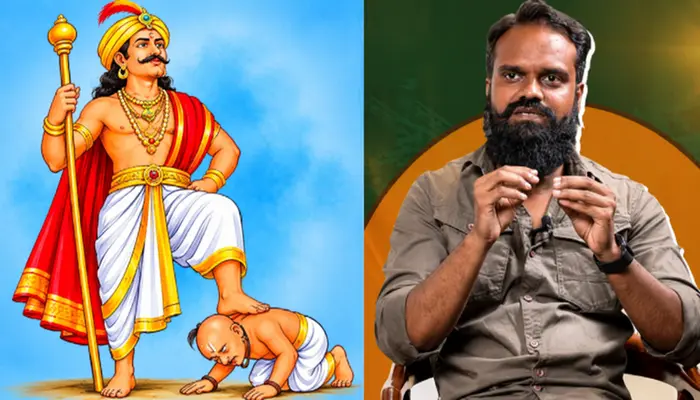
In Pune, Maharashtra, a Muslim man named Paigambar Sheikh, associated with the Sambhaji Brigade, circulated an objectionable image on social media that mocked and satirised the Vamana avatar of Lord Vishnu. The image, which was shared on the occasion of Diwali and Balipadyami, depicted Emperor Bali standing with his foot on the head of Vatu (the young Brahmin boy Vamana), thereby reversing the traditional depiction of the episode described in Hindu scriptures. Alongside the image, Sheikh posted a caption expressing support for Baliraja, which read, ‘May hardships go away, may the kingdom of Bali come… The grandson of King Prahlad and son of Virochana, father of Banasura, whom the citizens of this place cherish in their bosom, Mahasamrat #Baliraja…’. The post was accompanied by an image of Sheikh himself. The circulation of the image, which portrayed the Vamana avatar of Lord Vishnu in a satirical and derogatory manner, drew criticism from Hindu devotees and social media users. The depiction was particularly contentious because it inverted the scriptural account of the encounter between Lord Vishnu, in his Vamana avatar, and King Bali. According to the Puranic account, Baliraja was the grandson of the devotee Prahlada and a great devotee of Lord Vishnu. Lord Vishnu assumed the Vamana avatar to test Bali's generosity and humble his pride. After covering the three worlds in two steps, Lord Vishnu asked Bali where he should place his third step, upon which Bali offered his own head. Lord Vishnu then placed his foot on Bali's head and sent him to Sutala Loka, granting him a kingdom described as more glorious than heaven. Pleased with Bali's sacrifice and devotion, Lord Vishnu also undertook the role of his gatekeeper to protect him. The image circulated by Sheikh reversed this religious narrative by showing Bali placing his foot on Vamana's head.
Why it is Hate Crime ?
This case has been added to the tracker under the primary category of - Hate speech against Hindus. Within it, the sub-category selected here is - Subversion of scriptures. Subverting the religious scriptures of Hindus has particularly devastating consequences. Subversion of the scriptures of Hindus is often done to justify or promote hatred, discrimination, or violence against specific individuals or groups of Hindus. Religious scriptures are often nuanced and those who harbour religious animosity towards Hindus often misquote or misrepresent the scripture to legitimise their animosity and hate towards the faith and its adherents. Any such misquoting of scriptures or subversion to justify hate, violence and discrimination against Hindus owing to religious animosity is hate speech and is categorised as such. The other sub-category selected here is - Anti-Hindu slurs, mocking faith. Anti-Hindu slurs and the deliberate mocking of the Hindu faith owing to religious animosity involve the usage of derogatory terms, stereotypes, or offensive references to religious practices, symbols, or figures. One of the common anti-Hindu slurs used against Hindus is “cow-worshipper” and “cow piss drinker”. The intention of using this term is to demean and mock Hindus as a group and their religious beliefs since Hindus consider the cow holy. Additionally, some symbols and the slurs attached to them have a historical context that exacerbates the insult, hate, stereotyping, dehumanisation and oppression against Hindus. Cow worship has been used for centuries to denigrate Hindus, insult their faith and oppress Hindus specifically as a religious group. There has been overwhelming documentation about how cow slaughter has been used to persecute Hindus with cow meat being thrown in temples and places of worship. There has also been overwhelming documentation where cow meat (beef) has been force-fed to Hindus to either forcefully convert them to Islam or denigrate their faith. Apart from cow worship, the Swastika – which holds deep religious significance for the Hindus – has also been misinterpreted and distorted to use as a slur against Hindus. Similarly, the worship of the Shivling has been used by supremacist ideologies and religions to denigrate Hindus owing to religious animosity. Such slurs and denigration stem out of inherent animosity and hate towards Hindus and their faith, therefore, it is categorised as hate speech targeted at Hindus specifically owing to their religious identity. The incident was added to the tracker because the post was directed at Hindus, as it involved the deliberate use of a sacred Hindu religious figure and an important episode from Hindu scriptures as material for public ridicule. Lord Vishnu is one of the principal deities of Hinduism and is regarded as the preserver and protector of the universe, forming part of the Hindu Trimurti alongside Brahma and Mahesh (Shiva). He is worshipped by millions of Hindus, and his various avatars, including Vamana, hold immense religious, spiritual and theological significance. The Vamana avatar is particularly revered as an embodiment of the divine intervention of Lord Vishnu to uphold dharma and restore cosmic order. Consequently, the circulation of a derogatory portrayal of this avatar went beyond an expression of disagreement with a religious belief or an alternative interpretation of scripture. It used a revered manifestation of one of Hinduism's principal deities as the subject of mockery, thereby targeting an important element of Hindu religious identity, faith and devotion. Such portrayals contribute to an environment in which Hindu religious symbols, beliefs and traditions are treated as legitimate subjects of contempt rather than being afforded the same respect expected towards the religious beliefs of other communities. The incident also constituted a deliberate subversion of Hindu scriptures, as the image distorted a sacred episode from the Puranic tradition by reversing the established portrayal of the encounter between Lord Vishnu in his Vamana avatar and King Bali. Hindu scriptures describe Bali as a devoted follower of Lord Vishnu who willingly offered his head as the third step after the deity measured the three worlds. By depicting Bali placing his foot on Vamana's head, the image inverted the religious narrative and presented the revered deity in a position of humiliation. This was not merely an alternative interpretation of a scriptural episode but a satirical distortion of a sacred account that held deep religious significance for Hindus. Such deliberate subversion of religious narratives undermined the sanctity of Hindu scriptures and used their distortion as a means of ridiculing Hindu beliefs and traditions. Hindu scriptures and their traditional interpretations form an important part of the community's religious and cultural inheritance. Deliberately presenting a revered deity in a position of humiliation, particularly through imagery that reverses the traditional account, amounted to ridiculing the religious tradition itself. The issue was the use of a sacred figure in a deliberately provocative representation that undermined the dignity associated with Hindu worship and belief. When religious figures and sacred narratives are selectively appropriated to ridicule a particular community, such conduct can reinforce hostility and normalise contempt towards that community's religious identity. The religious context and timing of the post further strengthened its communal significance. The image was circulated during Diwali and Balipadyami, when Hindus commemorate traditions associated with Lord Vishnu's Vamana avatar and King Bali. Using this particular occasion to circulate a satirical depiction of a Hindu deity indicated a disregard for the religious significance attached to the festival and the beliefs of the community observing it. The choice of subject was not incidental: it directly drew upon a sacred Hindu narrative and inverted its central religious imagery for the purpose of ridicule. Targeting a religious figure during a festival associated with that figure's scriptural tradition risked turning an occasion of religious observance into an opportunity to demean Hindu beliefs. In recent times, social media has increasingly become a platform for anti-Hindu hate, with derogatory memes, videos, and messages targeting Hindu religious symbols, practices, and deities. Such content is recognised as part of a broader pattern of Hinduphobia and religious hate crimes online. This deliberate targeting of revered religious icons firmly establishes this act as a religiously motivated hate crime; therefore, it is being categorised under the hate crime database. Disclaimer: The date of the incident has been taken as 8 November 2026, corresponding to Diwali, the occasion on which the objectionable social media post was circulated.


Case Status
Unknown


Perpetrators Details
Perpetrators
Muslim Extremists
Perpetrators Range
One Person
Perpetrators Gender
male
 Sources



