Diwali celebrations targeted with grotesque anti-Hindu comments by South African social media handles, Hindu deities described as 'demonic'
 Durban, KwaZulu-Natal, South Africa
 8 November, 2026
Case Summary
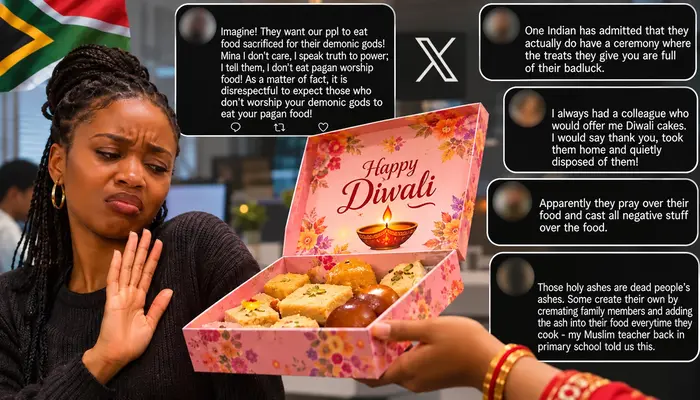
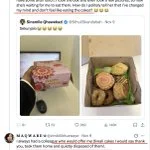
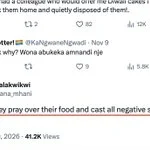
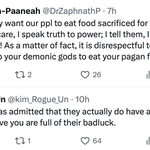
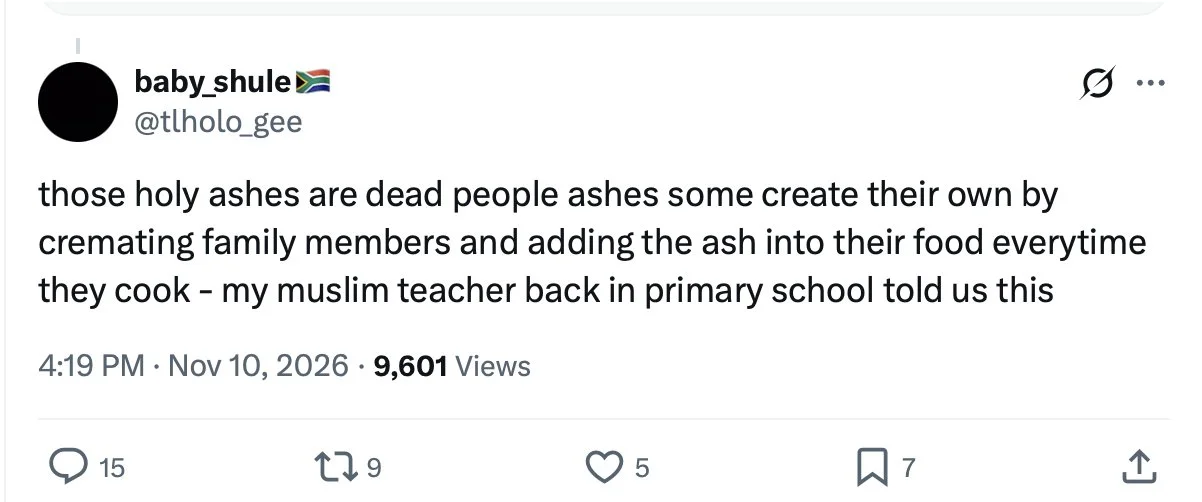
During the 2026 Diwali celebrations, several South African-based X (formerly Twitter) accounts targeted Hindus. They ridiculed the Diwali festival and its religious offerings, described Hindu deities as 'demonic' and 'pagan', and openly vilified the Hindu community and its religious traditions. The incident came to light after an X account named Stop Hindu Hate Advocacy Network (SHHAN) shared screenshots of the exchanges on its official X handle. The screenshots showed a post dated 9 November 2026 by a South African-based woman, Sinamile Qhawekazi, who shared photographs of a box of Diwali sweets she had received from a Hindu individual as a gesture of goodwill. The box carried the greeting 'Happy Diwali'. However, the woman expressed reluctance to eat the sweets, following which several accounts joined the discussion and began making derogatory comments about Diwali, Hinduism and the Hindu community. One user, operating under the username '@DrZaphnathP', objected to people eating food offered during Hindu religious worship and described Hindu deities as 'demonic gods' and the food as 'pagan'. He wrote: "Imagine! They want our ppl to eat food sacrificed for their demonic gods! Mina, I don't care, I speak truth to power; I tell them, I don't eat pagan worship food! As a matter of fact, it is disrespectful to expect those who don't worship your demonic gods to eat your pagan food!" Another user, '@kim_Rogue_Un', made a derogatory remark about Hindu religious offerings, associating the consumption of such food with bad luck. He wrote: "One Indian has admitted that they actually do have a ceremony where the treats they give you are full of their bad luck." Another account, operating under the display name 'MAQWABE' and username '@zimbilikhuzwayo', instructed the woman to take the sweets home and dispose of them. The user wrote: "I always had a colleague who would offer me Diwali cakes. I would say thank you, took them home and quietly disposed of them!" When a user named 'Scary Potter' questioned this behaviour, asking, "May I know why?", another user, 'SesiwahalaKwikwi' (@sesinwana_mhani), joined the discussion and vilified the Hindu community. She wrote: "Apparently they pray over their food and cast all negative stuff over the food." Another user, operating under the display name 'Baby Shule' and username '@tlholo_gee', made a similar derogatory remark. The user wrote: "Those holy ashes are dead people's ashes. Some create their own by cremating family members and adding the ash into their food every time they cook - my Muslim teacher back in primary school told us this." Notably, this was not limited to a handful of derogatory remarks. The comment section was filled with hundreds of similar anti-Hindu comments, in which users expressed open prejudice towards Hindu religious beliefs, the festival of Diwali and the Hindu community. These included comments describing Hindu deities as 'demonic', referring to religious offerings as 'pagan ', and spreading grotesque falsehoods about Hindu traditions and the Hindu community.
Case Images
Why it is Hate Crime ?
This case is being added to the tracker under the primary category: Hate Speech against Hindus. The subcategory selected is: Anti-Hindu slurs, mocking faith. Anti-Hindu slurs and the deliberate mocking of the Hindu faith owing to religious animosity involve the usage of derogatory terms, stereotypes, or offensive references to religious practices, symbols, or figures. One of the common anti-Hindu slurs used against Hindus is “cow-worshipper” and “cow piss drinker”. The intention of using this term is to demean and mock Hindus as a group and their religious beliefs since Hindus consider the cow holy. Additionally, some symbols and the slurs attached to them have a historical context that exacerbates the insult, hate, stereotyping, dehumanisation and oppression against Hindus. Cow worship has been used for centuries to denigrate Hindus, insult their faith and oppress Hindus specifically as a religious group. There has been overwhelming documentation about how cow slaughter has been used to persecute Hindus with cow meat being thrown in temples and places of worship. There has also been overwhelming documentation where cow meat (beef) has been force-fed to Hindus to either forcefully convert them to Islam or denigrate their faith. Apart from cow worship, the Swastika – which holds deep religious significance for the Hindus – has also been misinterpreted and distorted to use as a slur against Hindus. Similarly, the worship of the Shivling has been used by supremacist ideologies and religions to denigrate Hindus owing to religious animosity. Such slurs and denigration stem out of inherent animosity and hate towards Hindus and their faith, therefore, it is categorised as hate speech targeted at Hindus specifically owing to their religious identity. This incident was a clear manifestation of Hinduphobia, as a simple gesture of goodwill by a Hindu individual, who shared festive sweets with a South African woman during Diwali, resulted in a barrage of anti-Hindu comments denigrating Hindu deities, ridiculing the festival and vilifying the Hindu community. The comments went beyond expressing a personal reluctance to consume the sweets and descended into grotesque religious stereotypes, derogatory remarks about Hindu worship and the vilification of Hindu religious traditions. The targeting of a Hindu festival, its sacred offerings, and the community celebrating it demonstrated overt religious hostility. Diwali is one of the most sacred festivals in Hinduism. It celebrates the triumph of good over evil, light over darkness and knowledge over ignorance. The festival holds profound religious significance for Hindus, who worship deities such as Goddess Lakshmi and Lord Ganesha and offer prayers, sweets and other food offerings as part of their observances. It is also customary for Hindus to distribute sweets among family members, friends, neighbours, relatives and colleagues as an expression of goodwill, affection and festive celebration. The sweets shared in this incident were part of this religious and cultural tradition. The Hindu individual who gifted them to the woman did so as a gesture of goodwill during the festival. Instead of simply declining the gift if she did not wish to consume it, the woman posted about it on social media, following which the comment section was flooded with anti-Hindu remarks. The subsequent vilification of the gift and the religious tradition behind it demonstrated the hostility directed towards Hinduism and its adherents. One of the comments explicitly described Hindu deities as 'demonic gods' and the sweets offered during Hindu worship as 'pagan food'. The user also objected to non-Hindus being expected to consume food associated with Hindu religious offerings, portraying the act of sharing sweets as something offensive. Calling Hindu deities 'demonic' was a direct and deeply offensive attack on the Hindu faith. Hindu deities are sacred divine figures, revered through generations and central to the spiritual beliefs, worship and religious traditions of millions of Hindus. They are worshipped with devotion, invoked in prayers and honoured through sacred offerings. Equating these revered deities with demons was not merely an expression of religious disagreement; it was an attempt to vilify what Hindus hold sacred by associating their gods with evil and malevolent forces. Such language demonstrated deep-seated contempt for Hinduism and blatant hostility towards the religious identity of its adherents. The use of the word 'pagan' to describe Hindu religious offerings further reinforced this hostility. The term 'pagan' carries derogatory connotations in Christian religious discourse and has historically been used to denigrate non-Christian faiths and polytheistic traditions. It has frequently been employed to portray polytheistic religions, including Hinduism, as spiritually inferior, uncivilised or illegitimate. Its use to describe Hindu offerings, particularly alongside the description of Hindu deities as 'demonic gods', reflected a deeply derogatory attitude towards Hinduism. By branding Hindu worship as demonic and its sacred offerings as pagan, the user displayed religious contempt towards Hinduism and sought to portray its practices as inherently evil and unworthy of respect. This constituted blatant anti-Hindu hostility rooted in religious prejudice. Another comment propagated the grotesque stereotype that Hindus conducted ceremonies in which they transferred their bad luck into sweets before distributing them to others. This accusation portrayed an entire religious community as deliberately passing misfortune to unsuspecting recipients through food. Sharing sweets during Diwali is a gesture of goodwill and celebration, not an attempt to pass on negative influences. Portraying this tradition as something sinister demonstrated hostility towards Hindu religious customs and sought to stigmatise Hindus on account of their religious identity. It was an attempt to turn an ordinary expression of goodwill into a malicious religious practice through fabricated and derogatory stereotypes. Another comment described how the user accepted Diwali sweets from a colleague, thanked them and subsequently took the sweets home to 'quietly dispose of them'. This openly expressed contempt for the festive tradition of sharing Diwali sweets. There was no obligation on the recipient to consume the food, and she could simply have declined the offering politely if she did not wish to eat it. However, deliberately accepting the sweets and then discarding them, while publicly describing the act, demonstrated disrespect towards the gesture and the religious celebration associated with it. In the context of the wider discussion, this remark formed part of the broader ridicule directed at Hindu offerings and the community sharing them. It reflected hostility towards a customary Hindu expression of goodwill and denigration of the sentiments associated with the festival. Another comment further vilified Hindus by asserting that they prayed over their food and 'cast all negative stuff' into it before handing it to others. This portrayed Hindu religious prayers and food offerings as a means of transferring negative influences to unsuspecting recipients. The practice of offering food to Hindu deities and distributing it as prasadam is a sacred aspect of Hindu worship. Prasadam is regarded as a divine blessing received through the offering and is shared among devotees with reverence. By portraying this practice as an attempt to contaminate food with negative influences, the comment grotesquely misrepresented a sacred Hindu observance and cast an entire religious community as malicious. This was another instance of blatant hostility towards Hindu beliefs and religious practices. A similar comment spread the grotesque falsehood that Hindus mixed the ashes of cremated family members into their food. Hindu cremation is a sacred funeral rite, and the ashes and remains of the deceased are treated with religious reverence and handled according to customary rites. The suggestion that Hindus mixed cremation ashes into food was an obscene fabrication that portrayed Hindu religious customs as repulsive and contaminating. By invoking this falsehood to disparage Hindu religious offerings, the comment further contributed to the denigration of Hindu religious identity. Alongside the accusation that Hindus transferred negative influences through food, this demonstrated how ordinary Hindu religious practices were distorted into offensive stereotypes to vilify the entire Hindu community. Notably, these were not isolated or limited remarks. The comment section was filled with hundreds of similar anti-Hindu comments in which users expressed open prejudice towards Hindu beliefs, Diwali celebrations and the Hindu community. Hindu deities were repeatedly described as 'demonic', religious offerings were labelled 'pagan', and Hindu customs were associated with bad luck, negative powers and grotesque falsehoods. The collective nature of these comments demonstrated widespread hostility towards Hindu religious identity. Such vilification contributes to an environment in which Hindus face prejudice and discrimination, their religious practices are ridiculed, and their festivals and sacred beliefs are subjected to repeated denigration. The incident therefore demonstrated deep-seated religious animosity towards Hinduism and its followers. Since the incident met the parameters of a religiously motivated hate crime, it was added to the hate crime database of the Hinduphobia Tracker. Disclaimer: The Hinduphobia Tracker records the date of an incident based on when the incident itself occurred, rather than when it was reported in the media or gained traction on social media. In this instance, the incident began on 9 November 2026, when the South African-based woman, Sinamile Qhawekazi, posted about receiving Diwali sweets from a Hindu individual. Therefore, 9 November 2026 has been recorded as the incident date. A total of four perpetrator accounts have been documented in this incident. Although the comment section contained hundreds of additional anti-Hindu comments, the Hinduphobia Tracker has documented four identifiable accounts for this entry. Accordingly, the perpetrator count has been recorded as four, representing a conservative estimate of the number of accounts involved. The religious identities of these four perpetrators were not clearly established at the time of documentation. Their social media profiles did not disclose their religious affiliations, nor was there any clear indication of their religious identities. Therefore, the religious identity of all four perpetrators has been recorded as 'Unknown' at the time of documentation.


Case Status
Unknown


Perpetrators Details
Perpetrators
Unknown
Perpetrators Range
From 2 To 5
Perpetrators Gender
both
 Sources



