Hindu faith ridiculed: Indian politician mocks sacred mantras recited by Hindu priests, describes them as ‘abusive words’
 Mirzapur, Uttar Pradesh, India
 31 October, 2026
Case Summary
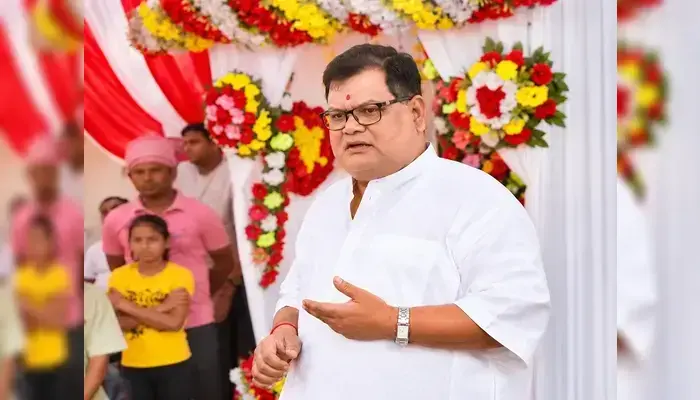
Former Samajwadi Party leader and district president Shiv Shankar Yadav from Mirzapur, Uttar Pradesh, made anti-Hindu remarks. He mocked sacred Hindu shlokas and mantras (religious chants) recited by priests during weddings and religious ceremonies. He described these chants as a form of abuse and made disparaging remarks about Hindu traditions and Hindus belonging to the Brahmin community. A video of his controversial remarks went viral on social media. In the video, Yadav stated that the mantras recited by priests during weddings are essentially abuses that people do not understand. Mocking the priests who perform these rituals, he said that they recite only half the mantras, mumble incomprehensible words and subsequently demand ₹101 as dakshina (religious offering). He further dismissed Hindu traditions as wrong, ridiculing the religious practices followed by Hindus during weddings and other ceremonies. Yadav subsequently went on to mock Brahmin priests and their role in performing Hindu religious rituals. He narrated an incident involving the 13th-day death ceremony (Terahvin) of a Samajwadi Party functionary and said that he had worked to discontinue such traditions in several villages. He said that the functionary, Sujit Yadav, also known as Lakkad Pehalwan, had agreed to discontinue the ceremony on the condition that Samajwadi Party chief Akhilesh Yadav attended the event. According to Shiv Shankar Yadav, he subsequently approached Akhilesh Yadav, who agreed to attend the ceremony. Describing the arrangements, he said that a havan kund (sacred fire altar) had been constructed and that the havan (Vedic fire ritual) was performed without a single Brahmin priest present. He specifically highlighted that most of those participating in the havan belonged to the Patel community, adding that the arrangement reflected the party's PDA (Pichhda, Dalit and Alpsankhyak – Backwards Classes, Dalits and Minorities) politics. Akhilesh Yadav attended the ceremony, participated in the havan for approximately 10–20 minutes and interacted with those present. Following the circulation of Shiv Shankar Yadav's video, which triggered outrage among members of the Brahmin community, Yadav issued a clarification, claiming that the video had been edited to tarnish his image.
Why it is Hate Crime ?
This case is being added to the tracker under the primary category: Hate Speech against Hindus. The subcategory selected is: Anti-Hindu slurs, mocking faith. Anti-Hindu slurs and the deliberate mocking of the Hindu faith owing to religious animosity involve the usage of derogatory terms, stereotypes, or offensive references to religious practices, symbols, or figures. One of the common anti-Hindu slurs used against Hindus is “cow-worshipper” and “cow piss drinker”. The intention of using this term is to demean and mock Hindus as a group and their religious beliefs since Hindus consider the cow holy. Additionally, some symbols and the slurs attached to them have a historical context that exacerbates the insult, hate, stereotyping, dehumanisation and oppression against Hindus. Cow worship has been used for centuries to denigrate Hindus, insult their faith and oppress Hindus specifically as a religious group. There has been overwhelming documentation about how cow slaughter has been used to persecute Hindus with cow meat being thrown in temples and places of worship. There has also been overwhelming documentation where cow meat (beef) has been force-fed to Hindus to either forcefully convert them to Islam or denigrate their faith. Apart from cow worship, the Swastika – which holds deep religious significance for the Hindus – has also been misinterpreted and distorted to use as a slur against Hindus. Similarly, the worship of the Shivling has been used by supremacist ideologies and religions to denigrate Hindus owing to religious animosity. Such slurs and denigration stem out of inherent animosity and hate towards Hindus and their faith, therefore, it is categorised as hate speech targeted at Hindus specifically owing to their religious identity. This case was a clear instance of anti-Hindu hate speech. Through his remarks, the perpetrator mocked sacred Hindu mantras and shlokas, denigrated the priests who recited them and ridiculed Hindu religious practices. His statements went beyond political criticism and demonstrated open hostility towards the Hindu faith and its traditions. The first aspect of his anti-Hindu remarks was his mockery of sacred Hindu mantras and shlokas recited during weddings and religious ceremonies. In Hinduism, mantras are sacred chants, often composed in Sanskrit, which are derived from the Vedas and other Hindu scriptures. Shlokas are devotional and scriptural verses that convey spiritual teachings, invoke divine blessings and form an integral part of Hindu worship and religious observances. During Hindu weddings, Vedic mantras are recited to invoke the blessings of deities, sanctify the marriage ceremony, solemnise the union and guide the couple through sacred matrimonial rituals. Similarly, mantras and shlokas are recited during pujas, havans, religious ceremonies and other important Hindu observances as expressions of devotion and reverence towards the divine. These chants hold profound religious and spiritual significance and are regarded as sacred by the Hindu community. By describing these revered mantras as a 'form of abuse' and ridiculing their recitation, the perpetrator denigrated an integral component of Hindu religious practice. His remarks demonstrated a complete disregard for Hindu religious sentiments and a disparaging attitude towards the faith itself. Portraying sacred Hindu chants as abusive words was not merely an expression of disagreement but an act of religious denigration that demonstrated hostility towards Hinduism and contributed to the normalisation of contempt towards Hindu religious beliefs and practices. The perpetrator also mocked Hindu priests who recited these mantras, portraying them as individuals who deliberately recited incomplete mantras, mumbled incomprehensible words and subsequently demanded money from devotees in the form of dakshina. By presenting Hindu priests in this manner, he attempted to portray all of them as fraudulent and exploitative individuals who deceived devotees under the pretext of performing religious rituals. Hindu priests traditionally played an important role in conducting religious ceremonies, interpreting scriptural traditions, reciting sacred mantras and guiding devotees through prescribed rituals. By reducing their religious duties to an act of deception and financial exploitation, the perpetrator promoted a deeply disparaging stereotype about Hindu priests. Such sweeping ridicule of religious functionaries, particularly when directed at a specific religious community, reinforces prejudice and contempt towards its religious institutions and practitioners. His remarks therefore demonstrated prejudice and contributed to the propagation of Hinduphobic stereotypes against Hindu priests and the wider Hindu community. The perpetrator further dismissed Hindu traditions as wrong and ridiculed the religious practices followed by Hindus during weddings and other ceremonies. These traditions were not arbitrary social customs but were rooted in Hindu religious beliefs, scriptural injunctions and centuries-old spiritual practices. By dismissing them collectively as wrong and making them objects of ridicule, he demonstrated contempt for the religious traditions and cultural practices of the Hindu community. His remarks reflected religious hostility towards Hinduism and a deliberate disparaging attitude towards the faith and its followers. The perpetrator subsequently went on to mock Brahmin priests by narrating how he had worked to discontinue traditional religious practices in several villages. He specifically highlighted the 13th-day death ceremony (Terahvin) of Samajwadi Party functionary Sujit Yadav, also known as Lakkad Pehalwan, and emphasised that the havan had been performed by members of the Patel community without the presence of a single Brahmin priest. Traditionally, Brahmin priests have played an established role in officiating Hindu religious ceremonies, including havans and various death-related rites, guiding families through the prescribed rituals and recitations. However, the perpetrator did not merely describe an alternative arrangement for conducting a ceremony. He deliberately highlighted the absence of Brahmin priests and the participation of members of the Patel community to ridicule the traditional role of Brahmin priests and present the abandonment of established religious practices as a political achievement. He further linked this arrangement to the Samajwadi Party's PDA (Pichhda, Dalit and Alpsankhyak – Backwards Classes, Dalits and Minorities) political ideology. Using Hindu religious rituals and the role of Hindu priests as instruments of political messaging, he denigrated established religious traditions and portrayed the exclusion of Brahmin priests as a means of advancing his political agenda. His remarks demonstrated hostility towards Hindu religious institutions and the Brahmin community, with Hindu religious sentiments being subjected to ridicule for political posturing. Overall, the perpetrator's remarks demonstrated deep-rooted hostility towards Hinduism and the Hindu community. Therefore, this case is being added to the hate crime database of the Hinduphobia Tracker. Disclaimer: The Hinduphobia Tracker records incident dates based on when the crime occurred rather than when it was reported by the media. In this case, the exact date of occurrence was not specified in media reports. Therefore, 1 November 2026, the date on which the incident was reported by the media, has been selected as the indicative incident date for documentation purposes only.


Case Status
Unknown


Perpetrators Details
Perpetrators
Others
Perpetrators Range
One Person
Perpetrators Gender
male
 Sources



