Multiple idols of Hindu deities desecrated, 12 temples vandalised and sacred structures damaged on Diwali in Shivpuri, Madhya Pradesh
 Shivpuri, Madhya Pradesh, India
 7 November, 2026
Case Summary
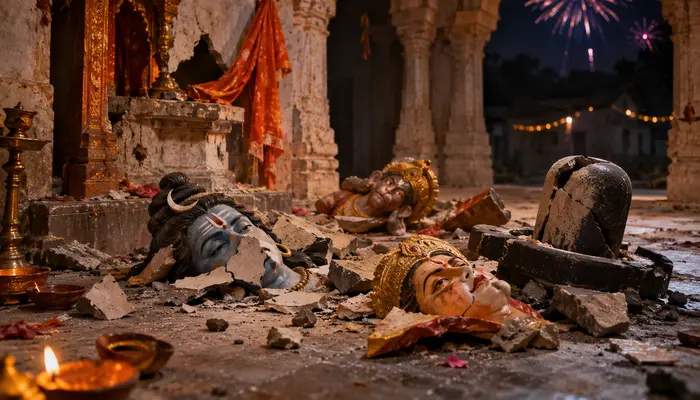
In Padora village, Shivpuri district, Madhya Pradesh, multiple idols of Hindu deities, including Lord Rama, Lord Shiva, Lord Hanuman, Ram-Janki, Goddess Durga and Bhairav Baba, were desecrated, while approximately 12 temples and religious sites were vandalised on the night of Diwali by unidentified miscreants. The Raj Mandir, Talab Mahadev Mandir, Gadi Mandir, Thakur Baba Mandir, Badi Mata Mandir, Bhairav Baba Mandir, Karas Dev Mandir, Kali Mata Mandir and Hanuman Mandir were among the affected religious sites. The trident, altar and havan kund at Badi Mata Mandir were damaged, while the idol of Bhairav Baba at Kali Mata Mandir was broken. The sacred platforms of Siddha Baba, Bawri Baba, Mahate Dau and Valmiki Chabutra were also damaged. The incident took place on 8 November 2026, during the sacred Hindu festival of Diwali. On the morning of 9 November, villagers visited the temples to offer prayers and seek blessings following the celebrations, only to find the idols damaged and religious sites desecrated. The discovery sparked widespread outrage, with tension gripping the village. By 2 pm, details of the incident had emerged, further fuelling anger among villagers over the desecration of their places of worship. Following the incident, villagers demanded the immediate identification and arrest of those responsible, stringent legal action against the perpetrators, and the restoration and reinstallation of the damaged idols. They also urged the police administration to ensure a prompt and impartial investigation while taking necessary measures to maintain peace and communal harmony in the village. Upon receiving information about the incident, Mayapur police arrived at the village and took steps to bring the situation under control. Police personnel inspected all the affected temples and religious sites and prepared an official record of the inspection and damage. Police deployed additional personnel in the village to maintain law and order. Acting on a complaint filed by villagers, Mayapur police registered a First Information Report (FIR) against unknown persons and initiated an investigation. As part of the investigation, police also questioned residents of neighbouring villages to identify those responsible. The investigation remained ongoing, and police assured villagers they would identify the perpetrators soon.
Why it is Hate Crime ?
The primary category selected in this case is: Attack on Hindu religious representations. The subcategory selected is: Desecration of Hindu religious symbols. Icons and symbols or a religious representation of a spiritual ideal are widely revered in Hinduism. Iconography is of vital significance in the Hindu milieu. It helps connect people’s spiritual beliefs with the real world. Iconography within the Hindu faith takes several shapes and forms. Murtis are of most significance to Hindus, to which daily rituals, prayers and offerings are done. Besides the murtis, there are several other symbols which have deep significance in the Hindu faith – the Om and Swastika for example. Since these Hindu religious symbols hold paramount importance in Hinduism, any desecration of symbols, icons, murtis, religious representations and manifestations, is driven by animosity towards the faith itself which manifests itself through these murtis, icons and symbols. Therefore, any desecration of these Hindu religious symbols and representations is considered religiously motivated hate crimes under this category. The other subcategory selected in this case is: Attack on Temples. In Hinduism, a temple is the abode of the Deity. The Deity in the Temple is consecrated, thereby, making it a real, breathing entity. Hindus believe that not just the Deity but the temple premises itself are sacred to Hindus since Hindus hold the faith that the entire Temple space is an amalgamation of the divine energy of the deity. Given the central significance of Temples in Hindu Dharma, any attack against a Hindu Temple or its peripheral premises is an attack on the faith itself and is born out of animosity towards the faith, of which, the Temple is a central tenet. Any manner of attack against a Temple and/or its premises would therefore be considered a religiously motivated hate crime. This case is a clear example of a religiously motivated attack because multiple Hindu temple idols were deliberately desecrated, temples vandalised, and sacred structures damaged across Padora village on the night of Diwali. The widespread targeting of Hindu places of worship during a sacred Hindu festival reflected hostility towards the Hindu community and its religious beliefs. To understand the severity of this incident, it is important to recognise the religious significance that Hindu idols hold. In Hindu traditions, a murti is not merely a physical object or artistic representation but a sacred form through which a deity is worshipped and invoked during rituals, prayers, offerings and darshan. Idols of deities such as Lord Rama, Lord Hanuman, Lord Shiva and Bhairav Baba hold profound religious significance, serving as focal points of devotion and worship. Temples and sacred structures, including altars, havan kunds and religious platforms, are integral to Hindu religious practices and community worship. Their desecration and destruction therefore constitute an attack on spaces central to Hindu faith and religious life. The destruction of these idols constituted an act of religious desecration targeting sacred Hindu representations. The idols of Lord Rama, Lord Shiva, Lord Hanuman, Goddess Durga and Bhairav Baba are not ordinary objects but revered forms of worship that hold deep religious significance for Hindu devotees. By physically destroying representations of deities that devotees worshipped, offered prayers to and regarded as manifestations of the divine, the perpetrators violated their sanctity and inflicted profound religious hurt on the Hindu community. The fact that the vandalism was not limited to one temple or idol but targeted multiple Hindu temples and religious sites further underscores the gravity of the incident. Hindu temples hold profound religious and spiritual significance, serving as centres of worship, devotion, religious learning and the observance of sacred rituals and traditions. They provide devotees with spaces to connect with the divine and participate in collective religious practices. The temples and the idols worshipped within them are integral to Hindu religious life, with the sanctum sanctorum holding particular importance as the innermost sacred space housing the principal deity. Desecrating idols and vandalising these places of worship went beyond the destruction of physical property and constituted an attack on spaces central to Hindu faith and religious identity. The targeting of multiple Hindu religious sites demonstrated a serious disregard for Hindu religious sanctity and the sentiments of devotees. The timing of the incident made it even more disturbing, as the vandalism took place during Diwali, one of the most sacred and widely celebrated festivals in Hinduism. While Hindu devotees were observing the festival through prayers, temple visits and the worship of deities, multiple idols and places of worship were being desecrated. Discovering such widespread destruction immediately after a festival centred on devotion and religious celebrations deeply hurt the sentiments of the Hindu community. Targeting Hindu places of worship during such an important religious occasion further intensified the outrage among devotees and added to the gravity of the incident. The intent behind such an action could only possibly be that of provoking Hindus and showing disrespect towards their faith. Such callous attack on multiple sacred spaces can only stem from a profound contempt for the Hindu religion. Although the identity of the perpetrators remained unidentified at the time of documentation, the nature of the acts they committed demonstrated clear religious hostility towards Hinduism and the Hindu community. Therefore, this case is being added to the hate crime database of the Hinduphobia Tracker.


Case Status
Complaint filed


Perpetrators Details
Perpetrators
Unknown
Perpetrators Range
Unknown
Perpetrators Gender
unknown
 Sources



