Hindu sacred festival mocked, Muslim politician labels Diwali a 'human-induced disease'
 Saharanpur, Uttar Pradesh, India
 8 November, 2026
Case Summary
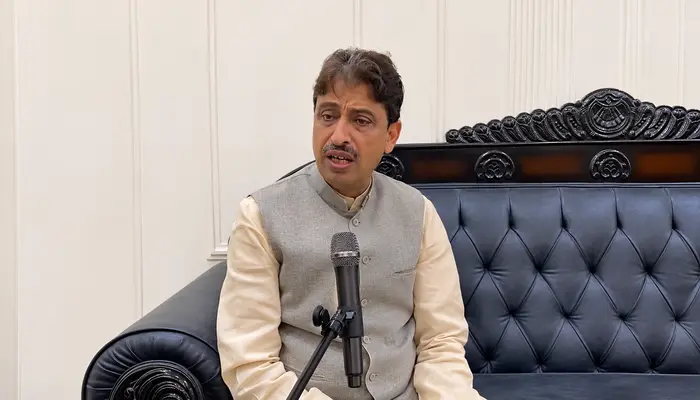
In Saharanpur, Uttar Pradesh, Congress Member of Parliament (MP) Imran Masood made an offensive remark about Diwali, calling it a “human-induced disease” and citing pollution as justification. Speaking to the media, the Saharanpur MP described Diwali and pollution as a “human-induced disease”, framing his remarks around the need to address pollution. He further questioned the nature of Diwali celebrations, suggesting that discussions surrounding the issue had overshadowed the festival’s celebratory spirit. Masood stressed the need for public awareness and maintained that the responsibility for addressing the issue did not rest with the government alone, irrespective of which political party was in power. The remarks came amid a wider political exchange during Diwali. Masood’s remarks drew sharp criticism from Hindus and social media users, including political leaders. They objected to Diwali being described as a disease and stressed that it was a sacred festival. Similar controversies have previously emerged over remarks by political leaders from left-wing and other ideological backgrounds concerning Diwali and Hindu traditions. In November 2026, Kharge described Diwali as “khushiyon ka Eid” while extending festive greetings.
Why it is Hate Crime ?
This case is being added to the tracker under the primary category: Hate Speech against Hindus. The subcategory selected is: Anti-Hindu slurs, mocking faith. Anti-Hindu slurs and the deliberate mocking of the Hindu faith owing to religious animosity involve the usage of derogatory terms, stereotypes, or offensive references to religious practices, symbols, or figures. One of the common anti-Hindu slurs used against Hindus is “cow-worshipper” and “cow piss drinker”. The intention of using this term is to demean and mock Hindus as a group and their religious beliefs since Hindus consider the cow holy. Additionally, some symbols and the slurs attached to them have a historical context that exacerbates the insult, hate, stereotyping, dehumanisation and oppression against Hindus. Cow worship has been used for centuries to denigrate Hindus, insult their faith and oppress Hindus specifically as a religious group. There has been overwhelming documentation about how cow slaughter has been used to persecute Hindus with cow meat being thrown in temples and places of worship. There has also been overwhelming documentation where cow meat (beef) has been force-fed to Hindus to either forcefully convert them to Islam or denigrate their faith. Apart from cow worship, the Swastika – which holds deep religious significance for the Hindus – has also been misinterpreted and distorted to use as a slur against Hindus. Similarly, the worship of the Shivling has been used by supremacist ideologies and religions to denigrate Hindus owing to religious animosity. Such slurs and denigration stem out of inherent animosity and hate towards Hindus and their faith, therefore, it is categorised as hate speech targeted at Hindus specifically owing to their religious identity. This case has been added to the tracker because the statement made by Congress MP Imran Masood constitutes a direct act of denigration against Hindus by describing one of their most sacred festivals, Diwali, as a “human-induced disease”. His remark was not merely a critique of governance or environmental policy, but it brought a core Hindu religious celebration into a disparaging comparison with a disease. By associating Diwali with a human-induced disease and questioning the nature of its celebrations, Masood’s remarks deliberately denigrated a Hindu religious tradition and offended the religious sentiments of Hindus in the guise of commentary on pollution. Diwali is one of the most significant Hindu festivals, celebrated with religious rituals, prayers, lighting traditional oil lamps (diyas), decorating homes, exchanging sweets and gifts, and bursting firecrackers. These customs form an integral part of the festival’s celebrations, with families and communities coming together to observe the occasion and mark the triumph of light over darkness. Describing such a sacred festival as a “human-induced disease” goes beyond commenting on pollution and strikes at the religious sentiments of those who celebrate it. By using such disparaging language, Masood demeaned a cherished Hindu tradition and risked portraying the very act of celebrating Diwali as something undesirable. By invoking pollution as a justification for his remarks, Masood shifted the focus away from the environmental issue and used it to frame Diwali itself in deeply disparaging terms. Rather than limiting his comments to the environmental impact of firecrackers, he described Diwali as a “human-induced disease”, dragging an entire Hindu festival into a derogatory comparison. This went beyond criticism of a particular practice and demeaned a religious celebration cherished by millions of Hindus, making his remarks deeply offensive to their faith and cultural identity. It should be noted that only Hindu festivals and religious practices are repeatedly subjected to disproportionate criticism and scrutiny, while comparable objections to the observances of other religious communities are not raised with the same intensity. Targeting Diwali under the pretext of pollution, while portraying a cherished Hindu tradition as a disease, reflects a clear double standard in the treatment of religious celebrations. Such rhetoric falls squarely within the category of hate speech against Hindus, specifically the subcategory of “Anti-Hindu slurs, mocking faith.” It perpetuates prejudice against Hindu customs, normalises disdain for Hindu worship, and equates the most cherished expressions of faith with bigotry and oppression. By portraying Diwali itself in derogatory terms under the pretext of addressing pollution, Masood’s remarks encourage a social climate in which Hindu religious observance becomes a target of suspicion and derision. This case is therefore recorded to highlight the pattern of belittling and disparagement directed at Hindu practices under the guise of political or environmental commentary.


Case Status
Unknown


Perpetrators Details
Perpetrators
Muslim Extremists
Perpetrators Range
One Person
Perpetrators Gender
male
 Sources



