Sacred Shivlinga desecrated at Hindu temple and thrown onto road in Mirzapur, Uttar Pradesh
 Mirzapur, Uttar Pradesh, India
 6 November, 2026
Case Summary
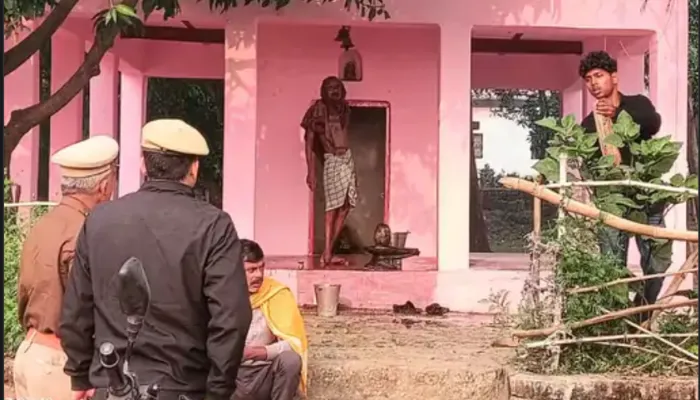
In Mujhera Khurd village, Mirzapur, Uttar Pradesh, a sacred Shivlinga kept at a Hindu temple was desecrated and thrown onto the road by a group of men. At around 3 am on 7 November 2026, a group of men arrived at the temple, broke the sacred Shivlinga and threw it onto the street. The temple had been constructed by local Hindu resident Dhirendra Singh in front of his house, where his family and other villagers regularly offered prayers. Dhirendra Singh stated that the perpetrators had hurled abuses at him and his family before entering the temple and desecrating the Shivlinga. He and another family member, Munnu Singh, named local resident Bechu Yadav and his associates in their complaint, stating that they had carried out the desecration. The incident triggered anger among the local Hindu residents. Following the incident, villagers alerted the police through the 112 emergency helpline. The in-charge of Tedhwa police outpost, Sheshnath Yadav, reached the village along with other police personnel. The police inspected the temple and spoke to the villagers. A police force was subsequently deployed in the village to maintain law and order. Chilh police station in-charge Brahmadin Pandey stated that a case would be registered on the basis of the complaint and action would be taken against those responsible. Bechu Yadav was taken to the police station for questioning, while the police also investigated the involvement of his associates. Media reports further stated that Bechu Yadav and the other men were under the influence of alcohol at the time of the crime.
Why it is Hate Crime ?
This case has been added to the tracker under the primary category: Attack on Hindu religious representations. The sub-category selected is: Desecration of Hindu religious symbols. Icons and symbols or a religious representation of a spiritual ideal are widely revered in Hinduism. Iconography is of vital significance in the Hindu milieu. It helps connect people’s spiritual beliefs with the real world. Iconography within the Hindu faith takes several shapes and forms. Murtis are of most significance to Hindus, to which daily rituals, prayers and offerings are done. Besides the murtis, there are several other symbols which have deep significance in the Hindu faith – the Om and Swastika for example. Since these Hindu religious symbols hold paramount importance in Hinduism, any desecration of symbols, icons, murtis, religious representations and manifestations, is driven by animosity towards the faith itself which manifests itself through these murtis, icons and symbols. Therefore, any desecration of these Hindu religious symbols and representations is considered religiously motivated hate crimes under this category. The other sub-category selected here is - Attack on Temples. In Hinduism, a temple is the abode of the Deity. The Deity in the Temple is consecrated, thereby, making it a real, breathing entity. Hindus believe that not just the Deity but the temple premises itself are sacred to Hindus since Hindus hold the faith that the entire Temple space is an amalgamation of the divine energy of the deity. Given the central significance of Temples in Hindu Dharma, any attack against a Hindu Temple or its peripheral premises is an attack on the faith itself and is born out of animosity towards the faith, of which, the Temple is a central tenet. Any manner of attack against a Temple and/or its premises would therefore be considered a religiously motivated hate crime. This case is a clear example of a religiously driven hate crime, as the perpetrators desecrated a Hindu temple by vandalising the sacred Shivlinga installed inside it and throwing it onto the street. The Shivlinga holds profound religious significance in Hinduism, as it represents Lord Shiva and is worshipped as a sacred manifestation of the deity. It is an important symbol of devotion, and devotees offer prayers and perform rituals before it as an expression of their reverence for Lord Shiva. Hindu temples, meanwhile, are sacred religious places dedicated to the worship of Hindu deities, where devotees gather to offer prayers, perform religious rituals and practise their faith. They hold immense spiritual and cultural significance in the Hindu community and are regarded as sanctified spaces deserving of reverence and respect. Therefore, vandalising the sacred Shivlinga and throwing it onto the street amounted to the desecration of a sacred Hindu religious symbol as well as an attack on the Hindu temple and its sanctity. The act demonstrated the perpetrators' blatant disregard for Hindu religious beliefs and their disrespect for the sentiments of Hindu devotees. Such conduct went beyond mere vandalism, as deliberately desecrating an object of Hindu worship within a temple and throwing it onto the street amounted to an affront to the Hindu faith itself. The nature of the act reflected deep-seated hostility towards Hinduism, constituting a clear case of a religiously driven hate crime. In this case, some may argue that the perpetrator carried out the act under the influence of alcohol and not due to religious animosity. However, intoxication does not justify the deliberate desecration of a Hindu place of worship or negate the religious dimension of the offence. The perpetrator specifically entered a temple, damaged the Shivlinga and disrespectfully threw it on the street. If the act was solely due to intoxication, the perpetrator could have targeted any non-religious property or non-Hindu religious sites such as a mosque, church or gurudwara. The selective targeting of a Hindu temple and a sacred Shivlinga demonstrates that the act was directed to hurt the religious sentiments of the Hindu community. This overall showcases the perpetrators' inherent hostility towards Hinduism and its adherents. Therefore, this case is being added to the hate crime database of the tracker. Disclaimer: Hinduphobia Tracker records Bechu Yadav as the sole perpetrator in this case, as he was identified by name in the complaint, while the total number of his associates involved in the incident was not specified. This is a conservative estimate adopted for documentation purposes only.


Case Status
Complaint filed


Perpetrators Details
Perpetrators
Others
Perpetrators Range
One Person
Perpetrators Gender
male
 Sources



