Hindu deities denigrated through sexually suggestive and objectionable depictions on social media
 India
 6 November, 2026
Case Summary
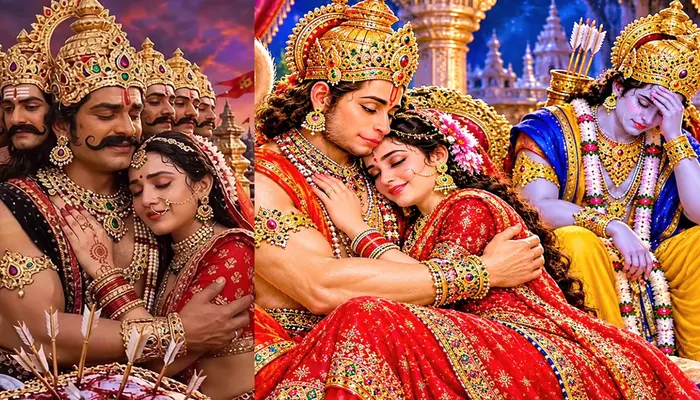
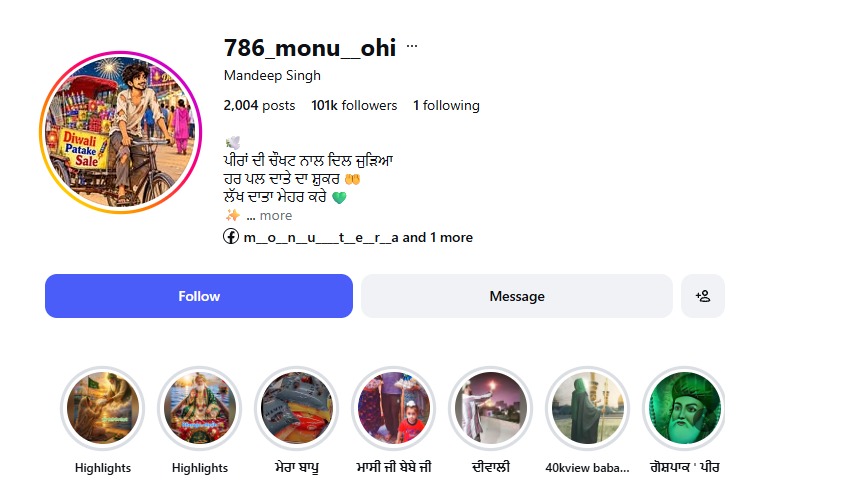
The Instagram account operating under the username 786_monu__ohi, with the profile name Mandeep Singh, uploaded multiple videos and posts that denigrated Hindu deities denigrated and depicted them in objectionable and sexually suggestive contexts. The Instagram handle, 786_monu__ohi, had approximately 1,994 posts and 101,000 followers, while following only one account. Its profile displayed the name Mandeep Singh and featured a Punjabi-language bio expressing devotion to Pirs and seeking divine blessings. The account therefore had a substantial audience through which the objectionable content targeting Hindu deities was disseminated. One video portrayed a romantic interaction between Ravana and Goddess Sita, presenting the revered Hindu figures in an inappropriate manner. Another post depicted a romantic interaction between Lord Hanuman and Goddess Sita, while Lord Ram was shown crying in the background. Through these depictions, the account presented Hindu deities in extremely disrespectful and provocative contexts, distorting their religious significance and disregarding the sentiments of Hindu devotees. The account also contained numerous posts praising Islam and Sikhism, alongside the videos and posts that denigrated Hindu deities. The repeated publication of such content on the account demonstrated a pattern of content that demeaned revered Hindu religious figures and targeted Hindu religious beliefs and sentiments.
Case Images
Why it is Hate Crime ?
This case has been added to the tracker under the primary category of - Attack on Hindu religious representations. Within it, the sub-category selected here - Iconoclastic representation of Hindu Gods/Goddesses. An icon is a symbol of someone or something that is revered, or a religious representation of a spiritual ideal. Iconography is of vital significance in the Hindu milieu. It helps connect people’s spiritual beliefs with the real world. Iconography within the Hindu faith takes several shapes and forms. Murtis are of most significance to Hindus, to which daily rituals, prayers and offerings are done. Besides the murtis, there are several other symbols which have deep significance in the Hindu faith – the Om and Swastika for example. Any iconoclastic representation of these symbols, images and murtis is an affront to the religious beliefs and faith of the Hindu community itself since the symbols and icons are deeply religious in nature. In this sub-category of crime, we would record hate crimes and iconoclastic representations, in words, art, or any other form of representations of symbols that hold religious significance for the Hindu community. Since these symbols, icons and murtis are central to the Hindu faith, any iconoclastic representation of these symbols is born out of animosity towards the faith itself, manifesting itself through these symbols and therefore, these representations would be considered religiously motivated hated crimes. The other primary category selected here is - Hate speech against Hindus. Within it, the sub-category selected here is - Anti-Hindu slurs, mocking faith. Anti-Hindu slurs and the deliberate mocking of the Hindu faith owing to religious animosity involve the usage of derogatory terms, stereotypes, or offensive references to religious practices, symbols, or figures. One of the common anti-Hindu slurs used against Hindus is “cow-worshipper” and “cow piss drinker”. The intention of using this term is to demean and mock Hindus as a group and their religious beliefs since Hindus consider the cow holy. Additionally, some symbols and the slurs attached to them have a historical context that exacerbates the insult, hate, stereotyping, dehumanisation and oppression against Hindus. Cow worship has been used for centuries to denigrate Hindus, insult their faith and oppress Hindus specifically as a religious group. There has been overwhelming documentation about how cow slaughter has been used to persecute Hindus with cow meat being thrown in temples and places of worship. There has also been overwhelming documentation where cow meat (beef) has been force-fed to Hindus to either forcefully convert them to Islam or denigrate their faith. Apart from cow worship, the Swastika – which holds deep religious significance for the Hindus – has also been misinterpreted and distorted to use as a slur against Hindus. Similarly, the worship of the Shivling has been used by supremacist ideologies and religions to denigrate Hindus owing to religious animosity. Such slurs and denigration stem out of inherent animosity and hate towards Hindus and their faith, therefore, it is categorised as hate speech targeted at Hindus specifically owing to their religious identity. The incident constituted a hate crime because the objectionable content specifically targeted Hindu religious beliefs, revered deities and sacred narratives, subjecting them to degrading and sexually suggestive portrayals. Hindu deities are central to the religious faith and spiritual lives of millions of Hindus, and their depictions in sacred texts and traditions carry profound religious significance. The portrayal of Goddess Sita in a romantic context with Ravana directly distorted the sacred narrative of the abduction of Sita and her devotion to Lord Ram. Similarly, depicting Lord Hanuman in a romantic relationship with Goddess Sita, while showing Lord Ram crying in the background, misrepresented the revered relationship between these deities and deliberately presented a sacred Hindu narrative in an objectionable context. These were not merely unconventional artistic representations but depictions that ridiculed and demeaned figures worshipped by Hindus. The nature of the content was particularly significant because it involved the sexualisation and distortion of Hindu religious figures. Goddess Sita is revered as an embodiment of chastity, devotion and virtue, while Lord Hanuman is worshipped for his unwavering devotion to Lord Ram and his reverence for Goddess Sita. Depicting the two in a romantic context disregarded these foundational aspects of Hindu religious tradition and turned a sacred relationship based on devotion and respect into an inappropriate portrayal. Similarly, presenting Ravana and Goddess Sita romantically distorted one of the most significant episodes of the Ramayana, in which Ravana's abduction of Sita represented the central conflict of the epic. Such representations demeaned the religious and cultural significance of these figures and ridiculed beliefs that were deeply held by Hindu devotees. The repeated nature of the content further strengthened the communal dimension of the incident. The account did not merely feature one isolated objectionable post but uploaded multiple videos and images that depicted Hindu deities in disrespectful and sexually suggestive situations. The recurrence of such portrayals indicated a pattern of publishing content that trivialised and denigrated Hindu religious figures. The fact that the account simultaneously featured numerous posts praising Islam and Sikhism, while publishing content that demeaned Hindu deities, was also relevant to understanding the nature of the material being circulated. The contrast in the treatment of religious traditions provided additional context to the account's content, although the praise of other religions, by itself, did not constitute wrongdoing. The reach of the account further amplified the impact of the content. With approximately 101,000 followers and nearly 1,994 posts, the account had a substantial audience and the capacity to circulate such derogatory portrayals widely. In recent times, social media has increasingly become a platform for anti-Hindu hate, with derogatory memes, videos, and messages targeting Hindu religious symbols, practices, and deities. Such content is recognised as part of a broader pattern of Hinduphobia and religious hate crimes online. Taken together, the repeated sexualisation, distortion and ridicule of revered Hindu deities, the disrespectful manipulation of sacred episodes from the Ramayana and the dissemination of such material to a substantial online audience established the religiously targeted character of the content. The conduct was directed at figures and narratives that formed an integral part of Hindu religious identity, rather than being a general criticism of religion or an ordinary expression of disagreement. This deliberate targeting of revered religious icons firmly establishes this act as a religiously motivated hate crime; therefore, it is being categorised under the hate crime database


Case Status
Unknown


Perpetrators Details
Perpetrators
Sikh Extremists
Perpetrators Range
One Person
Perpetrators Gender
male
 Sources



