Hindu man arrested in Bangladesh over unverified blasphemy claims following Muslim mob’s agitation
 Lalmonirhat District, Bangladesh
 2 November, 2026
Case Summary
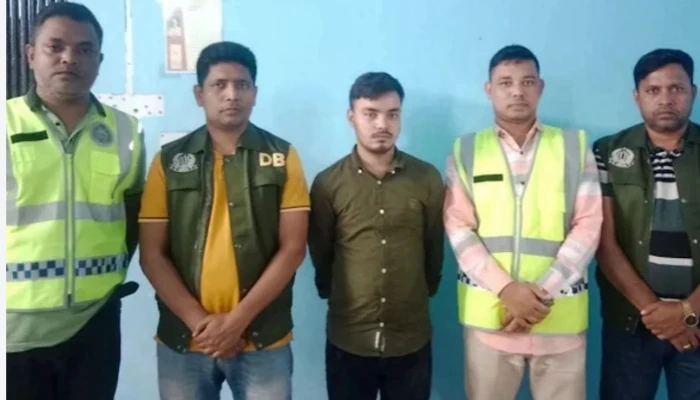
In Lalmonirhat Sadar Upazila, Bangladesh, a Hindu man was arrested over allegations of insulting Islam on social media. At the time of his arrest, the allegations against Amit Roy Shuvo remained unverified and unsubstantiated. Police identified the arrested man as Amit Roy Shuvo, son of Paresh Roy, and a resident of Ward No. 8 of Moghalhat Union. He worked at a garment factory in Dhaka. According to the report, allegations surfaced that Amit had posted objectionable remarks about Islam and Prophet Muhammad (PBUH) on social media. On Saturday, 31 October 2026, members of the local Muslim community and other residents staged a protest rally in the Fulgaachh Bazar area, demanding Amit's immediate arrest and exemplary punishment. Following the protest, police arrested him in the Nilphamari Sadar area late on Tuesday night, 3 November 2026. Thereafter, Lalmonirhat Sadar Police Station registered a case under the Cyber Security Act. Police subsequently launched an operation to arrest him. After conducting searches in Dhaka and several other locations, investigators traced him to Nilphamari Sadar. Officer-in-Charge (OC) of Lalmonirhat Sadar Police Station, Saad Ahmed, confirmed the arrest. Police further said Amit was produced before a court after his arrest, where the court ordered him to be sent to judicial custody. At the time of writing the report, the claim that the Hindu man had insulted Islam had not been independently confirmed. No detailed information emerged on how the charges were verified, Amit Roy Shuvo's response to the allegations, the original source of the statements circulating on social media, or the authenticity of the digital evidence involved. This incident occurred against the broader backdrop of the historical persecution faced by Hindus in Bangladesh. While the Hindu minority has endured discrimination, targeted violence, and religious hostility over decades, such persecution has intensified in distinct spurts during periods of political and social instability. The latest major escalation began after the ouster of Sheikh Hasina’s government in August 2024, continued after the death of Sharif Osman Bin Hadi in December 2025, and resurfaced in the immediate aftermath of the 13th National Parliamentary Election in 2026. Following the ouster of Sheikh Hasina, multiple incidents involving attacks on Hindu homes, temples and religious institutions were documented, alongside intimidation, arson and mob violence targeting Hindu localities. The Hinduphobia Tracker recorded 336 incidents involving the Hindu minority during this period, reflecting the scale of the escalation and the continuing vulnerability of Hindus in Bangladesh. A further spurt of violence followed the death of Sharif Osman Bin Hadi, a Muslim political activist and student leader known for his anti-Hindu and anti-India rhetoric, in December 2025. In the aftermath, Hindu communities were subjected to retaliatory violence, with Hindu homes and properties selectively attacked and several families forced to flee. Among the victims was Dipu Chandra Das, who was lynched and whose body was subsequently set ablaze by a Muslim mob over false blasphemy allegations. The Hinduphobia Tracker documented 51 incidents of anti-Hindu violence in the period following Hadi’s death alone, further illustrating how existing hostility towards the Hindu minority intensified during moments of communal mobilisation. During the same period, posters and written material calling for the extermination of Hindus were also displayed in public spaces. Such rhetoric, when viewed alongside incidents of arson, vandalism, assault and targeted intimidation, reflected an environment in which hostility towards Hindus was not merely episodic but repeatedly resurfaced in more intense forms during periods of unrest. The most recent escalation followed the 13th National Parliamentary Election in 2026. In the immediate aftermath of the election results, Hindu families in districts including Noakhali, Rangpur, Nilphamari, Sylhet, Thakurgaon and Dinajpur faced attacks involving arson, looting, assault and vandalism of Hindu homes and temples. In several instances, Hindu properties were selectively targeted, and families were threatened with displacement. The present incident therefore occurred within a much longer history of persecution of Hindus in Bangladesh, where hostility towards the community has persisted over time and intensified in repeated spurts. The latest cycle began after Sheikh Hasina's ouster. It continued through subsequent periods of political and communal upheaval, leaving the Hindu minority increasingly vulnerable to targeted violence, intimidation and religious hostility.
Why it is Hate Crime ?
This case has been added to the tracker under the primary category of - Attack not resulting in death. Within it, the sub-category selected here is - Attacked over 'Blasphemy'. Blasphemy essentially refers to the desecration of anything which is held sacred/holy to a group of people. However, for religious supremacist groups, the elements of ‘blasphemy’ are ever-changing, shifting and expanding – leading to infringement on the rights of other religious groups, freedom of speech and expression, threats and even physical violence. There are instances where blasphemy is also used as a dog whistle to target Hindus owing to intrinsic animosity towards Hinduism. There are several instances where stating truths as mentioned in the non-Hindu doctrine itself has led to unmitigated violence against Hindus. There have also been instances where non-Hindus have themselves created a ‘blasphemous’ situation, like placing a Quran in a temple, to use it as an excuse to attack Hindus. Essentially, Blasphemy charges are often made up and/or are used to shut down any form of criticism of non-Hindu faiths and as a tool to target Hindus. Any physical violence over Blasphemy charges against Hindus are foundationally based on animosity for Hindus and their faith owing to religious supremacist ideologies, therefore, such attacks would be documented as religious motivated hate crimes under this category. This case has been documented because it demonstrates how an unverified accusation of insulting Islam can expose a Hindu individual to communal hostility, intimidation and the threat of violence. The Hindu man was targeted by a Muslim mob after accusations circulated that he had made objectionable remarks about Islam, even though the allegations were never verified. The incident demonstrated how accusations linked to blasphemy or perceived criticism of Islam are frequently weaponised against religious minorities, particularly Hindus, in Muslim-majority countries such as Bangladesh. The religious nature of the accusation transformed the matter into one capable of mobilising hostility against the Hindu victim based on an alleged offence against another faith. The significance of the case lies in the manner in which a blasphemy-style accusation can rapidly escalate into a wider communal threat. This demonstrates how such accusations can place Hindu victims in an immediately vulnerable position by generating collective hostility around them even before the allegation itself has been verified. The fact that the accusation remained unproven is particularly important. A charge of insulting Islam itself has become a tool for targeting a Hindu individual, irrespective of whether the alleged statement was ever made. Once such an allegation circulates publicly, the Hindu victim is stigmatised as someone who has offended Islam, creating pressure, hostility and the possibility of retaliatory action without any established proof of wrongdoing. Blasphemy-related allegations in Muslim-majority countries such as Bangladesh are frequently weaponised to persecute Hindus and other minorities. Such accusations often rely on hearsay, selective interpretation, disputed digital content, or unverified claims, yet they can provoke public outrage, communal mobilisation, and police intervention before any impartial investigation takes place. In many cases, merely being accused becomes sufficient grounds for mob violence, social humiliation, ostracism, arrest, threats of violence, or long-term persecution. The reaction in this case, where mere allegations rapidly triggered public anger, mob mobilisation and sloganeering against a Hindu youth, highlighted the unequal environment in which Hindu minorities are frequently denied the presumption of innocence. Muslim extremist groups have historically exploited blasphemy accusations to intimidate religious minorities, particularly Hindus, silence dissent, and reinforce social control. Hindus in Bangladesh remain especially vulnerable because allegations involving Islam frequently trigger collective outrage and public vigilantism regardless of whether the accusations have been independently verified. Such allegations have repeatedly preceded Muslim mob attacks, destruction of Hindu homes and temples, forced displacement, arrests, and other forms of persecution across Bangladesh. Consequently, accusations of blasphemy against Hindus cannot be viewed in isolation from the broader environment of anti-Hindu hostility in which they occur. This is not an isolated case. The Hinduphobia Tracker has previously documented nearly 50 cases in Bangladesh in which Hindus were targeted by Muslim mobs and state institutions under the pretext of blasphemy. These cases were recorded between 1 January 2023 and 10 October 2026. In these incidents, the allegations of blasphemy were not established, yet victims were subjected to violence, threats, death, arrest or institutional pressure merely on the basis of unproven accusations. The recurrence of such incidents demonstrates a broader pattern in which blasphemy allegations are weaponised against Hindu minorities, with accusations concerning Islam becoming a means of exerting communal and institutional pressure on them. This incident therefore formed part of a documented pattern of anti-Hindu targeting rather than representing an isolated incident. The case therefore reflects the dangerous role that blasphemy accusations can play in generating religiously charged hostility against Hindus. Here, an unverified allegation concerning Islam was sufficient to produce communal tension around a Hindu man and necessitate the deployment of security forces to prevent further escalation. The victim's religious identity, the nature of the accusation, and the social and professional consequences attached to it therefore make the religious dimension central to this case. It has consequently been classified as a religiously motivated hate crime. Disclaimer: The Hinduphobia Tracker records incident dates based on when the crime occurred, or when the victim's ordeal began. However, available reports did not establish the exact date of the incident. Therefore, for documentation purposes, we recorded the date as the date the Hindu man was arrested: 3 November 2026.
Victim Details
Total Victim
1
Deceased
0
Gender
- Male 1
- Female 0
- Third Gender 0
- Unknown 0
Caste
- SC/ST 0
- OBC 0
- General 0
- Unknown 1
Age Group
- Minor 0
- Adult 1
- Senior Citizen 0
- Unknown 0


Case Status
Unknown


Perpetrators Details
Perpetrators
Muslim Extremists
Perpetrators Range
Unknown
Perpetrators Gender
unknown
 Sources



