Ramayan display in Saudi Arabia vilified; ABS News invokes 'I Love Muhammad' campaign, linked to unrest and attacks on Hindus, to fuel anti-Hindu rhetoric
 India
 3 November, 2026
Case Summary
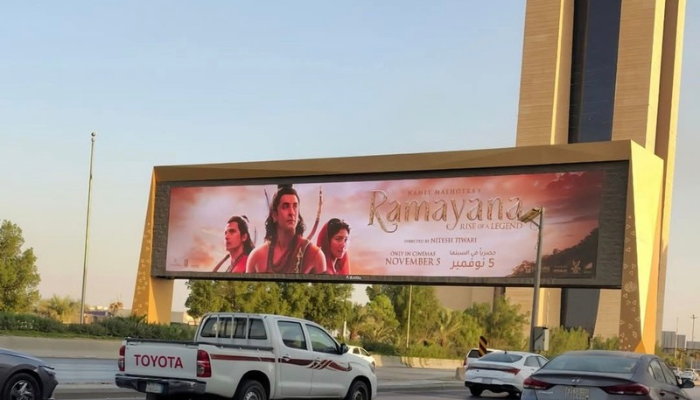
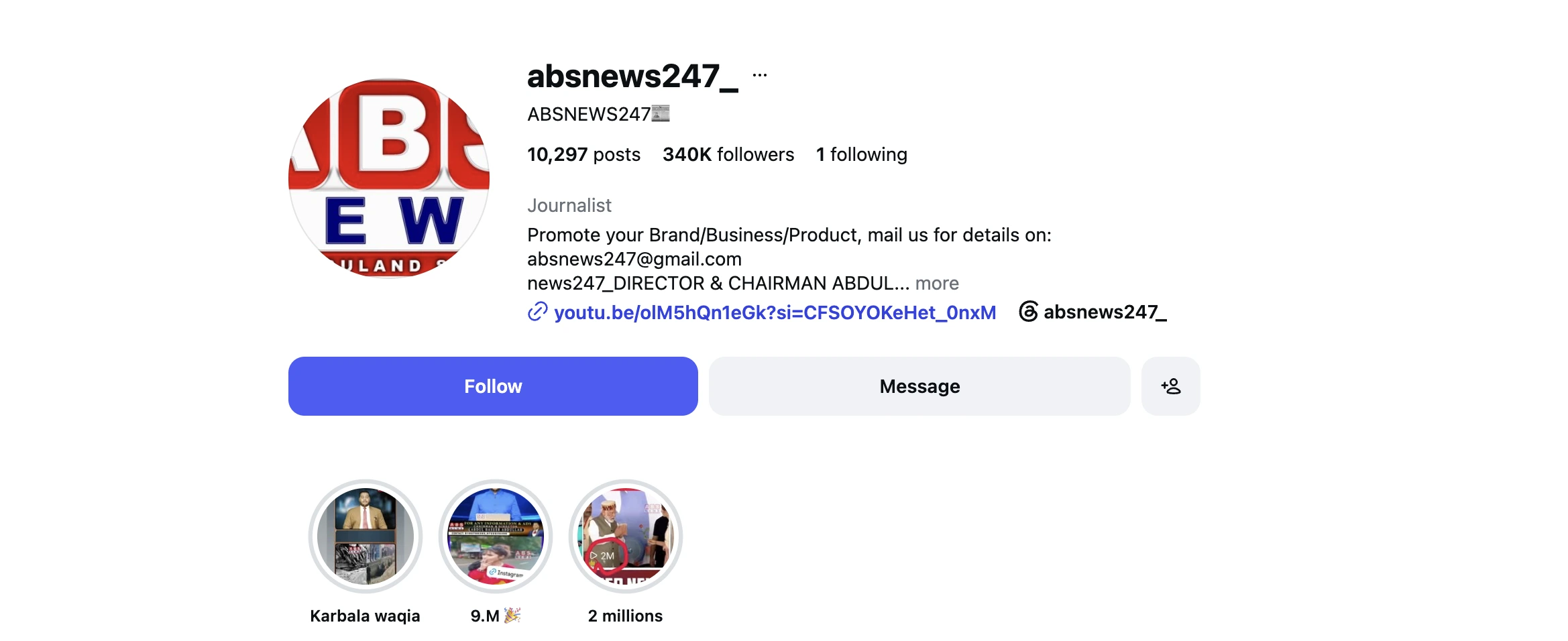
The display of promotional posters for the Hindu epic Ramayan in Saudi Arabia has sparked an unusual backlash, with a pro-Islamic media outlet named ABS News taking issue with Hindu religious imagery in the Kingdom. In a segment on the subject, the channel's anchor expressed displeasure over the posters and invoked the 2025 'I Love Muhammad' controversy in India, drawing a comparison with a campaign that had triggered protests, communal unrest and attacks on Hindus. The channel's anchor described the display of Ramayan posters in Saudi Arabia as "sharam aur dukh ki baat" (a matter of shame and sadness). He then invoked the 'I Love Muhammad' campaign in India, drawing a direct comparison between the two situations. He claimed that Muslims in India had been arrested and made to languish in jail for taking out 'I Love Muhammad' processions, while in Saudi Arabia, people were being encouraged to watch a Hindu film depicting Hindu gods and goddesses. By making this comparison, the anchor sought to portray the screening of a Hindu religious film in Saudi Arabia as an affront to Muslims, using the 'I Love Muhammad' controversy to stir resentment among Muslim viewers. The reference was particularly striking given the events surrounding the 'I Love Muhammad' campaign. What began with a dispute over a lightboard displaying the phrase in Kanpur, Uttar Pradesh, in September 2025, soon spread to other parts of the country. Protests and demonstrations followed, with violent crowds clashing with police, vandalising property and raising threatening slogans. The controversy also became a flashpoint for anti-Hindu hostility and intimidation. Yet ABS News invoked this very campaign while discussing the display of posters promoting a Hindu epic in Saudi Arabia. The backlash was not limited to the media outlet. Several Indian Muslim social media users also objected to the Ramayan posters, questioning why Hindu religious imagery was being displayed in Saudi Arabia. According to an OpIndia report published on 3 November 2026, some users described Saudi Arabia as the "land of Tawheed" and called the display "shirk in the land of Tawheed", referring to the Islamic concept of associating partners with Allah. Others criticised the Saudi authorities for allowing the posters and questioned why images of Hindu deities were being displayed in the birthplace of Islam. Some even tagged Saudi government authorities, apparently seeking action against the posters. The posters were promoting Ramayan, a film based on one of Hinduism's most revered epics. For Hindus, the Ramayan is not simply literature or entertainment. It is deeply connected to their faith, traditions and cultural identity. Yet its public display in Saudi Arabia was enough to provoke outrage among sections of social media users, who appeared to believe that Hindu religious imagery had no place in a country identified with Islam. The OpIndia report also noted that neither the Saudi authorities nor the Arab audience had objected to the posters.
Case Images
Why it is Hate Crime ?
The other primary category selected is: Hate speech against Hindus. Under this, the subcategory selected is: Anti-Hindu slurs, mocking faith. Anti-Hindu slurs and the deliberate mocking of the Hindu faith owing to religious animosity involve the usage of derogatory terms, stereotypes, or offensive references to religious practices, symbols, or figures. One of the common anti-Hindu slurs used against Hindus is “cow-worshipper” and “cow piss drinker”. The intention of using this term is to demean and mock Hindus as a group and their religious beliefs since Hindus consider the cow holy. Additionally, some symbols and the slurs attached to them have a historical context that exacerbates the insult, hate, stereotyping, dehumanisation and oppression against Hindus. Cow worship has been used for centuries to denigrate Hindus, insult their faith and oppress Hindus specifically as a religious group. There has been overwhelming documentation about how cow slaughter has been used to persecute Hindus with cow meat being thrown in temples and places of worship. There has also been overwhelming documentation where cow meat (beef) has been force-fed to Hindus to either forcefully convert them to Islam or denigrate their faith. Apart from cow worship, the Swastika – which holds deep religious significance for the Hindus – has also been misinterpreted and distorted to use as a slur against Hindus. Similarly, the worship of the Shivling has been used by supremacist ideologies and religions to denigrate Hindus owing to religious animosity. Such slurs and denigration stem out of inherent animosity and hate towards Hindus and their faith, therefore, it is categorised as hate speech targeted at Hindus specifically owing to their religious identity. ABS News turned the display of promotional posters for the Hindu epic Ramayan in Saudi Arabia into an occasion to express hostility towards Hindu religious identity. Its anchor described the display as "sharam aur dukh ki baat" (a matter of shame and sadness), treating the promotion of a Hindu film depicting Hindu gods and goddesses as something objectionable. He then invoked the 'I Love Muhammad' campaign in India, claiming that Muslims had been arrested and made to languish in jail for taking out processions, while people in Saudi Arabia were being encouraged to watch a film about Hindu deities. By drawing this comparison, the anchor sought to portray the promotion of Hindu religious content as an injustice to Muslims and provoke resentment against its public visibility. This framing is particularly significant given the anti-Hindu hostility that accompanied the 'I Love Muhammad' controversy in India. As documented by Hinduphobia Tracker, seven incidents during the campaign involved Muslims targeting Hindus, their religious festivals, temples and community leaders. These incidents formed a chain of escalating aggression in which the campaign became a pretext for intimidation and attacks directed at the Hindu community and its religious and cultural institutions. By presenting the controversy only through the lens of Muslims facing action, ABS News ignored this pattern and instead used the campaign to cast the promotion of a Hindu epic in Saudi Arabia as a provocation. The religious significance of the targeted imagery cannot be overlooked. Hindu deities are sacred to Hindus and integral to their religious beliefs, worship, and cultural identity. The Ramayan itself is one of Hinduism's most revered epics. Yet sections of Muslim social media users described Saudi Arabia as the "land of Tawheed" and called the display of Hindu religious imagery "shirk", invoking the Islamic theological prohibition against associating partners with Allah and the worship of idols. While the rejection of idol worship is a tenet of Islamic theology, using that belief to condemn, vilify or seek the removal of another religion's sacred symbols goes beyond the expression of one's own religious conviction. It amounts to imposing one's theological objections on another community's public religious expression. The objection was not to any reported disruption or public-order issue, but to the very presence of Hindu deities and religious imagery. The online backlash also included users tagging Saudi authorities and objecting to the presence of Hindu religious imagery in the country. This, alongside ABS News's attempt to frame the promotion of the film as an affront to Muslims, reflects an unwillingness to accept the public visibility of Hindu faith and its symbols. A poster promoting a film based on one of Hinduism's most revered epics became an occasion to vilify the religion, question the presence of its sacred imagery and seek action against its display. This hostility towards the public expression of Hindu religious identity is what makes the episode an instance of Hinduphobia.


Case Status
Unknown


Perpetrators Details
Perpetrators
Others
Perpetrators Range
One Person
Perpetrators Gender
male
 Sources



