Hindu places of worship threatened with bomb attacks on Diwali by Khalistan National Army; target Hindu identity through inflammatory rhetoric
 India
 3 November, 2026
Case Summary
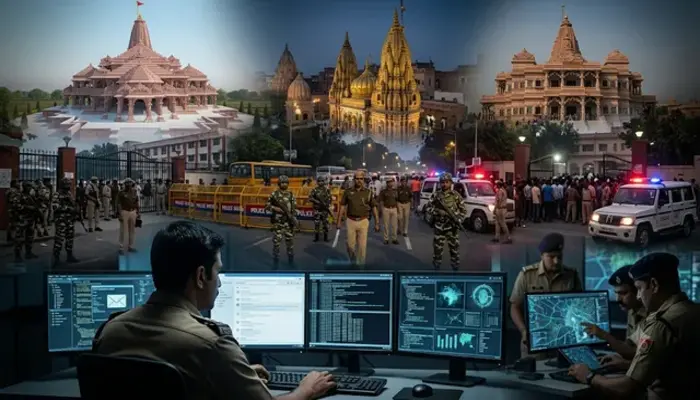
Ahead of Diwali, Hindu religious sites were threatened with bomb attacks by the Khalistan National Army, triggering widespread concern. The threatening messages described the festival as “Kali Diwali” (Black Diwali) and referred to Ayodhya, Varanasi and Mathura as the “Hindu-atvadi de Janam asthan” (birthplace of Hindu extremists). The threatening emails were sent on 4 November 2026 to several educational institutions in Uttar Pradesh and the Ayodhya District Court in Uttar Pradesh, warning of bomb blasts at Hindu religious sites in Uttar Pradesh's three major pilgrimage cities, Ayodhya, Varanasi (Kashi) and Mathura. The email listed these locations as the birthplace of “Hindu extremists". The threats also targeted educational institutions and the Ayodhya District Court, with the emails warning of explosions between 8 and 27 November 2026. Several schools in Ayodhya, Mathura and Varanasi received threatening emails stating that they would be bombed on Diwali, 8 November 2026. The emails urged parents to protect their children and not send them to school. Parma Academy School in Ayodhya, along with Radiant College and Navdeep College in Ambedkar Nagar, were among the institutions that received similar messages. The emails also warned people against visiting temples in Ayodhya, Varanasi and Mathura on 8 November, stating that bomb blasts would take place there. One message specifically threatened a blast at a temple between 9:11 am and 11:11 pm on 8 November and warned that explosions would continue until 27 November. The messages described the occasion as “Kali Diwali” (Black Diwali) and included the slogans “KHALISTAN KHALISTAN Zindabad” (Long live Khalistan) and “Kali Diwali in Hindu-stan” (Black Diwali in India). The Ayodhya District Court also received the threatening email on its official email address at approximately 12:25 pm on 4 November. The message was sent from an email account bearing the name Slater Johnson and warned of a bomb blast at the court premises on 8 November. It stated, “There will be a black Diwali on November 8th. Ayodhya, Varanasi, and Mathura will chant Khalistan, Khalistan Zindabad. There will be blasts starting November 8th and continuing until November 27th.” Following the threat, Chief Judicial Magistrate Piyush Tripathi wrote to the Senior Superintendent of Police, requesting enhanced security at the court premises, adequate police deployment, intensive checking at entry and exit gates, searches for suspicious persons and objects, and regular checks by bomb disposal and dog squads. He also sought CCTV monitoring, checks of security equipment and additional patrolling. Police personnel from the City and Cantt police stations subsequently searched the court premises and checked the entry gates and metal detectors. City Circle Officer Shriyash Tripathi stated that court security would be increased and that the source of the email was being traced. The threatening emails also targeted singer Diljit Dosanjh, warning that his shows would be attacked using bombs and improvised explosive devices (IEDs). One message stated that those associated with him would be killed in bomb attacks at his performances. The emails referred to the 1984 anti-Sikh violence and included the phrase “blood for blood”. The listed names included Eng. Guranakh Singh, Rukan Shahwala and Dr Gurnirvair Singh Khan Rajada. The messages were signed in the name of the “Khalistan National Army” and included pro-Khalistan slogans. Following the threats, security was increased at religious sites, educational institutions and other sensitive locations. Police and cyber teams began examining the emails to trace their origin, including the IP addresses, VPN usage and server locations. The Uttar Pradesh Anti-Terrorism Squad (ATS) was also involved in investigating the source of the threats and whether any wider network was involved. Authorities cautioned that the use of the name “Khalistan National Army” in the emails did not, by itself, establish that the organisation was responsible for sending them. No explosives or suspicious objects had been recovered during the initial security checks.
Why it is Hate Crime ?
This case has been added to the tracker under the primary category of - Hate speech against Hindus. Within it, the sub-category selected here is - Violent threats. Violent threats, explicit, implicit or implied, is the most dangerous form of hate speech since it goes beyond discriminatory and prejudicial language to express the intent of causing harm to an individual or a group of people based on their religious identity and faith. There could be several different kinds of threats that are issued to Hindus based on religious animosity. An explicit threat would mean the direct threat of violence towards an individual Hindu, a group of Hindus or Hindus at large. Physical violence, death threats, threats of destruction of property belonging to Hindus and threats of genocide would mean explicit threats against Hindus for their religious identity. Implicit threats may not be a direct threat but implied through the use of symbols of actions – for example – in the Nupur Sharma case, other than explicit threats, there were also implicit threats when Islamists took to the streets to burn and beat her effigies. It implies that they want to do the same to Nupur Sharma – thereby is considered an implicit threat. Violent threats can be delivered in person, through letters, phone calls, graffiti, or increasingly through social media and other online platforms. It would be important to understand that a threat – explicit or implicit, online or offline – to an individual who happens to be a Hindu does not qualify as a religiously motivated threat. Such a threat, while vile and dangerous, could be owing to non-religious reasons and/or personal animosity. To qualify as a religiously motivated threat, it would need to exhibit an indication that the individual is being targeted for religious reasons and/or owing to his/her religious identity as a Hindu. This case has been added to the Hinduphobia Tracker because the threatening emails explicitly identified Hindu places of worship as targets for bomb attacks and sought to intimidate the Hindu community through threats against its religious institutions. The messages went beyond a general threat of violence or a separatist political declaration by specifically naming temples in Ayodhya, Varanasi and Mathura and warning devotees against visiting them. The deliberate selection of Hindu religious sites as targets demonstrated hostility directed at Hindu religious life and the community's ability to practise its faith without fear. These threats carried particular significance because Ayodhya, Varanasi and Mathura are among the most prominent and sacred centres of Hindu worship, holding immense religious and spiritual importance for Hindus across the country. Ayodhya is revered as the birthplace of Bhagwan Shri Ram, Varanasi is one of the oldest and most sacred centres of Shaivite worship, with the Kashi Vishwanath Temple being one of the twelve Jyotirlingas, while Mathura is revered as the birthplace of Bhagwan Shri Krishna. These cities attract millions of Hindu pilgrims and devotees and are central to Hindu religious traditions, pilgrimage and worship. Targeting temples in these three cities therefore carried significance far beyond threats against individual buildings. It amounted to intimidation directed at some of the most important centres of Hindu faith, threatening the religious security of devotees and seeking to instil fear across the wider Hindu community. The wording of the emails further exposed the religious animosity driving the Khalistani threats. The Khalistani perpetrators described Ayodhya, Varanasi and Mathura as the “Hindu-atvadi de Janam asthan”, translated as the “birthplace of Hindu extremists”. By specifically identifying these prominent Hindu religious centres through a derogatory reference to their Hindu identity, the Khalistanis made their hostility towards Hindus explicit. This was not merely separatist rhetoric or opposition to a political ideology; it showcased religious animosity by singling out cities revered by Hindus precisely for their religious significance. Coupled with the threats to bomb temples in these cities, the expression demonstrated that Hindu religious identity itself was a target of their hostility. The use of the expression “Kali Diwali” was particularly significant because it sought to attach an ominous and threatening character to one of the most sacred festivals in Hindu religious life. Diwali symbolises the triumph of light over darkness and good over evil and is celebrated by Hindus as an occasion of religious devotion, renewal and joy. Deliberately describing the festival as “Kali Diwali”, in the context of bomb threats and the declaration of a “Kali Diwali in Hindu-stan”, conveyed an intention to turn an occasion of Hindu religious celebration into one associated with fear, destruction and violence. This language went beyond a generic threat of explosions and demonstrated hostility towards the religious and cultural significance of Diwali itself. The repeated invocation of "revenge" in connection with historical grievances further heightened the communal character of the threat by seeking to justify contemporary hostility against Hindu religious sites. Such messaging contributes to an atmosphere of fear and polarisation by portraying Hindus and their places of worship as legitimate targets for retaliation. The combination of separatist rhetoric, threats of violence, and the deliberate targeting of revered Hindu temples transformed the message from a political declaration into an act of intimidation directed at a specific religious community. For these reasons, the case has been added to the Hinduphobia Tracker. The incident involved direct threats against Hindu places of worship, attempts to terrorise Hindu devotees, and rhetoric that combined separatist objectives with explicit hostility towards Hindu religious institutions. The targeting of temples was not a peripheral aspect of the threat but its central feature, as the Khalistanis sought to create fear within the Hindu community and challenge its ability to practise its faith without threat or coercion. The incident, therefore, constitutes a clear example of anti-Hindu intimidation and hostility directed at both Hindu religious symbols and the wider Hindu community. Disclaimer: The emails named three individuals: Eng. Guranakh Singh, Rukan Shahwala and Dr. Gurnirvair Singh Khan Rajada. However, their identities and involvement in sending the threatening emails had not been independently established. For documentation purposes, the perpetrator count has therefore been recorded as 3, based solely on the three names mentioned in the emails.


Case Status
Complaint filed


Perpetrators Details
Perpetrators
Sikh Extremists
Perpetrators Range
Unknown
Perpetrators Gender
male
 Sources



