Hindu woman raped, forced to convert, wear burqa and eat non-vegetarian food by Muslim man; accused was part of Islamic conversion racket at a medical university
 Agra, Uttar Pradesh, India
 2 November, 2011
Case Summary
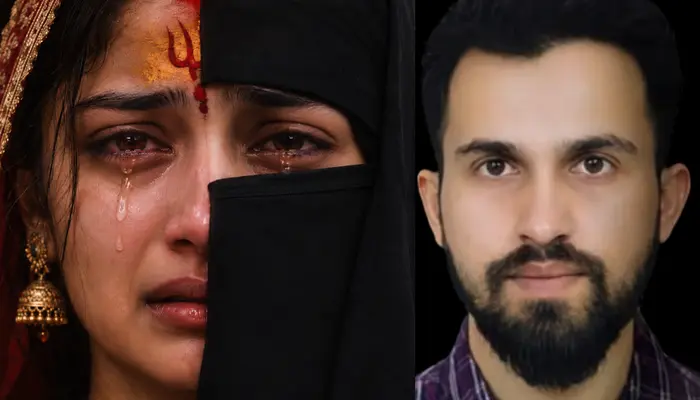
In Agra, Uttar Pradesh, a Hindu woman was befriended and targeted by a Muslim man, Dr Rameezuddin Nayak (Rameez Malik). The accused lured her into a relationship under the pretext of marriage, raped her and pressured her to convert to Islam. The victim was forced to undergo a nikah, wear a burqa and consume non-vegetarian food despite being a vegetarian. She was also prevented from celebrating Hindu festivals and compelled to participate in Muslim religious customs. During their relationship, Rameezuddin and his associates repeatedly denigrated Hinduism while praising Islam. Notably, Rameezuddin was also involved in a separate case of forced religious conversion and sexual exploitation of a Hindu woman at King George's Medical University (KGMU), Lucknow. The Hinduphobia Tracker had previously documented this incident, in which he targeted Dr Devatri Mitra, a Hindu resident doctor at KGMU. In December 2025, he lured her into a relationship and sexually exploited her under the pretext of marriage. He subsequently pressured her to convert to Islam as a condition for marrying him. When she refused to abandon her faith, he ended the relationship and subjected her to sustained harassment and intimidation, which drove her to attempt suicide on 17 December 2025. Following this, Dr Devatri exposed his involvement in a wider conversion racket targeting Hindu women, students and employees within the university. A First Information Report (FIR) was registered at Chowk Police Station on 23 December 2025, prompting the Uttar Pradesh government to order an investigation by the Special Task Force (STF). The STF submitted its report on 25 October 2026, which exposed the wider conversion network and brought the Agra woman's ordeal to light as part of its findings. According to the victim's statement to the police, she first became acquainted with Rameezuddin during her medical studies at Sarojini Naidu Medical College (SNMC), Agra. In 2011, he telephoned her on the occasion of Diwali and wished her. Their acquaintance gradually developed into regular interactions. In December 2012, Rameezuddin invited her to his flat in the Sabun Katra area of Agra under the pretext of dance practice. After she arrived, he gave her an intoxicating drink, following which she became incapacitated. He took advantage of her condition and raped her. He later sent her a message apologising for his conduct. A few days afterwards, he proposed continuing the relationship on the promise of marriage. On 11 December 2012, he called her to his flat again and pressured her into sexual relations. She also stated that he had recorded intimate photographs and videos of her. Following these encounters, Rameezuddin placed used condoms and empty liquor bottles in her bag. The victim's father discovered them and objected to the relationship. However, Rameezuddin and his associates continued their attempts to isolate her from her family. They repeatedly engaged her in conversations denigrating Hinduism and praising Islam, while encouraging her to distance herself from her parents. Rameezuddin's mother, Khateeja, also contacted the victim during 2013–14 and invited her to meet at a hotel. Presenting herself as a modern and progressive woman, Khateeja spoke to the victim about personal freedom and individual choices. Meanwhile, Rameezuddin expected the victim to telephone him every night. Whenever she failed to call or delayed doing so, he subjected her to verbal abuse and physical assault. In 2014, during a college festival at the All India Institute of Medical Sciences (AIIMS), Delhi, Rameezuddin booked a room for the victim. The food or cigarettes given to her contained an intoxicating substance, following which she became semi-conscious. He again took advantage of her condition and raped her. The victim stated that Rameezuddin continued to sexually exploit her at different locations between 2012 and 2025. Whenever she resisted, he silenced her with promises of marriage. He also showed her intimate photographs and videos to his friends, further humiliating her and violating her privacy. In 2016, the victim became pregnant and pressed Rameezuddin to marry her. However, he refused and forced her to undergo an abortion. She was taken to a private clinic in the Khandari area of Agra, where she underwent a medical examination and was given abortion medication. On the third day, she experienced unbearable pain and suffered a miscarriage in her room. Between 2017 and 2019, the victim distanced herself from Rameezuddin out of anger and fear. During this period, her father began looking for a suitable groom for her, and several marriage proposals came forward. However, Rameezuddin sabotaged her marriage prospects by sending her intimate photographs and videos to prospective grooms. As a result, five to seven marriage proposals fell through. The investigation also brought to light that he had sabotaged approximately four marriage proposals of another Hindu woman. He kept private videos of Hindu women on his mobile phone and used them to blackmail and intimidate them. In 2023, at Rameezuddin's insistence, the victim moved to Lucknow. In October that year, his parents, Khateeja and Salimuddin, advised them to live together in the same flat, following which she began staying with him. He continued forcing her into sexual relations against her wishes. When she complained to his parents, they told her to tolerate the abuse rather than intervene. She was also made to perform household chores, including cooking, cleaning and scrubbing the toilets. Whenever she protested, she was subjected to verbal abuse and physical assault. In 2024, the victim discovered that Rameezuddin had been involved with other Hindu women during his time at KGMU. When she confronted him, he assaulted her. He pushed her to the ground, dragged her and smashed her head against a wall, causing her to sustain injuries and lose consciousness. The religious coercion against the victim also intensified during this period. Approximately a week before Holi in 2024, Rameezuddin's parents told her that a Hindu-Muslim marriage was not possible and that she would only be accepted as their daughter-in-law if she converted to Islam. Rameezuddin and his associates repeatedly denigrated Hinduism while praising Islam and pressuring her to abandon her religious identity. She was prevented from celebrating Hindu festivals and pressured to participate in Muslim religious customs. In January 2025, the pressure on the victim to convert and undergo a nikah intensified. Rameezuddin threatened to send her intimate photographs and videos to her parents and expose her publicly if she refused to comply. His parents, Khateeja and Salimuddin, also repeatedly threatened her over the telephone and pressured her to marry him and convert to Islam. In February 2025, the victim and her parents were taken into a room where a Qazi (Islamic cleric) was already present. They were locked inside a small room, and the Qazi began reciting religious passages. The victim was forced to undergo a nikah by saying 'Qubool Hai' (I accept) three times. A Nikahnama (Islamic marriage contract) had already been prepared, and both she and her father were made to sign it. When her father attempted to record the proceedings, his mobile phone was snatched. The victim later managed to photograph the Nikahnama using Rameezuddin's phone. After the nikah, the pressure on her to adopt a Muslim identity continued. She was made to wear a burqa whenever she went outside, including during trips to Pilibhit and Khatima. Despite being a vegetarian, she was pressured to consume non-vegetarian food. She was also expected to participate in Muslim religious customs and abandon her Hindu practices. Furthermore, she was told that once she secured employment, her salary would have to be handed over to her in-laws. Thus, over several years, Rameezuddin and his family subjected the Hindu woman to repeated sexual exploitation, blackmail, physical abuse and sustained religious coercion, systematically pressuring her to abandon her Hindu identity and conform to Islamic practices. Notably, the Uttar Pradesh Special Task Force (STF) report submitted on 25 October 2026 exposed a widespread and organised religious conversion network operating within King George's Medical University (KGMU), Lucknow, and extending to other medical institutions, including Sarojini Naidu Medical College (SNMC), Agra, and Etah Medical College. Dr Rameezuddin Nayak (Rameez Malik) was identified as one of the key figures in this network, which connected Muslim medical students, resident doctors and university personnel across institutions. Operating through interconnected groups, including one known as 'Islamic Medicos', the network systematically targeted Hindu women doctors, students and employees through relationships, sexual exploitation, blackmail and pressure to convert to Islam. The investigation also exposed the involvement of several medical personnel and university staff members who facilitated these activities, protected those involved and enabled the network to operate across departments and institutions. The STF report further documented systematic religious discrimination against Hindu doctors, students and employees within KGMU. Hindu residents faced discriminatory treatment, harassment, adverse professional assessments and unequal treatment on account of their religious identity, while Muslim students and employees received preferential treatment. The report also exposed how influential faculty members and university personnel shielded those involved, discouraged complaints and created an institutional environment in which Hindu women who resisted religious coercion or sought action faced intimidation and professional repercussions. The investigation additionally brought to light the systematic propagation of hardline Islamic ideology and religious radicalisation among Muslim medical students. It specifically highlighted the promotion of the ideology of Islamic extremist preacher Zakir Naik, who was banned in India and whose organisation, the Islamic Research Foundation (IRF), was declared an unlawful association under the Unlawful Activities (Prevention) Act (UAPA). The report documented organised religious gatherings, the use of university facilities for religious activities and visits by Islamic preachers from outside Lucknow. These activities demonstrated that the network extended beyond individual conversion attempts and involved organised efforts to promote hardline religious ideology within medical institutions. Significantly, the STF report also established Rameezuddin's association with Dr Shaheen Saeed, who was apprehended in connection with the 2025 Delhi Red Fort blast case. He had met her at a medical conference and was influenced by her radical Islamic ideology. During interrogation, he acknowledged his association with her. Electronic devices recovered from him contained contacts of several Hindu women he had approached and pressured to embrace Islam, along with photographs of around 50 women. The report further exposed the financial incentives attached to the conversion operation: ₹15 lakh was offered for converting Hindu medical professionals and doctors, while ₹5 lakh was offered for converting other Hindu individuals. Taken together, the findings exposed an organised network involving the targeting of Hindu women across medical institutions, religious discrimination, ideological radicalisation, institutional support and financial incentives for religious conversion.
Why it is Hate Crime ?
This case is being added to the tracker under the primary category: Crimes against women in relationships and other sexual crimes. The subcategory selected is: Brainwashed and/or Groomed. The tertiary categories selected are: Rape and sexual assault/harassment, Victim says was brainwashed/groomed, Pattern of targeting Hindu women. In our database, we have not added incidents where women have converted to another religion of their free will and no allegations of forced/involuntary conversion have been made. However, there are certain cases of conversion where the consent itself is a result of the brainwashing or grooming of a minor by the non-Hindu perpetrator trying to victimise a woman for her Hindu religious identity. The phenomenon of grooming points to non-Hindu perpetrators identifying their Hindu victims’ vulnerabilities and exploiting them over months and sometimes years, to extract the supposed ‘consent’ in order to convert their religion. In most cases of grooming, the victims are minors or the grooming started when the victim was a minor. In other cases of grooming, the non-Hindu perpetrator brainwashes and grooms a minor victim to extract their trust and then proceeds to rape them repeatedly with the intent of converting them to their faith. It is pertinent to understand here that when the victim is a minor, the ‘consent’ to convert or enter into a romantic relationship with an adult itself is redundant – addressed by POCSO. While every case of conversion of a minor and incidents of establishing a physical relationship with a minor by an adult is a crime, for the purpose of this database, a case would be considered a hate crime only if there is a distinct religious angle to the grooming. For example, in the UK, if a Hindu minor is targeted by Pakistani grooming gangs, it would be considered a hate crime because the victims are specifically targeted owing to their non-Muslim religious identity with the perpetrators being Muslim. In other cases, if a Hindu minor is brainwashed into entering a physical relationship with the non-Hindu adult perpetrator and the family alleges grooming/brainwashing of the minor to convert her religion, it would form a part of this database. If the victim is a Hindu adult, the case would form a part of this database only if the victim herself says that she was brainwashed/groomed to convert her religion. However, if the victim is deceased (murdered or otherwise), the case would form a part of this database if her family/friends provided testimony that the victim was brainwashed/groomed to convert her religion. Since these crimes have a distinct religious angle where the victim is being targeted owing to her Hindu religious identity, these cases are considered a hate crime. The other subcategory selected is: Forced conversion before marriage. The tertiary categories selected are: Forced to do nikah, Forced to follow non-Hindu religious practices, Forced to wear hijab. In such cases, a non-Hindu man is in a relationship with a Hindu woman when the pressure to convert her religion begins to manifest. In such cases, typically, two patterns emerge. First, when the relationship is consensual, and the religious identity of the perpetrator is known to the Hindu woman in the relationship, however, at some point during the relationship, the non-Hindu man starts to force the victim to convert her religion and give up her Hindu religious identity. The second is when the woman gets into a marriage with the man pretending to share her faith. Later, when the truth is revealed, the man starts pressuring the woman to convert her religion and give up her religious identity. In both the situations, the methods used to force the victim to convert her religion often revolve around force-feeding beef, forcing her to wear hijab, forcing her to read the Kalma or even pressurizing the victim to do ‘Nikah’, which is marriage under Islamic law, with a prerequisite being conversion to Islam. Cases where a Hindu woman consensually converts to Islam in a relationship will be left out of the hate crime database, even though it could be argued in several cases that the conversion was a result of religious brainwashing. The other subcategory selected is: Blackmailed to convert. When Hindu women are in a relationship with non-Hindu men, there are cases where the woman is blackmailed to convert her religion, owing to her religious identity of being a Hindu. Such relationships may be consensual with the religious identity of the non-Hindu man known to the victim, however, there could be cases where the relationship is not consensual and the non-Hindu man starts blackmailing a Hindu woman to convert her religion. In these cases, it is often seen that the Hindu woman is blackmailed with intimate photos and/or videos, threats of harm to her or her family, threats of violence etc. Such cases are driven by specific religious motivations and against the religious identity of the victim and are therefore qualified as hate crimes. Another primary category selected is: Hate speech against Hindus. Within it, the sub-category selected here is: Anti-Hindu slurs, mocking faith. Anti-Hindu slurs and the deliberate mocking of the Hindu faith owing to religious animosity involve the usage of derogatory terms, stereotypes, or offensive references to religious practices, symbols, or figures. One of the common anti-Hindu slurs used against Hindus is “cow-worshipper” and “cow piss drinker”. The intention of using this term is to demean and mock Hindus as a group and their religious beliefs since Hindus consider the cow holy. Additionally, some symbols and the slurs attached to them have a historical context that exacerbates the insult, hate, stereotyping, dehumanisation and oppression against Hindus. Cow worship has been used for centuries to denigrate Hindus, insult their faith and oppress Hindus specifically as a religious group. There has been overwhelming documentation about how cow slaughter has been used to persecute Hindus with cow meat being thrown in temples and places of worship. There has also been overwhelming documentation where cow meat (beef) has been force-fed to Hindus to either forcefully convert them to Islam or denigrate their faith. Apart from cow worship, the Swastika – which holds deep religious significance for the Hindus – has also been misinterpreted and distorted to use as a slur against Hindus. Similarly, the worship of the Shivling has been used by supremacist ideologies and religions to denigrate Hindus owing to religious animosity. Such slurs and denigration stem out of inherent animosity and hate towards Hindus and their faith, therefore, it is categorised as hate speech targeted at Hindus specifically owing to their religious identity. In this case, a Hindu woman was raped, blackmailed and subjected to sustained religious coercion, including pressure to convert to Islam and undergo a nikah. She was also forced to wear a burqa, consume non-vegetarian food despite being a vegetarian, abandon Hindu religious practices, refrain from celebrating Hindu festivals and participate in Islamic religious customs. Throughout the relationship, her Hindu faith was repeatedly denigrated while Islam was praised. Blackmail, sexual violence and psychological manipulation were used as instruments to pressure her into abandoning her religious identity. Taken together, these acts demonstrated a sustained pattern of predatory targeting motivated by religious hostility towards the victim's Hindu identity. The incident therefore constituted a clear example of a religiously driven hate crime. The religious motive behind the crime was evident from the pattern of targeting and the eventual objective of conversion. Rameezuddin first befriended the victim and subsequently drugged and raped her, deliberately exploiting her incapacitated condition. The repeated use of intoxicating substances to facilitate sexual assault, followed by continued rape under the promise of marriage, demonstrated the predatory nature of the relationship. The sexual violence was not merely an act of physical exploitation; it established domination over the victim, violated her bodily autonomy and made her increasingly vulnerable to further manipulation. Viewed alongside the subsequent attempts to make her abandon Hinduism and convert to Islam, this pattern demonstrated how sexual violence became intertwined with the wider campaign of religious coercion. The promises of marriage were repeatedly used to silence her resistance and sustain the relationship, while the prolonged cycle of rape, intimidation and manipulation exposed the calculated predatory intent underlying the targeting of the Hindu woman. Another significant aspect of the case was the systematic psychological manipulation employed to alienate the victim from her Hindu faith and family. Rameezuddin and his associates repeatedly denigrated Hinduism while praising Islam, attempting to condition her into viewing Islam as superior and her own faith as inferior. This sustained disparagement was intended to undermine her religious convictions, weaken her attachment to Hinduism and gradually normalise the idea of abandoning her faith. Simultaneously, they encouraged her to distance herself from her parents and attempted to turn her against her family, thereby isolating her from the people who could have provided emotional support and protection. By attacking her religious beliefs while weakening her familial support system, the perpetrators sought to make her increasingly dependent on them and more susceptible to their religious demands. The involvement of Rameezuddin's associates and his mother further demonstrated that this psychological manipulation extended beyond the individual perpetrator. This concerted pattern of religious denigration, psychological conditioning and familial isolation amounted to an attempt to brainwash the victim into rejecting her Hindu identity and accepting Islam. It also demonstrated the use of brainwashing tactics to establish psychological control and prepare her for the eventual coercive conversion. The perpetrator's subsequent use of intimate photographs and videos to blackmail the victim further exposed the calculated nature of his exploitation. Rameezuddin weaponised the private material to intimidate her and sabotage her prospects of marrying someone else. He sent her intimate photographs and videos to prospective grooms whom her father had approached with marriage proposals, causing several of these proposals to fall through. The investigation also brought to light that he had similarly interfered with the marriage prospects of another Hindu woman. By deliberately destroying the victim's opportunities to establish a life outside the relationship, Rameezuddin sought to keep her trapped in a relationship characterised by sexual exploitation and coercion. The very material obtained through the violation of her bodily autonomy was subsequently turned into an instrument of control, allowing him to threaten her dignity, damage her future prospects and restrict her freedom to leave. This deliberate sabotage of her matrimonial prospects demonstrated that the blackmail was not merely intended to silence her but to undermine her independence and ensure her continued vulnerability to his demands. It exposed a calculated pattern of exploitation in which sexual violence, humiliation and intimidation were used to maintain control over the victim. After years of sexual violence, the victim was ultimately pressured to abandon Hinduism and convert to Islam, revealing the religious dimension of the perpetrator’s conduct. Coercing a Hindu woman to renounce her faith demonstrated deep-seated hostility towards her religious identity and a disregard for her freedom of conscience. A genuine religious conversion must arise from personal conviction and voluntary choice, not intimidation, coercion or blackmail. By attempting to impose Islam and treating her Hindu identity as something to be rejected, the perpetrator sought to replace her existing beliefs with a religious identity of his choosing. This deliberate attempt to suppress her faith and dictate her religious affiliation constituted a direct assault on her religious autonomy and exposed the anti-Hindu hostility underlying the crime. Following the forced conversion, the victim was made to undergo a nikah, further reinforcing the religious hostility that drove the case. Under traditional Islamic marriage rules, a Muslim man cannot marry a Hindu woman unless she first converts to Islam, a religious requirement that Rameezuddin and his parents explicitly reiterated when they told the victim that she could only be accepted as their daughter-in-law after abandoning Hinduism. The nikah was thus used not merely to formalise the relationship but to secure her submission to the religious demands of the perpetrator and his family, suppress her Hindu identity and impose an Islamic way of life upon her. The victim was taken with her parents to a room where a Qazi was present and forced to repeat ‘Qubool Hai’ three times, after which she and her father were made to sign a Nikahnama that had already been prepared. Conducted under coercion, the ceremony formalised a relationship built on sexual exploitation and intimidation while institutionalising her forced religious subjugation. The nikah therefore served as an instrument of domination and religious control, exposing the anti-Hindu hostility underlying the perpetrator’s conduct. The coercion did not end with the nikah. The victim was subsequently made to wear a burqa whenever she went outside. The imposition of this religious garment against her wishes demonstrated that the perpetrators were attempting to regulate even her outward appearance and public identity. The burqa, an Islamic garment, was imposed as part of a wider demand that she conform to the religious identity and practices expected of her by the perpetrators. Having first pressured her to abandon her Hindu faith and undergo a nikah, they subsequently sought to enforce an Islamic mode of dress and conduct in her everyday life. This demonstrated that the objective extended beyond securing a formal conversion or marriage. The perpetrators sought to exercise control over how she dressed, behaved and presented herself in public, systematically replacing her Hindu religious identity with the Islamic identity imposed upon her. The forced adoption of these practices therefore constituted another manifestation of the sustained religious coercion to which she was subjected. The victim was also prevented from celebrating Hindu festivals while being compelled to participate in Muslim religious customs. This demonstrated a deliberate attempt to suppress the religious practices through which she maintained her connection with Hinduism, while simultaneously imposing the religious observances of the perpetrators' faith. Preventing a Hindu woman from celebrating festivals central to her faith was not an ordinary disagreement over household customs or personal preferences. In the context of the repeated denigration of Hinduism, pressure to convert and forced nikah, it formed part of a wider effort to sever her connection with her Hindu heritage. The perpetrators were not merely asking her to participate in their religious customs; they were restricting her ability to observe her own. This unequal imposition of religious practices exposed the coercive objective behind their conduct: the suppression of her Hindu identity and the enforced adoption of an Islamic identity. It further demonstrated the religious hostility underlying the sustained abuse. Another particularly significant aspect was the pressure placed on the victim to consume non-vegetarian food despite her being a vegetarian. For many Hindus, vegetarianism is closely connected with religious conviction, personal observance and the principles of purity and sanctity. Dietary practices form an important part of an individual's religious identity, and forcing someone to consume food that they consciously abstain from on religious grounds constitutes an infringement of their personal and religious autonomy. In this case, the victim's religious identity and choices was not respected. Instead, she was pressured to consume non-vegetarian food despite her established vegetarian practices. Considered alongside the attempts to make her abandon Hindu festivals, wear a burqa and participate in Islamic customs, this coercion demonstrated a wider pattern of imposing a Islamic religious lifestyle upon her. It was another means through which the perpetrators sought to override her religious convictions and erode the everyday practices through which she maintained her Hindu identity. The forced consumption of non-vegetarian food against her religious convictions therefore formed part of the larger pattern of religious coercion and was not merely a violation of her dietary choices. The use of blackmail to pressure the victim into converting to Islam further exposed the coercive and religiously motivated nature of the crime. Rameezuddin repeatedly threatened to circulate her intimate photographs and videos, using the prospect of public humiliation and damage to her future prospects as leverage to force her to marry him and abandon Hinduism. Material obtained through sexual exploitation was thus weaponised to compel religious submission, leaving the victim vulnerable to intimidation rather than allowing her to exercise free choice. This demonstrated that the demand for conversion was not based on voluntary religious conviction but was enforced through calculated threats, exposing the close connection between her sexual exploitation and the perpetrators’ attempts to suppress her Hindu identity. Rameezuddin’s involvement in a wider conversion racket targeting Hindu women further established that the crime was not an isolated act of exploitation but part of a premeditated pattern of religious coercion. The network’s activities exposed a deliberate effort to target Hindu women and pressure them into abandoning their faith and embracing Islam through relationships, sexual exploitation, manipulation and intimidation. This organised approach demonstrated that the targeting of Hindu woman was not incidental but formed part of a wider conversion agenda. The systematic use of coercion to suppress Hindu religious identity and impose Islam exposed the deep-seated religious hostility driving the network and the extent of its efforts to undermine the religious autonomy of Hindu women. The ideological associations uncovered during the investigation further exposed the anti-Hindu orientation of the network. The Special Task Force report referred to the propagation of the ideology of Islamic preacher Zakir Naik, whose organisation, the Islamic Research Foundation (IRF), was declared an unlawful association by the Government of India under the Unlawful Activities (Prevention) Act, 1967, on grounds that included promoting religious hatred, encouraging forcible conversions to Islam and making derogatory statements against Hindus and Hindu deities. The investigation also brought to light Rameezuddin’s association with Dr Shaheen Saeed, who was investigated in connection with the November 2025 Red Fort bombing in Delhi. These ideological influences and associations, considered alongside the network’s organised efforts to target Hindu women and coerce their conversion, revealed a deeply hostile attitude towards Hinduism and demonstrated that the perpetrators’ conduct was rooted in more than personal exploitation: it was accompanied by an ideological drive to undermine Hindu religious identity and impose Islam through coercion, making this an example of a religiously driven offence. Overall, since this incident met several parameters of a hate crime, it was added to the hate crime database of the Hinduphobia Tracker. Disclaimer: The Hinduphobia Tracker records incident dates based on when the victim’s ordeal began, rather than when the incident was reported in the media. In this case, the incident came to light through media reports on 3 November 2026, while the victim’s ordeal began in 2011. Accordingly, 3 November 2011 has been selected as an indicative incident date for documentation purposes only. Four perpetrators have been counted in this case: Rameezuddin Nayak, his parents Salimuddin and Khateeja, and the Qazi who conducted the forced nikah. All four were identified as having roles in the victim’s exploitation, intimidation or religious coercion. The perpetrator count has therefore been recorded as '4'.
Victim Details
Total Victim
1
Deceased
0
Gender
- Male 0
- Female 1
- Third Gender 0
- Unknown 0
Caste
- SC/ST 0
- OBC 0
- General 0
- Unknown 1
Age Group
- Minor 0
- Adult 1
- Senior Citizen 0
- Unknown 0


Case Status
Arrested


Perpetrators Details
Perpetrators
Muslim Extremists
Perpetrators Range
From 2 To 5
Perpetrators Gender
both
 Sources



