Anti-Hindu hate speech: Student leader makes sweeping accusations of sexual offences against Hindu priests and derogatory remarks about Hindu scriptures
 Delhi, Delhi, India
 2 November, 2026
Case Summary
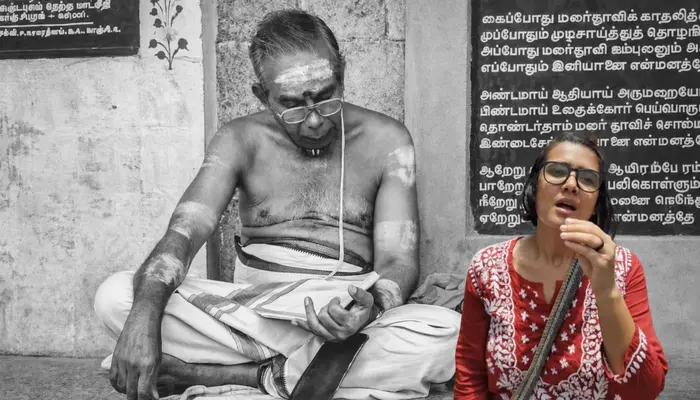
Neha Bora, national president of the All India Students Association (AISA), denigrated the Hindu faith with objectionable remarks linking Hindu temple priests to sexual offences and criticised Hindu religious traditions. The incident came to light after an old video of her resurfaced on social media. In the video, Bora spoke about what she described as the Brahmanical social hierarchy, comparing Brahminism or Brahmanvaad to patriarchy and capitalism and describing it as an oppressive socio-religious system. She claimed that Hindu women, including Brahmin women, needed protection from Brahminism and that Brahmin women were unsafe under this system, adding that priests raped women inside temples. She cited the Unnao and Kathua cases in support of this statement. She further claimed, “Women need protection, especially from Brahminism. That Brahminism which designates the same status for animals, the poor, the Shudras, and women: that they are all deemed fit to be subjected to taadna (punishment/subjugation)." Bora also invoked the Manusmriti and a controversial couplet from Tulsidas's Ramcharitmanas, particularly the phrase “taadna ka adhikar”, falsely arguing that Brahminical structures assigned women, Shudras, the poor and animals an inferior status. Addressing women who supported Brahminism, she sarcastically suggested that they should abandon modern clothing, remain within the four walls of their homes, wear long veils and sit at the feet of their husbands or fathers, arguing that this was the position assigned to them under the system she criticised. She maintained that her criticism was directed at the system rather than individual members of a caste. On 3 November 2026, Amita Sachdeva, a Supreme Court advocate-on-record and Delhi High Court lawyer, submitted formal complaints to the SHO of Parliament Street Police Station and the Cyber Police Station in New Delhi district, seeking the registration of an FIR against Bora. The complaints invoked Section 196(1)(a) and Section 196(1)(b) of the Bharatiya Nyaya Sanhita (BNS), 2023, which dealt with promoting enmity, hatred or ill-will between different groups and committing acts prejudicial to communal harmony and public tranquillity. Sachdeva objected to Bora's sweeping accusations against temple priests, arguing that attributing sexual offences to an entire category of religious functionaries, rather than identifying individual perpetrators, could promote hatred, hostility and disharmony between communities. She maintained that sexual offences needed to be investigated and prosecuted in accordance with the law wherever they occurred, and that broad accusations against an entire group could tarnish its image, hurt religious sentiments and disturb social harmony. She further argued that freedom of expression was constitutionally protected but remained subject to legal limitations and social responsibility. The complaints described the matter as one concerning public order rather than a personal grievance on behalf of any particular religious community. Sachdeva requested the police to register an FIR against Bora and any other persons whose involvement emerged during the investigation. She also sought an examination of the original statements, their intent, the electronic records, the manner in which the video had been circulated and its potential impact on public order. Meanwhile, the Bharatiya Janata Party (BJP) also criticised Bora and shared her remarks alongside an earlier statement by Rahul Gandhi on its social media platform X. The party described Bora's views as anti-Sanatan and accused her of insulting Sanatan Dharma and attacking Hindu beliefs. As of 3 November 2026, the police had not publicly confirmed the registration of an FIR, and the matter remained at the complaint stage.
Why it is Hate Crime ?
This case has been added to the tracker under the primary category of - Hate speech against Hindus. Within it, the sub-category selected here is - Anti-Hindu subversion and prejudice. Hate speech is defined as any speech, gesture, conduct, writing, or display that is prejudicial against a specific individual and/or group of people, which is leading to or may lead to violence, prejudicial action or hate against that individual and/or group. Media plays a specific and overarching reach in perpetuating prejudicial attitudes towards a community owing to unfair, untrue coverage and/or misrepresentation/misinterpretation, selective coverage and/or omission of facts of/pertaining to issues affecting a specific religious group. This type of bias can dehumanise the victim group, making it easier for others to justify harmful actions against them, which aligns with the objectives of hate speech laws aimed at preventing such harm. It is often observed that the media takes a prejudicial stand against the Hindu community driven by their need to shield the aggressor community which happens to be a numeric minority, however, is the one perpetrating violence against Hindus. For example, the media is often quick to contextualise religiously motivated crimes against Hindus, omit or misrepresent facts that point towards religiously motivated hate crimes, justify and/or downplay religiously motivated hate crimes or simply present fake news to stereotype Hindus. Such media bias leads to the denial of persecution and is often used to dehumanise Hindus, leading to justification for violence against them. For example, the media covered several fake allegations of Hindus targeting Muslims and forcing them to chant Jai Shree Ram. Most of these cases were proved false and fabricated after police investigation. These fake news reports were subsequently never retracted or clarified. Such fake news led to the justification of violence and dehumanisation of Hindus based on the argument that since Hindus targeted Muslims and forced them to chant Jai Shree Ram, the dehumanisation of Hindus and violence against them was par for the course and merely a retaliation. Such media bias leads to prejudicial portrayal of Hindus and offers a justification for violence against them and therefore, is considered hate speech under this category. The other sub-category selected here is - Subversion of scriptures. Subverting the religious scriptures of Hindus has particularly devastating consequences. Subversion of the scriptures of Hindus is often done to justify or promote hatred, discrimination, or violence against specific individuals or groups of Hindus. Religious scriptures are often nuanced and those who harbour religious animosity towards Hindus often misquote or misrepresent the scripture to legitimise their animosity and hate towards the faith and its adherents. Any such misquoting of scriptures or subversion to justify hate, violence and discrimination against Hindus owing to religious animosity is hate speech and is categorised as such. The other sub-category selected here is - Anti-Hindu slurs, mocking faith. Anti-Hindu slurs and the deliberate mocking of the Hindu faith owing to religious animosity involve the usage of derogatory terms, stereotypes, or offensive references to religious practices, symbols, or figures. One of the common anti-Hindu slurs used against Hindus is “cow-worshipper” and “cow piss drinker”. The intention of using this term is to demean and mock Hindus as a group and their religious beliefs since Hindus consider the cow holy. Additionally, some symbols and the slurs attached to them have a historical context that exacerbates the insult, hate, stereotyping, dehumanisation and oppression against Hindus. Cow worship has been used for centuries to denigrate Hindus, insult their faith and oppress Hindus specifically as a religious group. There has been overwhelming documentation about how cow slaughter has been used to persecute Hindus with cow meat being thrown in temples and places of worship. There has also been overwhelming documentation where cow meat (beef) has been force-fed to Hindus to either forcefully convert them to Islam or denigrate their faith. Apart from cow worship, the Swastika – which holds deep religious significance for the Hindus – has also been misinterpreted and distorted to use as a slur against Hindus. Similarly, the worship of the Shivling has been used by supremacist ideologies and religions to denigrate Hindus owing to religious animosity. Such slurs and denigration stem out of inherent animosity and hate towards Hindus and their faith, therefore, it is categorised as hate speech targeted at Hindus specifically owing to their religious identity. The incident reflected hostility towards Hindu religious institutions and the community's religious identity, as Bora's remarks went beyond criticism of a social hierarchy and made sweeping accusations against Hindu temple priests as a category of religious functionaries. By claiming that priests raped women inside temples and presenting this as a characteristic of the Brahmanical system, she associated Hindu places of worship and their religious functionaries with sexual criminality. Such generalisations risked portraying Hindu temples as inherently unsafe spaces for women and undermining the dignity and credibility of institutions central to Hindu religious life. Sexual offences are serious crimes that must be addressed, and perpetrators held accountable, but attributing such conduct to an entire category of religious functionaries without distinguishing individual offenders from the wider community amounted to collective vilification. The framing of her remarks also extended beyond a critique of caste-based discrimination or patriarchy. By repeatedly associating Brahminism with the subordination of women, Shudras, the poor and even animals, and invoking supposed statements from Hindu religious texts to reinforce this characterisation, Bora presented Hindu religious traditions as fundamentally oppressive. Her statement that even Brahmin women were unsafe under this system further suggested that Hindu religious institutions and traditions were intrinsically hostile to the women belonging to the community itself. This framing was particularly significant because it did not merely condemn specific discriminatory practices or interpretations but placed the broader Hindu religious framework under suspicion by associating it with sexual violence and the systematic subjugation of women. The invocation of cases such as Unnao and Kathua to support the generalised accusation against temple priests also raised concerns about the selective use of individual criminal incidents to stigmatise an entire religious category. Crimes committed by particular individuals cannot establish the criminal character of an entire religious institution or its functionaries. By using these cases to substantiate a sweeping assertion about priests raping women inside temples, Bora turns individual crimes into a basis for collective condemnation of the entire Hindu religious community. This distinction is central to assessing the communal dimension of the remarks: criticism of specific perpetrators or institutional failures is legitimate, but extending criminal culpability to an entire religious category can foster prejudice against the wider community. The Manusmriti is a religious text within Hinduism, traditionally attributed to the sage Manu. It functions as a dharmashastra, guiding morality, law, social order and religious conduct, and represents an important symbol of Hindu religious and cultural heritage. For Hindus, the text forms part of the broader corpus of Hindu religious and Dharmic literature and carries historical and civilisational significance. By invoking the Manusmriti alongside the Ramcharitmanas to portray Hindu religious traditions as inherently oppressive, Bora presented these texts as instruments of systematic subjugation. Her remarks reduced a complex body of religious and philosophical literature to a sweeping characterisation of Hindu traditions as inherently discriminatory and degrading. Such generalisations disparaged Hindu religious heritage and reinforcing negative perceptions of the faith and its foundational texts, rather than limiting the criticism to particular interpretations or social practices. It is also important to state that some anti-Hindu groups often weaponise the Manusmriti to portray Hinduism as regressive, casteist or anti-women, but this argument collapses under even basic scrutiny. Hinduism is not a religion centred around one book, one prophet or a single fixed law. The Manusmriti is not the Hindu equivalent of the Bible or the Qur'an; it is one among many Dharmashastras composed for specific times and social circumstances. Texts such as the Yājñavalkya Smriti, Nārada Smriti and Parāśara Smriti frequently contradict Manusmriti, demonstrating that Hindu thought has never been rigid or dogmatic but pluralistic, dialogic and adaptable. To hold Hindus collectively accountable for verses in the Manusmriti is deeply unfair and reflects a bias against Hinduism itself. No other major faith is judged by selectively quoting its ancient or context-bound texts, yet Hinduism alone is singled out in this manner. Expecting modern Hindus to answer for verses written thousands of years ago, in an entirely different era, is utterly irrational. Would Muslims feel comfortable if they were held responsible for obscure hadiths, or Christians if they were blamed for verses in the Old Testament? Furthermore, no modern Hindu derives their moral or spiritual life from the Manusmriti. Hindu rituals, festivals and everyday ethics are guided by the Bhagavad Gita, the Upanishads, the Ramayana and the living devotional and philosophical tradition texts that emphasise duty, inner discipline, equality and the divinity of all beings. In essence, in today's context, the Manusmriti is a historical text, not a religious scripture that defines or governs Hindu life. To use it as a weapon to vilify Hindus is intellectually dishonest and driven by prejudice rather than scholarship. It is a distortion that ignores both the pluralism of Hindu thought and the reality that Hindu society, including Hindu reformers and leaders, long ago moved beyond any literal or uncritical reading of such ancient legal codes. The broader significance of the remarks lay in their attempt to normalise suspicion and hostility towards Hindu religious institutions and their custodians. Temple priests occupy an important position in the performance of Hindu religious rituals and the preservation of sacred traditions. Associating them collectively with rape and presenting Hindu temples as spaces where women were unsafe could undermine public confidence in these institutions and reinforce derogatory perceptions of Hindu religious practices. The fact that the remarks circulated on social media further amplified their potential reach and impact. While Bora maintained that her criticism was directed at Brahminism as a social system rather than individual members of a caste, her remarks nevertheless extended hostility towards Hindu religious institutions, traditions and their functionaries. By associating Hindu temple priests collectively with sexual offences and portraying Hindu religious texts and traditions as inherently oppressive and degrading, she reinforced sweeping negative stereotypes about Hinduism and its adherents. Her statements carried the potential to undermine the dignity of Hindu religious institutions, disparage sacred religious literature and foster hostility towards the community. These aspects provided grounds for examining the incident as an instance of anti-Hindu hostility, and thus has been added to the tracker.


Case Status
Complaint filed


Perpetrators Details
Perpetrators
Others
Perpetrators Range
One Person
Perpetrators Gender
female
 Sources



