Multiple Hindu women targeted and forcibly converted to Islam by Muslim man; accused ran inter-state conversion racket linked to KGMU conversion case
 Lucknow, Uttar Pradesh, India
 3 January, 2026
Case Summary
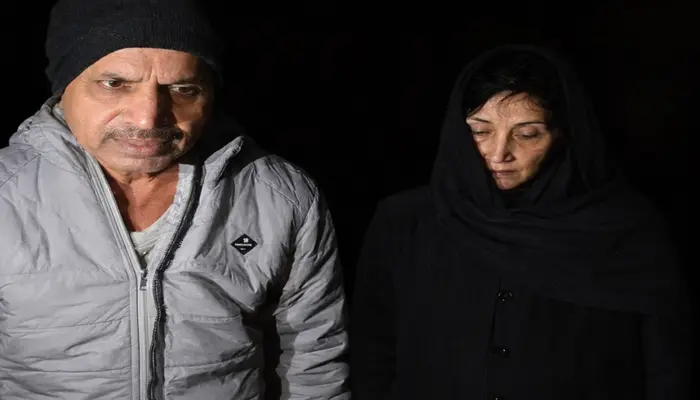
Multiple Hindu women were lured into relationships, forcibly converted to Islam and married by a Muslim man named Salimuddin Nayak. The accused operated an inter-state conversion network and was the father of Rameezuddin Nayak, who was also involved in a case of forced religious conversion of a Hindu woman at King George's Medical University (KGMU) in Lucknow, Uttar Pradesh. Notably, the Hinduphobia Tracker had previously documented the case involving Rameezuddin, a resident doctor at KGMU, who trapped a Hindu woman, Dr Devatri Mitra, and sexually exploited her under the pretext of marriage. When she later asked him to marry her, he began pressuring her to convert to Islam as a condition for marrying him. After she refused to renounce her Hindu faith, he abandoned and harassed her, driving her to attempt suicide on 21 December 2025. Following the incident, Dr Devatri also revealed that Rameezuddin was part of a group of Muslim individuals engaged in religious conversion activities within the university and that several other Hindu women had also been targeted and converted by the group. The subsequent police investigation into the KGMU case also brought the activities of Rameezuddin's father, Salimuddin, to light. The investigation revealed that Salimuddin had been involved in coercive religious conversion activities for a considerable period and had married four women, all of whom were Hindu before their marriages. He had targeted multiple Hindu women from Jammu and Kashmir, Punjab, Uttarakhand and Uttar Pradesh, lured them into relationships, forcibly converted them to Islam and married them. His activities extended across multiple states, and he had also influenced his son to engage in similar conversion activities. Salimuddin had married his second wife, Khateeja, approximately 35 years earlier, while his first wife was still alive. His first wife was Punjabi Hindu, and Rameezuddin was born from this marriage. Khateeja, who was Hindu before her marriage, was subsequently converted to Islam. Salimuddin and Khateeja originally belonged to Khatima in Udham Singh Nagar district, Uttarakhand, and later resided in a rented flat at Mumtaz Court Apartments in Thakurganj, Lucknow. Salimuddin had also used his profession as a homoeopathic practitioner to target Hindu women. He operated a homoeopathic clinic in Khatima, Uttarakhand, where he approached women under the pretext of providing medical treatment and exploited this access to intimidate them. His activities had caused several people to distance themselves from him. He subsequently spent considerable time at his ancestral residence in Nyoria, Pilibhit district, Uttar Pradesh. The investigation further revealed that Salimuddin, Rameezuddin and another Muslim individual, Qazi Zahid Hasan Rana, were involved in an organised conversion network. The three held closed-door meetings under the guise of religious education, during which radical Islamic ideology was promoted, and efforts were made to establish an organised group for religious conversions to Islam. Salimuddin had specifically directed his son to target Hindu women and entice them into religious conversion. He also assigned him conversion targets. Rameezuddin used his position as a doctor to gain the trust of Hindu women by offering medical treatment, assistance and support, which he exploited to pursue relationships and facilitate religious conversions. Police arrested Salimuddin and his wife, Khateeja, on 5 January 2026 from their rented residence at Mumtaz Court Apartments in Thakurganj, Lucknow. Their involvement came under scrutiny after Dr Devatri Mitra from KGMU and another Hindu woman from Agra Medical College gave statements before a magistrate detailing the role of Rameezuddin's parents in their sexual exploitation, religious conversion and forced miscarriages. At the time of writing this report, police were also investigating the role of other individuals involved in facilitating the conversions. Update (25 October 2026): Reports emerged that following the incident involving Hindu doctor Dr Devatri Mitra, the Uttar Pradesh Special Task Force (STF) conducted a detailed inquiry into religious conversion activities and the targeting of Hindu women at King George’s Medical University (KGMU), Lucknow. An extensive report submitted on 25 October 2026 brought to light a wider network operating within the university, instances of religious discrimination and the involvement of faculty members and other personnel in shielding those responsible. In addition to Devatri’s case, the STF identified several other Hindu women doctors and employees who had been targeted across different departments, including resident doctors Dr Kritika Pandey and Dr Muskaan, as well as another Hindu doctor who had graduated from Sarojini Naidu Medical College (SNMC), Agra. The report also recorded two cases registered in December 2025 at Chowk and Kaiserbagh police stations by Devatri and nursing staff member Maviya against resident doctors Dr Rameezuddin and Mohd Adil, respectively, under relevant provisions of the Bharatiya Nyaya Sanhita (BNS) and the Uttar Pradesh Prohibition of Unlawful Conversion of Religion Act, 2021. The report documented how senior faculty members in the Pathology Department shielded Rameezuddin and attempted to discredit Devatri. Head of Department Professor Suresh Babu declared Rameezuddin innocent, described Devatri as a “psychopath” and pressured her family to reach a compromise. The report also recorded his association with Ambedkarite and Dalit ideology, hostility towards Hindu residents, and practice of saving residents’ caste categories before their names and maintaining caste-based lists. Additional Professor Dr Sumaiya Qaiyum, a native of Kashmir and wife of Professor Khaliq-ur-Rahman of Sanjay Gandhi Postgraduate Institute of Medical Sciences (SGPGI), Lucknow, also played a significant role. Both were graduates of Aligarh Muslim University (AMU) and were described in the report as having a hardline Islamic outlook. Sumaiya, who was responsible for approving residents’ leave, extended preferential treatment to Muslim residents while discriminating against Hindu doctors. Hindu residents faced harassment, discriminatory duty assignments and adverse feedback, while Muslim residents received preferential treatment, including greater accommodation for religious observances and personal commitments. Sumaiya also dismissed Devatri’s case as a “small incident”, discouraged residents from raising the matter and threatened those supporting her. The report further identified Dr Wahid Ali, who headed the Biochemistry Lab within Pathology, as providing a separate space inside the HPLC Lab for Muslim students to gather, offer Namaz and hold meetings. It documented preferential treatment for Muslim students and the harassment of Hindu residents, while Wahid supported Rameezuddin against Devatri. The STF further documented a pattern of targeting Hindu women across Gandhi Ward, Microbiology and Radiology. Several Hindu nursing employees and other university staff members were trapped into relationships, sexually exploited and pressured or coerced to convert to Islam and marry the Muslim men involved. Hindu women who resisted conversion or raised complaints faced intimidation, blackmail and threats to their professional careers. In some instances, complaints were suppressed or ignored, while the Hindu women who approached the authorities faced adverse consequences, including termination from employment and threats of academic or professional retaliation. The findings indicated that these incidents were not isolated to one department or one individual, but involved multiple employees and resident doctors across the university. The report described an organised network of Muslim medical students and resident doctors associated with SNMC Agra and KGMU. Its members included Rameezuddin, Dr Rizwan Malik, Dr Adnan Ansari, Dr Sam Anees and others from the 2021 and 2022 batches. The group maintained close ties, interacted with Hindu female residents, promoted hardline Islamic ideology and received support from Professor Sumaiya Qaiyum. The STF also referred to a book titled Islamic Medicos, published at SNMC Agra, containing details of Muslim medical students from the 2012–2016 batches, as well as a similar magazine published at the college. Newly admitted Muslim students were organised and trained by members of this network. Rameezuddin introduced Hindu female residents, including Dr Mansi, Dr Devatri, Dr Kritika Pandey and Dr Muskaan, to members of the group. He also introduced Dr Sam Anees, a resident of Saharanpur, to Devatri and told her that Anees had raped 19 Hindu women. Other individuals identified in connection with the network included Mohd Kaif of the SNMC 2021 batch; Mohd Ehsaan, Aman Malik and Shadan Shameem; and Mohd Ayaan, Mohd Zaheer, Mohd Aman and Shabir Khan from KGMU’s 2021 and 2022 batches. The report recorded that members maintained close relationships with Hindu female residents and sought to draw them into the group’s Islamic ideological network. The STF traced instances of religious conversion activities at KGMU to the period between 2006 and 2012, when Dr Abbas Ali Mehdi headed the Medicine Department. S.A. Abbas, a clerk who had worked across several KGMU departments, was closely associated with Mehdi and handled his work. After retiring around three years before the report, Abbas became Mehdi’s personal secretary. Mehdi had taken voluntary retirement and owned Era Medical College. The report stated that committee members tasked with examining conversion complaints and issues involving Muslim students were recommended by Mehdi to the Vice-Chancellor through Abbas, and that several Muslim doctors from KGMU had invested in Era Medical College. After Abbas’s retirement, Professor Usman Kausar, a nephrologist in the Medicine Department, emerged as a prominent figure among Muslim faculty members and resident doctors, using his oratory skills to defend Muslim students and employees facing complaints. Kausar operated a private clinic, Diabetes Health, where his compounder and assistant, Rizwan, wrote prescriptions. His brother-in-law, Dr Haider Abbas, who shared his ideological outlook, was also appointed to the Medicine Department. Assistant Professors Dr Ahmad and Dr Kaleem of the Biochemistry Department were also identified as key figures supporting and motivating Muslim students. The report further identified Dr Naseem Khan, formerly associated with KGMU’s Dental Department and then with the Physiology Department at Integral University, Lucknow, as a propagator of radical Islamic preacher Zakir Naik’s ideology among Muslim students. It also referred to his wife, Dr Khalida Naseem, formerly an eye surgeon at KGMU, who resigned from Integral University following action against Dr Shaheen in connection with the 2025 Delhi Red Fort blast case. Under the influence of Zakir Naik’s ideology, the second floor of KGMU’s gymnasium was converted into a Muslim Ibadatkhana in 2013 on Naseem Khan’s direction, despite an existing mosque inside the university. Muslim clerics from Etawah, Mainpuri and Karkhal frequently visited and delivered religious speeches there. The report also linked Rameezuddin to Dr Shaheen Saeed, who was apprehended in connection with the 2025 Delhi Red Fort blast case. He met her at a medical conference, was influenced by her radical Islamic ideology and acknowledged his association with her during interrogation. Electronic devices recovered from him contained contacts with several Hindu women whom he had approached and pressured to embrace Islam, along with photographs of around 50 women. The report recorded a financial incentive structure under which ₹15 lakh was offered for the conversion of medical professionals and doctors, and ₹5 lakh for converting others. Rameezuddin was arrested in January 2026 in connection with the case registered at Chowk police station in December 2025, and KGMU’s internal Vishakha Committee also found him guilty. On 30 October 2026, the Uttar Pradesh government directed the KGMU Registrar to initiate strict departmental action against university personnel found complicit in religious conversion activities, harassment and related misconduct, and to submit an Action Taken Report.
Why it is Hate Crime ?
This case is being added to the tracker under the primary category: Crimes against women in relationships and other sexual crimes. The subcategory selected is: Brainwashed and/or Groomed. The tertiary category selected is: Pattern of targeting Hindus. In our database, we have not added incidents where women have converted to another religion of their free will and no allegations of forced/involuntary conversion have been made. However, there are certain cases of conversion where the consent itself is a result of the brainwashing or grooming of a minor by the non-Hindu perpetrator trying to victimise a woman for her Hindu religious identity. The phenomenon of grooming points to non-Hindu perpetrators identifying their Hindu victims’ vulnerabilities and exploiting them over months and sometimes years, to extract the supposed ‘consent’ in order to convert their religion. In most cases of grooming, the victims are minors or the grooming started when the victim was a minor. In other cases of grooming, the non-Hindu perpetrator brainwashes and grooms a minor victim to extract their trust and then proceeds to rape them repeatedly with the intent of converting them to their faith. It is pertinent to understand here that when the victim is a minor, the ‘consent’ to convert or enter into a romantic relationship with an adult itself is redundant – addressed by POCSO. While every case of conversion of a minor and incidents of establishing a physical relationship with a minor by an adult is a crime, for the purpose of this database, a case would be considered a hate crime only if there is a distinct religious angle to the grooming. For example, in the UK, if a Hindu minor is targeted by Pakistani grooming gangs, it would be considered a hate crime because the victims are specifically targeted owing to their non-Muslim religious identity with the perpetrators being Muslim. In other cases, if a Hindu minor is brainwashed into entering a physical relationship with the non-Hindu adult perpetrator and the family alleges grooming/brainwashing of the minor to convert her religion, it would form a part of this database. If the victim is a Hindu adult, the case would form a part of this database only if the victim herself says that she was brainwashed/groomed to convert her religion. However, if the victim is deceased (murdered or otherwise), the case would form a part of this database if her family/friends provided testimony that the victim was brainwashed/groomed to convert her religion. Since these crimes have a distinct religious angle where the victim is being targeted owing to her Hindu religious identity, these cases are considered a hate crime. The other subcategory selected is: Forced conversion before marriage. The tertiary category selected is: Forced to do nikah. In such cases, a non-Hindu man is in a relationship with a Hindu woman when the pressure to convert her religion begins to manifest. In such cases, typically, two patterns emerge. First, when the relationship is consensual, and the religious identity of the perpetrator is known to the Hindu woman in the relationship, however, at some point during the relationship, the non-Hindu man starts to force the victim to convert her religion and give up her Hindu religious identity. The second is when the woman gets into a marriage with the man pretending to share her faith. Later, when the truth is revealed, the man starts pressuring the woman to convert her religion and give up her religious identity. In both the situations, the methods used to force the victim to convert her religion often revolve around force-feeding beef, forcing her to wear hijab, forcing her to read the Kalma or even pressurizing the victim to do ‘Nikah’, which is marriage under Islamic law, with a prerequisite being conversion to Islam. Cases where a Hindu woman consensually converts to Islam in a relationship will be left out of the hate crime database, even though it could be argued in several cases that the conversion was a result of religious brainwashing. This case is a clear example of a religiously driven hate crime, as the Muslim perpetrator, Salimuddin, targeted multiple Hindu women, lured them into relationships, married them and forcibly converted them to Islam. Relationships and marriage were systematically used as a pretext to carry out coercive religious conversions, making the victims' Hindu religious identity central to the nature of the crime. The most significant religious marker in this case is the deliberate targeting of Hindu women for the purpose of converting them to Islam. The fact that the perpetrator specifically sought out Hindu women, lured them into relationships and subsequently used those relationships to facilitate their conversion demonstrates that the relationships were predatory in their intent from the very beginning. They were not simply relationships that eventually resulted in interfaith marriages; rather, they were used as instruments to pursue a predetermined religious objective. The deliberate construction of relationships with the intention of converting Hindu women reveals a calculated pattern of exploiting emotional attachment, intimacy and the promise of marriage to bring about a change in their religious identities. This demonstrates that the victims were targeted not merely as individuals but specifically as Hindu women whose existing faith the perpetrator intended to make them abandon. Such conduct reflects clear hostility towards their religious identity and makes the religious motive behind the crime evident. The fact that these Hindu women were forcibly converted to Islam further establishes the religious motive behind the crime. A conversion can only be considered voluntary when it stems from an individual's own conviction, willingness and free choice. In this case, however, the perpetrator deliberately targeted Hindu women, lured them into relationships and exploited their emotional attachment and the prospect of marriage to secure their conversion. This was a deeply predatory tactic in which intimate relationships were used as instruments of religious coercion. Conversion achieved through force, pressure, intimidation or manipulation cannot be regarded as a genuine change of faith; rather, it constitutes an attempt to override an individual's religious autonomy and erase their existing religious identity. By compelling these women to abandon Hinduism, the perpetrator demonstrated a blatant disregard for their right to practise their ancestral faith and treated their religious identity as something to be discarded and replaced. The objective, therefore, extended beyond entering into relationships or marriages: it was to use them as a means of compelling Hindu women to renounce their faith, exposing the clear anti-Hindu hostility underlying the crime. Another significant aspect of this case was that the perpetrator had targeted multiple Hindu women across different states, four of whom he married. This established a recurring pattern of targeting women on the basis of their Hindu identity, rather than an isolated instance of an interfaith relationship. The investigation also exposed his involvement in a wider conversion network alongside his son, Rameezuddin, who was implicated in the KGMU conversion case. The involvement of multiple individuals and the repeated exploitation of relationships to facilitate religious conversions demonstrated the organised nature of these activities. Hindu women were not incidental participants in this network; they were specifically identified as targets whose religious identities were to be changed by force. Such coordinated efforts to secure conversions through relationships, marriage and coercion went far beyond individual religious choice and constituted a systematic pattern of religious targeting. This demonstrated organised anti-Hindu hostility rather than isolated personal conduct. The fact that Salimuddin had instructed and encouraged his son to target Hindu women and carry out religious conversions further exposes the predatory and religious supremacist nature of the conversion network. The deliberate assignment of conversion targets demonstrates that these activities were not incidental but formed part of a consciously pursued religious objective. This reflects an ideological outlook rooted in Islamic theology that regards non-Muslims, particularly Hindus, as inferior, referring to them as kafirs (non-believers), who are expected to abandon their faith and embrace Islam or live under Islamic rule as dhimmis (non-Muslims living under Islamic authority with a subordinate legal status). Such theological concepts foster a supremacist outlook in which the conversion or subjugation of people belonging to other faiths, including Hindus, is treated as a religious objective, with little regard for their individual convictions, religious autonomy or freedom to retain their existing faith. These ideas are not merely theological abstractions; they manifest in practices where non-Muslims, particularly Hindus in India, are treated as targets for religious domination, coercion and humiliation. This religious framework fosters an 'us versus them' mindset in which the assertion of Hindu religious identity and the exercise of religious freedom are viewed as challenges to Islamic supremacy. Muslim individuals indoctrinated into such an outlook regard coercive conversion as justified or even as a religious obligation, portraying the abandonment of kufr (disbelief in Islam) and acceptance of Islam as a means of attaining salvation. Such an outlook disregards the free will of Hindu victims and their right to practise their ancestral faith. In this case, the deliberate targeting of Hindu women and the exploitation of intimate relationships through manipulation and coercion demonstrate how such religious supremacist attitudes translated into organised efforts to change their religious identities. The conversion nexus operated by Salimuddin and his son reflects a broader pattern of anti-Hindu hostility, in which Hindu women were specifically targeted and their existing faith treated as something that had to be erased through conversion. The pursuit of these conversions across multiple states further demonstrates the organised nature of the activities and their goal to alter the religious composition of communities by compelling individuals to abandon their Hindu faith. When conversion is pursued through coordinated networks, deception and coercion, it ceases to be an exercise of individual religious choice and becomes an instrument of religious domination. The deliberate targeting of Hindu women to secure their conversion collectively demonstrates deep-seated animosity towards Hinduism, making this an incident of religiously motivated hate crime. Overall, since this case meets several parameters of a religiously driven offence, it is being documented in the Hinduphobia Tracker's hate crime database. Disclaimer: The Hinduphobia Tracker records incident dates based on when a crime occurs, or the victim's ordeal begins, rather than when it is reported by the media. However, in this case, media reports did not specify the exact date of the incident. The media reported the incident in January 2026. Accordingly, an indicative incident date of 4 January 2026 has been used for documentation purposes, based on the relative timeframe provided in the media report. Although the investigation revealed that Salimuddin had married four Hindu women and targeted several others for religious conversion, the total number of victims in this case remained unknown. Accordingly, the victim count has been recorded as "Unknown", while the perpetrator count has been recorded as one, referring to Salimuddin Nayak. The Hinduphobia Tracker records the place of an incident based on the location where the victim's ordeal began. However, in this case, the perpetrator had targeted multiple Hindu women from different states across India, and the exact locations where each victim was initially targeted were not established. Therefore, Lucknow, where the perpetrator resided and operated, has been selected as the indicative place of the incident for documentation purposes only.


Case Status
Arrested


Perpetrators Details
Perpetrators
Muslim Extremists
Perpetrators Range
One Person
Perpetrators Gender
male
 Sources



