Hindu beliefs denigrated, leftist journalist mocks Gau Mata and Hindu scriptures
 New Delhi, Delhi, India
 29 October, 2026
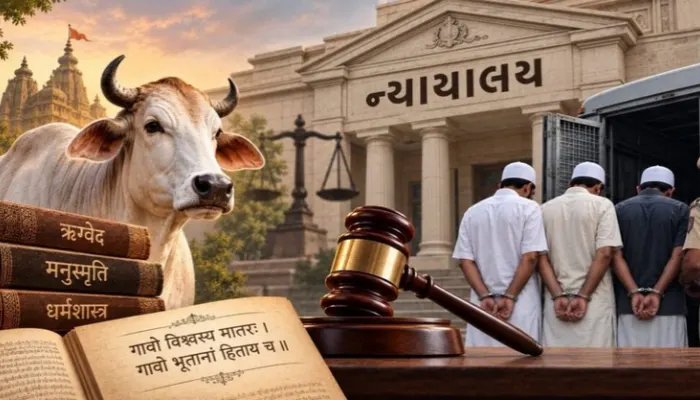
Case Summary
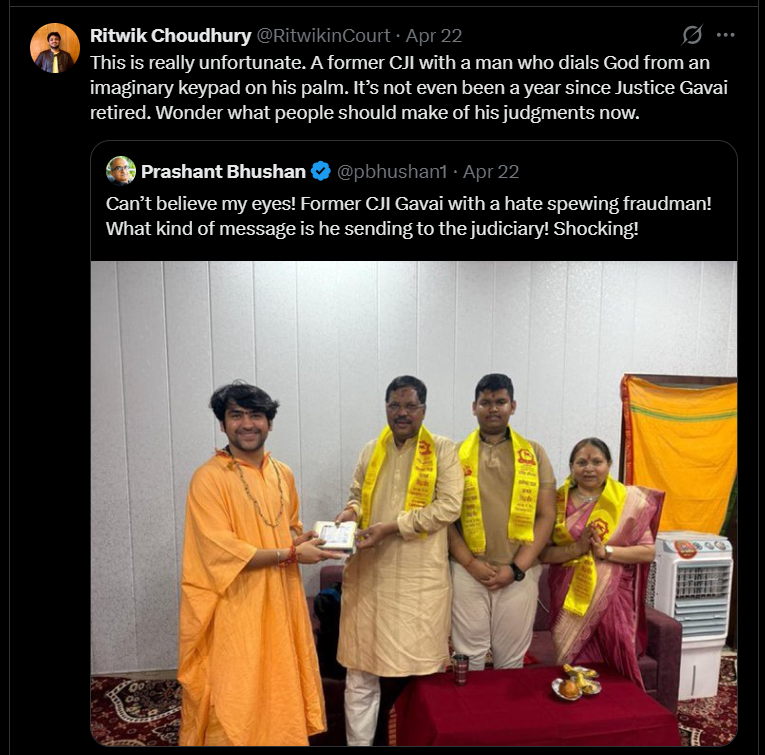
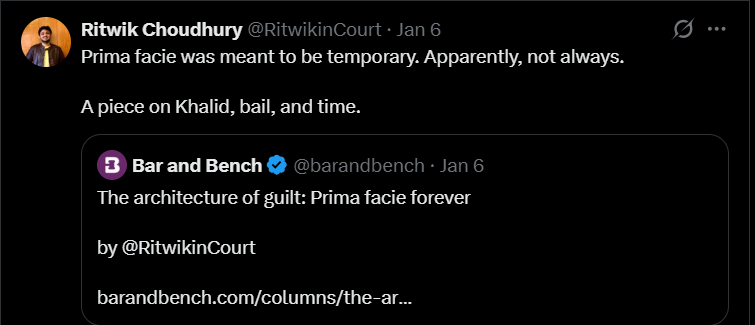
In India, legal journalist Ritwik Choudhury displayed Hinduphobia through his Bar & Bench column titled “Holy cow, unholy sentence”, published on 30 October 2026. The column denigrated Hindu religious beliefs concerning Gau Mata, mocked Hindu scriptures and attacked the judicial recognition of the cow's religious significance in Hinduism. Its opening line declared: “Insulting God directly gets you thirty-six months; slaughtering the animal associated with God costs you the rest of your natural life on earth.” Choudhury repeatedly portrayed the protection of Gau Mata as an irrational religious concern and presented the recognition of Hindu beliefs in a judicial judgment as an intrusion of religion into the legal system. The column concerned the judgment delivered on 26 October 2026 by the Additional Sessions Court at Kalol, Gandhinagar district, Gujarat. Judge Brijeshkumari Rameshwarsinh Rajput sentenced three men, Wasim Qureshi, Mohammad Rafiq Qureshi and Ashfaq Behlime, to imprisonment for life in a cow-slaughter case involving the recovery of 277 kilograms of beef during a raid on a house in Jamla village. Choudhury focused on the court's extensive references to the Rigveda, Manusmriti, and Harivamsa Purana. He described the judgment as an “expansive theological excursion” and questioned whether Judge Rajput was presiding over a criminal sessions court or “sitting as an ecclesiastical tribunal enforcing a theological code”. He reproduced the court's references to the belief that the cow houses 33 crore deities, that the Sun and Moon reside in its eyes, that Brahma, Vishnu and Mahesh inhabit its horns, and that its four legs represent the four Vedas. He also highlighted the court's statement that Gau Mata would gradually become extinct if those who slaughtered cows were not punished as prescribed by law. Choudhury used these Hindu scriptural references to ridicule the religious reasoning expressed in the judgment and portray Hindu beliefs concerning the sacred status of the cow as incompatible with judicial decision-making. Under the heading “Extinction as a sentencing policy”, Choudhury mocked the court's concern for protecting Gau Mata as “zoological panic”. He compared cow protection to the extinction of the Dodo and Woolly Mammoth, writing that the Indian bovine population, which he described as exceeding 300 million, was supposedly “three slaughterhouse knives away” from extinction. He then shifted the discussion to cattle deaths caused by the ingestion of municipal single-use plastic, starvation in State-funded gaushalas and road accidents caused by administrative abandonment. He contrasted the court's recognition of the cow as an endangered deity with the Gujarat High Court's interventions concerning stray cattle on roads. He described the cow as an “endangered deity” inside the courtroom and a “municipal traffic hazard” outside it. These comparisons used the condition of stray cattle and gaushalas to ridicule the religious significance of Gau Mata and divert attention from the slaughter of cows and the sale of their meat. Choudhury also targeted Judge Brijeshkumari Rameshwarsinh Rajput personally through repeated criticism of her judicial reasoning, intellect and exercise of sentencing discretion. Referring to the Supreme Court's judgment in State of Gujarat v. Mirzapur Moti Kureshi Kassab Jamat (2005), he wrote that Judge Rajput had “tossed that cumbersome legal fiction into the Sabarmati river”. He used this expression while discussing the Supreme Court's reliance on agricultural economics, the preservation of draught animals, cow dung as manure and biogas production in upholding restrictions on cow slaughter. Choudhury then portrayed Judge Rajput's recognition of the cow's sacred status as the disclosure of the “real motive” behind cow protection, describing the cow as sacred, the mother of the universe and cow protection as dharma. He further asserted that the judge had abandoned the Supreme Court's legal reasoning and replaced it with Hindu religious doctrine. Choudhury attacked the judge's sentencing decision, arguing that statutory discretion had “collapsed entirely”. He wrote that the court had failed to conduct a rigorous balancing exercise involving aggravating and mitigating circumstances, criminal antecedents, age, socioeconomic background and the individual role of the accused. He highlighted the defence submissions that the men were young, that one was nineteen years old, that they were the sole breadwinners of impoverished families and that they had no previous convictions. He stated that the court dismissed these pleas in a single breath and described the justification for imposing the maximum punishment as “a collection of Sanskrit verses and an imaginary ecological apocalypse”. He thereby portrayed Judge Rajput's decision as a product of Hindu religious beliefs rather than a judicial determination under the applicable statute. The column also attacked the use of Hindu scriptures in criminal judgments by referencing Article 21 of the Constitution and the Supreme Court's decision in S.R. Bommai. Choudhury wrote: “When a criminal court begins citing the Manusmriti to calibrate the deprivation of fundamental liberty under Article 21, the constitutional wall separating Church and State does not just crack, it dissolves.” He further stated that a citizen could not have their prison term dictated by a magistrate's “theological veneration of an animal”. He presented the citation of the Manusmriti and other Hindu religious texts as evidence of theological influence in the judiciary and characterised the judge's approach as an instance of “theological zeal”. He also described the use of Hindu religious texts in judgments as part of an emerging pattern of lower-court decisions in Gujarat, referring to a January 2023 Tapi Sessions Court judgment that stated that houses made of cow dung were unaffected by atomic radiation while sentencing a man to life imprisonment. Choudhury called these judgments an emerging genre of trial-court writing and described the pattern as “systemic rot”. Choudhury further singled out Gujarat's cow-preservation law and its provision for life imprisonment. He described Gujarat as the only State where bovine slaughter carried a life-imprisonment ceiling under the 2017 amendment and contrasted it with Uttar Pradesh, where he stated that the maximum punishment was ten years. He referred to the Gujarat High Court admitting an appeal against the 2023 Tapi life sentence to examine the punishment's proportionality. He also cited a Rajkot sessions court case involving beef biryani served at a wedding, in which the Gujarat High Court suspended a ten-year sentence and released the convict on bail. He used these judicial proceedings to argue that the maximum punishment for cow slaughter amounted to “religious retribution” and wrote that a trial judge could not impose life imprisonment merely because a livestock offence had “rattled their spiritual sensitivities”. These remarks directly questioned Judge Rajput's sentencing decision and portrayed the enforcement of Gujarat's cow-preservation law as an expression of religious sentiment. Under the heading “Penal exchange rate”, Choudhury compared the punishment for cow slaughter with punishments for offences involving women's dignity and human life. He referred to stalking, sexual harassment and criminal force intended to outrage a woman's modesty, citing punishments of three to five years. He also discussed an SUV driver running over a pavement dweller and cited a maximum five-year punishment for causing death by negligence. He compared cow-slaughter punishment with dowry-related cruelty and a situation in which a young bride was tortured until she attempted self-immolation. He then wrote: “In the Republic of India, you can destroy a woman’s dignity, extinguish human life through reckless violence, or drive a spouse to suicide and still expect to walk free before the decade is out. Slaughter a cow in Gujarat, however, and the State demands your entire mortal life.” Through these comparisons, he portrayed the punishment for cow slaughter as more severe than punishments for offences involving women's dignity, domestic cruelty and human life, using those comparisons to question the legal protection afforded to Gau Mata. Choudhury also compared the Gujarat cow-preservation law with punishments for cruelty against other animals. The comparison reproduced in the coverage of his column included beating a stray dog to death, mutilating a horse and poisoning a cat. He referred to Section 11 of the Prevention of Cruelty to Animals Act, 1960, and cited a fine of ₹50 for a first offence, with a repeat offence attracting a fine of up to ₹100 or imprisonment of up to three months. He contrasted these penalties with life imprisonment for cow slaughter in Gujarat and presented the difference as an irrational disparity in the treatment of animals. He also compared the Gujarat law with the United Kingdom's Animal Welfare (Sentencing) Act, 2021, which he cited as providing a maximum five-year prison sentence, and the United States' PACT Act, which he cited as providing a maximum seven-year sentence for severe animal cruelty. These comparisons placed the protection of Gau Mata alongside penalties for cruelty to dogs, horses and cats, portraying the statutory prohibition on cow slaughter as excessive. Choudhury further framed the issue through the punishment for deliberately outraging religious sentiments. His column's opening comparison of “thirty-six months” for insulting God with life imprisonment for slaughtering the animal associated with God was used to contrast the punishment for religious insult with the punishment for cow slaughter. The discussion also brought in the Manusmriti, the cow's association with Hindu deities, and the religious significance of Gau Mata in his argument about the constitutional separation of religion and State. He repeatedly returned to the proposition that recognising Hindu religious beliefs in the judgment amounted to theological influence over the administration of criminal justice. In the final section of the article, titled “Divinity in bovinity”, Choudhury described the Kalol judgment as an indication of what he considered the institutional priorities of India's legal system. He wrote: “When scriptures replace statutes, the courtroom ceases to be an arbiter of evidence and becomes an echo chamber of moral panic. The law loses its proportion, its reason and its basic human compass.” He ended by stating that the three convicts would spend their remaining years in Sabarmati Central Jail while cattle on the highways of Gandhinagar continued grazing on discarded polythene bags and industrial waste, “saved from the threat of global extinction by the grace of the Kalol Sessions Court”. The column repeatedly ridiculed Hindu scriptures, the sacred status of Gau Mata, the religious significance of cow protection and the judicial recognition of Hindu beliefs. It also directly targeted Judge Brijeshkumari Rameshwarsinh Rajput by questioning her judicial reasoning and portraying her sentencing decision as driven by Hindu religious sentiment.
Case Images
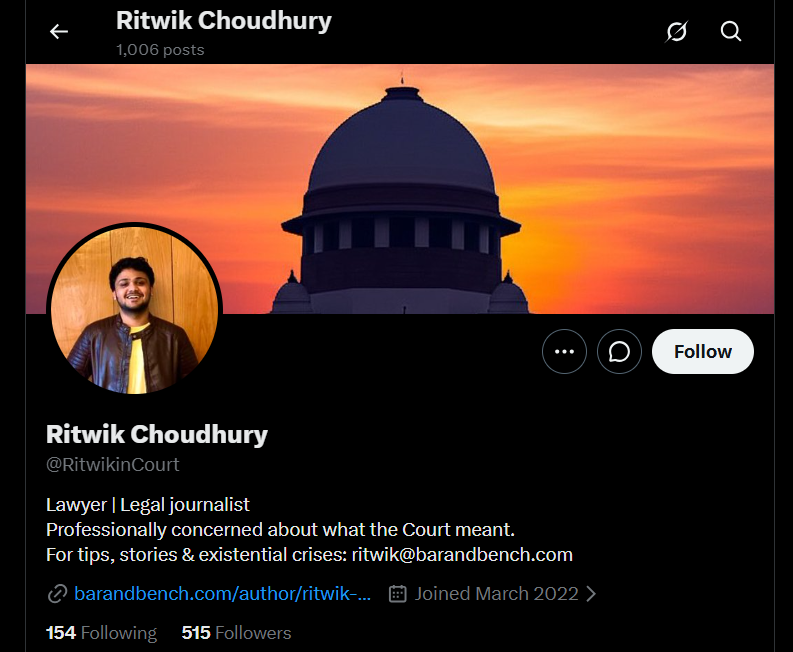
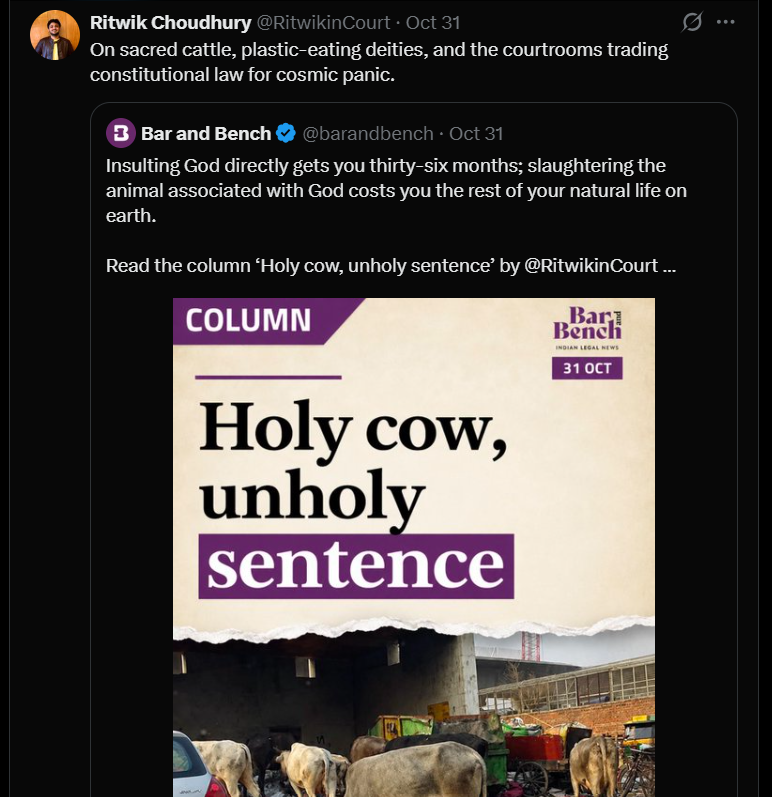
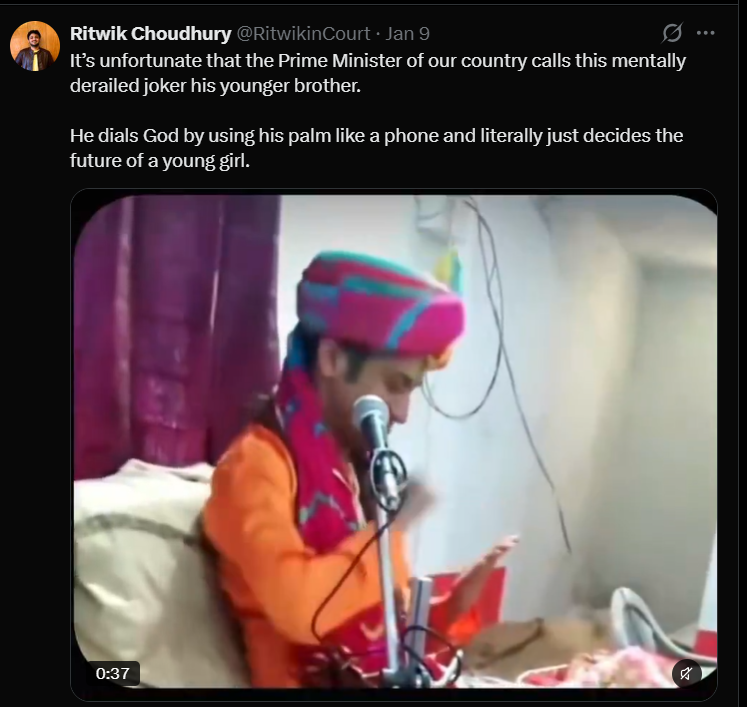
Why it is Hate Crime ?
The primary category selected for this case is: Hate speech against Hindus. The subcategory selected is: Anti-Hindu slurs, mocking faith. Anti-Hindu slurs and the deliberate mocking of the Hindu faith owing to religious animosity involve the usage of derogatory terms, stereotypes, or offensive references to religious practices, symbols, or figures. One of the common anti-Hindu slurs used against Hindus is “cow-worshipper” and “cow piss drinker”. The intention of using this term is to demean and mock Hindus as a group and their religious beliefs since Hindus consider the cow holy. Additionally, some symbols and the slurs attached to them have a historical context that exacerbates the insult, hate, stereotyping, dehumanisation and oppression against Hindus. Cow worship has been used for centuries to denigrate Hindus, insult their faith and oppress Hindus specifically as a religious group. There has been overwhelming documentation about how cow slaughter has been used to persecute Hindus with cow meat being thrown in temples and places of worship. There has also been overwhelming documentation where cow meat (beef) has been force-fed to Hindus to either forcefully convert them to Islam or denigrate their faith. Apart from cow worship, the Swastika – which holds deep religious significance for the Hindus – has also been misinterpreted and distorted to use as a slur against Hindus. Similarly, the worship of the Shivling has been used by supremacist ideologies and religions to denigrate Hindus owing to religious animosity. Such slurs and denigration stem out of inherent animosity and hate towards Hindus and their faith, therefore, it is categorised as hate speech targeted at Hindus specifically owing to their religious identity. The next subcategory selected is: Subversion of scriptures. Subverting the religious scriptures of Hindus has particularly devastating consequences. Subversion of the scriptures of Hindus is often done to justify or promote hatred, discrimination, or violence against specific individuals or groups of Hindus. Religious scriptures are often nuanced and those who harbour religious animosity towards Hindus often misquote or misrepresent the scripture to legitimise their animosity and hate towards the faith and its adherents. Any such misquoting of scriptures or subversion to justify hate, violence and discrimination against Hindus owing to religious animosity is hate speech and is categorised as such. The column targets Hindu religious identity by ridiculing the sacred status of Gau Mata. The cow holds a distinct and deeply revered place in Hinduism and is worshipped as Gau Mata, symbolising motherhood, nourishment, compassion and dharma. Choudhary repeatedly described Hindu reverence for the cow as “zoological panic”, an “imaginary ecological apocalypse” and the worship of an “endangered deity”. Such expressions reduce a central Hindu religious belief to an object of ridicule and portray the devotion of Hindus as irrational and excessive. His commentary therefore denigrates the faith of Hindus by mocking the religious significance they attach to Gau Mata. Choudhary further diminished this religious significance through comparisons between the punishment for cow slaughter and penalties for beating a stray dog to death, mutilating a horse, poisoning a cat and committing offences against women and human life. He also compared Gujarat's cow-preservation law with punishment provisions in other States and countries. These comparisons reduce the sanctity of Gau Mata to a matter of comparative sentencing and portray the legal protection of the revered cow as disproportionate. Hinduism teaches reverence for all living beings, yet this principle does not diminish the cow's distinct religious position. Using unrelated offences and the treatment of other animals to ridicule that position demeans the religious convictions of Hindus and subordinates their sacred beliefs to comparisons that disregard their significance. Choudhary's treatment of references to the Rigveda, Manusmriti, and Harivamsa Purana reflects a subversion of scriptures. He repeatedly characterised these scriptural references as a “theological code”, “a collection of Sanskrit verses” and “moral panic”. By presenting Hindu scriptural teachings concerning Gau Mata as evidence of irrational religious influence over the judiciary, he recast their religious significance as an object of contempt. His description of the court as an “ecclesiastical tribunal” further portrayed the recognition of Hindu beliefs in a judicial judgment as an illegitimate intrusion of religion. This framing denigrates Hindu scriptures and sends a derogatory message about the faith and its adherents. The Rigveda, one of Hinduism’s foundational Shruti scriptures, contains hymns and references to cows, including the term Aghnyā, traditionally understood as “one who should not be killed”. The Manusmriti, an influential Smriti text on dharma, duties, and conduct, contains specific provisions on caring for cows and penance for cow-killing. The Harivamsa Purana, traditionally regarded as a supplement to the Mahabharata, narrates the life of Lord Krishna, his association with cowherds and his protection of cattle. Together, these texts represent distinct strands of Hindu religious tradition, Vedic teachings, Dharmaśāstra and Purāṇic narratives and demonstrate the longstanding religious and cultural significance of cows in Hinduism. Choudhary also targeted the presiding judge, Brijeshkumari Rameshwarsinh Rajput, by portraying her judicial reasoning as driven by religious sentiment. He described her approach as “theological zeal” and wrote that the offence had “rattled their spiritual sensitivities”. His assertion that the judge had “tossed that cumbersome legal fiction into the Sabarmati river” further ridiculed her treatment of the religious significance of cow protection. These remarks turned the judge's recognition of Hindu religious beliefs into a basis for questioning her judicial reasoning and presented the protection of Gau Mata as an expression of religious excess. The leftist ideological outlook reflected in Choudhary's commentary is evident in its repeated dismissal of Hindu religious beliefs and its portrayal of Hindu devotion as incompatible with constitutional governance. By mocking Gau Mata, denigrating Hindu scriptures and diminishing the religious significance of cow protection through comparisons with unrelated offences, his column reinforces contempt towards Hindus based on their religious identity. Such commentary normalises the public ridicule of Hindu sacred symbols and teachings and conveys a derogatory message about a community whose religious and cultural identity is closely connected with the reverence for Gau Mata. Since the motivation behind such remarks stems from a deep-seated animosity towards the Hindu faith, this case has been categorised as a religiously motivated hate crime.


Case Status
Unknown


Perpetrators Details
Perpetrators
Others
Perpetrators Range
One Person
Perpetrators Gender
male
 Sources



